Yukhoe Kimbap: The Culinary Evolution of Korean Beef Tartare and Traditional Rice Rolls

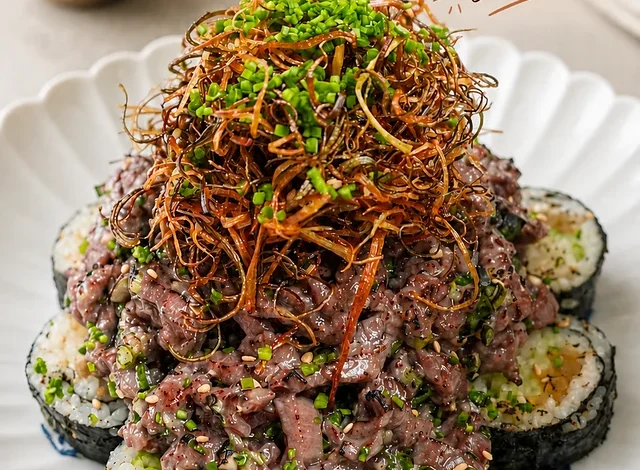
The convergence of traditional Korean culinary techniques and modern fusion gastronomy has yielded a sophisticated dish known as Yukhoe Kimbap. This elevated iteration of the classic kimbap—the beloved Korean seaweed-wrapped rice roll—replaces the conventional cooked protein fillings with premium, seasoned raw beef, or yukhoe. By marrying the textures of fresh produce with the savory depth of raw beef tartare, this dish represents a significant shift in how Korean comfort food is being positioned for both upscale dinner parties and refined home dining.

The Historical and Cultural Context of Yukhoe
Yukhoe, the Korean equivalent of steak tartare, has deep roots in the nation’s culinary history. While historical records from the Joseon Dynasty mention raw beef preparations, it was largely reserved for celebratory occasions or among the elite. The dish relies on the quality and freshness of the meat, typically sourced from the top round or eye of round, to ensure a tender mouthfeel.

In the contemporary era, particularly in regions like Jeonju—famous for its bibimbap and preservation of traditional Hanok village food culture—yukhoe has transitioned into a staple served with julienned Korean pear (bae) and egg yolk. The pear’s natural sweetness and high moisture content act as a necessary counterbalance to the rich, umami-heavy profile of the seasoned beef. This historical reliance on flavor balance is the foundational principle upon which the modern Yukhoe Kimbap is constructed.

Technical Composition and Culinary Methodology
Unlike traditional kimbap, which often relies on the structural integrity of cooked ingredients like sautéed carrots, spinach, or processed ham, Yukhoe Kimbap demands a higher degree of precision in preparation. The composition follows a rigorous sequence to ensure food safety and textural contrast:

- The Foundation (Rice and Nori): The rice must be seasoned with high-quality toasted sesame oil and salt to provide a nutty, aromatic base. The nori (roasted seaweed) acts as the vessel, requiring a precise wrapping technique to maintain the structural integrity of the roll.
- The Fresh Fillings: The interior of the roll is kept minimalist to prevent the moisture from the raw ingredients from compromising the seaweed. Julienned cucumber and Korean pear provide the signature "crunch" factor, while pickled radish (danmuji) or, in artisanal versions, sake-lees-aged oriental melon (Ulwae jubak-jangajji), provides the necessary acidity.
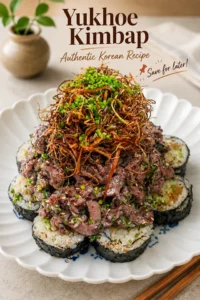
- The Protein Component: The yukhoe is not placed inside the roll. By placing the seasoned raw beef on top of the sliced kimbap, the chef ensures that the temperature of the beef—which should be kept chilled until the final moment—remains distinct from the warm, seasoned rice.
- The Texture Modifier: A distinguishing feature of this dish is the use of fried green onions. By julienning green onions or leeks and frying them in avocado oil until crisp, the dish gains an essential savory crunch that mimics the experience of a charred protein without requiring the beef itself to be cooked.
Chronology of Preparation and Service
The professional preparation of Yukhoe Kimbap adheres to a strict timeline to maximize safety and flavor. Culinary experts suggest a three-phase approach:

- Phase I: Prep and Infusion (Pre-service): Green onion oil is extracted by frying alliums in oil at 160°C (320°F). The oil is reserved for the sauce, while the fried green onion solids are set aside. The yukhoe sauce—a blend of soy, sesame, and aromatics—is prepared and emulsified.
- Phase II: Construction (Minutes before service): The rice is seasoned, and the rolls are constructed using the pear, cucumber, and radish. The rolls are sliced into bite-sized segments.
- Phase III: Seasoning and Plating (Immediate service): The raw beef is mixed with the prepared sauce, minced garlic, and fresh green onions only seconds before plating. The beef is then piled onto the kimbap. A final, optional step involves using a culinary torch to lightly char the top of the beef, a technique that adds a subtle smokiness and changes the sensory profile of the raw meat.
Analytical Implications for Home and Professional Kitchens
The emergence of Yukhoe Kimbap reflects broader trends in global food culture, where street food is being "elevated" through premium ingredients. From an economic perspective, the dish allows for high-margin menu pricing due to the inclusion of raw beef, yet it remains relatively accessible for home cooks who have access to high-quality butchers.

Data from the culinary sector suggests that the "deconstructed" approach to kimbap—where a primary topping is added to the exterior—is gaining traction. This method mitigates the risk of the kimbap falling apart, a common frustration for home cooks, and presents the dish as an aesthetically pleasing, individual-serving hors d’oeuvre.

Furthermore, the emphasis on the "second life" of ingredients, such as the green onion oil, aligns with the industry’s push for sustainability. By utilizing the oil used to fry the garnishes in the sauce and for other stir-fry applications, the recipe minimizes food waste, a hallmark of modern sustainable cooking practices.

Safety and Sourcing Standards
Because the primary protein is served raw, the safety protocols for Yukhoe Kimbap are stringent. It is universally recommended that practitioners communicate clearly with their meat purveyors. The beef used must be specifically designated as "sashimi-grade" or suitable for raw consumption. In professional kitchens, this often involves sourcing from specialized suppliers who maintain cold-chain integrity from slaughter to delivery.

The recommendation to chill the beef in the freezer prior to slicing is not merely for ease of handling; it is a food safety best practice that keeps the bacterial load low by maintaining a stable, low temperature throughout the cutting process.

Conclusion
Yukhoe Kimbap is more than a culinary novelty; it is a synthesis of historical Korean flavor profiles and modern plating aesthetics. By prioritizing the crisp, fresh, and raw elements over the traditional cooked fillers of standard kimbap, this dish offers a lighter, more vibrant alternative that caters to current consumer preferences for fresh, high-protein, and textured dining experiences. As culinary boundaries continue to blur, dishes like these serve as a bridge between the traditional heritage of the Korean kitchen and the innovative, experimental nature of today’s global gastronomic landscape. Whether served at a formal dinner party or a casual home gathering, the dish remains a testament to the versatility of one of Korea’s most iconic ingredients: the seasoned, tenderized raw beef known as yukhoe.