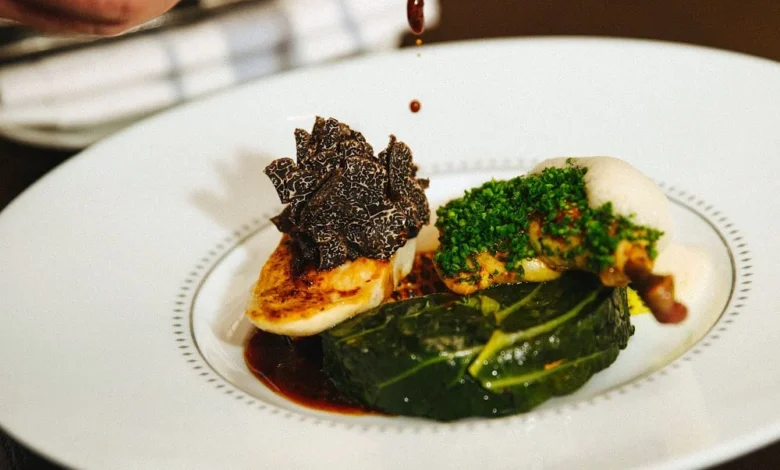
Chef Matthias Brenner’s Corn-Fed Baby Chicken with Savoy Cabbage and Périgord Truffle stands as a testament to the enduring allure of classical French technique harmoniously blended with subtle Bavarian-Alpine influences. This elegant creation, a signature offering from Brasserie Cuvilliés at the luxurious Rosewood Munich, epitomizes precision, ingredient reverence, and contemporary culinary craftsmanship. The dish meticulously presents the corn-fed baby chicken in dual preparations—crispy and confit—ensuring a compelling textural and flavour contrast, beautifully complemented by a delicate savoy cabbage parcel filled with a light poultry farce.
The Culinary Vision of Chef Matthias Brenner
Matthias Brenner, the esteemed head chef of Brasserie Cuvilliés, brings a formidable culinary pedigree to his role. His journey through Germany’s top gastronomic establishments has forged a distinctive style characterized by refinement, approachability, and an unwavering commitment to seasonal ingredients. Brenner’s philosophy revolves around elevating regional flavors through meticulous execution, thoughtful restraint, and a modern perspective on traditional techniques. This dish, in particular, serves as a prime example of his ability to marry the robust foundations of French haute cuisine with the nuanced demands of contemporary European dining, all while hinting at the rich culinary landscape of his Bavarian surroundings.
Brenner’s training emphasizes a deep understanding of core culinary principles, allowing him to deconstruct and reassemble classic dishes with a fresh sensibility. His leadership at Brasserie Cuvilliés has solidified the restaurant’s reputation as a destination for sophisticated diners seeking an experience that is both grounded in tradition and forward-thinking. The careful selection of each component in the baby chicken dish, from the specific feed of the poultry to the provenance of the truffle, underscores his dedication to quality and flavor integrity.
A Symphony of Premium Ingredients
The success of a dish like this hinges profoundly on the quality and provenance of its core ingredients. Each element is chosen not just for its individual merit but for its ability to contribute to a cohesive and memorable gastronomic experience.
Corn-Fed Baby Chicken: The choice of corn-fed baby chicken is deliberate and impactful. Corn-feeding imparts a distinct yellow hue to the chicken’s skin and fat, and crucially, a richer, sweeter flavor profile compared to conventionally raised poultry. The diet influences the fat marbling, resulting in exceptionally tender and succulent meat. "Baby chicken," often referring to a poussin or a small broiler chicken, offers delicate flesh that cooks quickly and evenly, making it ideal for the dual preparation technique employed by Chef Brenner. The breast is typically pan-seared or roasted to achieve a crispy skin, while the legs, richer in connective tissue, are perfectly suited for the slow, gentle confit method, yielding meltingly tender results. Sourcing such premium poultry often involves working with specialized farms that adhere to high welfare standards, reflecting a broader trend in fine dining towards ethical and sustainable ingredient procurement.
Savoy Cabbage: This crinkly-leafed cabbage variety is prized for its tender texture and slightly sweet, earthy flavor, making it a favorite in European cuisine. Unlike its smoother counterparts, Savoy cabbage retains a pleasant bite even after cooking and its distinctive appearance adds visual appeal. In this dish, it’s transformed into a delicate parcel, likely blanched and carefully wrapped around a light poultry farce. This preparation method showcases the cabbage’s versatility, allowing it to act as both a subtle flavor enhancer and a textural counterpoint to the richness of the chicken and truffle. The use of a vegetable often considered rustic in such an elegant context speaks to Brenner’s ability to elevate humble ingredients through sophisticated technique.
Périgord Truffle: The inclusion of Périgord truffle (Tuber melanosporum), often referred to as the "black diamond" of the culinary world, instantly elevates the dish to a realm of luxury. Native primarily to the Périgord region of southwestern France, as well as parts of Spain and Italy, these fungi are highly seasonal, typically harvested in winter. Their intense, earthy, and musky aroma, with notes of garlic, hazelnut, and even damp forest floor, is unparalleled. A single truffle can command significant prices, ranging from hundreds to thousands of euros per kilogram, depending on market conditions, quality, and scarcity. The "generous shavings" described indicate a commitment to showcasing the truffle’s powerful sensory impact, ensuring its distinctive aroma permeates the entire plate. The global truffle market is a fascinating interplay of tradition, intense demand, and the delicate balance of nature, with new regions like Australia and the Pacific Northwest also emerging as significant producers, albeit with different species or cultivation methods. The Périgord truffle remains the gold standard for many chefs and gourmands.
Masterful Techniques: The Art of Preparation
The dish’s complexity and depth are a direct result of the classical French techniques applied with modern precision.

Crispy and Confit Preparations: The dual preparation of the chicken is a hallmark of sophisticated cooking. The breast, with its leaner meat, benefits from a quick, high-heat cooking method that crisps the skin while keeping the interior juicy. This offers a satisfying textural contrast. The legs, by contrast, are subjected to the confit process—a traditional method of slow-cooking meat in its own fat or oil at a low temperature. This technique, originally a preservation method, renders the meat incredibly tender and succulent, almost melting off the bone, while infusing it with rich flavor. The contrast between the firm, crispy breast and the soft, rich confit leg provides a dynamic experience on the palate.
Poultry Farce: The savoy cabbage parcel is filled with a "light poultry farce." A farce is a finely ground and seasoned mixture, often of meat, fat, and other ingredients, used as a stuffing or binding agent. In this context, a "light" farce suggests a delicate composition, perhaps incorporating cream, eggs, or panade to achieve a smooth, ethereal texture that complements the cabbage without overpowering it. This element adds an additional layer of moisture, flavor, and refinement to the dish.
Deeply Reduced Poultry Jus: The dish is finished with a "deeply reduced poultry jus." A jus is a rich, flavorful sauce made from the natural juices of meat, often enhanced with aromatic vegetables, herbs, and wine, then slowly simmered and reduced to a concentrated, glossy elixir. The reduction process intensifies the flavors, creating a sauce that is both robust and refined. This jus acts as the binding element, weaving together the distinct flavors of the chicken, cabbage, and truffle, providing a luxurious mouthfeel and an umami depth that elevates the entire composition. The art of making a perfect jus is a fundamental skill in classical French cuisine, requiring patience and meticulous attention to detail.
Bavarian Soul, French Heart: Regional Influences in Modern Cuisine
While the techniques employed are unequivocally French, Brenner’s mention of "Bavarian-Alpine influences" and "regional flavors" speaks to a broader trend in fine dining: the localization of global cuisine. In Munich, the capital of Bavaria, a chef of Brenner’s caliber naturally draws inspiration from the local larder and culinary traditions. While the dish itself, with its truffle and classical techniques, leans heavily French, the "restraint" and "precision" he applies can be seen as a modern German approach to classicism. Furthermore, the sourcing of the baby chicken or even specific herbs and vegetables might reflect regional Bavarian agricultural excellence. It is the chef’s interpretation, a subtle nod to his geographic context, that transforms a potentially universal fine-dining plate into something uniquely reflective of its setting within Rosewood Munich. This fusion often manifests not in overt, heavy regional flavors, but in a delicate balance and an emphasis on the freshness and seasonality of locally available produce.
The Rosewood Munich and Brasserie Cuvilliés: A Gastronomic Destination

The setting for such a dish is as important as its creation. Rosewood Munich, opened in late 2023, quickly established itself as a beacon of luxury hospitality in the heart of Bavaria. Housed in two historic buildings, the former State Bank of Bavaria and the adjacent Palais Neuhaus-Preysing, the hotel embodies a blend of timeless elegance and contemporary sophistication. Brasserie Cuvilliés, named after the Rococo architect François de Cuvilliés, who designed the famed Cuvilliés Theatre in Munich, serves as the hotel’s flagship dining experience.
The restaurant’s ambiance, much like the dish, marries classical European grandeur with modern comfort. It provides an ideal backdrop for Chef Brenner’s refined cuisine, appealing to both international travelers and discerning local patrons. The emphasis on high-quality ingredients, impeccable service, and a curated wine list ensures that the dining experience at Brasserie Cuvilliés extends beyond the plate, creating a holistic journey into European luxury. The commitment of Rosewood Hotels & Resorts to "A Sense of Place®" is evident in Brasserie Cuvilliés, where Brenner’s menu, while globally informed, subtly acknowledges its Bavarian location.
The Broader Fine Dining Landscape: Trends and Impact
Chef Brenner’s Corn-Fed Baby Chicken with Savoy Cabbage and Périgord Truffle is not merely a dish; it is a statement within the contemporary fine dining landscape. It reflects several overarching trends:
- Emphasis on Provenance and Quality: The meticulous sourcing of corn-fed chicken and Périgord truffle highlights the increasing demand for transparency and quality in ingredients. Diners are more informed and willing to pay a premium for ethically sourced, high-quality produce.
- Modern Classicism: Rather than abandoning traditional techniques, many top chefs are revisiting and refining them. Brenner’s approach demonstrates how classical French methods can be reinterpreted to suit modern palates, focusing on lighter preparations and intensified flavors.
- Sustainability and Seasonality: While not explicitly detailed in the provided text, the emphasis on "seasonal ingredients" inherently links to sustainability. Utilizing ingredients at their peak ensures maximum flavor and often supports local economies and responsible agricultural practices.
- Experiential Dining: Fine dining today is about more than just food; it’s an experience. The thoughtful plating, the interplay of textures and temperatures, and the luxurious ambiance of Brasserie Cuvilliés contribute to a memorable occasion.
- Chef as Artisan: Chefs like Matthias Brenner are increasingly viewed as artisans, blending artistic vision with technical mastery. Their personal philosophies and interpretations shape not only their menus but also broader culinary trends.
Conclusion: A Testament to Culinary Excellence
The Corn-Fed Baby Chicken with Savoy Cabbage and Périgord Truffle by Chef Matthias Brenner is a masterful creation that encapsulates the essence of modern European fine dining. It is a dish that speaks volumes about the chef’s dedication to quality, his technical prowess, and his ability to craft an experience that is both sophisticated and deeply satisfying. Through its careful balance of textures, the richness of its core ingredients, and the aromatic embrace of the Périgord truffle, it stands as a shining example of how traditional culinary art can be continually reinvented and elevated for the contemporary epicurean. It solidifies Brasserie Cuvilliés and Chef Brenner’s position at the forefront of Munich’s burgeoning gastronomic scene, setting a benchmark for culinary excellence.
Related posts: