
Chef Johns Blueberry Dutch Baby

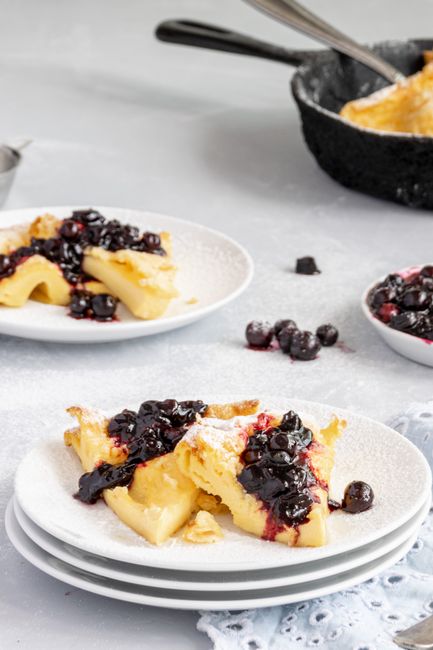
Chef John’s Blueberry Dutch Baby: A Cloud of Flavor
The Dutch baby, a hybrid of pancake and popover, offers a dramatic presentation and delightful texture, and Chef John’s interpretation elevates it with the bright, bursting flavor of blueberries. This impressive baked pancake, often called a German pancake or Bismarck, is deceptively simple to make, relying on a hot oven and a well-seasoned cast-iron skillet to achieve its signature puffy edges and custardy center. The inclusion of fresh blueberries infuses each bite with juicy sweetness, creating a harmonious balance with the slightly eggy, rich batter. Mastering this recipe unlocks a brunch showstopper that is both visually stunning and incredibly delicious, proving that elegant desserts and breakfasts don’t require complex techniques. The beauty of the Dutch baby lies in its transformation from a thin batter into a towering, golden-brown masterpiece, a culinary spectacle that delights diners before the first bite. Chef John’s recipe, with its specific ingredient ratios and baking instructions, is designed to ensure consistent success, minimizing the guesswork often associated with this dramatic baked good. Understanding the science behind its rise – the superheated air expanding the eggs and flour – is key to appreciating its magic. The cast-iron skillet is crucial, its even heat distribution promoting uniform puffing and a perfectly golden crust. Preheating the skillet is not optional; it’s fundamental to achieving the characteristic rise.
The foundational elements of Chef John’s Blueberry Dutch Baby are straightforward yet critical. A classic Dutch baby batter consists of eggs, flour, milk, and a touch of sugar, often with a pinch of salt for flavor enhancement. Chef John’s recipe typically utilizes a 1:1:1 ratio of eggs, flour, and milk by volume, a common and effective starting point for many Dutch baby variations. For instance, four large eggs, four tablespoons of all-purpose flour, and four fluid ounces (half a cup) of milk form the base. The eggs are the primary leavening agent, and their volume is crucial. Whisking them vigorously incorporates air, which expands dramatically in the hot oven. The flour provides structure, absorbing the liquid and forming the dough. While some recipes call for sifting the flour, Chef John often emphasizes that for a Dutch baby, a quick whisking is sufficient, as the extreme heat will do most of the work. The milk, typically whole milk for richness, adds moisture and helps create a tender crumb. A tablespoon or two of granulated sugar is usually added for sweetness, though this can be adjusted to personal preference. A pinch of salt, about ¼ teaspoon, balances the sweetness and enhances the overall flavor profile. For the blueberry variation, fresh blueberries are paramount. The recipe often calls for about one cup of fresh blueberries, which are gently folded into the batter just before pouring it into the hot skillet. Frozen blueberries can also be used, but they may release more moisture, potentially affecting the final texture. It’s advisable to toss frozen blueberries in a tablespoon of flour to help absorb some of that excess moisture. The quality of ingredients plays a significant role in the final outcome. Fresh, vibrant blueberries will offer a more pronounced flavor and better texture than their older counterparts. Similarly, using high-quality eggs and good milk will contribute to a richer, more satisfying Dutch baby.
The technique for preparing Chef John’s Blueberry Dutch Baby is as important as the ingredients themselves. The process begins with preheating the oven to a high temperature, typically 425-450°F (220-230°C). This intense heat is what causes the Dutch baby to puff up dramatically. Simultaneously, a well-seasoned 10-inch cast-iron skillet is placed in the preheating oven. A cast-iron skillet is preferred for its ability to retain and distribute heat evenly, creating the consistent high temperature necessary for the characteristic rise. Once the oven and skillet are thoroughly preheated, the batter is prepared. The eggs are whisked vigorously in a bowl until they are light and slightly frothy. The flour, sugar, and salt are then added and whisked until just combined, ensuring no dry pockets remain. It’s important not to overmix the batter, as this can develop the gluten in the flour, potentially leading to a tougher Dutch baby. The milk is then gradually whisked into the mixture until a smooth, thin batter is formed. This batter will resemble thin pancake batter or crepe batter. The fresh blueberries are then gently folded into the batter. The goal is to distribute them evenly without crushing them.
The dramatic moment arrives when the piping hot cast-iron skillet is carefully removed from the oven. The batter is immediately poured into the center of the hot skillet. The hot skillet will cause the batter to begin cooking and puffing around the edges almost instantly. The skillet is then returned to the hot oven. The baking time is relatively short, typically 15-20 minutes, depending on the oven and the desired level of browning. During this time, the Dutch baby will rise dramatically, forming a puffed rim and a slightly sunken, custardy center. It will be golden brown around the edges and may appear slightly undercooked in the center, which is desirable for its texture. The blueberries will have softened and burst, releasing their sweet juices into the batter. It’s crucial to resist the urge to open the oven door during the initial stages of baking, as this can cause the Dutch baby to deflate. Once it has reached its puffed glory and is golden brown, it’s carefully removed from the oven. The dramatic puff will begin to subside as it cools, but it will retain its impressive form.
Serving Chef John’s Blueberry Dutch Baby is an experience in itself. The Dutch baby is best served immediately while it is still warm and puffed. It can be dusted with powdered sugar, a classic accompaniment that adds a delicate sweetness and visual appeal. A squeeze of fresh lemon juice is another popular and highly recommended topping, its tartness cutting through the richness of the pancake and complementing the sweetness of the blueberries beautifully. Chef John himself often advocates for the simple elegance of powdered sugar and lemon. Other serving suggestions include a dollop of whipped cream, a drizzle of maple syrup (though some find this unnecessary with the inherent sweetness of the blueberries), or a side of fresh berries. The beauty of a Dutch baby is its versatility; it can be enjoyed as a sweet breakfast or brunch dish, or even as a light dessert. The combination of the warm, eggy pancake, the burst of tart-sweet blueberries, and the bright zest of lemon creates a symphony of flavors and textures. The slightly chewy edges contrast with the tender, custardy center, and the pops of blueberry juice add bursts of flavor with every bite.
The nutritional profile of a Dutch baby, while not typically the focus for those indulging in this delightful treat, offers some insights. A standard Dutch baby, before the addition of blueberries and toppings, is primarily composed of carbohydrates from the flour and sugar, protein and fat from the eggs, and some calcium from the milk. The addition of blueberries significantly boosts the vitamin C and antioxidant content. While it’s a rich dish, the portion size can be controlled, and the ingredients are relatively wholesome. For instance, using whole milk contributes some fat and protein. The eggs provide high-quality protein and essential nutrients. The flour offers carbohydrates for energy. The sugar content can be managed by adjusting the amount added to the batter or by opting for naturally sweet toppings. The fat content primarily comes from the eggs and any butter or oil used to grease the skillet, although Chef John’s recipe often relies on the non-stick properties of a well-seasoned cast-iron skillet. When considering the "healthiness," the focus is often on moderation and mindful topping choices. A dusting of powdered sugar and a squeeze of lemon offer minimal additional calories compared to a generous dousing of syrup and a mountain of whipped cream.
The versatility of Chef John’s Blueberry Dutch Baby extends beyond its primary serving. This recipe serves as an excellent base for numerous variations. For a more decadent experience, chocolate chips can be added along with the blueberries, creating a delightful chocolate-blueberry fusion. For a more savory twist, although less common, one could omit the sugar and add herbs and cheese, serving it with a side of scrambled eggs and bacon. However, the sweet variations are where the Dutch baby truly shines. Adding other fruits like raspberries, sliced peaches, or sliced apples (which would benefit from a pre-sauté to soften) can introduce new flavor profiles. A sprinkle of cinnamon in the batter can add warmth and spice, particularly complementary to apple or peach variations. For a touch of elegance, a few slivers of almonds or pecans could be scattered over the batter before baking, adding a delightful crunch. The key to successful variations lies in maintaining the integrity of the batter and the baking method, while thoughtfully introducing complementary flavors. The high heat and rapid cooking are what give the Dutch baby its character, so any additions should be made with this in mind. For instance, fruits that release a lot of water should be handled carefully, perhaps by pre-cooking them slightly or tossing them in flour to absorb excess moisture.
Troubleshooting common issues is crucial for achieving Dutch baby perfection. One of the most frequent problems is a lack of puff. This can be attributed to several factors: the oven not being hot enough, the skillet not being preheated sufficiently, or the oven door being opened too early during baking. Ensuring the oven reaches the correct temperature and the skillet has had adequate time to heat up is paramount. Another issue can be a gummy or undercooked center. This usually indicates that the Dutch baby was removed from the oven too soon. While a slightly custardy center is desirable, it shouldn’t be raw. Baking for an additional few minutes, if necessary, can resolve this. Conversely, an overcooked Dutch baby can become dry and tough. This is prevented by adhering to the recommended baking time and observing the visual cues of golden-brown edges and a puffed appearance. Uneven browning can occur if the oven has hot spots or if the skillet is not seasoned properly. Rotating the skillet halfway through baking can help ensure more even cooking. The dreaded deflation can be disheartening, but it’s often a natural part of the cooling process. However, excessive deflation immediately after removal from the oven can again be linked to insufficient oven heat or premature opening of the oven door. Ultimately, practice and attention to detail are the best tools for mastering this impressive, yet achievable, baked pancake. Chef John’s recipe, by providing clear guidelines and emphasizing crucial steps like preheating, minimizes these potential pitfalls, making it an excellent starting point for anyone seeking to create a stunning Blueberry Dutch Baby. The visual appeal of a perfectly puffed Dutch baby is undeniable, and achieving it requires understanding the interplay of heat, batter, and time. This recipe demystifies the process, allowing home cooks to replicate a restaurant-quality dish with confidence.


