The Rise of Mega Dairies and the Fragility of the UK Food System Rethinking Resilience in an Era of Climate and Geopolitical Instability

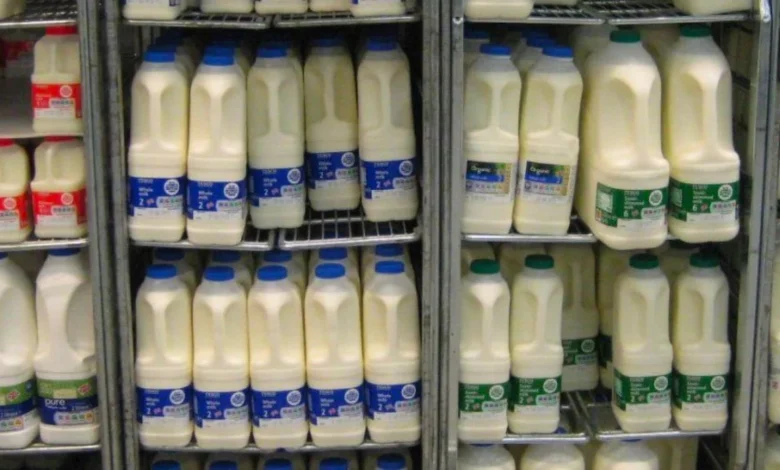
The British dairy industry is currently undergoing a structural transformation that mirrors the broader global trend toward agricultural intensification, yet this shift is raising profound questions about the long-term security of the nation’s food supply. Recent data and investigative reports suggest that the United Kingdom is at a crossroads, forced to choose between a model of high-input "mega-dairies" and a more traditional, pasture-based system that proponents argue is better suited to a volatile future. As the number of dairy farms in Great Britain falls below 7,000 for the first time—a staggering decline from the nearly 15,000 operating in the early 2000s—the remaining operations are becoming larger, more industrial, and increasingly dependent on global supply chains that are proving to be unexpectedly fragile.
The Industrialization of British Dairying
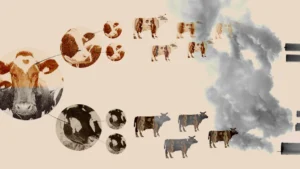
The landscape of UK milk production has been fundamentally altered by economic pressures that have persisted for over two decades. According to an investigation by The Bureau of Investigative Journalism, the number of "mega-dairies"—defined as facilities where hundreds or thousands of cows are housed permanently indoors—has doubled within the last ten years. This shift is primarily a response to a "get big or get out" economic reality. Farmers have faced years of volatile, often low, milk prices alongside skyrocketing costs for inputs such as fuel, electricity, and synthetic fertilizers.
For many producers, the only perceived path to survival has been to scale up, utilizing intensive systems that maximize output per cow. These systems rely heavily on Total Mixed Rations (TMR), which often include imported soy and maize, and require significant infrastructure investments. However, this move toward industrialization has come at a cost to the industry’s diversity. With fewer than 7,000 dairy farms remaining, the consolidation of the sector means that the UK’s milk production is being concentrated in fewer hands and more localized, high-density environments. While this may offer short-term economies of scale, it introduces systemic risks ranging from disease transmission to a loss of local ecological knowledge.
Geopolitical Vulnerability and the Input Trap
The primary critique of the intensive dairy model, as highlighted by the Sustainable Food Trust (SFT), is its heavy reliance on external, often international, inputs. Intensive systems are essentially "energy-into-food" converters that depend on the stability of global trade. The recent blockade and subsequent tensions in the Strait of Hormuz serve as a stark case study in this vulnerability. As a primary artery for the world’s nitrogen fertilizer and energy supplies, any disruption in the Strait has an immediate ripple effect on the cost of production for a UK dairy farmer relying on synthetic nitrates to grow silage or purchased concentrates to feed indoor herds.
Robert Barbour, Senior Research Manager at the SFT, notes that while the reopening of such trade routes provides temporary relief, it should not lead to complacency. The geopolitical landscape is increasingly characterized by "permanent stress," where food system suppliers can no longer assume the frictionless movement of goods. When a farming system is predicated on "just-in-time" delivery of imported soy from South America or fertilizer from the Middle East, its resilience is tethered to global stability—a commodity that is in increasingly short supply. In contrast, low-input, pasture-based systems utilize grazing animals to "upcycle" human-inedible grass into high-quality protein, using nitrogen-fixing plants like clover and animal manure to maintain soil fertility instead of fossil-fuel-derived chemicals.
Climate Change and the Erosion of Productive Land
The move toward intensification is also occurring against a backdrop of accelerating environmental degradation. The UK government’s own security assessments have warned that the nation may struggle to maintain food security if global ecosystem collapse drives intense geopolitical competition. Domestically, the challenges are equally daunting. The Climate Change Committee (CCC) has projected that under a 2°C warming scenario, the proportion of "high-quality" farmland in England and Wales could plummet from 38% to just 11% by 2050.
This projected loss of prime land is driven by several factors:
- Soil Erosion: Predicted to increase by at least 15%, stripping away the nutrient-rich topsoil essential for crop and grass growth.
- Drought and Heat Stress: The June heatwaves in Europe and the UK have already demonstrated the limits of intensive dairy cattle, which are highly susceptible to heat stress, leading to reduced milk yields and fertility issues.
- Yield Volatility: In the South East of England, wheat yields—a staple of intensive animal feed—are expected to see a 20% loss in one out of every 20 years due to drought.
The UK has already experienced three of its five worst harvests on record within the last decade. This unprecedented reversal of the 20-year harvest average suggests that the "high-output" model is reaching an ecological ceiling. If the land can no longer reliably produce the massive quantities of grain required to fuel intensive livestock systems, the entire logic of the mega-dairy begins to crumble.
The Agroecological Alternative: Resilience Over Volume
The Sustainable Food Trust and other advocacy groups argue for a transition toward agroecological farming, which prioritizes working within ecological limits. The SFT’s "Feeding Britain" report suggests that a resilient future would involve a 20% reduction in total dairy production, alongside more significant cuts to pork and poultry, which are even more dependent on arable crops for feed.
While a reduction in volume may seem counterintuitive to food security, the argument rests on the quality and reliability of the output. By shifting livestock to a "grass-fed" or "pasture-fed" model, the UK could utilize its millions of hectares of grassland—much of which is unsuitable for growing vegetables or grains—to produce nutrient-dense food without competing for arable land.
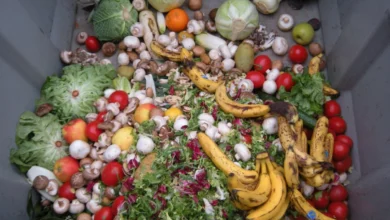
Research from Wageningen University supports this systems-wide approach. Their modeling shows that a global food system where livestock are fed entirely on human-inedible feeds (such as grass, crop residues, and food waste) would actually require only 75% of the arable land needed for a purely vegan diet. This is because animals can convert resources that humans cannot digest into essential calories and micronutrients, thereby maximizing the total food output of a given landscape.
Redefining Efficiency in the Post-Intensive Era
One of the significant hurdles to this transition is the way "efficiency" is currently measured. Standard industry metrics often focus on the carbon footprint per kilogram of product. Under these narrow parameters, intensive systems often appear more "efficient" because they produce large volumes of milk in a short amount of time. However, these metrics frequently fail to account for:
- Upstream Impacts: The carbon and biodiversity costs of producing and transporting soy and fertilizer.
- Systemic Resilience: The ability of the farm to survive a 300% increase in fertilizer costs or a total crop failure in a major exporting nation.
- Ecological Health: The long-term impact on soil biology, water quality (impacted by slurry runoff from high-density units), and local biodiversity.
The SFT argues for a shift toward "aggregated, system-wide" measurements of impact. This would value a farm not just for the liters of milk it produces, but for its contribution to soil carbon sequestration, its role in a circular nutrient economy, and its ability to provide food security during periods of international crisis.
Policy Implications and the Path Forward
The rise of "Big Dairy" is not an accidental byproduct of technology but a result of specific policy and market signals. For decades, the market has rewarded raw output and low prices above all else. To reverse this trend, government intervention is deemed necessary. This includes:
- Subsidies for Public Goods: Pivoting agricultural payments toward farmers who implement regenerative practices, such as diverse sward planting and holistic grazing.
- Supply Chain Transparency: Ensuring that the "hidden costs" of intensive production—such as environmental cleanup and health impacts—are reflected in the market or mitigated through regulation.
- Support for Mid-Sized Farms: Implementing policies that prevent further consolidation and help smaller, pasture-based dairies remain viable through local processing and direct-to-consumer marketing.
The decision facing the UK dairy sector is emblematic of a larger global struggle. As the world enters an era of "permanent stress" characterized by climate instability and geopolitical friction, the definition of a successful food system must change. If success continues to be measured by the sheer volume of output, the industry risks a "brittle" collapse when external inputs become unavailable or the climate becomes too hostile for industrial methods.
Ultimately, the growth of mega-dairies may be a sign of a system reaching its breaking point rather than a sign of progress. Transitioning to a model that integrates livestock into the natural rhythms of the landscape offers a path toward a food system that is not only sustainable in the environmental sense but resilient in the face of an uncertain 21st century. The challenge for policymakers, farmers, and consumers alike is to recognize that in the pursuit of food security, bigger is not always better, and intensification may be the very thing that makes the system most vulnerable.