The Ultimate Culinary Itinerary: Exploring the Historic and Gastronomic Landscape of Melaka, Malaysia

The coastal enclave of Melaka, situated along the Straits of Melaka in Peninsular Malaysia, occupies a unique position in the nation’s cultural and culinary geography. Recognized globally as a UNESCO World Heritage site, the city’s historical significance as a major 15th-century trading port has left an indelible mark on its local cuisine. This culinary landscape is characterized by a complex synthesis of Malay, Chinese, Indian, and Peranakan (Straits Chinese) traditions, utilizing indigenous herbs, fiery chili pastes, and intricate spice profiles that distinguish it from mainland fare.
As culinary tourism continues to grow as a primary driver of regional travel within Southeast Asia, Melaka has emerged as a mandatory destination for domestic and international travelers. The city’s food culture is not merely a collection of isolated dishes, but a living archive of trade migrations and cultural assimilation. This report outlines five foundational dining establishments in Melaka, detailing their historical context, culinary techniques, and socio-economic significance within the broader framework of Malaysian gastronomy.
Historical Context and the Evolution of Melaka’s Food Culture
The genesis of Melaka’s distinct flavor profile dates back to the Malacca Sultanate, when the city served as a convergence point for merchants from China, India, the Middle East, and the Indonesian archipelago. Intermarriages between foreign traders and local Malay women gave rise to the Peranakan, or Baba-Nyonya, community, whose culinary practices heavily rely on local flora such as laksa leaf, lemongrass, torch ginger, and various species of chili.

Unlike the Malay cuisine of the East Coast or the heavier Chinese influences found in metropolitan Kuala Lumpur, Melaka’s gastronomy is defined by its sour and spicy notes—exemplified by dishes like asam pedas—and the hybridization of Chinese preparation techniques with local ingredients, such as the transformation of standard Hainanese chicken rice into compressed rice spheres. Food historians note that these culinary traditions have been preserved across generations through family-run establishments, many of which have operated in the historic city center for decades without altering their foundational recipes.
1. Kedai Kopi Chung Wah: Preserving Hainanese Tradition on Jonker Street
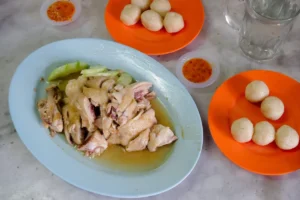
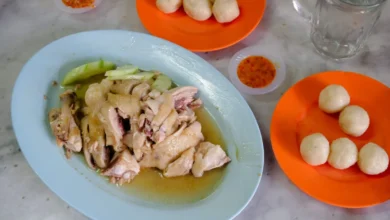
Situated prominently at the corner of Jonker Street—Melaka’s most famous historic thoroughfare—Kedai Kopi Chung Wah represents the quintessential Hainanese-Malaysian coffee shop experience. The establishment is renowned for its signature Hainanese chicken rice balls, a regional adaptation of the classic poached chicken and rice dish brought to Southeast Asia by immigrants from China’s Hainan province.

Preparation and Culinary Technique
The operational workflow at Kedai Kopi Chung Wah is streamlined for high-volume service. The rice is cooked in chicken broth infused with substantial quantities of garlic, ginger, and rendered chicken fat, then shaped manually into compact spheres while still hot. This compression gives the rice a dense, chewy texture and ensures the retention of aromatics.
The accompanying chicken is traditionally boiled, yielding a tender meat structure with gelatinous skin, served alongside sliced cucumbers. The meal’s defining element is its accompanying chili and garlic vinegar sauce, which introduces a sharp, citrusy acidity that balances the richness of the poultry and the starchy density of the rice. Operating typically from 9:00 AM to mid-afternoon, the restaurant routinely manages long queues due to its central location and historical reputation among both local residents and culinary tourists.

2. Asam Pedas Pak Man: The Science of Sour and Spicy Curry
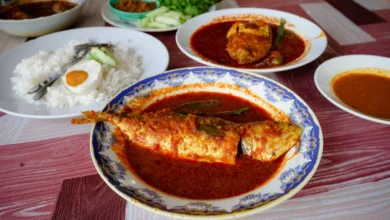
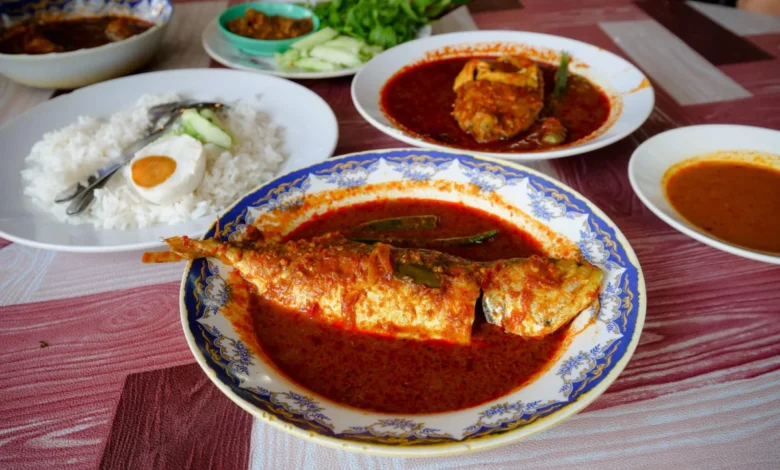
Moving beyond the urban center toward the coastal districts brings diners to Asam Pedas Pak Man, an institution dedicated to one of southern Malaysia’s most culturally significant dishes: asam pedas. Translating literally to "sour and spicy," this tamarind-based curry soup is a staple of Malay cuisine, particularly in Melaka and the neighboring state of Johor.
Ingredient Composition and Regional Significance
The base of asam pedas relies on a complex paste made from dried chilies, shallots, garlic, and turmeric, heavily acidified with tamarind juice (asam jawa) and often balanced with Vietnamese coriander (daun kesum). At Asam Pedas Pak Man, the dish is prepared daily using locally caught ocean fish, such as baramundi (ikan tongol) or skipjack tuna.

The restaurant opens early to serve breakfast items like roti canai and Peranakan coconut-based confectioneries (kuih), but the primary draw remains the asam pedas, which is typically ready by 9:00 AM. Culinary analysts often cite asam pedas as a prime example of functional gastronomy in tropical climates, where the capsaicin-induced perspiration and acidic profile stimulate appetite and provide natural cooling effects in high ambient temperatures. The establishment’s proprietary sambal belacan—a pungent fermented shrimp paste and chili condiment—further elevates the dish’s flavor profile, exemplifying the depth of regional spice utilization.
3. Klebang Original Coconut Shake: Modern Cravings and Coastal Commerce
In contrast to the century-old traditions of chicken rice and curry houses, the Klebang Original Coconut Shake reflects the evolution of modern Malaysian street food culture. Located a short distance outside the immediate downtown core near the Klebang coastline, this establishment has achieved viral status through local networks and digital tourism platforms.

Product Development and Economic Impact
The concept is straightforward yet innovative: tender young coconut water and scraped coconut flesh are blended with crushed ice and standardized portions of vanilla ice cream, optionally topped with an extra scoop in the "Special" iteration. The business model combines high-speed beverage production with adjacent food stalls offering affordable local items such as nasi lemak and keropok (fish crackers).
The success of the Klebang Original Coconut Shake illustrates the commercial viability of single-product specialization in modern Malaysian tourism. By anchoring its operation near a recreational coastal area, the enterprise captures a high volume of weekend visitors, demonstrating how traditional ingredients like coconut can be successfully reconfigured for contemporary consumer preferences.

4. Ban Lee Siang Satay Celup: Communal Dining and Interactive Gastronomy
Located within the commercial district of downtown Melaka, Ban Lee Siang Satay Celup offers an interactive dining format known as satay celup, a culinary hybrid that merges Chinese steamboat mechanics with Malay satay flavor profiles.
Operational Mechanics
Diners select from a vast array of raw and semi-processed skewers—including meats, seafood, quail eggs, mushrooms, and various vegetables—displayed on refrigerated open shelves. Patrons then cook these skewers directly at their table in a communal pot of boiling, spiced peanut gravy that is continuously heated over a burner.

The sauce, thick with ground peanuts, chili paste, and aromatic spices, thickens and intensifies in flavor as various ingredients are submerged throughout the meal. The final billing method relies on counting the discarded wooden skewers left at each table, priced at a nominal rate per stick. This gamified, highly communal style of eating underscores the social dimension of Melaka’s food culture, encouraging shared dining experiences among families and large groups.
5. Ikan Bakar Hj Musa: Charcoal-Grilled Seafood Excellence
The culinary tour concludes at Ikan Bakar Hj Musa, situated in a seaside district known for its open-air grilled seafood operations. Ikan bakar (charcoal-grilled fish) represents a major pillar of coastal Malaysian and Indonesian culinary heritage.

Sourcing and Preparation
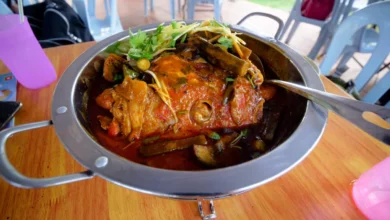
Operating on a weight-based selection system, patrons inspect fresh daily catches displayed on trays—ranging from stingray (ikan pari) and squid to tiger prawns—before choosing a specific preparation style. The defining characteristic of the establishment is its application of a spiced chili sambal directly onto the seafood as it cooks over open coconut-shell charcoal embers.
The high heat causes the outer layer of the sambal to caramelize into a semi-translucent, jam-like glaze that seals in the moisture of the fish while imparting a smoky, pungent, and mildly sweet flavor profile. Economists and food industry observers note that such seaside dining operations play a vital role in supporting local artisanal fishing communities, bridging the gap between small-scale marine harvesting and regional tourism economies.

Broader Socio-Economic Implications of Culinary Tourism in Melaka
The concentration of these diverse culinary traditions within a geographically compact municipality has profound economic and social implications for Melaka. Gastronomy tourism serves as a major catalyst for employment, real estate development in the hospitality sector, and the preservation of intangible cultural heritage.
State tourism boards and municipal planners increasingly recognize that traditional food establishments act as primary anchors for visitor retention, extending the average length of stay beyond standard sightseeing excursions. Furthermore, the multi-ethnic ownership structure of Melaka’s food sector—spanning Chinese coffee shop proprietors, Malay curry masters, and Peranakan dessert makers—reinforces the multicultural fabric that defines contemporary Malaysian identity. As global interest in authentic, regional cuisines continues to expand, Melaka’s culinary landscape remains a vital case study in how historical trade routes and multicultural synthesis can culminate in a vibrant, enduring modern food culture.