Anatomy of a Broken Safety Net: Inside the 2026 Food Recalls and the Vulnerabilities Threatening the U.S. Food Supply

The summer of 2026 will long be remembered by public health officials and consumers alike as a grueling period of profound uncertainty regarding the safety of the American food supply. Marked by a relentless succession of high-profile contamination events—ranging from a record-shattering cyclosporiasis outbreak linked to iceberg lettuce to persistent listeria strains in pork products and unexpected E. coli detections in frozen blueberries—the season strained consumer trust to a breaking point. Across social media, dark humor and viral memes surrounding gastrointestinal distress served as a coping mechanism for a broader, deeply felt anxiety: a mounting skepticism toward the complex regulatory apparatus tasked with keeping the nation’s dinner plates safe.
In a functioning ecosystem of public health, end-of-the-line product recalls are designed as a fail-safe, utilized only when a hazard slips past preliminary defenses. Yet, in the summer of 2026, these reactive measures frequently felt less like safety nets and more like the primary mode of hazard management. A convergence of regulatory rollbacks, federal budget constraints, and industry pushback left food safety agencies visibly short-staffed and structurally compromised, casting a harsh spotlight on systemic vulnerabilities that have been widening for years.
The Anatomy of Modern Food Recalls: Categories and Triggers
To understand how contaminated or mislabeled items reach store shelves, one must first examine the mechanics of why products are recalled. Food recalls are generally initiated when a health hazard or regulatory non-compliance is identified, prompting manufacturers, distributors, or federal agencies to remove the item from circulation.
Pathogens represent the most immediate danger. Bacteria such as E. coli and Salmonella, viral agents like norovirus, and parasites including Cyclospora can infiltrate the food supply chain at virtually any point, from agricultural fields and irrigation water to processing facilities and transportation vehicles. While routine facility inspections are meant to intercept these microorganisms early, many slip through until clinical surveillance flags a cluster of illnesses.
Physical contaminants constitute a second major category. Foreign objects frequently find their way into processed foods due to mechanical wear and tear on factory equipment. Metal shavings from degraded blades, fragments of hard plastic from conveyor belts, or shards of glass from broken packaging near production lines pose severe internal injury risks to consumers. Consequently, even the discovery of a microscopic piece of metal can trigger the recall of entire production lots.
Allergenic mislabeling forms a third distinct trigger. Federal regulations mandate that food manufacturers explicitly declare the presence of major allergens, including milk, eggs, fish, crustacean shellfish, tree nuts, peanuts, wheat, and soybeans. Formulation errors, cross-contamination during packaging, or incomplete ingredient lists on imported goods regularly result in undeclared allergens that can trigger life-threatening anaphylactic reactions in sensitive individuals.
Finally, administrative and regulatory non-compliance can precipitate recalls without an explicit contamination event. A failure to complete mandatory inspections for imported meats or procedural oversights in processing validation can force a precautionary recall, even if the food itself remains entirely safe to consume.
Regulatory Jurisdiction and the Chronology of Oversight
The governance of the American food supply is divided primarily between two federal entities, each operating under distinct mandates and resource constraints: the Food and Drug Administration (FDA) and the United States Department of Agriculture’s Food Safety Inspection Service (FSIS).
The FDA oversees approximately 80 percent of the U.S. food supply, encompassing everything from fresh produce and seafood to processed goods and dietary supplements. However, the agency faces an immense jurisdictional footprint with relatively sparse personnel, resulting in infrequent facility inspections and limited pre-market oversight. Conversely, the FSIS holds jurisdiction over meat, poultry, and processed egg products. Because these animal-derived products carry a heightened risk of harboring pathogens introduced during slaughter and butchering, federal law mandates continuous daily inspection of packing facilities and rigorous pre-market label approvals.
The chronology of a recall typically begins long before public announcements hit the news. The detection pathway generally follows one of three trajectories:
- Internal Quality Control: The manufacturing company identifies an irregularity during routine testing, equipment checks, or administrative audits and alerts regulators.
- Regulatory Discovery: Federal or state inspectors find positive pathogen tests or sanitation failures during a routine plant audit.
- Epidemiological Detective Work: State and local health departments, working in tandem with the Centers for Disease Control and Prevention (CDC), monitor disease surveillance networks. When case counts spike, epidemiologists interview affected patients to trace common consumption patterns, eventually isolating the commercial vehicle responsible.
Once an issue is substantiated, federal regulators evaluate the degree of risk and assign the recall to one of three official classes:
- Class I: A dangerous or defective situation where there is a reasonable probability that the use of, or exposure to, the product will cause serious adverse health consequences or death.
- Class II: A situation where the use of, or exposure to, a violative product may cause temporary or medically reversible adverse health consequences, or where the probability of serious adverse health consequences is remote.
- Class III: A situation where the use of, or exposure to, a violative product is not likely to cause adverse health consequences.
Regulatory Friction: When Companies Resist and Systems Stall
While the vast majority of food recalls proceed voluntarily—as corporations rush to protect their brand equity and limit liability—the system experiences severe friction when companies dispute findings or delay compliance.
Under current statutory limits, the FSIS lacks the explicit authority to order a mandatory recall of meat or poultry products, relying instead on voluntary cooperation backed by the threat of product detention or seizure. The FDA possesses explicit mandatory recall authority, but it is legally restricted to situations where there is credible, robust evidence that a food product presents a Class I hazard and the manufacturer has refused a voluntary request. Consequently, mandatory recalls remain exceedingly rare, functioning primarily as a statutory backstop.
This friction was starkly illustrated in April 2026, when the FDA requested that Raw Farm, a producer of unpasteurized milk and cheeses, recall its raw cheddar after epidemiological evidence tied the product to an outbreak of E. coli infections resulting in multiple hospitalizations. Raw Farm initially declined, arguing that internal testing of retained samples had not yielded the exact matching bacterial strain. Although subsequent facility inspections by federal investigators revealed profound sanitation failures, prompting a second and ultimately successful recall request, the company publicly maintained its innocence. Public health advocates and congressional critics argued that the delay left contaminated cheese on store shelves for weeks longer than necessary, exposing structural inertia within federal oversight tools.
Similar administrative bottlenecks hampered the response to the summer’s massive cyclosporiasis outbreak. Health investigators in Michigan experienced multi-week delays in obtaining necessary distribution records from corporate entities. Public health experts noted that these delays could have been significantly curtailed had the federal government not blocked a proposed rule requiring food companies to submit requested traceback data to authorities within 24 hours—a regulation heavily lobbied against by agricultural trade groups citing undue administrative burdens.
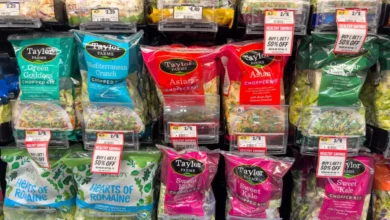
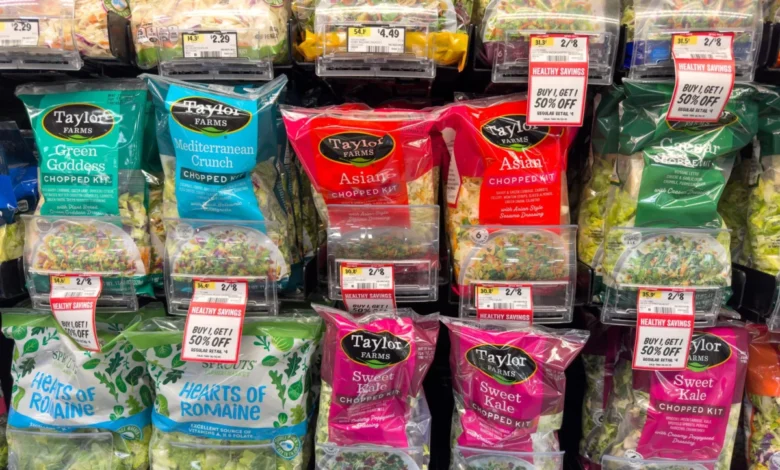
Furthermore, communication missteps during active outbreaks compounded consumer confusion. Following initial reports implicating iceberg lettuce from Taylor Farms de Mexico, subsequent preliminary positive test results were walked back by the FDA as false positives. The company’s aggressive public relations push following the correction created the misleading impression that the regulatory agency had entirely cleared the supply chain while the true source of the outbreak remained opaque. The resulting public confusion caused a broad, unwarranted drop in fresh produce consumption as terrified consumers generalized the risk across unrelated agricultural sectors.
Systemic Vulnerabilities and the Debate Over Recall Frequency
Public health analysts remain divided on whether the surge in high-profile recalls during 2026 reflects an actual degradation of food safety standards or simply a more aggressive, technologically sophisticated detection apparatus. Proponents of the latter view argue that modern genetic sequencing, whole-genome tracking, and enhanced corporate testing protocols allow regulators and companies to catch contamination events that previously would have gone entirely unnoticed.
Conversely, consumer advocacy groups and policy analysts point directly to recent federal budget cuts, staff attrition within regulatory agencies, and the systematic rollback of transparency mandates as the primary drivers of increased vulnerability. By trimming funding for continuous monitoring programs and rescinding rules designed to force corporate transparency, oversight bodies have been left with widening blind spots.
Consumer Guidance: Navigating Recalls in Real-Time
For the average consumer navigating the modern grocery landscape, the constant barrage of recall alerts can induce profound food fatigue. However, public health experts emphasize that most recalls are highly targeted and do not signify systemic collapse across entire food groups.
When a recall is announced, consumers should take measured, deliberate steps rather than resorting to indiscriminate disposal:
- Verify Specifics: Consult official databases maintained by the FDA or USDA FSIS to check exact brand names, universal product codes (UPCs), lot numbers, and expiration dates. Recalls cast intentionally wide safety nets; a recall affecting a broad category like chicken or lettuce only applies if the specific identifiers match the purchased item.
- Evaluate the Hazard: If a product is recalled due to a pathogen or physical contaminant, it should be immediately discarded or returned to the point of purchase for a full refund. However, if a recall stems from an undeclared allergen that does not pose a personal health risk to anyone in the household, the food can technically be consumed safely, though returning it remains an option.
- Practice Defensive Kitchen Hygiene: Because foodborne illnesses can occasionally enter circulation before a formal recall is issued, foundational kitchen safety remains an indispensable final layer of defense. Proper handwashing, rigorous sanitization of cutting boards and food-contact surfaces, and cooking meats and produce to recommended internal temperatures significantly reduce—even if they cannot entirely eliminate—the risk of foodborne infection.
As the agricultural and regulatory sectors grapple with the fallout of 2026, the imperative for structural reform remains clear. Until systemic gaps in data sharing, agency funding, and proactive enforcement are addressed, the burden of navigating the safety of the American pantry will continue to fall disproportionately on an increasingly anxious consuming public.