Exploring Wat Phu Tok: Thailand’s Most Daring Architectural and Spiritual Marvel

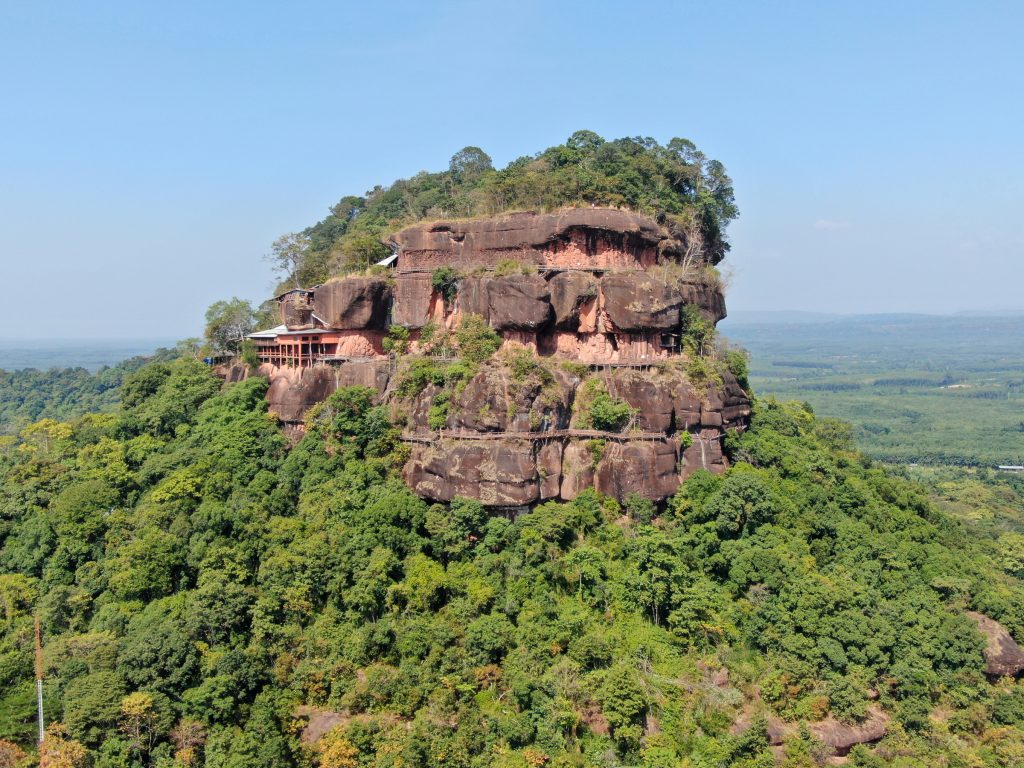
Rising abruptly from the flat agricultural plains of Thailand’s remote northeastern Isan region, Wat Phu Tok stands as one of the most remarkable architectural and spiritual achievements in Southeast Asia. Officially designated as Wat Jetiyakhiri, this extraordinary mountainside temple complex challenges gravity and engineering norms, offering visitors a harrowing yet profoundly meditative journey up a 359-meter isolated red rock monolith. Located in Bueng Kan province—one of the country’s least commercialized and most tranquil administrative districts—the site attracts travelers seeking to step off the conventional tourist grid to experience a seamless fusion of nature, architecture, and Buddhist philosophy.
Main Facts of the Complex
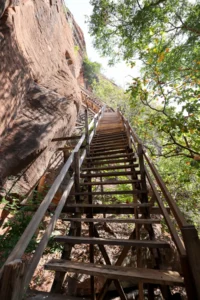
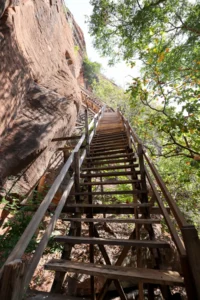
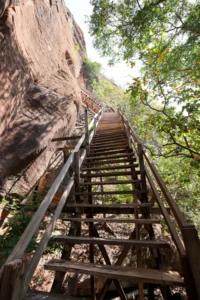
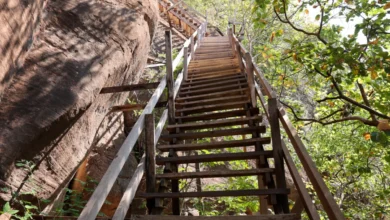
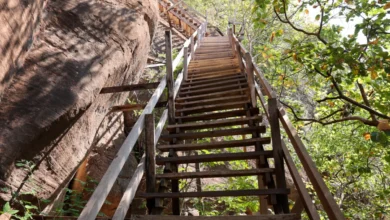
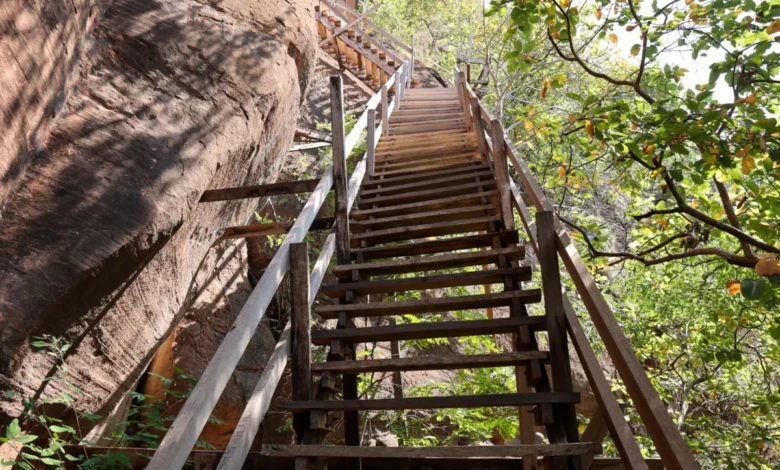
Wat Phu Tok, derived from the local Isan dialect where "Phu Tok" translates directly to "lonely mountain," is defined primarily by its intricate network of wooden staircases, ladders, and cliff-hanging walkways. Constructed entirely around a massive sandstone inselberg, the temple was engineered to mirror the seven stages of Buddhist enlightenment, culminating in a summit traditionally associated with ascetic meditation and natural isolation.

The site is anchored by a spacious lower level featuring a prominent temple, a serene lake, and landscaped parklands that serve as a welcoming hub for visitors before they embark on the ascent. The physical climb spans seven distinct tiers, each serving a specific structural and spiritual purpose. While the lower levels feature ground-level pathways and modest shrines, the upper tiers—particularly the fifth and sixth levels—transform into complex labyrinths of cantilevered wooden planks securely anchored directly into the vertical rock face. These suspension pathways afford panoramic views of the surrounding Mekong River basin and the dense, verdant canopy of Bueng Kan province.
Chronology and Historical Development

The history of Wat Phu Tok is rooted in the traditions of Thai forest Buddhism, a movement that emphasizes isolation, asceticism, and communion with untamed nature. For generations, the rugged terrain and dense flora of the isolated sandstone mountain rendered it largely impassable, save for local wildlife, notably populations of indigenous snakes that historically inhabited the rocky crevices.
The transformation of the lonely mountain into a functioning monastic sanctuary began under the vision of the revered monk Luang Pu Juan. Recognizing the psychological and spiritual benefits of the mountain’s challenging environment, the monk spearheaded the arduous construction project. Monks, local laborers, and devout followers collaborated to manually build the original wooden staircases, ladders, and scaffolding systems that interconnected natural caves, overhangs, and meditation platforms.

The project was systematically divided into seven vertical levels, directly corresponding to the Abhidhamma philosophy outlining the seven mental stages required to transcend worldly attachments and achieve spiritual purity. Despite the tragic death of founder Luang Pu Juan in a historic aviation accident, the temple has continued to operate under the stewardship of successive monastic communities. Ongoing maintenance ensures that the intricate wooden scaffolding remains structurally sound, preserving both a sacred site of worship and a monumental feat of vernacular civil engineering.
Supporting Data and Structural Analysis

Geologically, the mountain is a prominent sandstone formation reminiscent of larger regional inselbergs, often drawing architectural comparisons to Sigiriya in Sri Lanka, albeit on a more intimate, vertical scale. Situated approximately a 30-minute drive from Bueng Kan city, the temple grounds experience seasonal shifts in visitor volume, peaking during the dry season from November to February when weather conditions are most favorable for climbing.
Architecturally, the ascent is categorized by distinct engineering phases:

- Levels 1 to 4: Transition from ground-level forest trails to increasingly steep wooden staircases and angular ladder structures that test the physical endurance of climbers.
- Level 5: Serves as the primary plateau of the complex, housing the principal ordination hall, numerous administrative shrines, and expansive ground-level walking paths that deviate into isolated rock-cut alcoves and secondary suspension bridges.
- Level 6: The architectural centerpiece of Wat Phu Tok. Approximately half of this tier’s circumference is composed of cantilevered wooden walkways bolted directly into vertical sandstone cliffs. Engineering assessments and routine maintenance prioritize the replacement of weathered timber planks to support thousands of annual visitors.
- Level 7: The apex of the mountain, characterized by natural terrain rather than constructed platforms. Historically monitored for the presence of venomous fauna, the summit offers unobstructed meteorological and geographical visibility across the Indochinese borderlands.
Official Responses and Conservation Management
Local administrative bodies in Bueng Kan province, in cooperation with the National Office of Buddhism and regional tourism authorities, oversee the sustainable management of Wat Phu Tok. Recognizing the delicate balance between promoting regional tourism in Isan and preserving a functioning monastic residence, officials enforce respectful behavioral guidelines for all visitors.

Conservation efforts focus heavily on structural safety audits of the wooden boardwalks. Given the extreme vertical exposure of the sixth level, monastic caretakers and municipal engineers conduct periodic reviews of the anchor bolts, support beams, and handrails to mitigate structural degradation caused by tropical weathering, monsoon rains, and seasonal temperature fluctuations. Furthermore, regional development strategies aim to integrate Bueng Kan’s off-the-beaten-path attractions into broader infrastructural plans, improving road access from major transit hubs while preserving the inherent tranquility and ecological integrity of the surrounding forest reserves.
Broader Impact and Socio-Economic Implications

The ongoing prominence of Wat Phu Tok carries significant socio-economic implications for Bueng Kan, which was established as Thailand’s 77th province in 2011. Historically reliant on agriculture, rubber production, and cross-border trade with Laos, the province has increasingly leveraged unique cultural and ecological assets to diversify its regional economy through sustainable tourism.
As travelers increasingly seek out remote destinations that avoid the over-tourism characteristic of Thailand’s southern coastal islands and major urban centers, sites like Wat Phu Tok provide a vital economic stimulus for local hospitality, transportation, and small-scale enterprise. Simultaneously, the temple reinforces the cultural identity of the Isan region, highlighting vernacular engineering traditions and the enduring legacy of Thailand’s forest monk lineage. By offering a rigorous physical journey tied directly to metaphysical philosophy, Wat Phu Tok transcends its status as a mere tourist attraction, functioning instead as a living monument to human perseverance, architectural ingenuity, and spiritual introspection.