The Mathematics of Bread: How Exponential Growth and Lockdown Baking Saved Our Kitchens

The global lockdowns of recent years triggered unprecedented societal shifts, upending supply chains and forcing millions indoors. While the public health sphere became intensely familiar with the ominous mechanics of exponential viral spread, a quiet, parallel phenomenon was taking place in domestic kitchens. As grocery store shelves were stripped of essentials—most notably dried yeast—home bakers faced a sudden scarcity of baking agents. Yet, beneath this localized panic lay a fundamental biological reality: the extraordinary, compounding reproductive capacity of yeast. By harnessing the mathematical principles of exponential growth, resourceful home cooks discovered that a mere fraction of a standard yeast sachet could yield entire loaves of bread, transforming a potential culinary crisis into a masterclass in kitchen science.
The Lockdown Baking Boom and Supply Chain Pressures
The sudden surge in domestic baking observed during early COVID-19 lockdowns was unprecedented. Confined to their homes with cancelled social engagements and remote work arrangements, consumers turned to scratch cooking as both a psychological coping mechanism and a practical pursuit. Supermarkets across Europe and North America reported extraordinary spikes in the sale of baking staples. In Norway, for instance, commercial yeast supplies vanished from grocery store shelves for weeks and, in some regions, months on end.
This panic buying created an artificial scarcity that mirrored other supply chain disruptions of the era. However, unlike toilet paper or canned goods, yeast is a living organism capable of self-replication. While commercial manufacturers ramped up production to meet the unprecedented demand, individual households quickly realized that traditional baking recipes—often calling for excessive amounts of commercial yeast for rapid results—were profoundly inefficient. The crisis prompted a widespread re-evaluation of how home bakers utilized commercial yeast, shifting the focus from speed to biotechnology and time management.
The Science of Exponential Growth: From One Cell to a Trillion
To understand how a dwindling supply of instant dry yeast could sustain months of baking, one must examine the mathematics of microbial reproduction. Exponential growth occurs when a quantity increases by a fixed percentage over a given interval. In the case of Saccharomyces cerevisiae—commonly known as baker’s yeast—ideal environmental conditions involving adequate nutrients, oxygen, and optimal temperatures allow a single cell to undergo mitosis and split into two distinct cells approximately every 100 minutes.
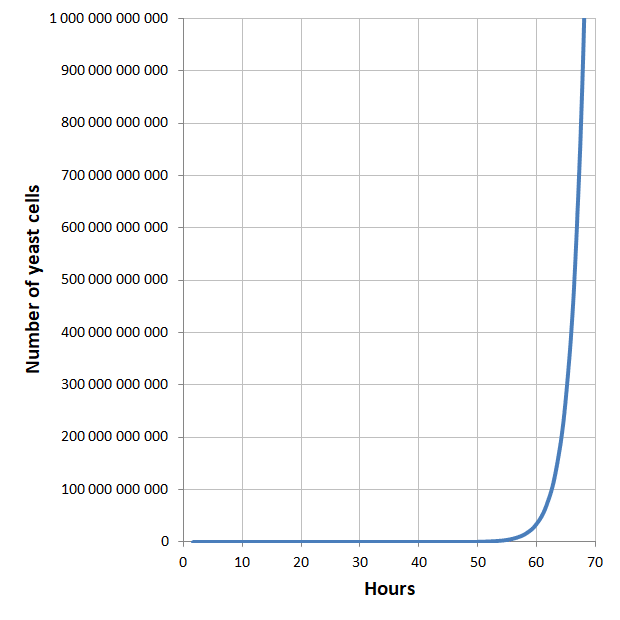
This biological life cycle operates on a compounding scale that frequently defies human intuition, much like the classic wheat and chessboard problem. Within the span of a single 100-minute cycle, one cell becomes two. After two cycles, or roughly 200 minutes, those two cells become four. While the initial progression appears slow and negligible, the compounding effect accelerates rapidly:
- Initial State (0 hours): 1 cell
- After 24 hours (~14.4 cycles): ~16,000 cells
- After 48 hours (~28.8 cycles): ~268 million cells
- Before 72 hours (~43.2 cycles): ~1 trillion (1,000,000,000,000) cells
To put this numerical progression into perspective, a standard 50-gram block of compressed commercial yeast contains roughly one trillion cells. Under perfect laboratory conditions, a single isolated yeast cell can replicate to match the mass of a commercial block in less than three days. While commercial yeast production facilities meticulously manage these parameters to manufacture bulk yeast efficiently, actual bread doughs operate under slower, more constrained environmental conditions due to salt concentrations, temperature fluctuations, and finite nutrient availability. Nevertheless, the underlying principle remains: far fewer yeast cells are required to leaven a loaf of bread than traditional recipes typically suggest.
Precision Baking: Leveraging Micro-Measurements and Digital Tools
Recognizing the immense reproductive potential of yeast, modern home bakers began adopting techniques historically reserved for artisanal pizzerias and commercial laboratories. Rather than dumping an entire 12-gram sachet of instant dry yeast into a single batch of dough—a practice common in hasty, traditional home-baking recipes—micro-baking techniques prioritize prolonged fermentation powered by minuscule quantities of yeast.
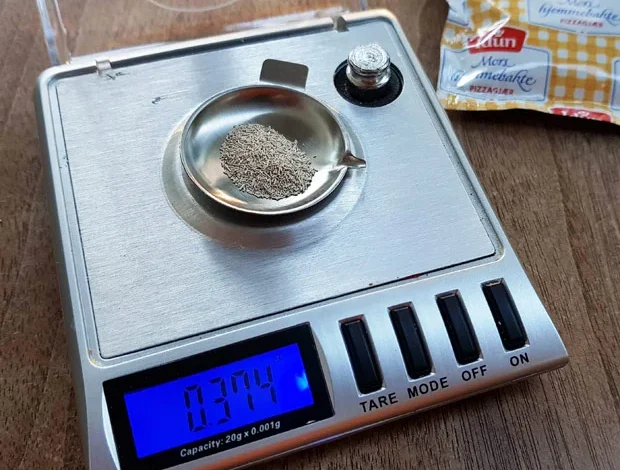
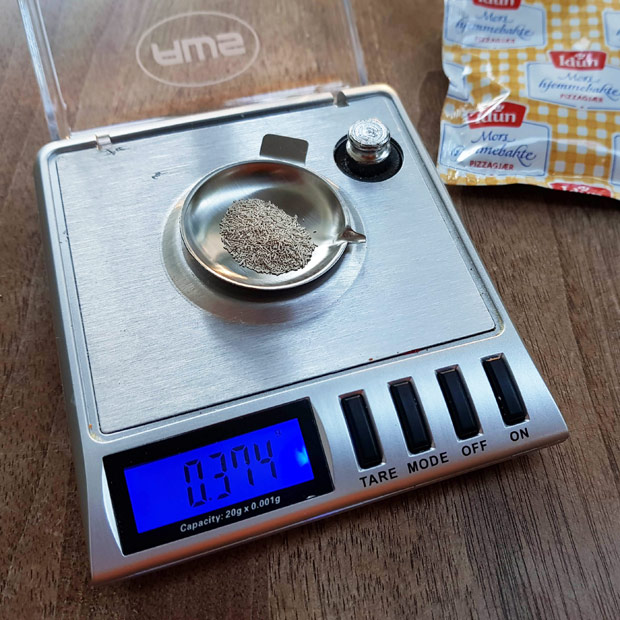
Achieving this requires precise measurement tools. Digital kitchen scales capable of reading down to 0.001 grams have become increasingly accessible and affordable, moving out of laboratory settings and onto domestic countertops. By utilizing these precision instruments, bakers can accurately portion fractions of a gram of dry yeast to suit extended fermentation schedules.
Digital calculators and applications have further democratized this scientific approach to baking. Tools such as PizzApp+ (available for Android devices) allow users to input specific variables—including flour weight, ambient room temperature, and desired bulk fermentation time—to calculate the exact quantity of yeast required. For example, a standard direct dough formulated with one kilogram of wheat flour requires a mere 0.48 grams of instant dry yeast when subjected to a 20-hour bulk fermentation at a stable temperature of 20°C (68°F).
Biochemical Implications: Flavor, Digestibility, and Sourdough Parallels
The shift toward extended fermentation using minimal yeast quantities offers profound advantages that extend far beyond simply conserving pantry supplies. When dough is allowed to ferment slowly over 18 to 24 hours rather than being rushed through a two-hour rise, secondary biochemical reactions take place.
During prolonged bulk fermentation, wild lactic acid bacteria naturally present in the flour or environment have adequate time to multiply and metabolize carbohydrates. These bacteria produce organic acids, including lactic and acetic acid, which significantly lower the pH of the dough. This controlled acidification contributes complex flavor profiles reminiscent of traditional sourdough breads, moving away from the one-dimensional taste of rapidly forced commercial yeast doughs.
Furthermore, extended enzymatic activity—specifically the breakdown of complex starches and proteins by amylases and proteases—improves the overall digestibility of the final baked product. Gluten proteins undergo partial pre-digestion by natural enzymes during the extended rest period, making the bread easier for the human digestive system to process.
While the global lockdown also sparked a massive resurgence in wild sourdough cultivation—eliminating the need for commercial yeast entirely—sourdough maintenance demands consistent feeding schedules and daily attention. For many consumers balancing remote work and domestic responsibilities, the allure of instant dry yeast combined with extended fermentation represented the ideal hybrid: the operational convenience of commercial yeast coupled with the complex flavor development of slow artisanal baking.
Broader Economic and Cultural Impacts on Domestic Culinary Habits
The intersection of pandemic lockdowns, supply chain vulnerabilities, and accessible kitchen technology has permanently altered domestic cooking habits. Consumer goods analysts note that the culinary skills acquired during the 2020–2021 lockdowns have persisted long after grocery store shelves replenished their stocks of commercial yeast and flour.
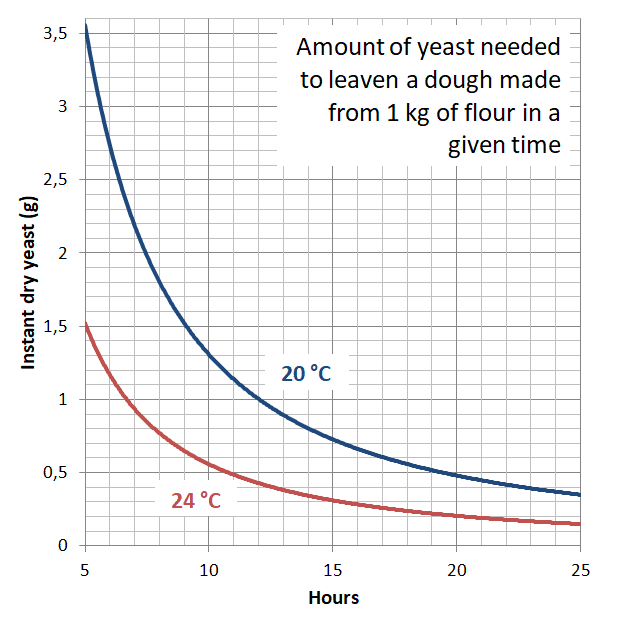
Culinary educators and food scientists view this shift as a positive evolution in consumer literacy. By demystifying the biological processes underlying baking, everyday cooks transitioned from following rigid, imprecise recipes to understanding the fundamental interplay between time, temperature, biology, and chemistry. The realization that a single sachet of dry yeast could theoretically be stretched to produce dozens of loaves—provided the baker was willing to let time do the heavy lifting—demonstrated the tangible value of scientific literacy in the domestic sphere.
Ultimately, the humble yeast sachet served as an unexpected educational tool during a period of global crisis. By observing the exponential growth of microbial life in dough, consumers gained a visceral, practical appreciation for exponential mathematics—a concept that, while challenging to grasp intuitively, proved essential for understanding both viral epidemiology and successful home baking.