The culinary traditions of the Middle East offer an extraordinarily rich tapestry of flavors, textures, and aromas, deeply rooted in centuries of cultural history, trade, and communal celebration. While Western baking often relies heavily on standard combinations of vanilla, chocolate, and wheat flour, Middle Eastern patisserie introduces a sophisticated palette featuring floral waters, fragrant spices, toasted nuts, and alternative flours. From the bustling sweet shops of Istanbul and Damascus to family kitchens preparing for festive seasons, regional biscuits and cookies serve as both daily accompaniments to coffee or tea and centerpieces of hospitality.
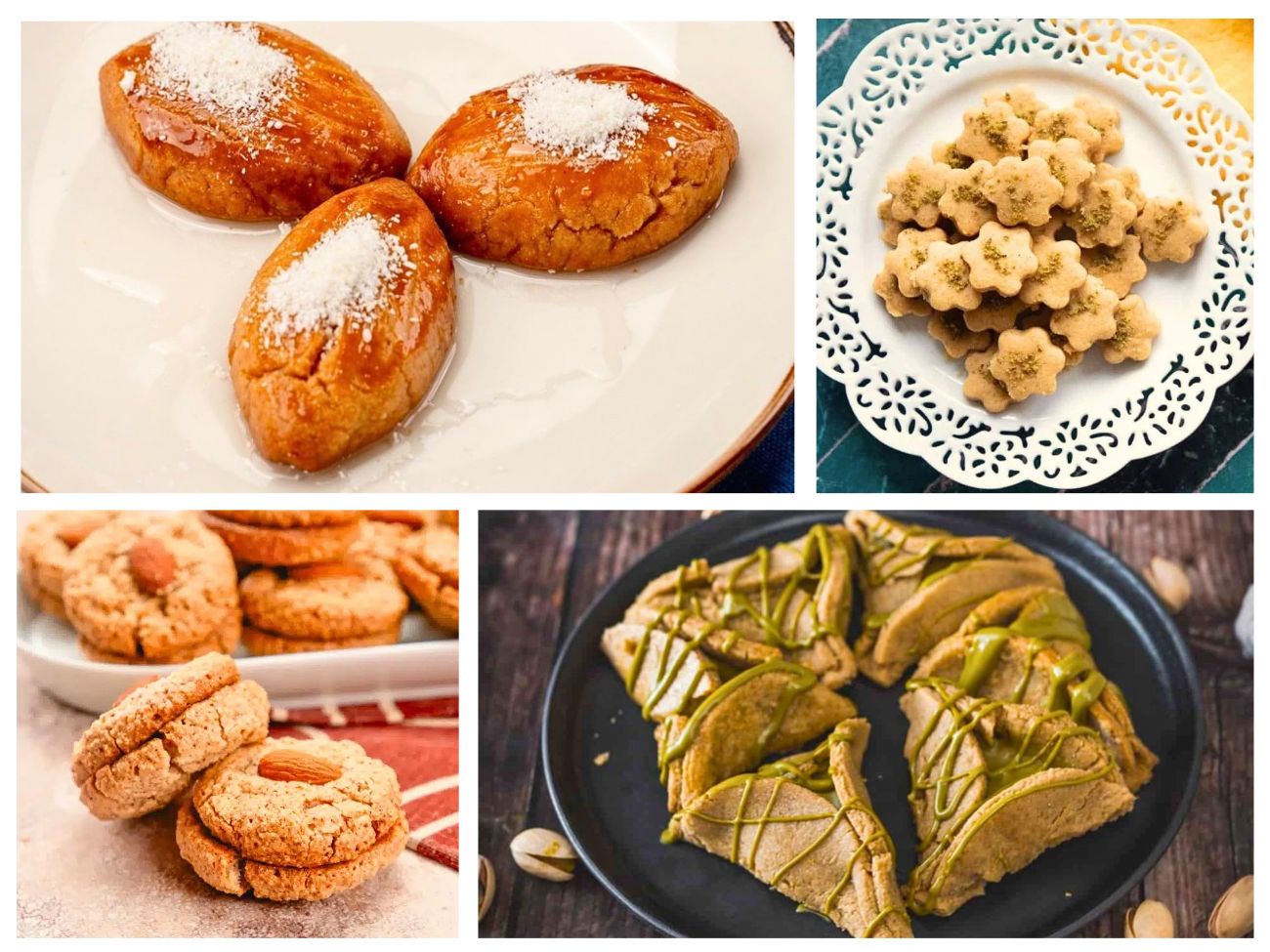
An examination of regional baking traditions reveals that these confections are far more than simple desserts. They are cultural artifacts that reflect historical trade routes, agricultural realities, and religious observances. Whether consumed during major holy periods such as Ramadan, Eid al-Fitr, and Nowruz, or enjoyed casually on an ordinary afternoon, these twelve distinct varieties of Middle Eastern cookies and biscuits demonstrate remarkable versatility, technical precision, and diverse flavor profiles.
Historical Context and Cultural Significance of Middle Eastern Confectionery
The evolution of Middle Eastern baking is closely tied to the region’s agricultural heritage and historical position as a nexus of global trade. Ingredients such as sesame seeds, dates, pistachios, almonds, and aromatic spices have been cultivated and traded across the Levant, Mesopotamia, Persia, and Anatolia for millennia. Spices like cardamom, introduced via ancient trade links with South Asia, and floral essences such as rose water and orange blossom water, perfected through early distillation techniques in the Islamic Golden Age, became foundational elements of regional flavor profiles.
In many Middle Eastern cultures, preparing and sharing sweets is an essential expression of hospitality, social bonding, and community solidarity. During religious and secular holidays—including Islamic celebrations like Eid, Jewish holidays like Purim, and Persian festivities like Nowruz—households traditionally prepare vast quantities of specialized cookies to offer visiting guests. This practice underscores a broader cultural ethos where generosity and the sharing of food symbolize respect, friendship, and communal harmony. Furthermore, the longevity and shelf-stability of many traditional biscuits—often achieved through the use of clarified butter (ghee) or high concentrations of nuts and seeds—historically made them ideal provisions for travelers and preservation during warmer months.

Detailed Profiles of Regional Varieties
-
Şekerpare: The Syrupy Pastry-Cookie Hybrid
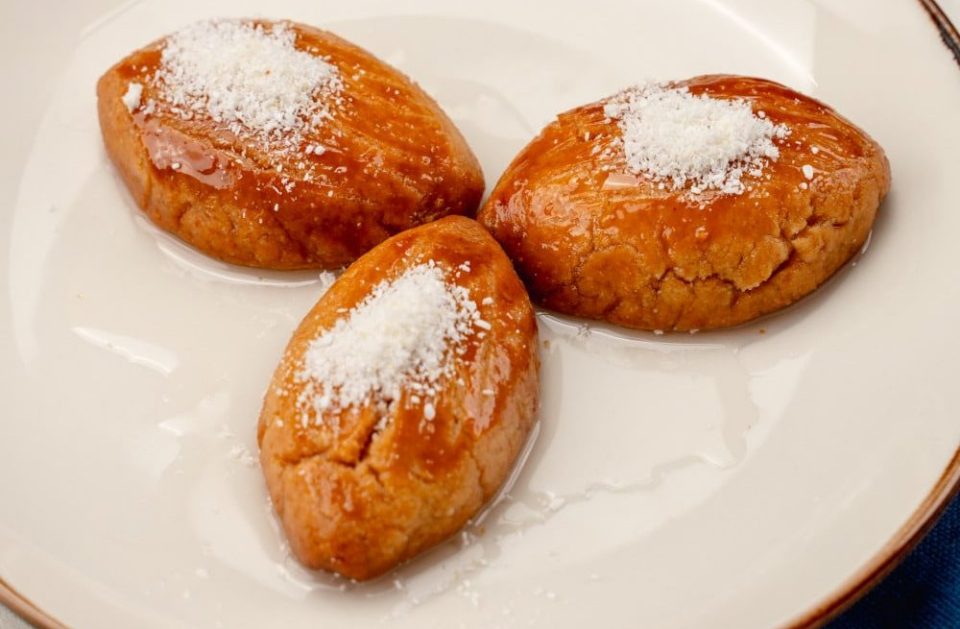
Originating from the culinary traditions of Turkey, Şekerpare occupies a unique classification between a traditional cookie and a syrup-soaked pastry. The base dough typically incorporates flour, semolina, butter, eggs, and sugar, yielding a dense, slightly crumbly texture. Once baked to a deep golden brown, the hot pastries are immediately submerged in a warm, citrus-infused sugar syrup. Over a period of several hours, the baked dough absorbs the liquid, resulting in a moist, melt-in-the-mouth consistency. Standard presentations often feature a blanched almond, pistachio, or a dusting of desiccated coconut pressed into the center prior to baking, providing a contrasting textural crunch.
-
Maamoul: The Art of the Molded Date Cookie
Maamoul stands as one of the most widely recognized and culturally significant shortbread cookies across the Levant, the Arabian Peninsula, and surrounding regions. Traditionally shaped using intricately carved wooden molds—which impart specific geometric or floral designs indicating the filling inside—maamoul consists of a delicate, crumbly crust made from semolina or a blend of semolina and wheat flour, enriched with butter or ghee. The interior conceals a sweet paste made from minced dates, often seasoned with cinnamon or nutmeg, though walnut and pistachio variations are also common. While heavily associated with religious celebrations such as Easter, Eid, and Purim, these confections remain a staple accompaniment to morning coffee throughout the year. -
Acıbadem Kurabiyesi: Traditional Turkish Almond Macarons
While standard confectionery techniques generally strive to prevent cracking during baking, Acıbadem Kurabiyesi—traditional Turkish almond cookies—rely on surface cracking to achieve their characteristic appearance. Composed primarily of ground almonds or almond meal, sugar, and egg whites, these cookies share a structural lineage with European macarons. They are naturally gluten-free due to the absence of wheat flour. The resulting biscuits are dense, chewy on the interior, and crisp on the exterior, often featuring a single whole almond pressed into the top. In traditional Istanbul patisseries, two individual cookies are frequently adhered at the base with a dab of sugar paste, creating a substantial sandwich structure.
-
Barazek: Syrian Sesame and Pistachio Crisps
Hailing from Damascus, Syria, Barazek are exceptionally thin, crisp biscuits distinguished by their dual-textured presentation. One side of the cookie is densely packed with toasted sesame seeds and a hint of honey or sugar syrup, while the opposite side is typically embedded with finely chopped green pistachios. Achieving the correct balance requires careful temperature control during baking to maintain a pale, crisp structure without scorching the delicate sesame and nut oils. Barazek are traditionally served alongside bitter black coffee, providing a balanced flavor profile where the rich, nutty crunch cuts through the beverage’s intensity. -
Rose Pistachio Hamantaschen: A Cross-Cultural Fusion
Hamantaschen are triangular, filled pockets traditionally associated with the Jewish holiday of Purim, particularly within Ashkenazi communities. However, contemporary culinary exchange has generated innovative regional adaptations, such as the Rose Pistachio Hamantaschen. This variation bridges Eastern European pastry forms with Middle Eastern ingredients by incorporating rose water into the shortcrust dough and filling the triangular pocket with a rich, vibrant pistachio cream. Finished with a delicate drizzle and crushed nuts, this iteration highlights the adaptability of traditional festive foods in multicultural culinary landscapes.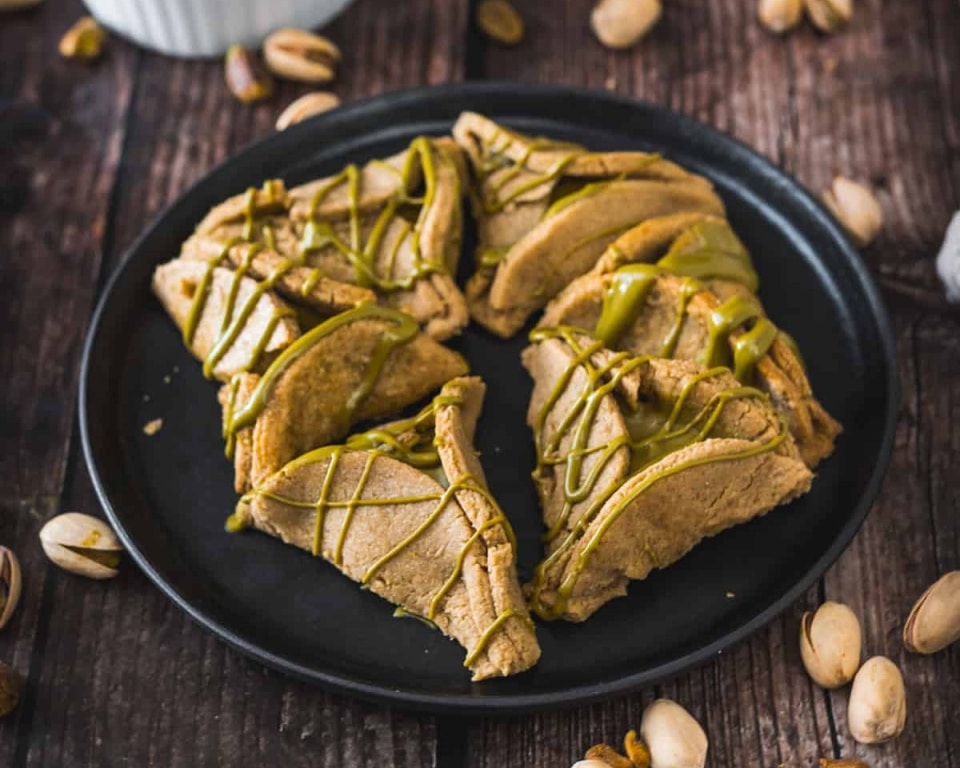
-
Nan-e Nokhodchi: Persian Roasted Chickpea Flour Cookies
Nan-e Nokhodchi are delicate, flower- or clover-shaped shortbread cookies that hold a central place during Nowruz, the Persian New Year. The defining characteristic of these cookies is the use of roasted chickpea flour (nokhodchi flour) in place of standard wheat flour. This ingredient imparts a distinct, nutty aroma and a remarkably fragile, melt-away texture that dissolves instantly upon consumption. Because chickpea flour lacks gluten, the dough is exceptionally delicate, requiring careful handling and complete cooling on the baking tray before transfer to prevent crumbling. Botanically and culturally, the clover shapes symbolize good fortune, renewal, and prosperity for the coming year. -
Ghorayeba: Egyptian Melt-in-the-Mouth Butter Cookies
Representing minimalism in Middle Eastern baking, Ghorayeba are traditional Egyptian shortbread cookies crafted from just a few fundamental components: flour, sugar, and clarified butter (ghee). Ghee is the critical determinant of quality, providing a distinct, rich flavor and a tender crumb structure that distinguishes Ghorayeba from Western butter cookies. Typically formed into small balls or rings and adorned with a single blanched almond or pistachio half in the center, these confections are baked at low temperatures to prevent browning, preserving their pale ivory color and delicate mouthfeel.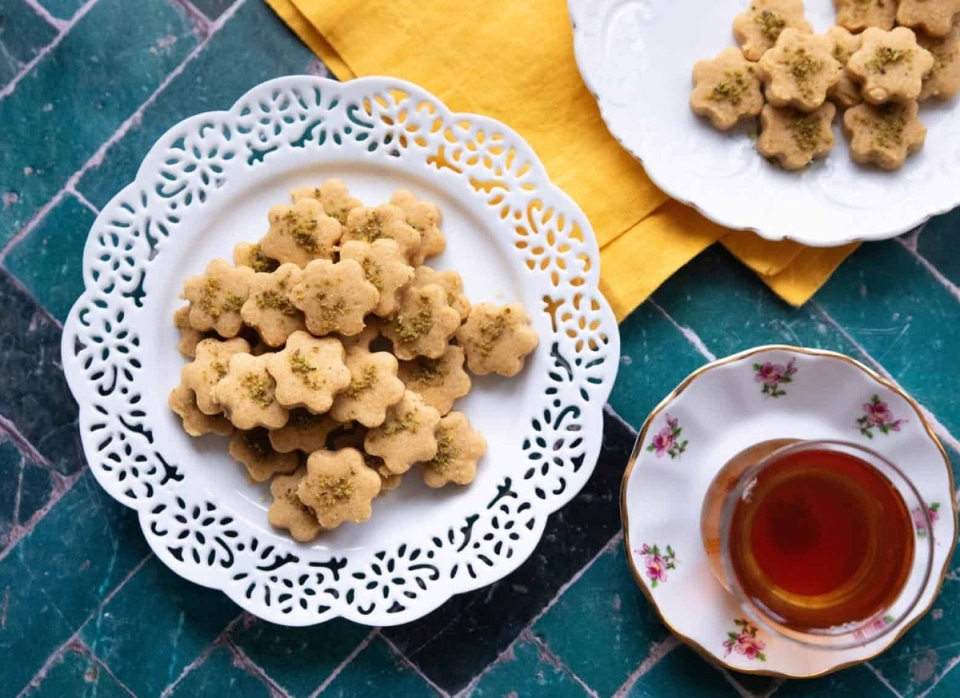
-
Elmalı Kurabiye: Turkish Apple-Filled Pastry Cookies
Elmalı Kurabiye translate literally to "apple cookies" in Turkish, functioning similarly to miniature, handheld fruit tarts. A dough comprising flour, butter, and yogurt or sour cream encloses a sweet, spiced filling made from grated apples, sugar, cinnamon, and chopped walnuts cooked down to a thick, jammy consistency. Shaped typically into crescents or logs, these cookies are baked until lightly golden and finished with a dusting of powdered sugar. A notable characteristic of Elmalı Kurabiye is their propensity to soften slightly over time when stored in an airtight container, making them an optimal make-ahead treat for household gatherings. -
Vegan Tahini and Lemon Cookies
Reflecting modern dietary adaptations while honoring traditional ingredients, Vegan Tahini and Lemon Cookies utilize sesame paste (tahini) as the primary fat source in place of butter or dairy. Tahini imparts an earthy, complex nuttiness that is brightened by the addition of fresh lemon zest and juice. Unlike the crumbly, shortbread-style textures prevalent in regional baking, these cookies are characteristically soft, chewy, and dense. They offer an alternative for individuals seeking plant-based options without sacrificing authentic Middle Eastern flavor profiles.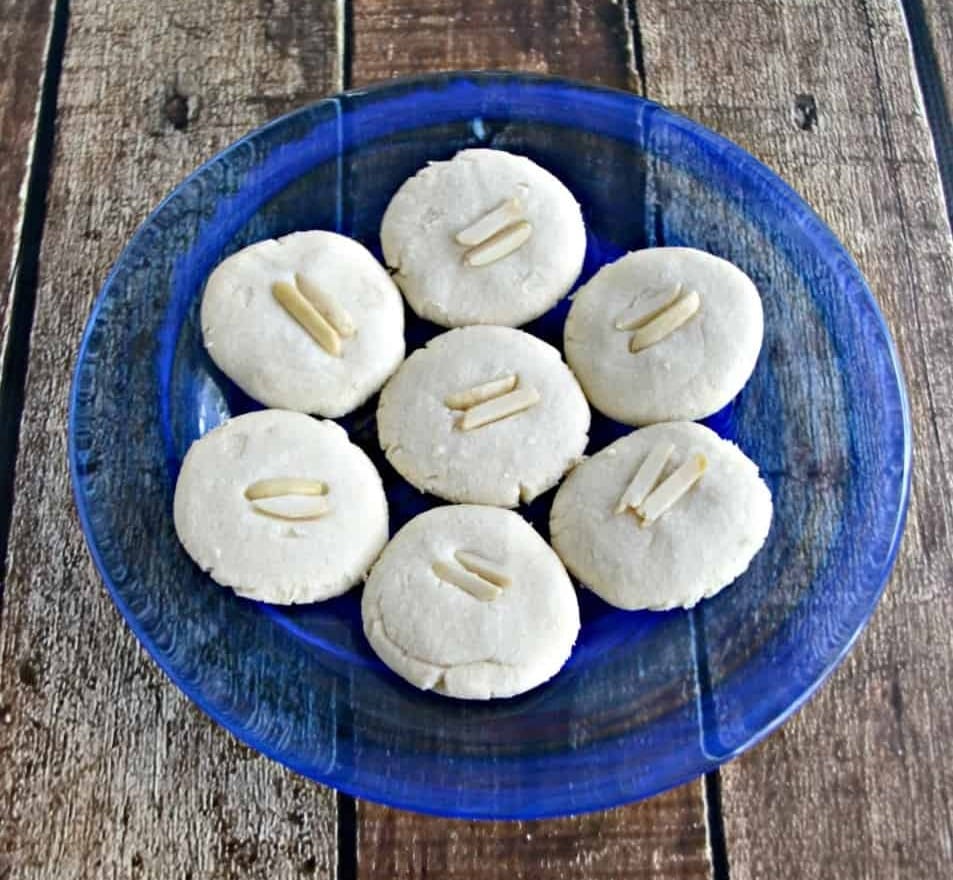
-
Un Kurabiyesi: Classic Turkish Flour Biscuits
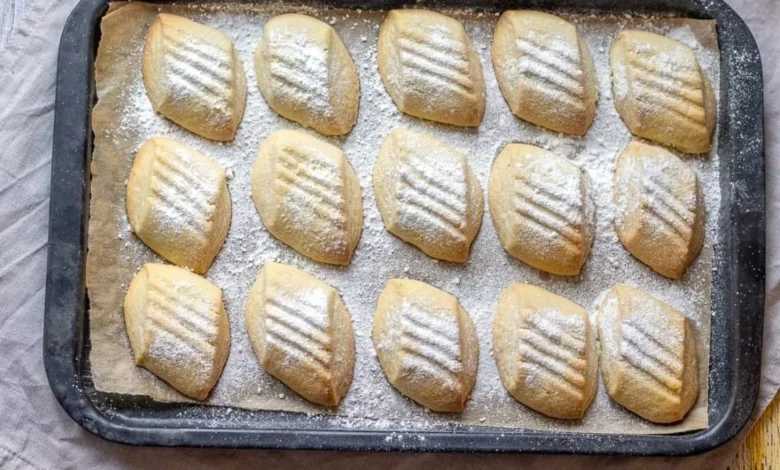
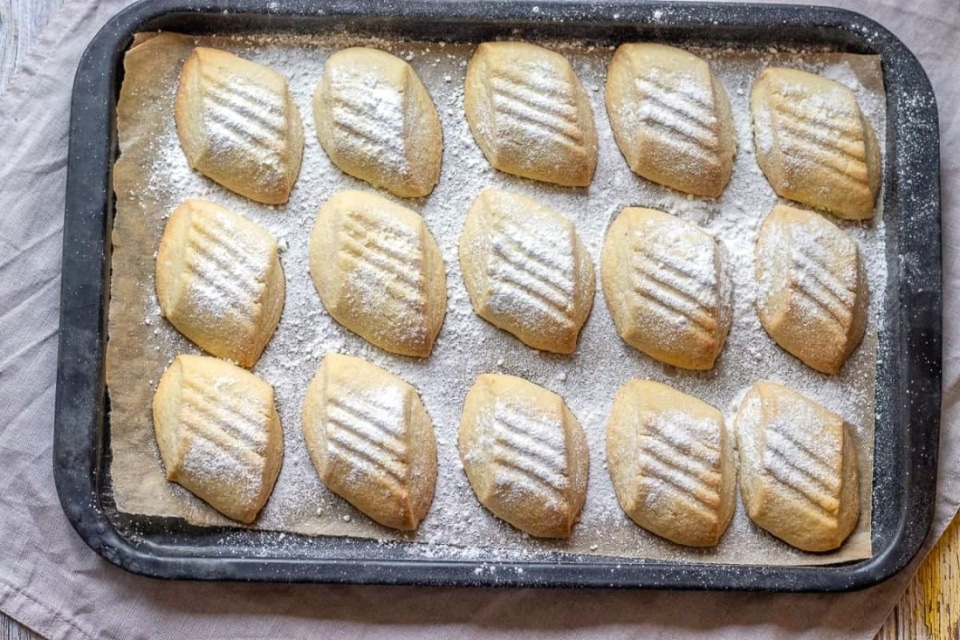
Un Kurabiyesi are classic Turkish shortbread biscuits celebrated for their stark white appearance and exceptionally crumbly texture. The dough is formulated with a high ratio of flour, butter, and powdered sugar, thoroughly kneaded and shaped into crescents, logs, or rounds. The baking technique requires strict temperature management; the biscuits are removed from the oven while still completely pale, avoiding any caramelization. While still warm, they are heavily coated in powdered sugar, creating a sweet exterior shell that protects the fragile, dissolving crumb within. -
Tuzlu Kurabiye: Savory Turkish Tea Biscuits
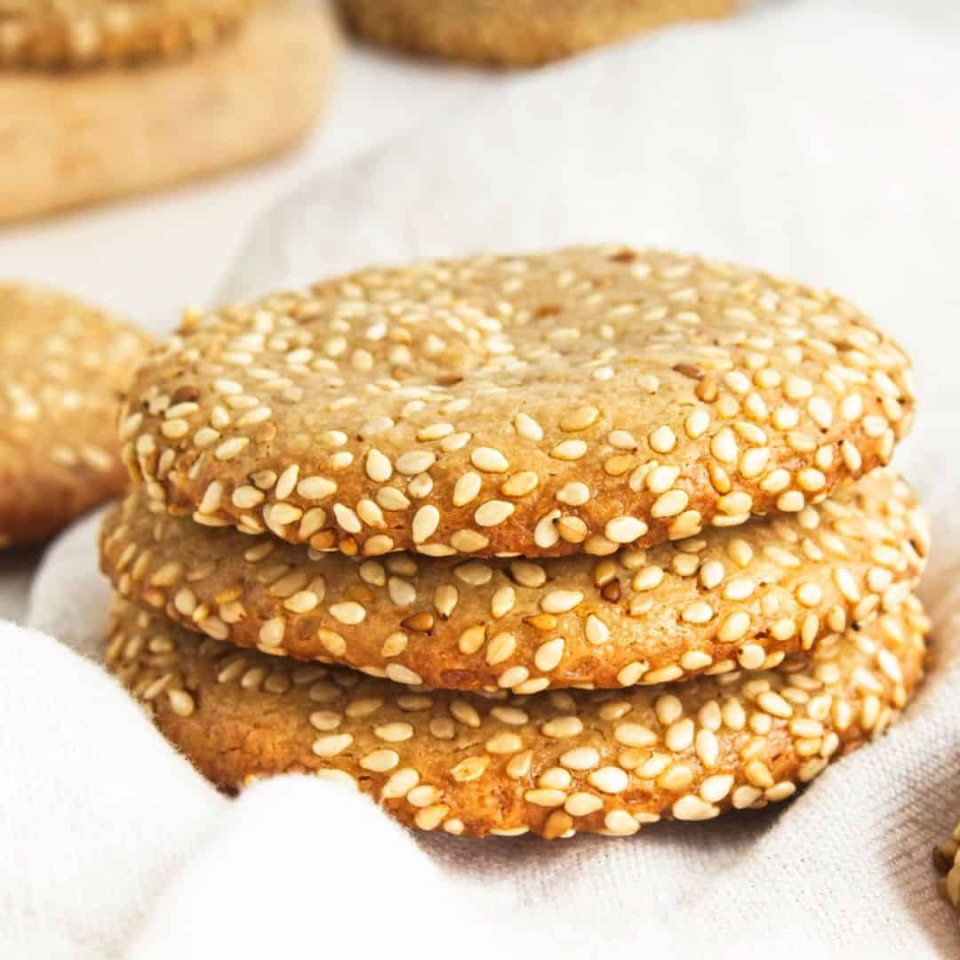
Challenging the assumption that all biscuits must be sweet, Tuzlu Kurabiye are savory, buttery Turkish cookies designed specifically to complement unsweetened black tea. The dough incorporates butter, oil, flour, vinegar—which acts as a tenderizer and contributes to the flaky texture—and salt. Encrunched in a mixture of white and black sesame seeds, these savory snacks offer a rich, crumbly bite with a prominent toasted seed flavor. Due to their lack of heavy sweetness and high fat content, Tuzlu Kurabiye possess an extended shelf life, remaining fresh in airtight containers for several weeks.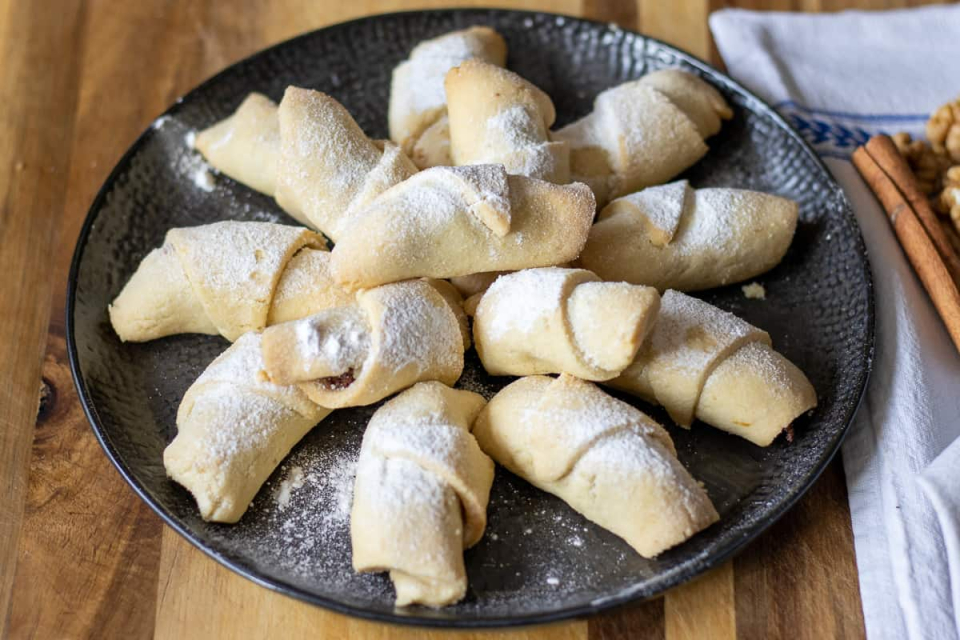
-
Almond Cardamom Cream Cheese Cookies
Almond Cardamom Cream Cheese Cookies represent an innovative synthesis of Middle Eastern spice profiles with Western baking techniques. Ground cardamom provides a warm, citrusy, and slightly herbal aroma that dominates the flavor profile, supported by almond extract and the moisture-rich structure of cream cheese. Prior to baking, the dough spheres are rolled in sliced almonds, which toast during the baking process to create a craggy, golden crust. A final application of powdered sugar yields a snowy appearance, rendering them popular for winter holiday spreads and formal afternoon tea services.
Economic and Industrial Implications of Regional Confectionery
The global appreciation for Middle Eastern baked goods has translated into significant economic activity, extending far beyond domestic kitchens and local bazaars. In recent years, commercial bakeries, specialty food importers, and artisanal patisseries in North America, Europe, and Australia have experienced rising demand for items such as maamoul, barazek, and tahini-based confections. This commercial expansion is driven by several demographic and consumer trends:
- Dietary Diversification and Multiculturalism: Multicultural urban centers have fostered broader consumer curiosity regarding international flavor profiles, moving traditional ethnic foods into mainstream retail markets.
- Demand for Alternative Ingredients: The inherent gluten-free properties of chickpea flour (used in Nan-e Nokhodchi) and almond flour (utilized in Acıbadem Kurabiyesi) align with modern consumer preferences for alternative grains and allergen-conscious baking.
- Plant-Based Innovation: The rise of veganism has spurred interest in traditional plant-based fats like tahini and olive oil within baking, validating historical recipes that predate modern industrial dairy production.
Market analysts note that the commercialization of these items requires careful balancing between mass-production efficiency and the preservation of authentic artisanal textures, particularly for delicate items like ghorayeba and un kurabiyesi that rely heavily on precise manual shaping and traditional fats.
Conclusion
Middle Eastern cookies and biscuits encapsulate a profound culinary heritage defined by technical refinement, aromatic complexity, and deep-seated cultural traditions. From the syrup-soaked indulgence of Turkish Şekerpare to the minimalist perfection of Egyptian Ghorayeba and the savory balance of Tuzlu Kurabiye, these confections demonstrate an extraordinary range of culinary expression. As global interest in regional cuisines continues to expand, these time-honored recipes maintain their dual role as daily comforts and central pillars of festive hospitality, bridging historical traditions with contemporary global palates.