Conquering Wat Phu Tok: A Journalistic Exploration of Thailand’s Most Vertiginous Mountain Temple

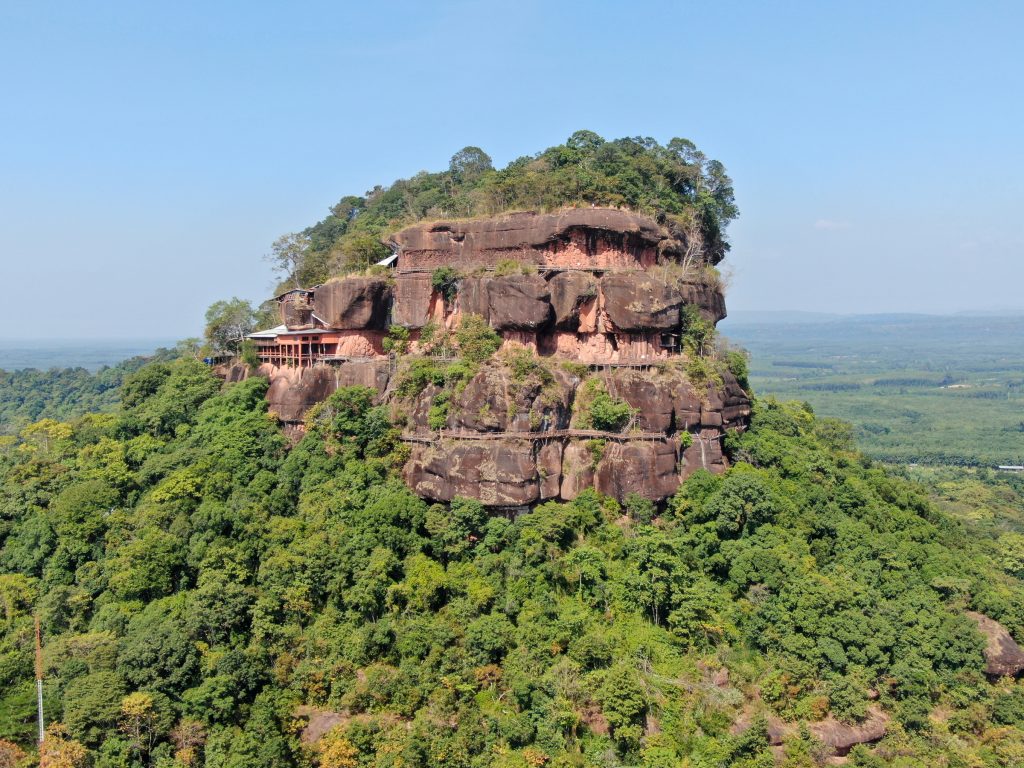
Nestled in the remote and verdant reaches of Thailand’s northeastern Isan region, the province of Bueng Kan remains one of the country’s best-kept secrets for travelers seeking solitude, nature, and unconventional architectural marvels. Far from the bustling tourist corridors of Bangkok, Chiang Mai, or the southern islands, Bueng Kan offers vast landscapes, endless horizons, and a slower pace of life. Yet, rising sharply from this tranquil expanse is one of the most daring engineering feats and spiritual sanctuaries in Southeast Asia: Wat Jetiyakhiri, widely known as Wat Phu Tok. Translating locally from the Isan dialect as the "Lonely Mountain," this 359-meter-high isolated quartzite outcrop challenges visitors with a labyrinth of vertical wooden staircases and cliff-hanging walkways designed to mirror the spiritual ascent to Nirvana.
Geographical and Historical Context
Wat Phu Tok is situated approximately 30 minutes by road from Bueng Kan city. Upon arrival, the abrupt emergence of the monolithic rock mountain from the flat surrounding terrain immediately draws comparisons to iconic global formations, such as Sigiriya in Sri Lanka. Historically, the rugged terrain, dense vegetation, and pervasive presence of venomous snake species rendered the mountain largely inhospitable to all but the most dedicated ascetics. However, these very elements—isolation, untamed nature, and inherent physical danger—made the site an ideal location for Buddhist meditation.

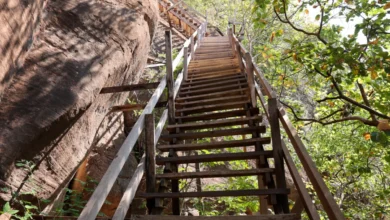
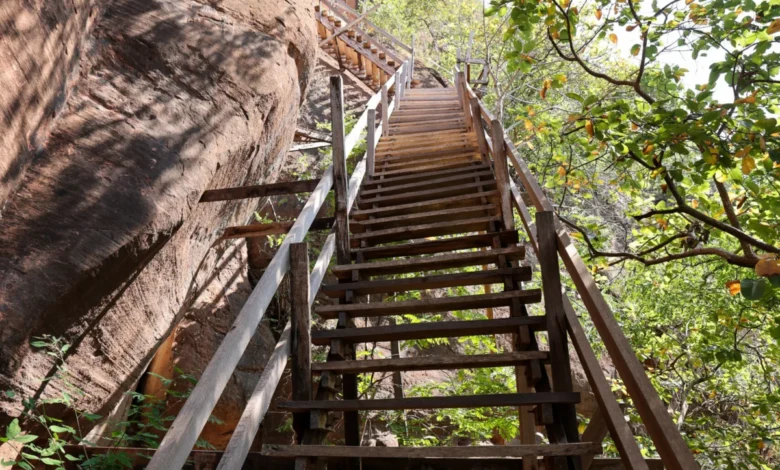
The transformation of the lonely mountain into a functioning sanctuary began under the visionary guidance of the revered forest monk Luang Pu Juan. Recognizing the potential for spiritual introspection amidst the wilderness, the monk initiated a massive infrastructure project. Laboring alongside local devotees and fellow monastics, Luang Pu Juan oversaw the construction of a complex system of wooden stairs, ladders, and scaffolding-style walkways. These pathways were meticulously engineered to navigate the sheer vertical faces of the rock, connecting natural caves, shrines, and designated meditation cells.
Architectural Evolution and the Seven Levels of Meditation

The structural layout of Wat Phu Tok is deeply symbolic, intentionally mirroring the seven stages of spiritual awakening in Buddhist philosophy. Each level of the mountain introduces varying degrees of physical difficulty and architectural complexity, culminating in a test of endurance and focus.
The ascent begins at the base of the mountain, where a large temple complex, a serene lake, and landscaped parklands welcome visitors. The trail transitions rapidly from a conventional dirt path into a series of wooden plank staircases. As climbers ascend past the initial lower levels, the gradient steepens significantly, eventually transforming into near-vertical wooden ladders anchored directly into the rock face. While the construction utilizes local timber that occasionally flexes underfoot, structural maintenance has ensured that the pathways remain remarkably stable, mitigating potential hazards for cautious travelers.

Upon reaching the fifth level, the spatial dynamic shifts dramatically. Unlike the narrow cliffside paths of the lower and upper tiers, the fifth level broadens into a substantial ground-level terrace. This plateau serves as the administrative and ceremonial heart of the mountain monastery, housing the primary ordination hall alongside numerous smaller shrines, meditation salas, and monastic living quarters. A notable detour on this level leads adventurous visitors across a narrow elevated rock walkway and a wooden suspension bridge to a secluded rock temple perched precariously on the mountain’s periphery.
The Sixth Level: Engineering Marvel and Psychological Test

Continuing the ascent brings travelers to the sixth level, universally recognized by visitors and monks alike as the architectural and experiential climax of Wat Phu Tok. Approximately half of the sixth level’s circumference consists of cantilevered wooden walkways meticulously bolted into the sheer rock cliffs, while the remaining portion traverses solid ground.
Navigating the cliffside section requires a steady nerve. The wooden planks hover hundreds of feet above the forest canopy, offering unobstructed panoramic views of the Mekong River basin and the expansive green plains of Bueng Kan province below. While engineered for safety, the open nature of the walkways and the sheer drop-offs demand unwavering concentration from every visitor. Despite the psychological hurdle for individuals prone to vertigo, the sixth level delivers an unparalleled sensory experience, combining crisp mountain breezes with vast, uninterrupted vistas in every direction.

The Seventh Level and Ecological Considerations
The final tier, the seventh level, represents the physical summit of Wat Phu Tok. Historically and ecologically, this uppermost zone is noted for its dense population of indigenous wildlife, specifically venomous snakes. Consequently, local authorities and monastic caretakers advise caution, framing the ascent to the summit as an undertaking pursued entirely at one’s own risk.

Unlike the intricate wooden scaffolding of the lower tiers, the seventh level features no man-made walkways or architectural shrines. It is characterized strictly by the natural, rugged terrain of the mountaintop. While specific vantage points near the summit afford additional vistas, most architectural historians and travel analysts emphasize that the true significance of the site is concentrated within the lower levels, particularly the fifth and sixth tiers.
Safety, Maintenance, and Visitor Implications

The ongoing preservation of Wat Phu Tok relies heavily on the dedication of the local monastic community and regional authorities, who conduct periodic structural inspections and repairs of the aging timber infrastructure. Given the remote location of Bueng Kan province—which was formally established as Thailand’s 77th province only in 2011—infrastructure development has historically proceeded at a measured pace.
Tourism analysts view sites like Wat Phu Tok as vital components in diversifying Thailand’s tourism economy away from saturated urban and coastal centers. By promoting off-the-beaten-path destinations in the Isan region, regional planners aim to distribute economic benefits to lesser-visited provinces while encouraging sustainable, low-impact cultural tourism.

For travelers planning an excursion to Wat Phu Tok, safety protocols remain straightforward: appropriate footwear with reliable traction is mandatory, hydration is essential given the tropical climate, and strict adherence to posted safety notices is required. Visitors are similarly reminded to maintain respectful attire and quiet decorum, as the mountain remains an active place of Buddhist worship and ascetic practice. Through careful balancing of public access and ecological preservation, Wat Phu Tok endures as a testament to human perseverance, architectural ingenuity, and spiritual devotion in the heart of northeastern Thailand.