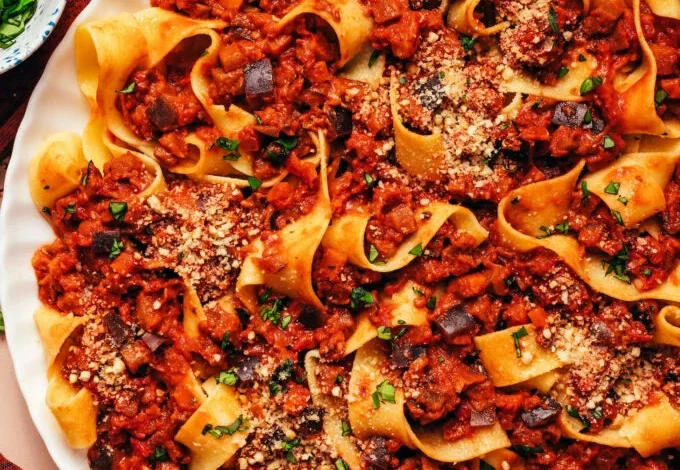
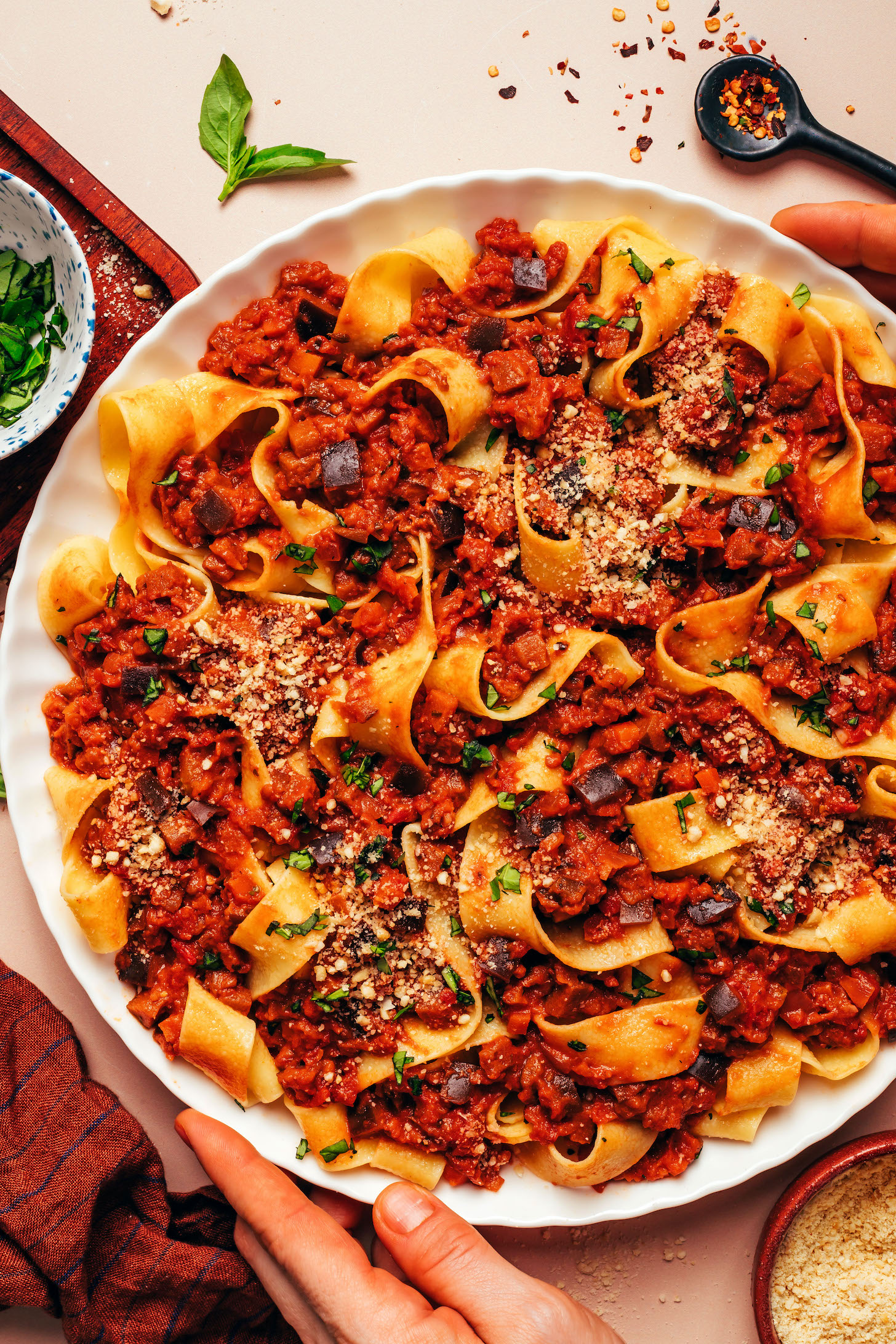
The culinary landscape continues to evolve in response to shifting consumer preferences toward sustainable eating, plant-forward diets, and simplified home cooking. In line with this broader gastronomic trend, food creators and culinary publishers are increasingly focusing on recipes that reduce kitchen labor while maximizing seasonal produce. A notable addition to this movement is the newly introduced Easy Eggplant Bolognese, a one-pot, plant-based iteration of the classic Italian meat sauce traditionally originating from Bologna. Developed as a seasonal recipe tailored for late summer, this dish reimagines a centuries-old culinary staple by swapping traditional minced meat for finely diced eggplant, utilizing a single vessel to streamline preparation, and incorporating dairy-free alternatives to maintain the rich texture characteristic of authentic regional Italian cooking.
Background and Culinary Evolution of Bolognese Sauce
To understand the context of this modern adaptation, it is necessary to examine the history of the original dish. Traditional ragù alla Bolognese, as formally documented by the Italian Academy of Cooking (Accademia Italiana della Cucina) in 1982, is a meat-based sauce native to Bologna, Italy. Characterized by its thick consistency, the authentic recipe relies on a foundational soffrito consisting of finely minced onions, celery, and carrots, combined with minced or coarsely ground beef, pork pancetta, white wine, broth, and a small amount of tomato paste or tomato passata, traditionally finished with a splash of milk or cream.

Over the decades, culinary globalization and the rise of plant-based dietary choices have prompted home cooks and professional chefs alike to experiment with alternative ingredients. Variations substituting lentils, mushrooms, tempeh, and chickpeas have gained traction as consumers seek lower-carbon footprints and higher dietary fiber content without sacrificing the comforting, savory profile of traditional Italian comfort food. The introduction of an eggplant-based version capitalizes on the sponge-like texture and rich umami potential of nightshade vegetables during their peak harvesting months in late summer, offering a nutrient-dense profile that appeals to both strict vegans and flexitarians.
Nutritional Analysis and Dietary Implications
From a nutritional standpoint, the Easy Eggplant Bolognese presents a significant departure from standard meat-based ragùs while retaining key macronutrients through thoughtful ingredient selection. According to standardized nutritional profiling for a single standard serving of this recipe, the dish yields approximately 284 calories, 31.9 grams of carbohydrates, 6.6 grams of protein, and 17.1 grams of total fat, with a notably low saturated fat content of 2.5 grams and zero cholesterol.
Furthermore, the integration of eggplant, carrots, and tomatoes significantly elevates the dietary fiber content to 8.3 grams per serving, alongside notable concentrations of potassium (1,040 mg), Vitamin C (27 mg), and iron (3.7 mg). The inclusion of homemade or store-bought cashew milk introduces plant-based fats that mimic the traditional creaminess imparted by dairy milk in authentic Bolognese recipes, successfully bridging the gap between heavy traditional sauces and modern health-conscious alternatives. The dish is naturally gluten-free when paired with appropriate pasta alternatives and accommodates a preparation time of 45 minutes, comprising 15 minutes of active preparation and 30 minutes of passive simmering.
Step-by-Step Preparation and Culinary Methodology
The operational efficiency of the recipe relies heavily on its one-pot methodology, typically executed in a Dutch oven or a deep, heavy-bottomed skillet. The chronological execution of the dish is structured to build complex flavor profiles through sequential layering:
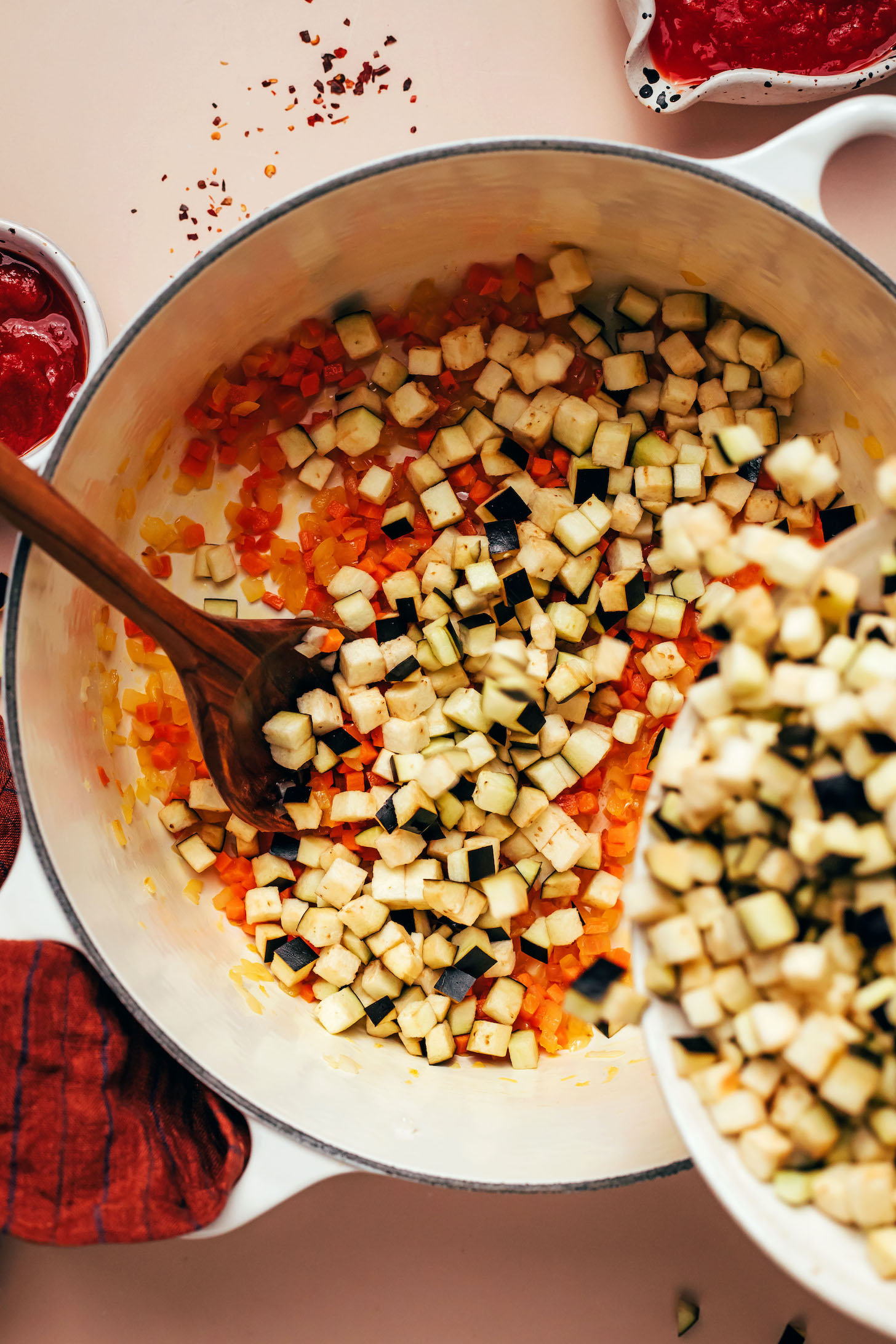
- The Foundation (Soffrito): The process begins by sautéing finely diced onions and carrots in olive oil over medium heat, establishing the foundational savory-sweet aromatic base. Unlike the traditional three-vegetable Italian soffrito, celery is omitted in favor of focusing sweetness and texture on the carrots and onions.
- The Star Ingredient: Finely cubed eggplant is introduced to the pot alongside the softened aromatics. Prolonged sautéing allows the eggplant to break down, absorb the olive oil, and develop a deep, caramelized flavor profile that replicates the rich mouthfeel typically provided by browned ground meat.
- Aromatics and Deglazing: Minced garlic and red pepper flakes are incorporated briefly before the pan is deglazed with dry white wine. This step releases the browned fond from the bottom of the pot, adding acidity and depth to the developing sauce.
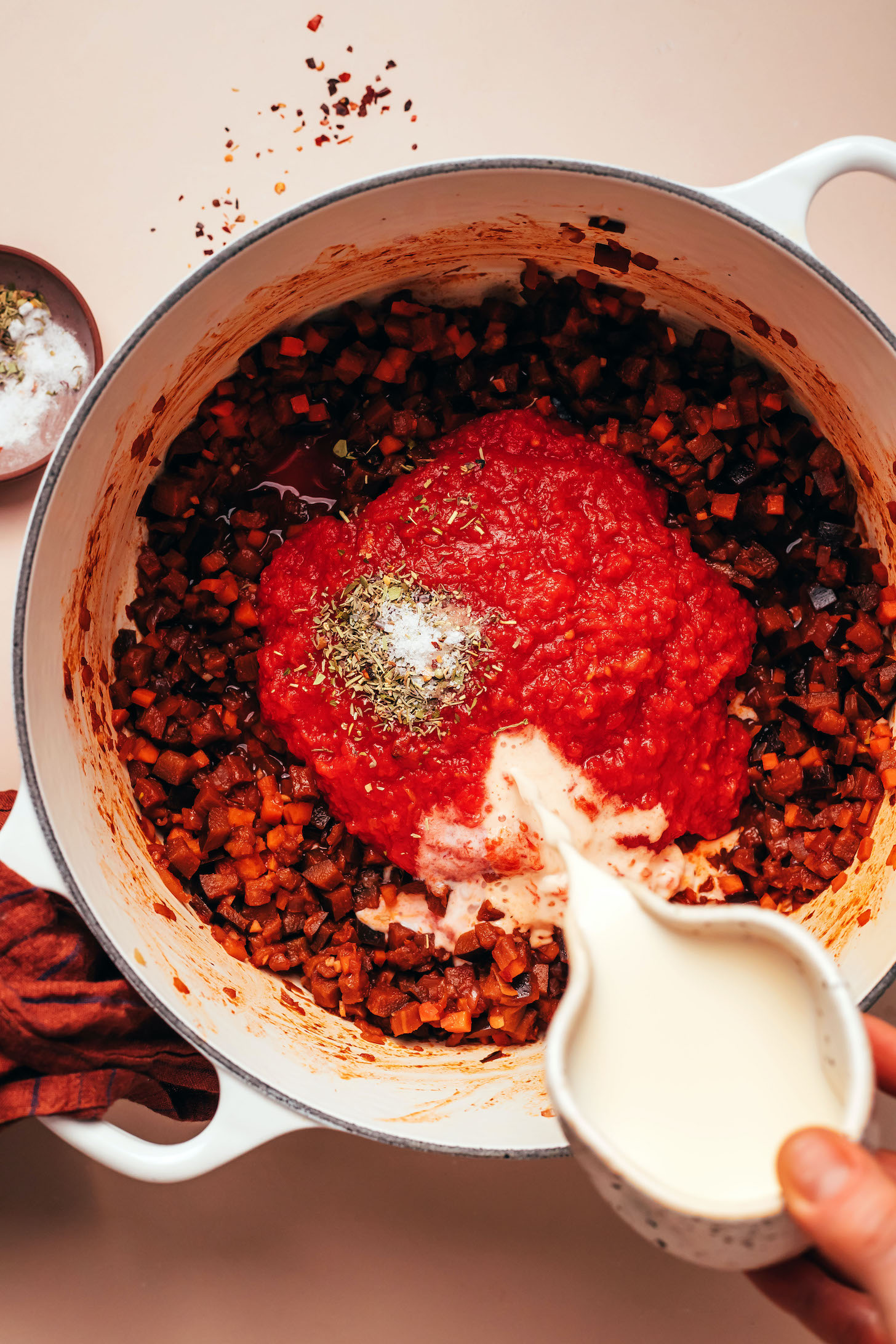
- Simmering and Emulsification: Crushed tomatoes and tomato paste are stirred in to establish a bright, acidic tomato base. To replicate the rich dairy component of traditional Bolognese without animal products, a measured quantity of cashew milk is blended into the mixture. Dried Italian herbs (basil and oregano), sea salt, and a touch of maple syrup are added to balance the natural acidity of the tomatoes.
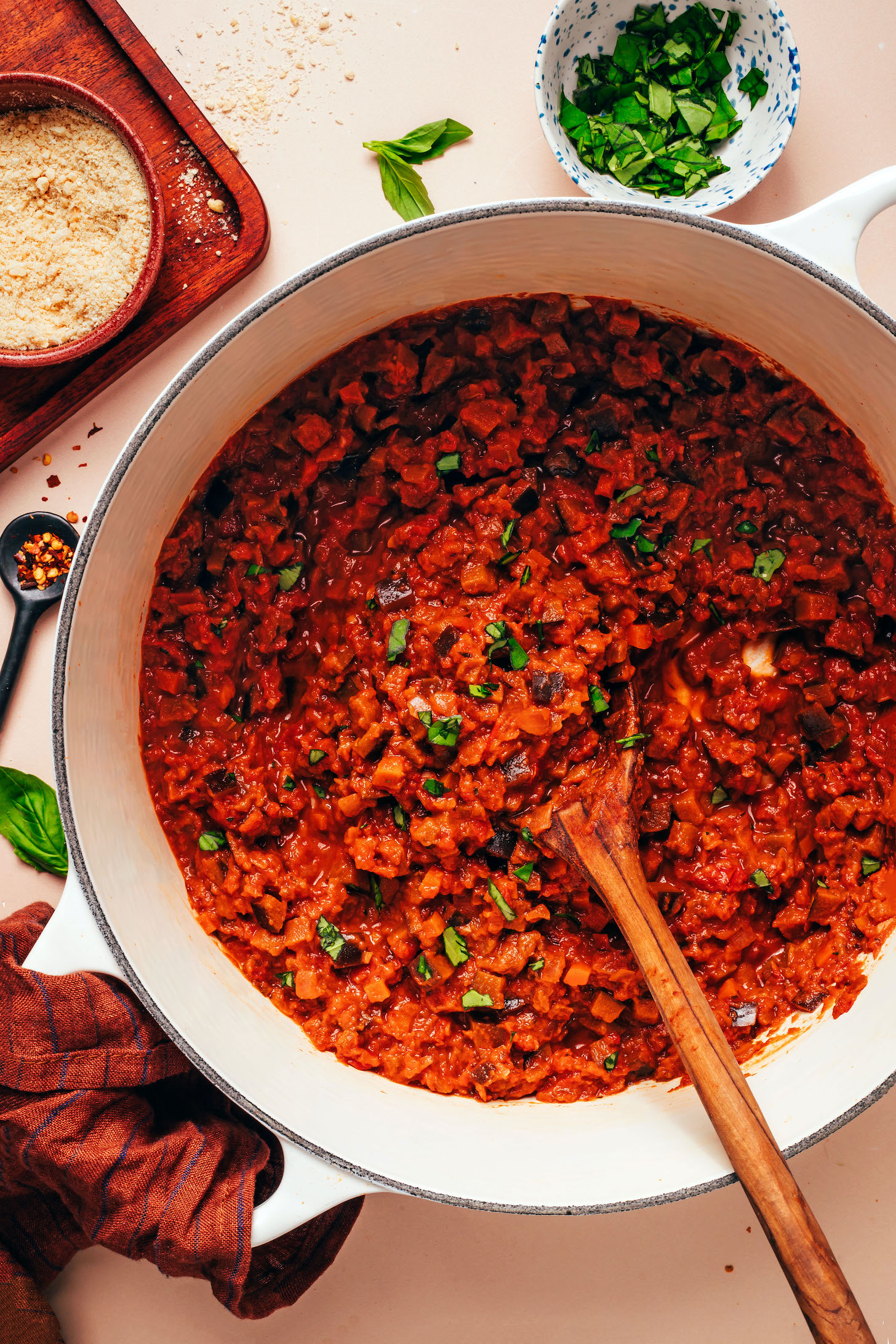
- Reduction: The entire mixture is left to simmer uncovered for a minimum of 20 to 30 minutes—though extended simmering up to one hour is recommended for optimal flavor concentration—allowing excess moisture to evaporate and resulting in a thick, cohesive sauce.
Flexibility and Adaptability for Diverse Dietary Preferences
One of the primary drivers behind the adoption of modern plant-based recipes in household kitchens is adaptability. While the core recipe is entirely vegan, gluten-free, and dairy-free, the formulation is intentionally designed to accommodate various dietary requirements through simple modifications:
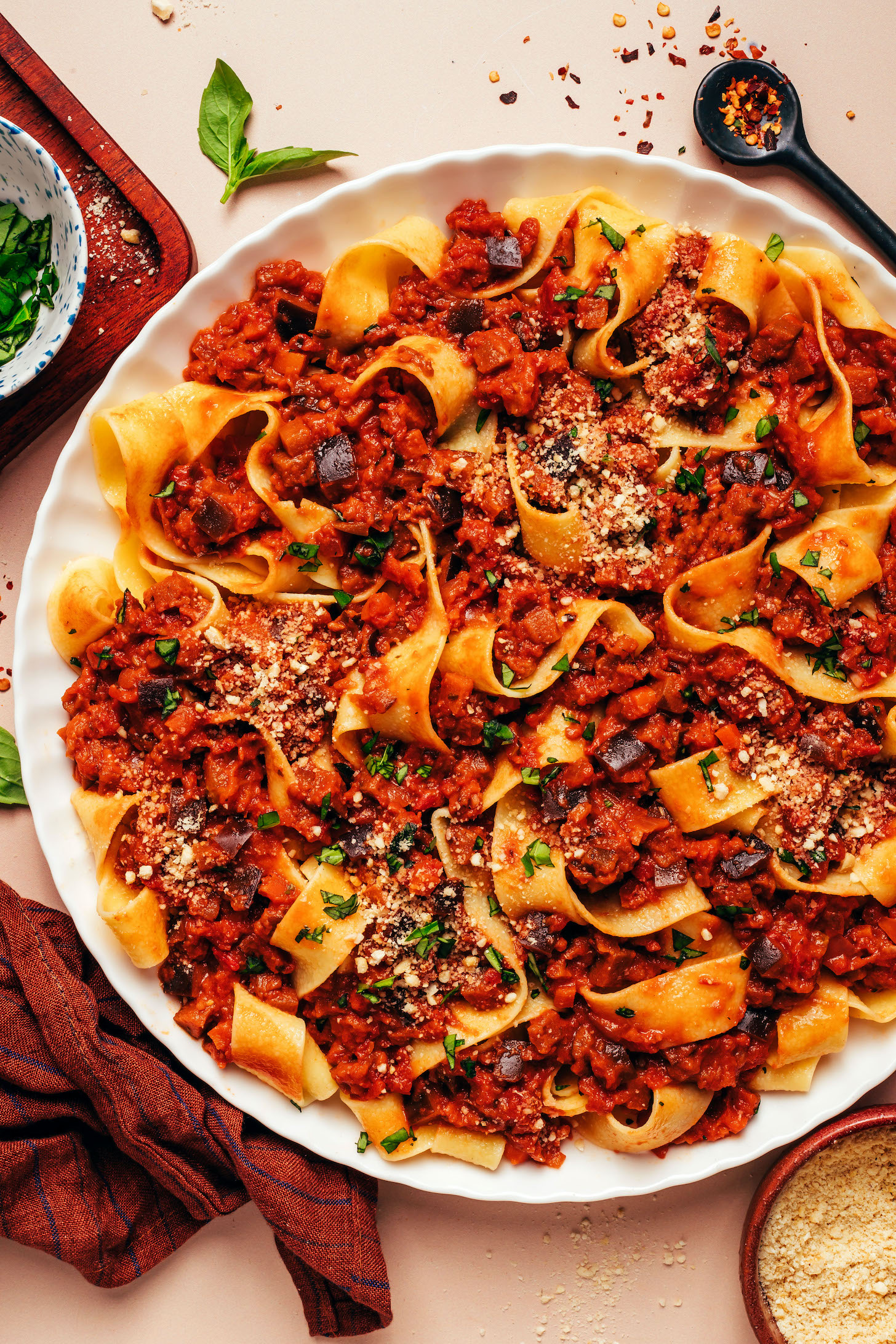
- Protein Enhancement: For individuals seeking higher protein density, the recipe supports several variations. Vegan modifications include stirring in one to two cups of cooked red lentils alongside the crushed tomatoes, or serving the sauce atop lentil-based pasta. For vegetarian adaptations, finishing the dish with traditional grated Parmesan cheese remains an option. For meat-eaters, incorporating one pound of ground beef after sautéing the eggplant—or serving the sauce alongside homemade turkey meatballs—allows the dish to function as a bridge meal for mixed-preference households.
- Storage and Meal Prepping: From a logistical perspective, the sauce demonstrates favorable preservation qualities. It can be refrigerated in an airtight container for three to four days or frozen for up to one month, making it a viable option for weekly meal planning and batch cooking.
Broader Industry Trends and Consumer Reception
Food industry analysts note that recipes emphasizing minimal cleanup—such as one-pot and one-pan meals—continue to dominate digital culinary platforms. The appeal lies in time conservation and reduced dishwashing labor, which align with the fast-paced lifestyle of modern consumers. Moreover, the emphasis on seasonal vegetables like eggplant addresses a growing consumer demand for sustainable, locally sourced produce that minimizes environmental impact.
Culinary experts observe that successful plant-based iterations of classic meat dishes rely less on artificial meat substitutes and more on leveraging the natural textures and umami-rich properties of whole foods. By treating eggplant with the same respect for browning, simmering, and flavor-building traditionally reserved for meat ragùs, recipes like the Easy Eggplant Bolognese challenge long-standing perceptions that plant-based dining lacks depth or satisfaction. As home cooking trends continue to favor accessibility paired with gourmet results, such vegetable-forward transformations are expected to remain a staple of contemporary home kitchens well beyond the summer season.