When Two Green Dreams Collide: The High-Stakes Battle Between Regenerative Agriculture and Utility-Scale Solar Development

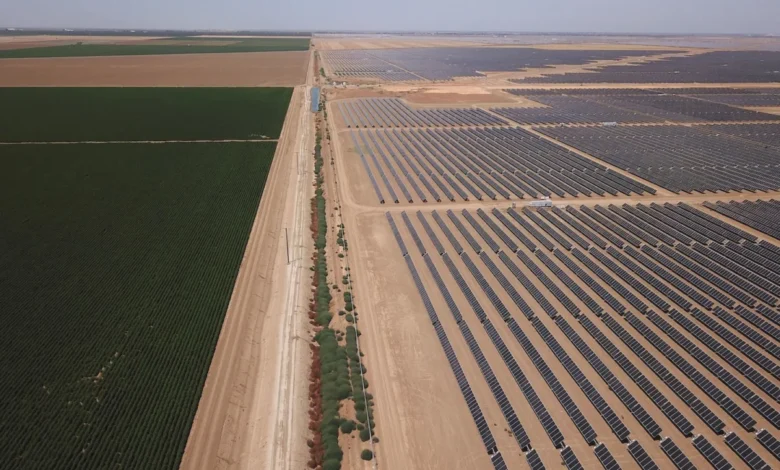
The pursuit of a decarbonized future has inadvertently birthed one of the most contentious land-use paradoxes of the twenty-first century. Across agricultural heartlands globally and throughout the United5 States, a silent conflict is unfolding between two pillars of climate action: the urgent global imperative to transition toward renewable energy, and the equally critical movement to restore degraded soils through regenerative agriculture. While both systems promise to mitigate the worst impacts of global heating, they are increasingly competing for the exact same finite resource—fertile, arable land.
For farmers striving to heal the earth through restorative growing practices, the expansion of utility-scale solar installations presents an existential threat. Landowners, squeezed by volatile commodity markets, skyrocketing operational costs, and stagnant margins, are finding the guaranteed, long-term passive income of solar leases impossible to resist. Consequently, hundreds of thousands of acres of productive farmland are being converted into photovoltaic arrays, raising critical questions regarding long-term food security, rural community viability, and the true cost of the green energy transition.
The Origins of the Regenerative Movement and Modern Realities
To understand the friction between solar development and farming, one must examine the foundational goals of regenerative agriculture. Around 2011, Jonathan and Kaylyn Cobb established Green Fields Farm in central Texas with a deceptively simple mandate: to return hundreds of acres of family-owned and leased land—previously farmed conventionally for corn and cotton—to its natural, prairie-like state.
Rejecting the chemical-dependent, heavy-tillage paradigm of conventional agriculture, the Cobbs introduced native deep-rooting perennials like silver bluestem, yellow Indian grass, and Maximilian sunflowers. Their goal was to enrich the heavy clay soil with organic carbon, maximize water retention, and foster nutrient cycling. Eventually, they integrated rotational livestock grazing, mimicking the migratory patterns of North American bison to naturally fertilize the earth.
Initially celebrated by sustainability advocates as a model for modern farming, the Cobbs’ operation proved that regenerative practices could sequester carbon, protect against drought, and yield marketable meat while revitalizing local ecosystems. According to scientific estimates, sequestering just an additional two percent of carbon within global agricultural soils could theoretically draw down atmospheric greenhouse gases to safe, pre-industrial levels.
Yet, translating these ideals to scale remains an uphill battle. Transitioning from conventional commodity crops to regenerative systems involves a steep learning curve, significant initial investment in specialized equipment, and entrenched cultural resistance from older generations of farmers who view unplowed, diverse cover-cropped fields as unkempt or mismanaged. Furthermore, unpredictable weather events, soil toxicity from historical land use, and exorbitant land prices compound the systemic vulnerabilities facing modern growers.
The Rise of Utility-Scale Solar and the Allure of the Lease
While regenerative farmers fight an uphill financial battle to keep their operations afloat, the renewable energy sector offers a lucrative alternative. To meet aggressive federal and international carbon-reduction targets, utility-scale solar capacity has surged dramatically. Between 2019 and 2020 alone, utility-scale solar in the United States increased by 26 percent, driven by falling hardware costs and federal decarbonization mandates.
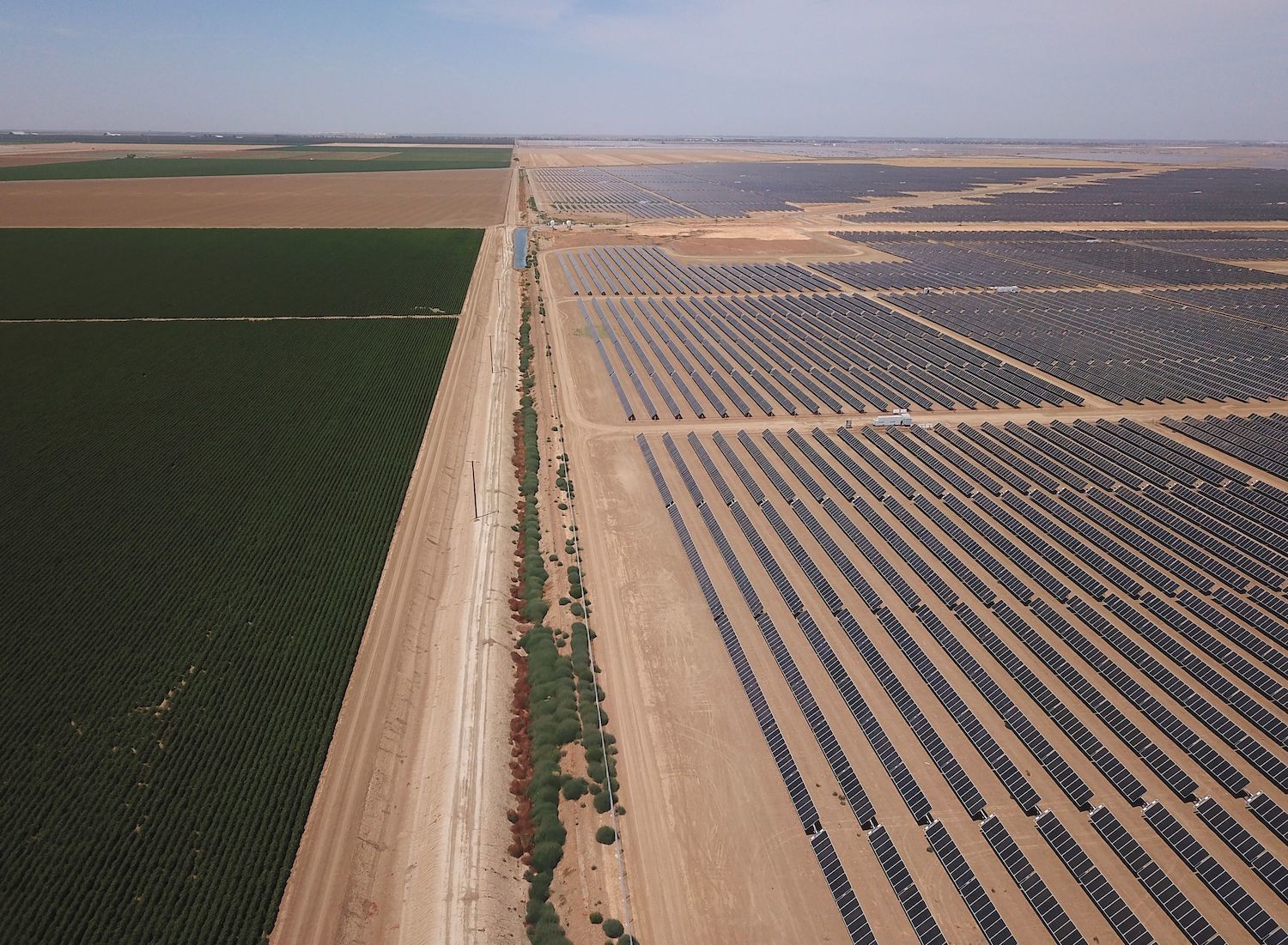
However, utility-scale solar requires immense surface area, and flat, cleared agricultural land offers ideal conditions for photovoltaic installations. According to data from the American Farmland Trust (AFT), U.S. farmers unloaded roughly 11 million acres of agricultural land for real estate and commercial development between 2001 and 2016. Today, an increasing percentage of that transition is being absorbed by solar energy developers.
For many rural landowners operating on fixed incomes or struggling with razor-thin agricultural profit margins, the math is simple. Leasing land to a solar corporation can yield tens of thousands of dollars annually with zero production risk, shielding families from crop failures, pest infestations, and fluctuating commodity prices.
For Jonathan Cobb, this trend represents a devastating encroachment. While trying to expand his regenerative grazing operations in Texas, he watched neighboring landowners sign away their fertile acreage to solar developers. Even within his own family, the economic reality of aging parents on fixed incomes created severe tension, as the prospect of leasing family acreage for solar installations threatened to strip away vital grazing territory essential for his livestock.
Global Responses and the Emergence of Agrivoltaics
Recognizing the dual threats of climate change and potential food shortages, governments and researchers worldwide are actively exploring ways to harmonize solar energy production with ongoing agricultural output. This emerging discipline, known as agrivoltaics, integrates agricultural activities—such as crop cultivation, livestock grazing, or pollinator habitats—directly beneath or between elevated solar panels.
Internationally, policy frameworks are adapting rapidly. Germany enacted legislation designed to open agricultural land to solar installations while explicitly mandating the parallel use of land for food and energy production. The German government committed financial support to encourage farmers to incorporate solar panels on up to 15 percent of their agricultural land, prioritizing long-term food security alongside renewable generation targets.
Similarly, Japan has championed agricultural photovoltaic systems since 2013 under its "solar sharing" mandates. These regulations require any solar project established on agricultural land to maintain active crop yields or livestock production beneath the arrays, transforming abandoned farmland back into productive economic assets.
In the United States, agrivoltaics remains in a nascent phase, constrained primarily by upfront capital costs and engineering limitations. Traditional utility-scale solar panels are mounted too low to the ground to permit the passage of heavy farm machinery or accommodate tall native prairie plants and cattle. Raising these panels requires substantially more structural steel, increasing installation expenses significantly.
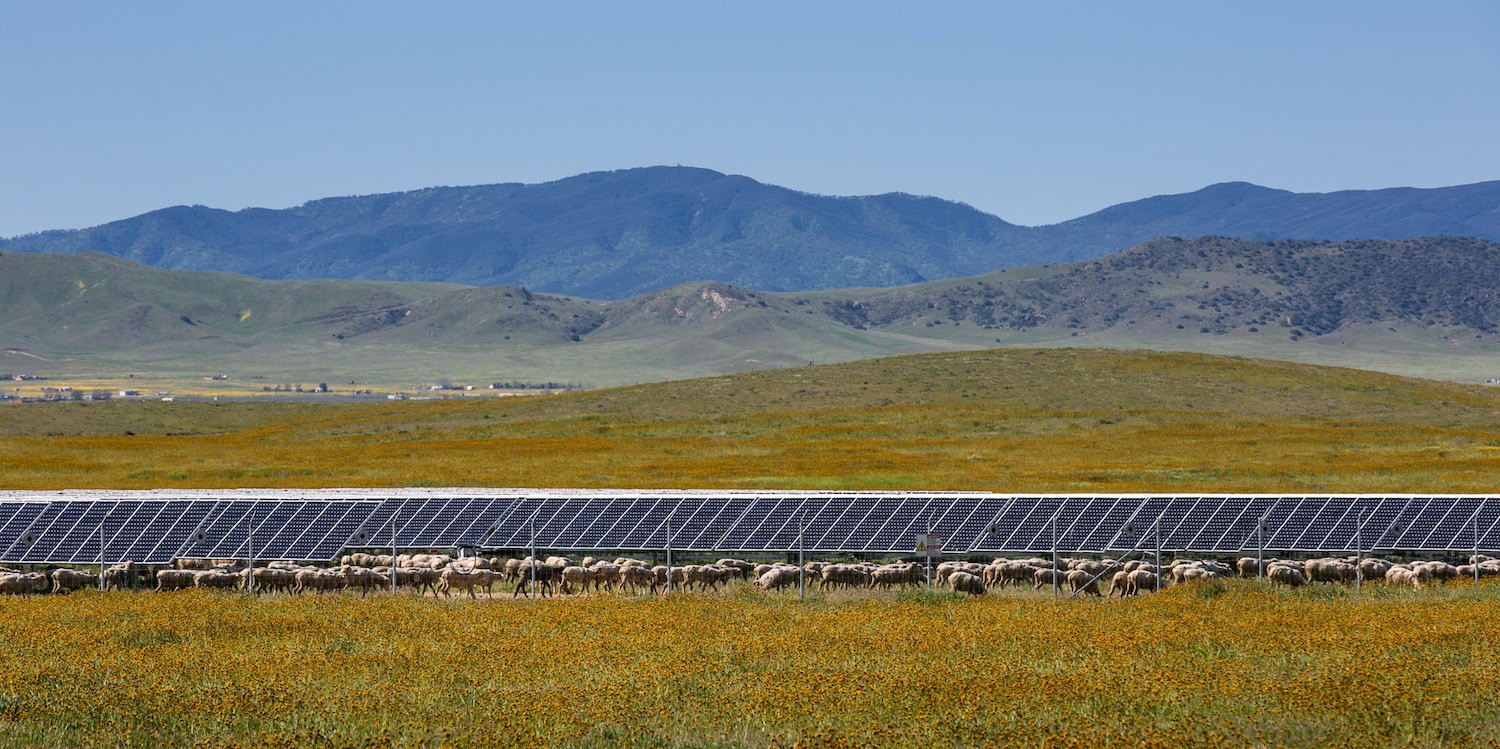
Nevertheless, simpler agrivoltaic models are gaining traction domestically, most notably through sheep grazing. Because sheep are lower-slung than cattle and naturally forage on grasses without damaging infrastructure, they function as living lawnmowers, keeping vegetation around panels under control while eliminating the need for chemical herbicides or mechanical mowing.
Research and Institutional Innovations
Leading scientific institutions are actively working to overcome the engineering and economic barriers of agrivoltaics. At the National Renewable Energy Laboratory (NREL) in Golden, Colorado, researchers led by energy-water-land analyst Jordan Macknick are heading the InSPIRE project. Funded by the U.S. Department of Energy, the initiative investigates the performance of agrivoltaic systems across 25 diverse locations nationwide, evaluating how shade from solar arrays impacts soil moisture, crop yields, and erosion rates.
According to Macknick, optimizing agrivoltaic systems requires collaborative design from the outset. Rather than universally elevating panels, developers can strategically increase the spacing between rows, ensure adequate turning radiuses for tractors, and carefully integrate irrigation and fencing infrastructure.
While industrial row crops, which require massive combines and uninterrupted sunlight, remain poorly suited for agrivoltaics, smaller-scale regenerative operations present prime opportunities for integration. By merging clean energy generation with soil restoration, researchers hope to position agrivoltaics as a cornerstone of the broader sustainable agriculture movement.
Overcoming Financial and Structural Barriers
For individual farmers, financial accessibility remains the single greatest impediment to sustaining long-term agricultural viability. Tamara Hicks, a sheep and goat farmer in Petaluma, California, who transformed a foreclosed, environmentally degraded conventional dairy farm into a regenerative operation, emphasizes the importance of shared resources and cooperative economics.
Hicks notes that prohibitive equipment costs—such as specialized no-till seeders costing upwards of $30,000—prevent many independent farmers from adopting regenerative practices. To counter these barriers, she advocates for equipment-sharing cooperatives, robust mentorship networks, and agricultural conservation easements. Organizations like the Marin Agricultural Land Trust (MALT) and the American Farmland Trust purchase or incentivize the extinguishment of agricultural development rights, providing farmers with crucial capital to invest in infrastructure like value-added creameries or barns while permanently locking the land into agricultural use.
The Broader Implications for Rural Communities
The conversion of farmland to solar energy installations extends far beyond individual property rights; it threatens the foundational social and physical infrastructure of rural communities.
As Mitch Hunter, research director at the American Farmland Trust, observes, the loss of experienced farmers and active acreage has cascading effects. When a critical mass of landowners sells out to solar developers, local agricultural supply stores, processing facilities, grain elevators, and veterinary services lose their customer base, effectively dissolving the agrarian ecosystem. Even though solar panels can theoretically be decommissioned after several decades, the accumulated generational knowledge, community networks, and specialized local infrastructure cannot be easily restored.
Balancing the urgent need for rapid decarbonization with the equally vital necessity of preserving arable land and soil health represents one of the defining policy challenges of the modern era. Without deliberate regulatory frameworks, targeted financial incentives for agrivoltaics, and robust protections for working lands, the green energy transition risks solving one planetary crisis by inadvertently exacerbating another.
Related posts: