The Evolution of the Colombian Buñuelo
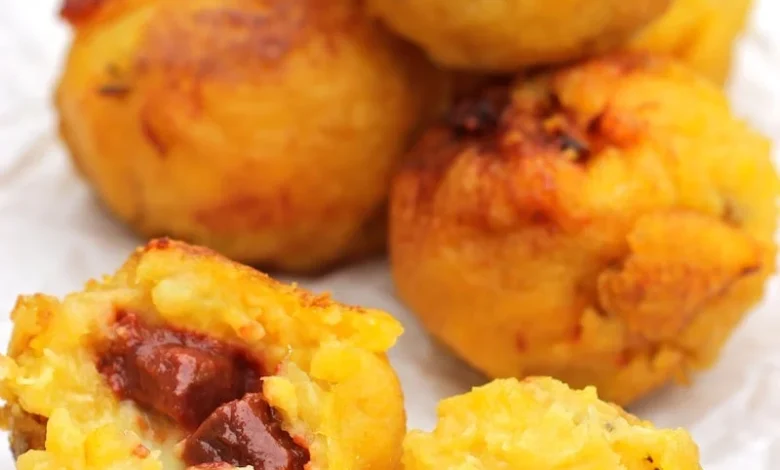
The term "buñuelo" traces its etymological roots back to the Spanish occupation of the Americas, where it originally referred to a simple fried dough fritter. However, in the context of Colombia, the dish underwent a significant transformation. Unlike the traditional wheat-based Spanish version, the Colombian Buñuelo de Plátano Maduro utilizes the starch and natural sugars of the ripe plantain (Musa paradisiaca), a crop that became essential to the Colombian diet following its introduction to the region.

Historically, the plantain has been a dietary staple in the tropical climates of the Caribbean and Andean foothills. By the mid-20th century, the integration of local ingredients—such as queso costeño (a salty, firm cheese) and bocadillo (a dense, jellied guava paste)—into the dough of the fritter became a hallmark of domestic Colombian cooking. This culinary innovation allowed for the creation of a balanced flavor profile: the sweetness of the caramelized plantain contrasts with the salinity of the cheese and the concentrated acidity of the guava.
Chronology and Cultural Integration
While the exact date of the invention of the plantain-based buñuelo remains undocumented due to its nature as a folk recipe, its prominence surged alongside the growth of the informal street food sector in major Colombian urban centers like Medellín and Bogotá during the 1970s and 80s.

- Early 20th Century: Plantains, already a primary food source, began to be processed into various textures, including mashes and fried discs, to minimize food waste as the fruit ripened.
- Mid-20th Century: The standardization of the buñuelo as a "snack" category occurred. Vendors in town plazas began pairing these fried items with coffee or hot chocolate, establishing them as an afternoon staple.
- Late 1990s – Present: The professionalization of Colombian gastronomy led to the inclusion of these traditional recipes in upscale culinary settings, moving the dish from street carts to the menus of fine-dining establishments, where chefs often refine the texture or introduce modern techniques like sous-vide plantain preparation.
Nutritional Profile and Ingredient Analysis
The nutritional value of these fritters is defined primarily by the plantain, a complex carbohydrate source that is rich in Vitamin A, Vitamin C, and potassium. From a chemical perspective, the ripening process of the plantain converts starches into simple sugars, which are responsible for the deep golden-brown color achieved during the Maillard reaction in the frying process.
Data regarding the standard preparation suggests the following breakdown per serving (approx. 30g):

- Calories: 22–25 kcal (depending on frying oil absorption)
- Carbohydrates: 2–3g
- Protein: 1g (contributed by the internal cheese filling)
- Sodium: 25–30mg (derived primarily from the queso costeño)
The inclusion of guava paste adds a distinct nutritional component. Guava is highly prized in tropical nutrition for its high pectin content and significant levels of antioxidants. When heated, the sugar in the bocadillo reaches a high-viscosity state, which prevents it from leaking out of the dough during the frying stage—a technique that requires precise temperature control (typically between 350°F and 375°F).
Culinary Methodology and Technical Requirements
The production of Buñuelos de Plátano Maduro requires a specific sequence of thermodynamic conditions. The plantains must be cooked (boiled or fried) until soft, then mashed into a homogeneous paste. The moisture content of this paste is critical; if the dough is too wet, the structural integrity of the ball fails during the immersion in hot oil, leading to the seepage of the cheese filling.

Industry experts note that the addition of a small amount of flour or cornstarch is often necessary to bind the sugars in the plantain, creating a stable exterior. The frying stage is the most technical aspect of the preparation. If the oil is not hot enough, the plantain will absorb excessive fat, leading to a greasy, unpalatable texture. If the oil is too hot, the exterior will carbonize before the internal cheese has reached its melting point. The optimal result is a shell that remains crispy for at least 10–15 minutes post-frying.
Broader Economic and Cultural Implications
The Buñuelo de Plátano Maduro serves as a vehicle for cultural identity within the Colombian diaspora. As immigration patterns have increased the presence of Colombian communities in North America and Europe, the demand for traditional ingredients—specifically plantains and authentic Latin American cheeses—has spurred a localized supply chain.

From an economic perspective, the reliance on plantains as a base ingredient offers a low-cost, high-yield product for small business owners. The recipe’s adaptability—allowing for the omission of guava for a savory-only version or the substitution of different cheeses—makes it a versatile menu item that can be scaled across various food service models, from high-volume catering to artisanal snack bars.
Future Outlook and Culinary Innovation
The current trend in global food culture toward "authentic heritage" foods has positioned the Buñuelo as a subject of renewed interest. Food scientists and culinary historians are currently examining the potential for shelf-stable, pre-packaged versions of these snacks, though the prevailing consensus among culinary professionals remains that the dish is best experienced fresh.

Moreover, as international markets continue to demand plant-based or vegetarian-friendly options, the Buñuelo de Plátano Maduro is uniquely positioned to gain further traction. Because its primary structure is fruit-based, it naturally avoids the use of meat-derived fats or proteins, appealing to a broader demographic of health-conscious and ethical consumers.
In conclusion, the Buñuelo de Plátano Maduro is more than a simple appetizer. It is a testament to the ingenuity of Colombian cooks who transformed humble agricultural surplus into a complex, multi-textured dish. Its longevity in the Colombian diet, combined with its emerging role as a global culinary representative, ensures its status as a vital component of the Latin American gastronomic canon for the foreseeable future. Through careful preparation and the honoring of traditional ingredient combinations, these plantain balls maintain a standard of excellence that reflects the rich, diverse history of their origin.