The Rise, Fall, and Potential Resurgence of Amstel Light: A Masterclass in Beverage Industry Missteps

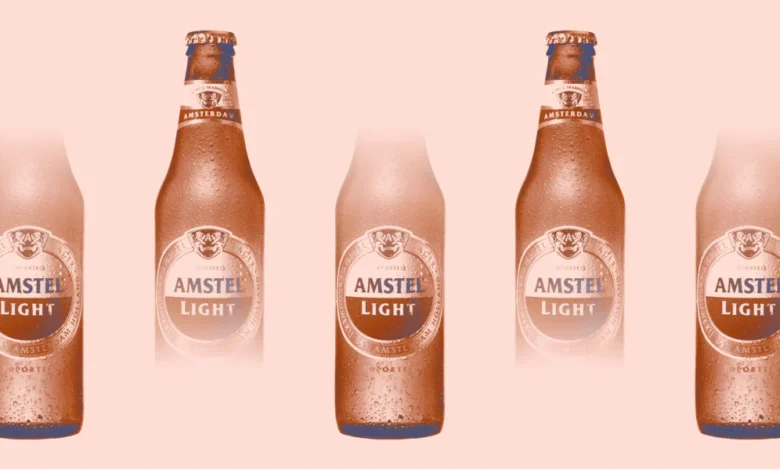
The trajectory of Amstel Light serves as a fascinating case study in modern brand management, consumer psychology, and corporate cannibalization. While today’s craft-obsessed beer drinkers may barely register the brew, Amstel Light was once a titan of the American import market. For a generation, it reigned as the undisputed king of imported light beers in the United States, shaping consumer perceptions and proving that low-calorie alternatives could retain both flavor and sophistication. However, a combination of shifting market dynamics, aggressive internal competition, and changing consumer preferences ultimately dismantled its dominance, offering a cautionary tale for legacy brands across the globe.
Main Facts and Market Dominance
At its peak in 2004, Amstel Light moved an astonishing 10 million cases annually in the United States. Its success was not merely a byproduct of a booming import sector; it was built on distinctive branding and a clever positioning strategy. Introduced to the U.S. market in 1980 by Leo Van Munching, Jr.—the legendary importer responsible for popularizing Heineken—Amstel Light carved out a lucrative niche, particularly in affluent urban centers across the American Northeast, such as New York and Boston.
Long before the market was flooded with international light options, Amstel Light enjoyed nearly a decade without direct competition from major rivals like Corona Light. It was marketed as "the beer drinker’s light beer," a sophisticated alternative to domestic heavyweights and standard lagers. Its distinct brown glass packaging even spared it from the common industry critique of skunkiness often associated with green-bottled imports. For more than two decades, the brand was a powerhouse on-premise staple, frequently commanding greater draft sales than full-strength Heineken in certain regions due to its appeal in warm climates and social settings.
Chronology of a Legacy Brand
The story of Amstel begins long before its American foray. Founded in 1870 along the Amstel River in Amsterdam, the independent brewery built its reputation on a celebrated pilsner that fiercely competed with local rival Heineken. That rivalry concluded in 1968 when Heineken acquired Amstel, transforming it into a subsidiary brand within its growing portfolio.
The pivotal moment for the brand’s American chapter arrived in 1980. Following the explosive nationwide rollout of Miller Lite in 1975 and the subsequent light beer revolution, Leo Van Munching, Jr., petitioned Heineken to develop a light beer import to capture the burgeoning demographic. Eschewing the "Heineken Light" moniker, the company utilized the Amstel name for its new low-calorie offering. For over a decade, Van Munching & Company orchestrated a brilliant dual-brand strategy, promoting Heineken and Amstel Light side-by-side under campaigns like "The Tops in the Field."
The golden era persisted into the early 2000s. However, the foundational cracks began to form in 2005 and 2006, coinciding with a massive corporate shift. Following Heineken’s complete buyout of Van Munching & Company in 1990 (subsequently renamed Heineken USA), the parent company made a strategic pivot that would alter the fate of its secondary import.
Supporting Data and The Internal Rivalry
The definitive turning point for Amstel Light occurred at the start of 2006, when Heineken launched an estimated $50 million promotional campaign for an in-house competitor: Heineken Premium Light. Seeking to capitalize on the equity of its flagship name, the parent company unleashed an unprecedented digital and traditional advertising blitz.
Industry analysts point to this moment as the primary catalyst for Amstel Light’s decline. According to trade publisher Beer Marketer’s Insights, the massive ad spend and corporate redirection starved Amstel Light of the marketing attention it required to defend its market share. The company effectively shifted its focus to the brand with its name on the corporate door.
The numbers tell a stark story of corporate cannibalization. Between 2006 and 2011, Amstel Light suffered a catastrophic 47.7 percent loss in volume. By 2012, the brand earned a dubious distinction on financial publisher 24/7 Wall St.’s list of "nine beers Americans no longer drink." Ironically, the newly introduced Heineken Light suffered a parallel fate, shedding 36.7 percent of its volume between 2007 and 2012, ultimately joining Amstel Light on the same declining registry just a year later.
External Pressures and Evolving Landscapes
Internal missteps were compounded by profound external shifts in the American beer ecosystem. The mid-2000s marked the meteoric rise of the American craft beer movement. As independent craft breweries began offering high-end, complex alternatives to mainstream domestic lagers, the entire imported "upscale" category faced immense pressure.
Furthermore, the competitive landscape had drastically evolved. During Amstel Light’s foundational decades, it enjoyed a wide runway. By the time craft beer and an array of international competitors saturated the market, Amstel Light was squeezed from both sides: traditional light beer drinkers were migrating toward domestic craft or new import options, while upscale consumers gravitated toward regional microbrews. The brand found itself caught in a strategic no-man’s-land.
Global Perspectives and Domestic Reality
While Amstel Light’s American footprint contracted severely, the broader Amstel brand maintains a very different narrative in its native Netherlands and across Europe. Marcel Haas, a data scientist and beer culture commentator, notes that in the Netherlands, standard Amstel pilsner is viewed as a reliable, ubiquitous default draft option in local pubs rather than a luxury import.
Amstel Light itself was never a dominant domestic product in the Netherlands. Instead, the parent portfolio in Europe found success through product diversification, including radlers, non-alcoholic variations, and seasonal offerings. Among connoisseurs, Amstel Bock—a traditional, strong autumn bock beer—commands genuine respect, illustrating that the core brand retains considerable brewing heritage and consumer goodwill despite its commercial missteps abroad.
Broader Impact and Future Implications
For industry experts, the Amstel Light saga remains a textbook lesson in the perils of brand dilution and the risks of replacing a functional strategy with unproven ambition. When a legacy brand is performing reliably, abandoning its core positioning to launch an internal competitor often damages both product lines.
Nevertheless, industry analysts suggest that the story of Amstel Light may not be fully written. Consumer trends in the beverage sector are inherently cyclical. As the market cools from the constant pursuit of novelty and hyper-innovation, contemporary drinkers are displaying a renewed appreciation for heritage, provenance, and historical gravitas. Recent revivals of classic European lager brands and vintage imports indicate that consumers are increasingly returning to core styles with established roots.
Whether Amstel Light can recapture its former glory in the United States remains uncertain. However, the foundational elements that made it a powerhouse—authentic European heritage, approachable flavor profiles, and distinct market positioning—remain intact. In an industry defined by constant reinvention, the path forward for yesterday’s icons may ultimately lie in remembering what made them successful in the first place.