Banana Bread Bars with Fudge Buttercream Offers a New Twist on a Classic Comfort Bake

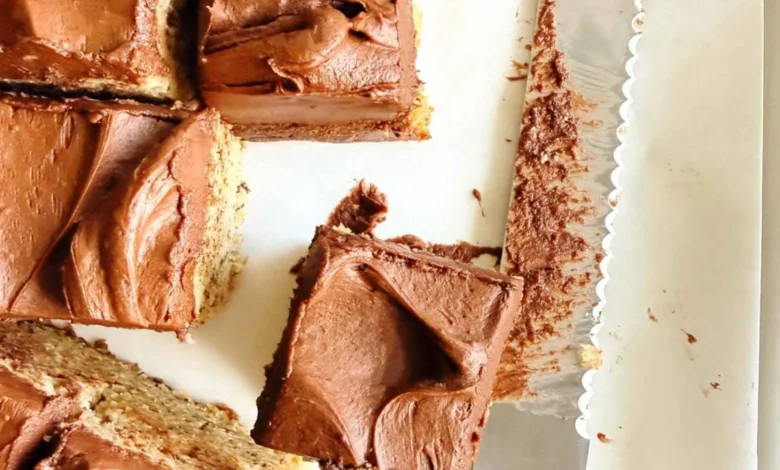
The culinary landscape has long revered traditional banana bread as a household staple, valued for its ability to salvage overripe fruit while delivering a dense, comforting flavor profile. In an evolution of this time-tested favorite, a new baking recipe has emerged that reimagines the classic loaf into portable, single-serving bars crowned with a dense layer of rich chocolate fudge buttercream. Developed as an adaptation from the cookbook 100 Afternoon Sweets, the recipe simplifies the baking process into a streamlined, one-bowl method while introducing a decadent flavor contrast that merges fruit-forward sweetness with deep, bittersweet cocoa notes.
Main Facts and Recipe Mechanics
The newly released recipe bridges two distinct baking concepts: a moist, intensely flavored banana bread base and a rich, velvety fudge buttercream. Unlike traditional tiered cakes or complex multi-step pastries, this formulation is engineered for efficiency. The banana bread component is designed as a single-bowl bake, eliminating the need for complex equipment such as stand mixers or multiple mixing vessels.
According to culinary documentation accompanying the release, the batter relies heavily on heavily spotted, overripe bananas to deliver natural moisture and sweetness. The base can also be repurposed into a traditional loaf format by transferring the batter into an 8-by-4-inch loaf pan and extending the baking time to between 50 and 60 minutes until a tester inserted into the center emerges clean. The resulting bread requires no specialized culinary training to execute, doubles easily for larger batches, and maintains structural integrity during freezing.
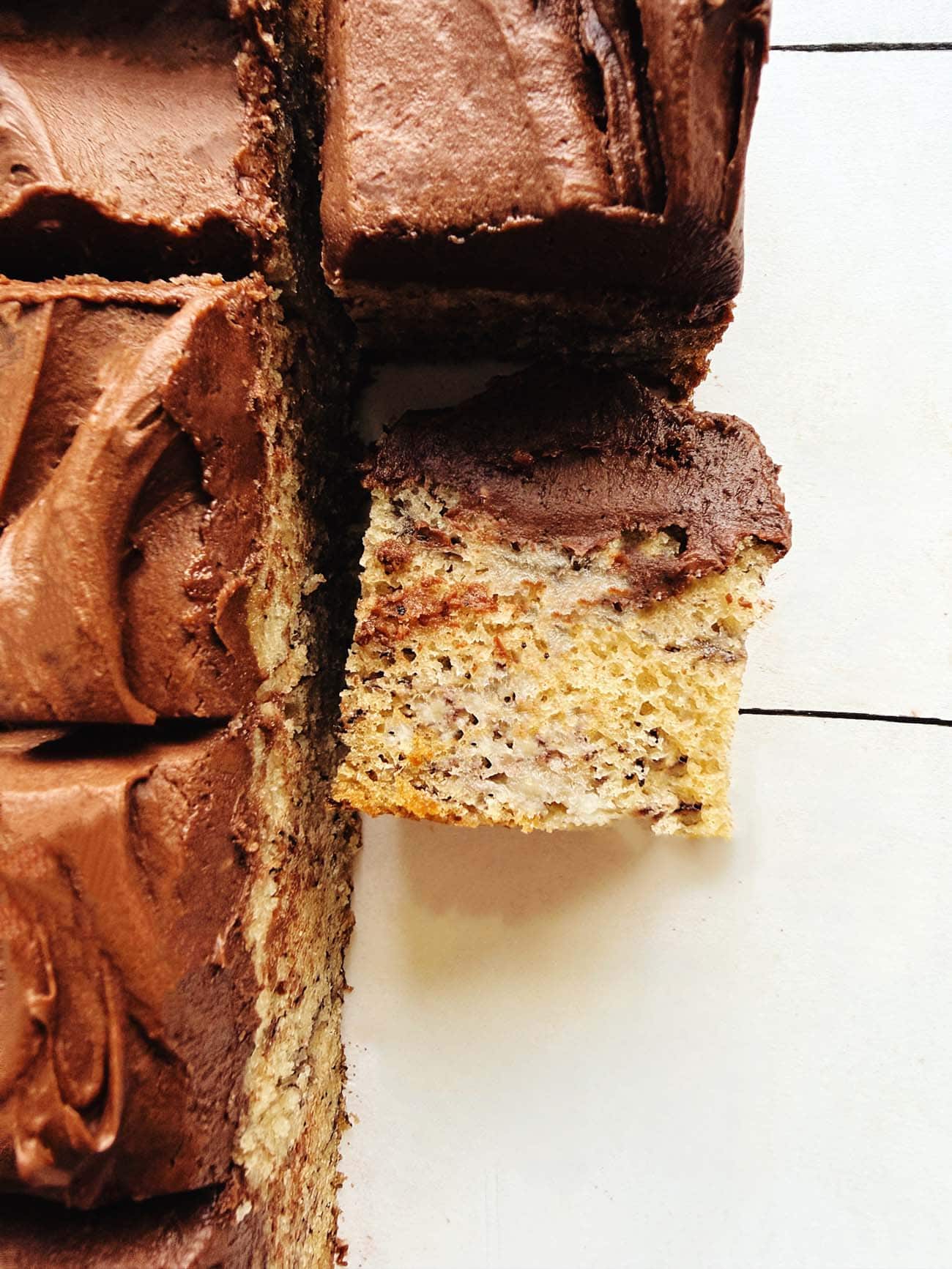
Atop the moist banana base sits a dense chocolate fudge buttercream. While the baseline recipe utilizes a standard measurement of frosting, bakers have the option to double the buttercream quantities to achieve a thick, substantial swoop of frosting characteristic of gourmet bakery confections. Culinary experts note that sifting the powdered sugar prior to incorporation is vital to prevent persistent lumps that can be difficult to smooth out within the dense chocolate mixture. Furthermore, precise flour measurement remains a critical factor for success; the recipe standardizes one cup of all-purpose flour at 142 grams, addressing common discrepancies where varying culinary websites measure a cup anywhere from 120 to 142 grams.
Chronology and Development of the Recipe
The conceptualization and public release of the banana bread bars follow a trajectory rooted in home baking experimentation and cookbook publishing trends.
- Initial Conception: The foundational recipes for both the banana bread base and the fudge buttercream were originally developed and compiled for the cookbook 100 Afternoon Sweets, focusing on accessible yet elevated snack-time treats.
- Morning Experimentation: Driven by a desire for a hybrid comfort bake, recipe developers returned to the kitchen to combine the two distinct elements into a streamlined, pan-baked bar format.
- Testing and Refinement: Kitchen trials confirmed that reducing the baking time through a pan format rather than a deep loaf pan yielded a faster, more even bake while maintaining interior moisture. Proportions for the fudge buttercream were adjusted to balance the sweetness of the banana base without overwhelming the palate.
- Public Launch: The finalized recipe was officially documented and published on October 22, 2026, accompanied by professional photography detailing the texture of the crumb and the application of the fudge frosting.
Supporting Data and Baking Science
The chemistry behind banana bread bars relies heavily on the Maillard reaction, caramelization, and the chemical leavening agents interacting with the acid present in ripe fruit. As bananas ripen, starches convert into simple sugars, increasing both the natural sweetness and the moisture content of the fruit. This surplus of moisture prevents the baked good from drying out, allowing the crumb to remain tender even when baked in a shallower bar configuration.
In comparison to standard sheet cakes or brownies, banana bars possess a unique structural density. The inclusion of mashed fruit adds weight to the batter, requiring a careful balance of flour, fat, and leavening agents to prevent the center from becoming dense or gummy. By standardizing the flour weight to 142 grams per cup, the recipe developers sought to eliminate the variable density caused by flour compaction during the scooping process—a common variable that often leads to dry or overly dense baked goods in home kitchens.
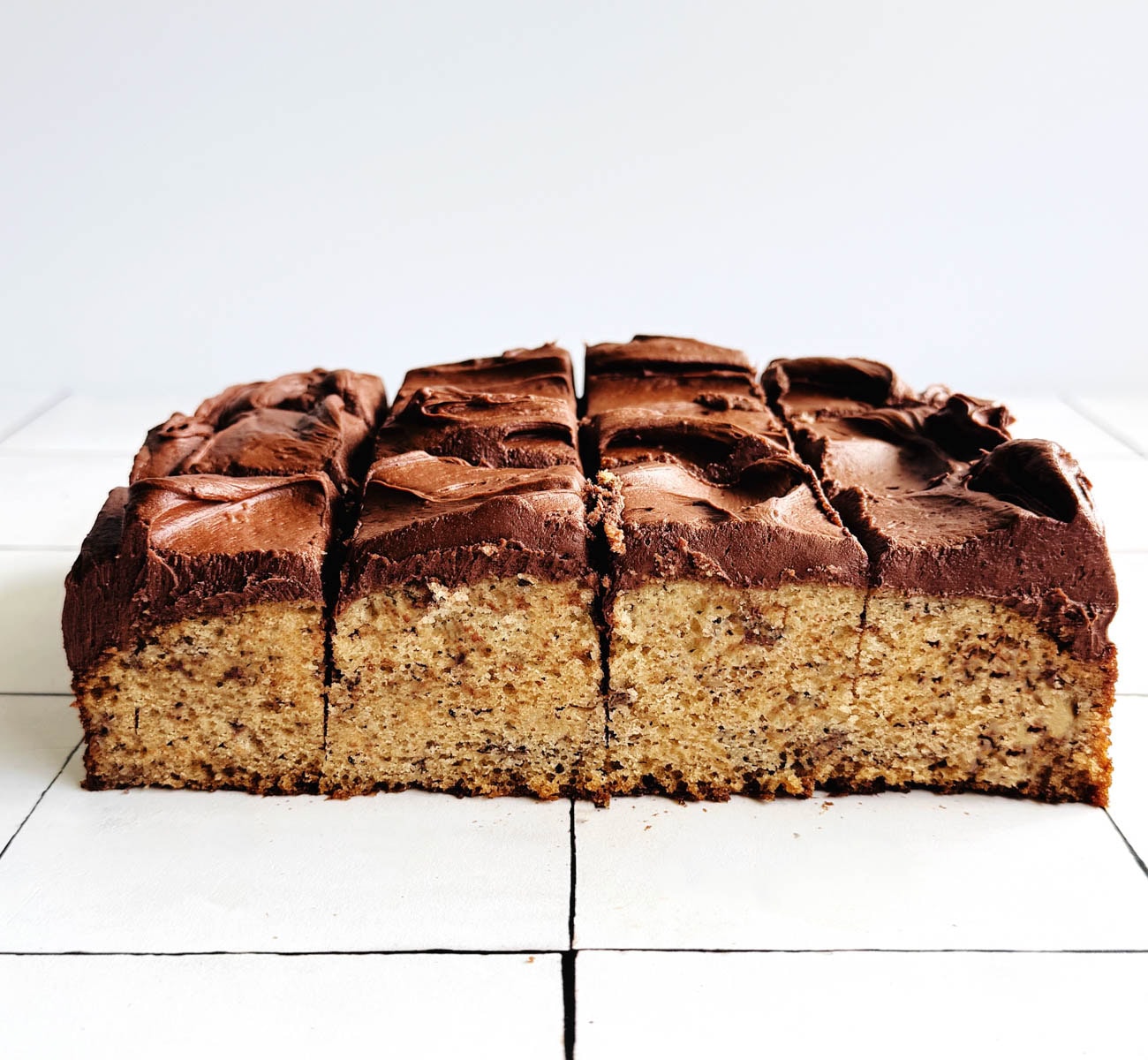
The fudge buttercream introduces a secondary chemical matrix consisting of fat (butter), sugar, and cocoa solids. Unlike whipped frostings that incorporate high volumes of air for a light texture, fudge buttercream emphasizes a higher ratio of solid fats and cocoa, resulting in a smooth, spreadable emulsion that acts as a moisture barrier, sealing the top of the banana bar and extending its freshness.
Culinary Analysis and Broader Industry Implications
The introduction of hybrid comfort bakes reflects broader shifts in consumer baking habits following years of pandemic-era culinary exploration. Home bakers increasingly seek recipes that offer high reward with minimal cleanup, favoring streamlined, one-bowl methods over multi-step artisanal techniques.
Furthermore, the trend highlights a growing interest in elevated nostalgia. By taking a familiar, comforting food item like banana bread and introducing high-end elements such as a rich fudge buttercream, home cooks can achieve bakery-quality results within a domestic kitchen environment. Food historians and culinary analysts note that comfort foods frequently surge in popularity during periods of economic or social uncertainty, as consumers gravitate toward familiar flavors that evoke feelings of security and warmth.
The adaptability of the recipe—functioning equally well as flat bars or a traditional loaf—also speaks to contemporary demands for versatility in cooking. With food waste reduction remaining a priority for households globally, recipes that effectively utilize overripe produce while offering multiple presentation formats provide practical utility alongside sensory appeal.
Conclusion
The release of the banana bread bars with fudge buttercream expands the culinary lexicon of traditional comfort baking. By merging the simplicity of a one-bowl banana base with the decadence of a dense chocolate frosting, the recipe offers a versatile, accessible option for home bakers. Whether executed as individual portable squares or baked traditionally in a loaf pan, the formulation bridges the gap between everyday practicality and gourmet indulgence, securing its place within modern home baking culture.