How Exponential Growth, Pandemic Lockdowns, and Precision Baking Defeated the Global Yeast Shortage

The COVID-19 pandemic fundamentally altered daily life across the globe, transforming domestic spaces into makeshift offices, classrooms, and bakeries. As public health restrictions kept millions indoors during successive waves of lockdowns, consumer behavior shifted dramatically. Among the most visible manifestations of this cultural pivot was an unprecedented surge in home baking. Supermarket shelves globally—most notably in countries like Norway—were routinely stripped bare of baking essentials, with commercial yeast disappearing for weeks and even months at a time.
This widespread shortage forced amateur bakers and culinary enthusiasts to reexamine their techniques. Rather than abandoning the craft, many turned to the principles of food science, leveraging the biological mechanics of exponential growth and precision kitchen tools to stretch limited pantry supplies. By combining micro-measurements with extended fermentation times, home cooks discovered that a single standard sachet of instant dry yeast could last for months, fundamentally changing how everyday bread and pizza dough are produced in domestic kitchens.
The Science of Exponential Growth in Baking
To understand how a minuscule amount of yeast can successfully leaven a large quantity of flour, one must examine the mathematics of microbial reproduction. Throughout the pandemic, the concept of exponential growth became a fixture of public discourse, albeit predominantly in the grim context of SARS-CoV-2 transmission rates. Much like viral pathogens, single-celled organisms such as Saccharomyces cerevisiae—commonly known as baker’s yeast—reproduce exponentially under optimal conditions.
Exponential growth is characterized by a fixed percentage increase over a given time frame. For yeast, under ideal laboratory conditions featuring abundant nutrients, sufficient oxygen, and carefully regulated temperatures, a single cell undergoes budding and splits into two distinct cells approximately every 100 minutes. This rapid lifecycle means that a population doubles in less than two hours.
The mathematical progression is deceptive in its early stages, mirroring the counterintuitive nature of viral outbreaks or classic mathematical riddles such as the wheat and chessboard problem. For a prolonged period, visual observation suggests that very little is happening. However, the cumulative effect accelerates rapidly:
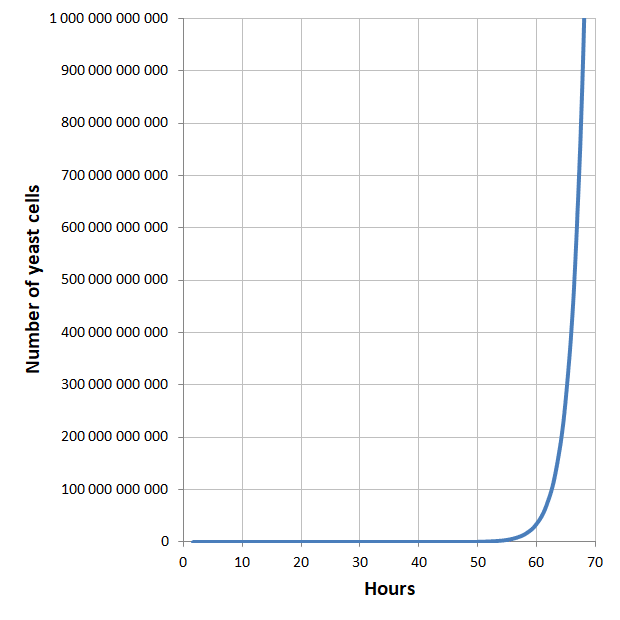
- Initial State: 1 cell
- After 24 hours (~14 life cycles): ~16,000 cells
- After 48 hours (~29 life cycles): ~268 million cells
- Before 72 hours (~43 life cycles): ~1 trillion cells
A trillion yeast cells roughly equate to the total cellular mass found in a standard 50-gram commercial block of compressed yeast. While commercial yeast manufacturers harness these exact biological parameters in controlled industrial bioreactors to produce bulk yeast rapidly, actual bread dough operates under different constraints. In a denser, nutrient-limited mixture of flour, water, and salt, yeast reproduction slows down considerably. Nonetheless, the underlying exponential capacity remains the primary driver behind dough leavening.
Chronology of the Pandemic Baking Boom
The phenomenon of empty baking aisles did not occur overnight; it evolved in distinct phases corresponding to global government interventions and shifting consumer habits.
Phase 1: The Initial Panic and Supply Chain Disruptions (March – May 2020)
As the World Health Organization declared COVID-19 a global pandemic and nations implemented sweeping lockdowns, consumer anxiety triggered panic-buying. Non-perishable goods, flour, sugar, and yeast vanished from retail inventories. Supply chains, accustomed to steady, predictable institutional demand from commercial bakeries and restaurants, struggled to pivot overnight to consumer-packaged goods destined for individual households.
Phase 2: Adaptation and Culinary Experimentation (June – December 2020)
With lockdowns extending through the summer and autumn months, home cooks sought productive indoor hobbies. Baking emerged as a primary outlet for stress relief and culinary creativity. As commercial yeast supplies remained intermittent, bakers divided into distinct camps: those who embraced wild fermentation through complex sourdough starters, and those who sought technological and scientific workarounds to maximize commercial yeast efficiency.
Phase 3: The Rise of Micro-Dosing and Precision Tools (2021 – Present)
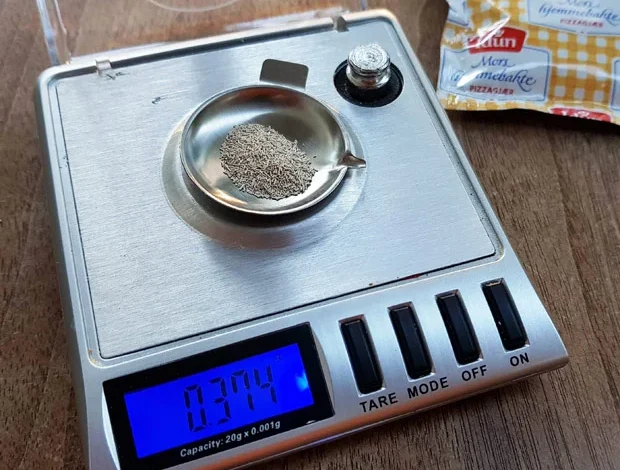
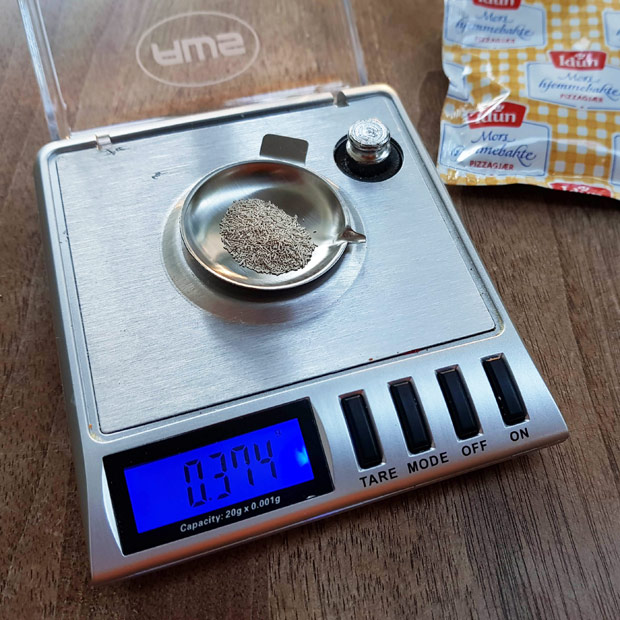
By late 2020 and into subsequent years, home bakers began adopting advanced techniques traditionally reserved for artisanal pizzerias and commercial laboratories. Recognizing that standard teaspoon measurements are imprecise and often lead to excessive yeast consumption, culinary hobbyists integrated digital milligram scales—capable of reading down to 0.001 grams—into their domestic routines.
Supporting Data and Mathematical Dough Formulation
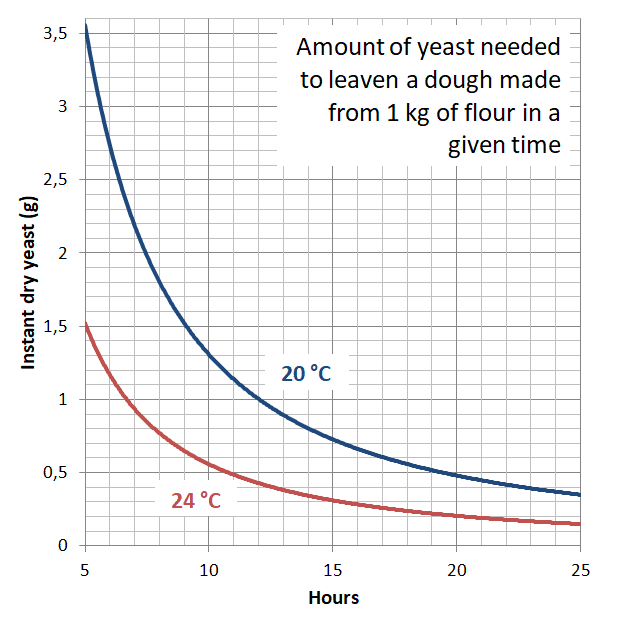
The integration of precision measurements into home baking allowed enthusiasts to drastically reduce the quantity of yeast required for a standard recipe. Rather than dumping an entire 12-gram sachet of instant dry yeast into a single batch of dough—a common practice that often leads to over-proofed bread and yeasty flavor profiles—bakers adopted long, cold, or ambient bulk fermentations (known professionally as direct or straight dough methods).
Advanced digital tools, such as mobile applications originally designed for artisan pizza makers (including PizzApp+ for Android), gained mainstream traction among domestic bakers. These applications utilize complex algorithms factoring in flour weight, ambient room temperature, water temperature, and desired fermentation duration to calculate the exact fractional weight of yeast required.
For example, data derived from professional dough-formulation models demonstrates that a standard bread or pizza dough utilizing 1 kilogram of wheat flour requires merely 0.48 grams of instant dry yeast if subjected to a 20-hour bulk fermentation at 20°C (68°F).
| Flour Quantity | Fermentation Time | Ambient Temperature | Required Instant Dry Yeast |
|---|---|---|---|
| 1,000 grams | 4 hours | 24°C / 75°F | ~2.5 to 3.0 grams |
| 1,000 grams | 12 hours | 20°C / 68°F | ~0.80 grams |
| 1,000 grams | 20 hours | 20°C / 68°F | ~0.48 grams |
| 1,000 grams | 24 hours | 16°C / 60°F | ~0.35 grams |
Affordable digital scales capable of measuring these minute quantities with high fidelity dropped significantly in price, transitioning from specialized laboratory equipment to accessible kitchen gadgets costing very little.
Culinary Implications and Flavor Profiles
Beyond the pragmatic benefit of stretching grocery budgets and mitigating supply chain shortages, the shift toward low-yeast, long-fermentation baking yielded unexpected culinary advantages.
In traditional rapid-rise baking, high quantities of yeast quickly consume available sugars to produce carbon dioxide and ethanol, inflating the gluten network rapidly. However, this expedited process leaves little time for secondary chemical and biological reactions. When bakers reduce yeast quantities and extend bulk fermentation times—often ranging from 12 to 24 hours—microbial activity extends far beyond simple leavening.
During extended fermentation, naturally occurring lactic acid bacteria present in flour or introduced through ambient environments have adequate time to metabolize complex carbohydrates. This biochemical process produces organic acids, primarily lactic and acetic acid, which impart depth, complexity, and subtle sour notes to the finished crust and crumb. Furthermore, enzymatic activity breaks down starches into simpler sugars, enhancing natural sweetness and browning during the baking process.
While sourdough fermentation remains the gold standard for complex flavor development, it demands daily maintenance, feeding schedules, and a tolerance for variable microbial behavior. For many home cooks, the combination of instant dry yeast convenience and prolonged fermentation offered an optimal middle ground: the predictable reliability of commercial yeast paired with the superior flavor profile characteristic of artisanal baking.
Broader Economic and Consumer Shifts
The lessons learned during the pandemic baking boom continue to influence modern consumer behavior. The experience exposed the fragility of hyper-optimized global supply chains while highlighting the resilience and adaptability of consumers.
Culinary educators and food scientists note that the widespread adoption of precision measuring tools has permanently elevated the baseline skill set of the home cook. Cooking and baking are increasingly viewed not merely as domestic chores, but as applied sciences where variables such as hydration percentages, thermal regulation, and microbial growth rates are actively managed.
Furthermore, the economic efficiency discovered during periods of scarcity has outlived the initial supply shortages. Consumers who once burned through multiple packets of yeast per week now recognize that single sachets can be conserved over dozens of baking sessions. As food prices fluctuate and global supply chains face ongoing pressures from climate change, geopolitical instability, and logistical bottlenecks, these micro-scale efficiency practices provide a resilient model for sustainable domestic food production.
Ultimately, the confluence of a global health crisis, mathematical principles of exponential growth, and accessible kitchen technology transformed a mundane grocery shortage into a masterclass in culinary science. By letting time do the heavy lifting, home bakers demonstrated that small quantities, when guided by precise scientific understanding, can yield extraordinary results.