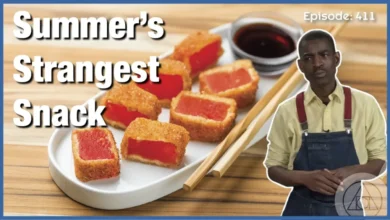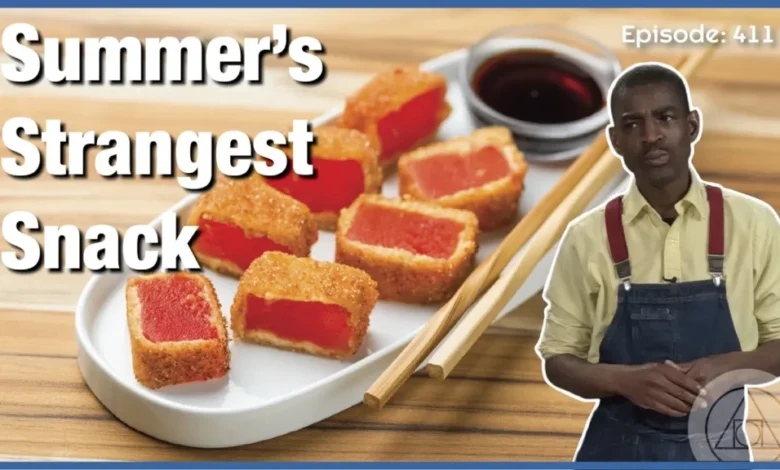
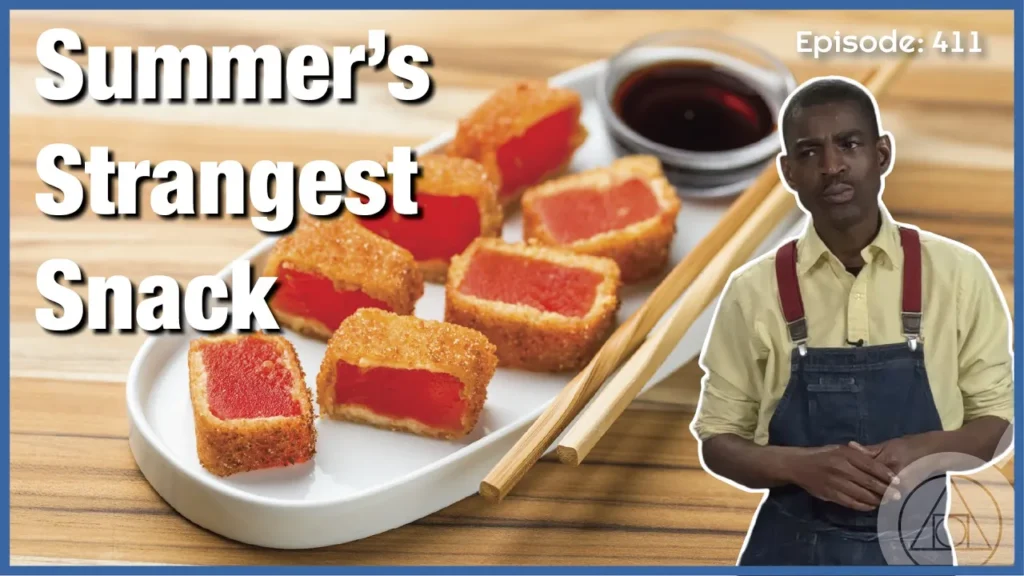
The intersection of modernist culinary techniques and seasonal produce has long been a subject of experimentation for professional chefs and home enthusiasts alike. Recently, the "We Transform Food" (WTF) series, produced by Modernist Pantry, tackled a unconventional challenge: deep-frying various types of melons, including watermelon, cantaloupe, and honeydew. While deep-frying fruit is a staple of state fairs—most notably with apples and bananas—the application of high-heat oil to the high-water-content structure of melons represents a technical hurdle that requires precise temperature control and specific coating methodology to avoid catastrophic failure.
The Chemistry of Frying High-Moisture Produce
Deep frying is a process governed by the displacement of water. As a food item enters oil heated between 350°F and 375°F (175°C to 190°C), the water on the surface and within the outer layer of the food rapidly converts to steam. This pressure prevents the oil from penetrating the food while simultaneously crisping the exterior. When dealing with melons—which are composed of approximately 90 to 92 percent water—the margin for error is significantly smaller than with starchier produce like potatoes or plantains.
If the batter is too thin or the temperature too low, the moisture from the melon leaks out, leading to a soggy, disintegrated product. If the temperature is too high, the exterior burns before the internal heat has a chance to alter the texture of the fruit’s cellular structure. The experiment demonstrated that when executed correctly, the heat causes a breakdown of the fruit’s pectin, transforming the crisp, aqueous flesh into a custard-like consistency. This creates a sensory paradox: a hot, crisp shell encasing a warm, creamy, and intensely sweet fruit center.
Chronology of Culinary Innovation: From State Fair Staples to Modernist Kitchens
The evolution of deep-fried fruit is deeply rooted in North American carnival culture. For decades, the "fried Oreo" or "fried Snickers" reigned supreme, with chefs eventually pivoting to fresh produce to balance the indulgence. The shift toward frying melons specifically represents a later evolution in this timeline, emerging as a niche interest among avant-garde chefs who utilize modern stabilizers and hydrocolloids.
- Early 20th Century: Deep-fried fritters and fruit-based pastries gain popularity in North American diners, usually restricted to apples or peaches due to their structural integrity.
- The 1990s: The rise of fusion cuisine encourages experimentation with tropical fruits in tempura-style batters.
- 2010s: The Modernist movement, championed by entities like Modernist Pantry, begins systematically analyzing the chemical properties of ingredients, leading to the development of sophisticated batters that can withstand the high moisture content of melons.
- Current Era: The release of "We Transform Food" Episode 411 serves as a documentation of these techniques for the home cook, providing a scalable framework for unconventional frying.
Supporting Data: Composition and Thermodynamic Requirements
To achieve a successful result, the culinary process must account for the specific sugar and water profiles of the melons being used. Watermelon (Citrullus lanatus) contains high levels of lycopene and a simple sugar profile, which caramelizes rapidly under heat. Cantaloupe (Cucumis melo var. cantalupensis) offers a higher density of beta-carotene and a distinct aromatic profile, which intensifies when heated.
| Fruit Variety | Water Content | Primary Sugar Type | Frying Behavior |
|---|---|---|---|
| Watermelon | ~92% | Fructose | Rapid steam release; requires heavy batter |
| Cantaloupe | ~90% | Sucrose | Maintains structural integrity longer |
| Honeydew | ~89% | Glucose | Becomes soft/custard-like quickly |
The technical success of the fry depends on the "Leidenfrost effect" occurring at the surface of the batter. By creating a thermal barrier, the chef prevents the melon from simply boiling in its own juices. Analytical data suggests that a batter with a high protein-to-starch ratio—often utilizing rice flour for crispness and egg whites for aeration—is essential for success.
Official Perspectives and Professional Analysis
The "We Transform Food" series acts as an educational platform for the Modernist Pantry, an organization dedicated to making specialized culinary equipment and ingredients accessible to the public. According to their documentation, the primary goal of these episodes is not merely to create a novelty dish, but to demonstrate how standard culinary techniques can be adapted to ingredients typically considered "un-fryable."
Culinary experts note that this process has broader implications for food waste and menu development. By transforming over-ripe or less-than-aesthetic melons through heat, chefs can utilize produce that might otherwise be discarded. The transformation of a raw, cooling fruit into a warm, decadent dessert provides a pathway for utilizing seasonal produce in off-season contexts.
"The experiment highlights the necessity of understanding the ingredient’s internal structure before applying heat," noted one independent culinary analyst. "When we fry a melon, we aren’t just cooking the surface; we are essentially poaching the interior in its own steam while simultaneously creating a crisp exterior shield. It is a masterclass in thermal management."
Broader Impact and Culinary Implications
The implications of this experiment extend beyond the home kitchen. In the professional sector, the ability to manipulate fruit texture via heat opens new possibilities for vegan desserts and textural contrasts in fine dining. The "fried melon" model serves as a foundation for understanding how high-water-content items—such as tomatoes, zucchini, or even citrus—can be re-engineered through deep frying.
Furthermore, the documentation provided by the Modernist Pantry emphasizes the use of specific, high-smoke-point oils. This is a critical factor often overlooked in domestic settings. By utilizing oils like refined avocado or grapeseed oil, the chef avoids the introduction of off-flavors that occur when oils with lower smoke points break down during the extended heating required to properly fry a dense melon wedge.
As consumers continue to seek more creative ways to prepare plant-based foods, the techniques popularized by the "We Transform Food" series are likely to see increased adoption. The transition from traditional, predictable fried foods to more complex, fruit-forward dishes marks a shift in how modern home cooks perceive the boundaries of their kitchen equipment.
In conclusion, the deep-frying of melons is not a mere gimmick. It is a precise, scientifically grounded culinary application that requires an understanding of water displacement, batter chemistry, and heat transfer. While the resulting product—a crispy, custard-like fruit—may seem counterintuitive, it stands as a testament to the versatility of modern ingredients and the potential for any chef, amateur or professional, to fundamentally change the nature of the food they serve. The documentation provided in the "We Transform Food" series serves as a valuable resource for those looking to push the boundaries of their culinary capabilities, proving that with the right approach, even the most aqueous produce can be transformed into a memorable dining experience.