Pakar Gizi UI Ungkap Tanda dan Cara Mencegah Anemia Defisiensi Besi Sejak Dini

Jakarta – Anemia due to iron deficiency continues to be a persistent nutritional challenge in Indonesia, affecting approximately one in four children and one in four pregnant women. This widespread prevalence, largely attributed to insufficient iron intake, poses a significant public health concern because the condition often develops asymptomatically, its detrimental effects only becoming apparent when they impact a child’s health and developmental trajectory.
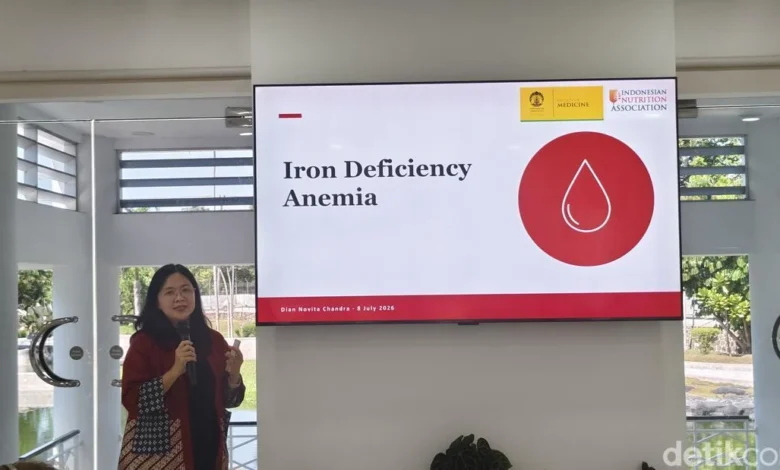
Dr. Dian Novita Chandra, M.Gizi, a nutritionist from the Faculty of Medicine at Universitas Indonesia and Secretary of the Indonesian Nutrition Association (INA), highlighted the critical nature of iron deficiency anemia as a national health priority. "Iron deficiency anemia is highly prevalent in the early stages of life," Dr. Chandra stated. "This period is paramount for a child’s growth, immune system development, and lays the foundation for lifelong health into adulthood." She made these remarks during a talk show held at the Danone Specialized Nutrition factory in Prambanan, Central Java, on Wednesday, July 8, 2026. The event, organized by Danone Specialized Nutrition in collaboration with INA, aimed to raise awareness about the critical role of early nutrition in preventing developmental challenges.
The Silent Onset: Why Iron Deficiency Anemia Often Goes Unnoticed
Iron deficiency anemia is frequently referred to as a "silent condition" due to its insidious nature and the lack of specific, easily recognizable symptoms in its initial stages. In the early phase, the body merely experiences a depletion of iron reserves, which typically does not manifest in noticeable discomfort. As the deficiency progresses and the body’s iron demands remain unmet, hemoglobin levels begin to decline, signaling the onset of anemia.
"Iron deficiency anemia is considered a silent condition because its symptoms are usually subtle and non-specific," explained Dr. Chandra. This gradual progression often leads families to overlook the signs of iron deficiency in their children. The telltale indicators, when they do appear, can be easily mistaken for common childhood ailments. These may include a pale complexion, unusual fatigue, reduced appetite, increased susceptibility to illness, decreased activity levels, or difficulties with concentration. Because these complaints are often dismissed as typical childhood phases, interventions are frequently delayed until the anemia has become more advanced and its impact more pronounced.
The World Health Organization (WHO) estimates that globally, iron deficiency anemia affects over 1.5 billion people, with the highest prevalence observed in women of reproductive age and young children. In Indonesia, national data from the Basic Health Research (Riskesdas) in 2018 indicated that the prevalence of anemia in children aged 6-59 months was 48.9%, a figure that underscores the urgency of addressing this issue.
Beyond Lethargy: The Far-Reaching Consequences of Iron Deficiency
The ramifications of iron deficiency extend far beyond mere physical weakness. Iron plays a pivotal role in numerous bodily functions, with a particularly critical impact on brain development during infancy and early childhood. This formative period sees an elevated demand for iron to support rapid growth, the establishment of a robust immune system, and the intricate development of cognitive functions.
"If left unaddressed, this condition can diminish a child’s learning capacity and attention span," Dr. Chandra warned. "Research has also indicated that persistent iron deficiency can negatively affect cognitive function well into adulthood." This highlights that iron deficiency anemia is not a transient state of fatigue but a condition with the potential for long-term developmental consequences if not proactively managed from the earliest stages of life. The implications for educational attainment and future economic productivity are substantial.
The Indonesian Pediatric Society (IDAI) has consistently emphasized the importance of adequate iron intake for optimal child development, citing potential long-term impacts on cognitive abilities, academic performance, and overall quality of life. Early intervention is thus crucial to mitigate these risks.
The Nuances of Iron Absorption: Beyond Just Iron-Rich Foods
Simply consuming foods rich in iron is not a guaranteed solution for preventing or treating iron deficiency anemia. The body’s ability to absorb and utilize this essential mineral is equally crucial. Optimal iron absorption is paramount for its role in hemoglobin synthesis and supporting other vital physiological processes.
"Of course, food is the most important factor," Dr. Chandra emphasized. "However, it’s not enough to simply eat foods that are rich in iron. We must also consider whether these foods are being effectively absorbed by the body."
Several factors influence iron absorption. Phytates, commonly found in cereals and legumes, can impede the absorption of iron. While certain processing methods, such as fermentation in tempeh, can help mitigate this inhibitory effect, other compounds play a beneficial role. Vitamin C, for instance, significantly enhances the absorption of non-heme iron, the type found in plant-based foods.
Therefore, a balanced dietary approach that incorporates a diverse range of iron sources – both animal-based (heme iron, which is more readily absorbed) and plant-based (non-heme iron) – is essential. This should be complemented by the inclusion of fruits and vegetables rich in vitamin C to maximize iron uptake. For individuals who struggle to meet their daily iron requirements through diet alone, iron-fortified foods, often enriched with both iron and vitamin C, can serve as a valuable supplementary option.
Early Detection: The Cornerstone of Effective Prevention
Preventing iron deficiency anemia should ideally commence before the condition fully manifests. Educating caregivers about appropriate dietary practices and implementing early detection strategies are critical steps to identify and address iron depletion at its nascent stages, rather than waiting for the more severe consequence of low hemoglobin levels.
"The most crucial aspect is to provide education before the deficiency becomes severe," Dr. Chandra stated. "We need to detect it earlier, during the phase of iron depletion, before it progresses to anemia."
A promising approach gaining traction involves non-invasive screening methods, such as the "iron calculator." This innovative tool assesses an individual’s risk of iron deficiency by evaluating factors like dietary patterns, vitamin C intake, the presence of iron absorption inhibitors, and a history of anemia in the mother, as well as birth conditions. By identifying at-risk children early on, timely interventions can be implemented, thereby preventing the development of full-blown anemia.
The Synergistic Power of Education and Fortification
Consistent and adequate iron intake is vital for preventing and managing iron deficiency. A study conducted among children aged one to three years in urban areas of Indonesia investigated the comparative effectiveness of nutritional education alone versus a combined approach of nutritional education and the consumption of iron- and vitamin C-fortified foods.
The findings revealed that the group receiving both education and fortified foods demonstrated a significantly better ability to meet their daily iron requirements. Furthermore, their hemoglobin levels remained stable over a four-month period. In contrast, the group that received only nutritional education experienced a decline in hemoglobin levels. This research underscores that educational initiatives are most impactful when they are coupled with concrete strategies to ensure sufficient iron intake, leading to more optimal and sustained health benefits.
In concluding her remarks, Dr. Chandra reiterated the imperative of early and consistent prevention of anemia. "The message is simple: we must detect iron deficiency earlier, provide good nutrition, and thereby prevent iron deficiency anemia. This will ensure Indonesia has a healthier and more robust future generation," she concluded.
The implications of this research extend to public health policy, suggesting that a dual-pronged strategy of comprehensive nutritional education and targeted food fortification programs could be highly effective in combating iron deficiency anemia across vulnerable populations in Indonesia. The long-term benefits, including improved cognitive development and overall health, are significant for both individual well-being and national development.
The talk show, hosted at the Danone Specialized Nutrition facility, served as a platform to disseminate these critical insights to a broader audience, including healthcare professionals, educators, and parents. The commitment of organizations like Danone Specialized Nutrition in supporting such initiatives reflects a growing recognition of the vital link between early nutrition and lifelong health outcomes.