Raspberry Swirl Cheesecake Bars: A Masterclass in Balancing Creamy Richness and Tart Fruit Flavors

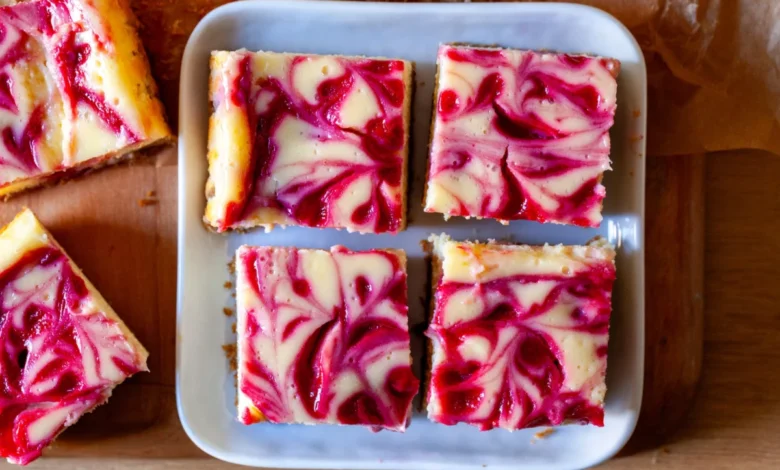
The culinary landscape of dessert-making often forces a compromise between visual perfection and unpretentious flavor, but a new entry into the contemporary baking canon manages to bridge this gap with remarkable ease. Developed as a collaborative tribute to family tradition and modern baking efficiency, the newly introduced Raspberry Swirl Cheesecake Bars offer a sophisticated yet accessible approach to a historically complex dessert category. Moving away from the high-maintenance requirements of traditional springform cheesecakes, this recipe reimagines the classic dessert into portable, shareable squares that cater to both home bakers and large-scale gatherings.
Background Context and Evolution of Cheesecake Bars

The evolution of cheesecake spans millennia, with historical records tracing its roots back to ancient Greece, where flattened cheese cakes were served to athletes during the first Olympic games in 776 BC. Over centuries, the dessert migrated across Europe, eventually culminating in the iconic New York-style cheesecake popularized in the United States during the early 20th century. However, the modern adaptation of cheesecake into bar format represents a significant shift in baking convenience.
Traditional cheesecakes require precise water baths, lengthy baking times, and delicate cooling procedures to prevent surface cracking. The advent of cheesecake bars—and specifically fruit-swirled variants—revolutionized home baking by utilizing standard square baking pans and shorter thermal cycles. This format preserves the luxurious mouthfeel of high-fat dairy while eliminating the structural anxieties traditionally associated with whole-cake baking. The integration of a vibrant fruit element serves a dual purpose: it introduces essential acidity to cut through the richness of the cream cheese while providing an organic, visually striking aesthetic reminiscent of marbled stonework.
Anatomy of the Recipe: Ingredients and Structural Integrity

At the core of the Raspberry Swirl Cheesecake Bars is a meticulously balanced tripartite structure comprising a buttery graham cracker crust, a velvety citrus-infused cream cheese filling, and an intense, seedless raspberry reduction.
Data compiled from culinary testing indicates that the optimal ratio for bar-style cheesecakes relies on a high fat-to-protein balance in the dairy component, typically achieved through full-fat block cream cheese rather than whipped or spreadable varieties. The crust utilizes finely milled graham cracker crumbs bound with granulated sugar, a pinch of salt, and melted butter, blind-baked briefly to establish structural integrity before the liquid batter is introduced.
The raspberry swirl utilizes a technique that transforms overripe or soft berries—frequently prone to rapid spoilage—into a high-impact flavor agent. By puréeing the fruit with sugar and passing it through a fine-mesh sieve, bakers eliminate fibrous seeds while concentrating the natural anthocyanins responsible for the deep, ink-like coloration. This reduction is strategically injected both beneath the surface and across the top of the batter, creating an internal marbled effect that ensures every bite delivers an even distribution of sweet-tart flavor.

Chronology and Preparation Methodology
The production workflow for the Raspberry Swirl Cheesecake Bars is designed for efficiency, requiring approximately 75 minutes from preparation to oven insertion, followed by mandatory chilling time.
The process initiates with thermal regulation, requiring the oven to be preheated to 325 degrees Fahrenheit (163 degrees Celsius)—a moderate temperature designed to cook the custard gently without browning the surface. An 8-by-8-inch square baking pan is lined with parchment paper, with overhangs left intentionally to facilitate easy extraction post-cooling.

- Crust Formation: Finely crushed graham crackers are combined with sugar, salt, and melted butter, then firmly compressed into the base of the prepared pan. This layer is baked for 10 minutes to set the starches and fats.
- Fruit Processing: Fresh raspberries are blended with granulated sugar until liquefied, then strained to remove particulate matter, yielding a smooth, vibrant coulis.
- Batter Preparation: Cream cheese and sugar are beaten until thoroughly aerated, followed by the gradual incorporation of eggs to prevent curdling. Fresh lemon zest and juice are folded in at the final stage to introduce bright aromatic notes that counteract the heaviness of the dairy. Alternatively, a food processor method allows cold cream cheese chunks to be processed directly with the remaining ingredients, significantly reducing preparation time.
- Assembly and Swirling: The raspberry coulis is transferred to a piping device or a sealed culinary bag with a corner removed. The sauce is injected deep into the unbaked cheesecake batter to form submerged pockets, followed by surface droplets. A wooden skewer or toothpick is drawn through the medium to create a decorative marbling pattern.
- Baking and Cooling: The assembly is baked for 40 to 50 minutes until the center retains a slight, stable jiggle. Following a 15-minute ambient cooling period on a wire rack, the pan is transferred to refrigeration for complete setting.
Statements and Industry Reactions
Culinary experts and food historians have noted a distinct cultural shift toward elevated comfort foods in recent years, a trend accelerated by home-cooking revivals. Food scientists point out that the chemical interaction between the citric acid in the lemon juice and the lactic acid in the cream cheese creates a complex flavor profile that elevates a simple dessert into a gourmet experience.
"The democratization of baking through accessible formats like bars does not mean a compromise in quality," notes a prominent food science researcher specializing in dairy emulsions. "By utilizing mechanical emulsification via standard electric mixers or food processors, home bakers can achieve the same micro-aeration found in commercial bakeries, resulting in a silkier texture that holds its shape cleanly when sliced."

Broader Impact and Economic Implications
The popularity of fruit-swirled dessert bars reflects broader consumer trends emphasizing portion control, aesthetic versatility, and seasonal ingredient utilization. As grocery prices fluctuate, recipes that successfully repurpose overripe or fragile produce—such as fresh berries nearing the end of their shelf life—offer practical economic value to households seeking to minimize food waste.
Furthermore, the adaptability of the recipe aligns with the growing demand for potluck- and picnic-friendly items that require minimal tableware and zero on-site assembly. The capability to prepare the bars up to a week in advance without structural degradation makes them a staple for catering operations and home entertainers alike.

Nutritional Considerations and Storage Longevity
From a nutritional standpoint, cheesecake bars are calorie-dense due to the heavy concentration of lipids and carbohydrates derived from dairy, butter, and refined sugars. However, the inclusion of fresh raspberries introduces dietary fiber and antioxidant compounds, specifically polyphenols, which offer minor nutritional mitigation.
Storage longevity is a notable advantage of this formulation. When sealed adequately and maintained at a consistent refrigeration temperature between 34 degrees Fahrenheit and 38 degrees Fahrenheit (1 to 3 degrees Celsius), the bars retain their structural integrity, moisture levels, and flavor profile for five to seven days. For optimal presentation, culinary professionals recommend wiping the slicing blade clean between cuts and dipping it in warm water to ensure clean, sharp geometric edges.