Refajo: The evolution of Colombia’s essential social beverage from backyard staple to culinary icon

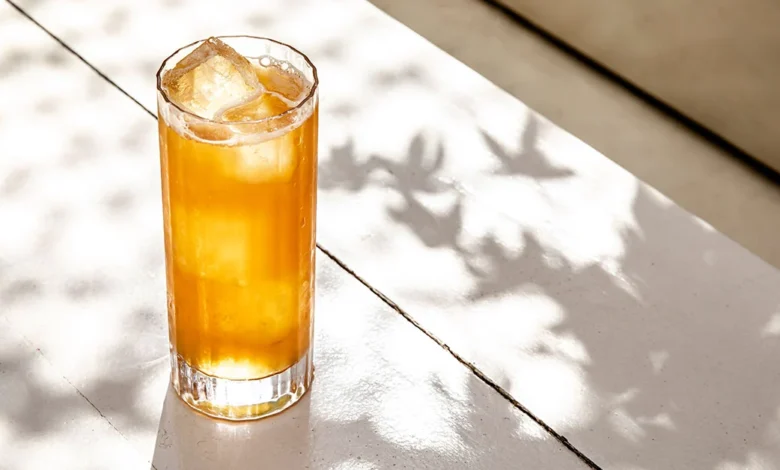
On an afternoon so sweltering that the air itself seemed to stagnate, the promise of Medellín as the “City of Eternal Spring” felt like a distant myth. Just two weeks after relocating from the frantic pace of New York City to the mountainous outskirts of Colombia’s second-largest city, I found myself seeking refuge beneath the canopy of a eucalyptus tree. My host, a local farmer, gestured toward the horizon and offered a simple inquiry: "¿Refajémonos?" As a newcomer to the region, the term was entirely foreign. It was not a proposition of impropriety, but rather an invitation to participate in one of Colombia’s most deeply ingrained social rituals: the consumption of a Refajo.
The Refajo is, in its most elemental form, a humble shandy—a mixture of light beer and carbonated, sugary soda. While the concept of mixing beer with non-alcoholic mixers is a global phenomenon, from the British shandy to the German Radler, the Colombian iteration occupies a singular place in the national consciousness. It has transcended its status as a simple beverage to become a verb, a social lubricant, and a cornerstone of Colombian hospitality.
A Historical Perspective on the Refajo
Anthropological research suggests that the Refajo has been a fixture of Colombian social life for at least four decades. According to Luis R. Vidal, an anthropologist at the Colegio Mayor de Antioquia, the drink emerged not as a culinary experiment, but as a practical solution to social and economic realities. In the late 20th century, the Refajo served three primary functions: it acted as an accessible hangover remedy, provided a method for extending limited beer supplies during large family gatherings, and offered a refreshing, low-alcohol alternative for outdoor celebrations in tropical climates.
The drink’s longevity is rooted in its versatility. While the base components are consistent—light beer and a citrus-forward, bubblegum-scented soda—the variations are regional. In the central Andean regions, the drink is synonymous with "Colombiana," a local soda often compared by international visitors to a mixture of cream soda and citrus. Conversely, along the Caribbean coast, the preference shifts toward "Kola Román," a reddish, highly sweet soda that imparts a distinct flavor profile and appearance to the mixture.
The Anatomy of the Beverage
The standard preparation of a Refajo is remarkably unpretentious. It involves combining equal parts of chilled light lager and the chosen soda over ice. However, the cultural implications of this mixture are significant. In many traditional Colombian households and rural establishments, the Refajo is prepared in large batches. It is frequently served alongside hearty, calorie-dense regional dishes, such as cazuela (a rich bean stew) or crispy chicharrón (fried pork belly).
The drink’s ubiquity has also led to its industrialization. In the early 2000s, the Colombian brewing giant Bavaria launched "Cola y Pola," an RTD (Ready-to-Drink) canned version of the classic Refajo. The name cleverly plays on the local slang "pola," which is synonymous with beer. This product successfully bridged the gap between the DIY, homemade tradition and the modern convenience market. Today, it is nearly impossible to enter a neighborhood corner store in Colombia without encountering the familiar branding of a pre-mixed Refajo.
The Professionalization of a Classic
In recent years, Colombia’s hospitality sector has seen a surge in international acclaim, particularly in cities like Medellín and Bogotá. As the country’s bar scene matures, a new generation of mixologists is navigating the tension between preserving traditional drinking culture and innovating for a global audience.
Maycoll Tobón, the bar director at Bar Carmen in Medellín—an establishment recognized among the World’s 50 Best Bars—represents this shift. Tobón argues that the Refajo is an essential component of the national identity that deserves more sophisticated treatment. Rather than viewing the simplicity of the drink as a limitation, Tobón and his contemporaries are using it as a canvas to showcase regional biodiversity.
At Bar Carmen, the menu has featured elevated interpretations of the Refajo. These versions eschew mass-produced, saccharine sodas in favor of house-made reductions and infusions featuring native tropical fruits such as gulupa, granadilla, and passion fruit. By pairing artisanal beers with these vibrant, acidic components, bartenders are effectively deconstructing the classic formula to highlight the complexity of Colombia’s agricultural bounty.
Socio-Economic Implications and Cultural Unity
The enduring popularity of the Refajo speaks to a broader cultural truth: the drink acts as a social equalizer. Unlike more complex craft cocktails that may be restricted by price point or accessibility, the Refajo is accessible to all social strata. It is a drink of the masses, appearing with equal frequency at modest backyard barbecues, rural farm gatherings, and high-end urban cocktail bars.
This cross-sectional appeal is the source of its strength. As the Colombian cocktail scene continues to gain international prestige, there is a legitimate concern that traditional drinks might be sidelined in favor of imported spirits and trends. However, the current movement to "preserve" the Refajo is not about stagnation; it is about acknowledging the historical value of a drink that has historically unified people across disparate regions and social classes.
The Future of the Refajo
Data regarding the consumption of RTD (Ready-to-Drink) cocktails in South America shows a steady upward trajectory. As consumers move away from high-ABV spirits in favor of lower-alcohol, sessionable drinks, the Refajo is well-positioned to remain relevant. The drink’s low alcohol content, typically hovering between 2% and 3% ABV depending on the ratio, aligns with global trends toward "mindful drinking."
Furthermore, the integration of indigenous ingredients—such as viche, an artisanal, sugarcane-based spirit from the Afro-Colombian Pacific Coast—into modern cocktail menus suggests that the Refajo may soon incorporate more complex, local, and sustainable elements. This evolution reflects a broader shift in the Colombian culinary landscape: a transition from colonial-era influences toward a celebration of native flavors and traditions.
Conclusion
The Refajo remains more than just a drink; it is a testament to the ingenuity of Colombian culture. From the simple act of combining beer and soda to beat the afternoon heat, the practice has evolved into a sophisticated expression of local pride. Whether served in a plastic pitcher at a family wedding or presented in a crystal glass at an award-winning bar, the Refajo serves as a reminder that the most significant cultural traditions are often those that are the most accessible.
As long as there is a need to gather, celebrate, and endure the heat of the Colombian afternoon, the Refajo will likely continue to hold its position as a staple of the national identity. It is a humble, resilient, and inherently social beverage that, in the words of those who have made it an art form, is worth holding on to. The transition of the Refajo from a simple backyard remedy to an object of culinary study ensures that it will remain a relevant, and perhaps even a pioneering, force in the future of South American mixology.