The Classic Sidecar Cocktail: Origins, Evolution, and the Enduring Appeal of a Prohibition-Era Staple

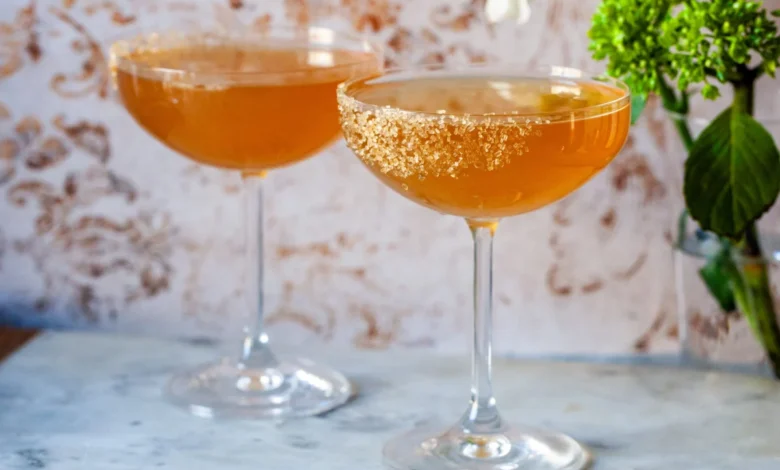
The culinary and mixology landscape has long been defined by cycles of rediscovery, with heritage cocktails continually cycling back into contemporary public awareness. Among the most enduring classics experiencing a modern revival is the Sidecar, a foundational sour cocktail traditionally composed of cognac, orange liqueur, and lemon juice. As home bartenders and upscale establishments alike revisit early 20th-century mixology, the Sidecar has emerged as a focal point of culinary interest, driven by its historical ambiguity, balanced flavor profile, and adaptability to modern tastes.
Main Facts of the Sidecar Phenomenon
The Sidecar is historically categorized as a "sour" or "daisy" style cocktail, a family of drinks characterized by a base spirit, a citrus element, and a sweetener. In a standard preparation, the beverage relies on a potent foundation of cognac or brandy, tempered by the acidity of fresh lemon juice and the aromatic sweetness of an orange liqueur, such as Cointreau or triple sec.

While classic recipes traditionally adhere to a strict proportional formula—often favoring a 2:1:1 ratio of spirit to liqueur to citrus—contemporary interpretations frequently adjust these quantities to suit modern palates, occasionally scaling back the citrus component to highlight the warming notes of the aged spirit. The drink is typically served in a stemmed glass with a sugared rim, a stylistic flourish that provides a visual contrast and a textural sweet counterweight to the tartness of the liquid contents.
Chronology and Historical Origins
The precise origins of the Sidecar remain a subject of debate among culinary historians and beverage professionals, with two primary origin stories dominating the historical record. Both narratives place the cocktail’s invention around the era of the First World War, between 1914 and 1918, though the exact geographic and personal catalysts are heavily contested.
The first narrative places the birth of the cocktail in Paris, attributing its creation to either Harry’s New York Bar or the Bar Hemingway at the Hôtel Ritz Paris. According to this folklore, an American army captain stationed in France during World War I would frequently arrive at the establishment via the passenger seat of a motorcycle sidecar. Seeking a drink to warm and invigorate himself, the captain requested a combination of cognac, orange liqueur, and lemon juice. Impressed by the regular’s preferred mode of transportation, the attending bartender ultimately named the concoction in honor of the vehicle.

The second historical theory suggests a more utilitarian origin behind the nomenclature. Early 20th-century bartenders occasionally found that the volume of mixed ingredients exceeded the capacity of the cocktail shaker. Rather than discarding the excess liquid, bartenders would strain the leftover portion into a secondary, smaller glass—frequently referred to in professional kitchens and bars as a "sidecar." Over time, the name stuck, transitioning from a bartending term to a formal menu item.
Despite these competing legends, the earliest documented print appearances of the Sidecar emerged in the early 1920s. Cocktail historians point to Robert Vermeire’s 1922 publication, "Cocktails: How to Mix Them," published in London, as well as Harry MacElhone’s "Harry’s ABC of Mixing Cocktails," released the same year in Paris. These early recipe books cemented the drink’s status in European and American drinking culture, bridging the gap between wartime novelty and a staple of the Prohibition-era cocktail renaissance.
Supporting Data and Mixological Analysis
From a culinary science perspective, the Sidecar functions as the French architectural counterpart to the modern tequila-based Margarita. Food scientists and mixologists note that the structural equilibrium of the drink relies heavily on the interplay between congeners in aged cognac and the high concentration of essential oils found in quality orange liqueurs.

Data compiled by hospitality industry analysts indicate that classic brandy- and cognac-based cocktails have experienced a steady resurgence in off-premise sales and home consumption over the past decade. This trend aligns with a broader consumer shift toward pre-Prohibition and mid-century classic drinks, which emphasize craftsmanship, minimal ingredients, and spirit-forward profiles over heavily adulterated, sugary alternatives.
Furthermore, the versatility of the Sidecar has allowed modern mixologists to experiment with alternative base spirits. While cognac remains the orthodox choice, bartenders across North America and Europe have successfully substituted bourbon, rye whiskey, and aged rums into the traditional formulation. This adaptability has broadened the drink’s demographic appeal, introducing younger consumers to heritage flavor profiles without alienating traditionalists.
Industry Responses and Craft Beverage Trends
Prominent figures in the culinary and beverage industries have frequently weighed in on the execution of the Sidecar, particularly regarding the debated inclusion of a sugared rim. While traditional presentation demands a frosted edge of raw or superfine sugar, contemporary beverage directors often advocate for a half-rim or no sugar at all, arguing that the orange liqueur provides sufficient residual sweetness to balance the lemon juice.

Master mixologists emphasize that the integrity of a Sidecar depends almost entirely on dilution and temperature control. Because the cocktail contains no carbonation or water-heavy mixers, vigorous shaking with ice is required to chill the liquid to near-freezing temperatures while achieving the optimal level of dilution. Industry standards recommend chilling the cocktail shaker until the metal exterior becomes uncomfortably cold to the touch before straining the contents into a pre-chilled glass.
Broader Impact and Cultural Implications
The enduring popularity of the Sidecar reflects a larger cultural appetite for historical authenticity in gastronomy. In an era dominated by rapid technological advancement and digital consumption, consumers increasingly seek out tangible connections to the past, finding comfort and cultural resonance in rituals that have endured for over a century.
As bars and restaurants continue to navigate shifting consumer preferences toward premium ingredients and heritage mixology, the Sidecar remains a benchmark of professional bartending competence. Its deceptively simple three-ingredient formula serves as a canvas for technical precision, proving that classic recipes, when executed with care and high-quality components, require little reinvention to remain relevant in the modern culinary landscape.