The Integrity of Hoegeng Imam Santoso and the Mystery of His Dismissal During the Robby Tjahjadi Smuggling Scandal

The dismissal of General Hoegeng Imam Santoso from his position as the Chief of the Indonesian National Police (Kapolri) on October 2, 1971, remains one of the most significant and controversial moments in the early history of Indonesia’s New Order. Hoegeng, who served as the fifth Chief of Police from 1968 to 1971, was abruptly removed by President Soeharto at a time when he was aggressively pursuing high-level corruption and smuggling syndicates. While the official reason provided by the presidency was that Hoegeng had reached retirement age and was needed for a diplomatic assignment, the timing of his removal sparked decades of speculation regarding the influence of powerful elites and the protection of illegal business interests within the inner circles of the Cendana regime.
Hoegeng’s tenure was defined by an uncompromising commitment to law enforcement and personal austerity. At 50 years old, an age considered the prime of a professional career for a military or police officer, he was told by President Soeharto that he was "too old" to continue leading the police force. In a move common for the era—often used to sideline influential figures who did not align with the regime’s interests—Soeharto offered Hoegeng a prestigious post as the Indonesian Ambassador to Belgium. Hoegeng’s response, recorded in his 1993 biography, "Hoegeng: Polisi Idaman dan Kenyataan," was a testament to his character: "I will accept any task, as long as I am not made an ambassador, Sir." For Hoegeng, being "kicked upstairs" to a diplomatic post was a betrayal of his calling as a lawman and a transparent attempt to remove him from the domestic investigative landscape.
The Rise of the Robby Tjahjadi Smuggling Syndicate
The primary catalyst for the tension between Hoegeng and the political establishment was the investigation into Robby Tjahjadi, a young entrepreneur who had built a massive luxury car smuggling empire. Tjahjadi, a graduate of SMA Xaverius Surakarta, had moved to Jakarta in 1964. By 1969, he had established a sophisticated network that bypassed Indonesian customs to import hundreds, and eventually thousands, of high-end vehicles.
The brands involved represented the pinnacle of global automotive luxury: Alfa Romeo, Fiat, BMW, Mercedes-Benz, Ford, Continental, and even Rolls-Royce. At a time when Indonesia was struggling with post-revolutionary economic instability and seeking to build its industrial base, the loss of tax revenue from these imports was staggering. Hoegeng’s investigations revealed that the syndicate utilized several illegal methods to facilitate their operations. One primary tactic involved the misuse of diplomatic passports and privileges, allowing vehicles to enter the country under the guise of official embassy use, thereby evading heavy import duties.
Furthermore, the syndicate relied on a deep-rooted system of bribery within the Directorate General of Customs and Excise. Hoegeng noted in his autobiography that such a massive operation could not have existed without the complicity of "insiders" within the bureaucracy. "They simply bribed a number of officials who were the decision-makers in customs matters," Hoegeng wrote. The scale of the smuggling was unprecedented for the era, with estimates suggesting the state lost hundreds of millions of rupiah—a monumental sum in the early 1970s.
The Incident at Cendana: A Turning Point in Indonesian Law Enforcement
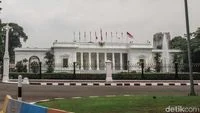
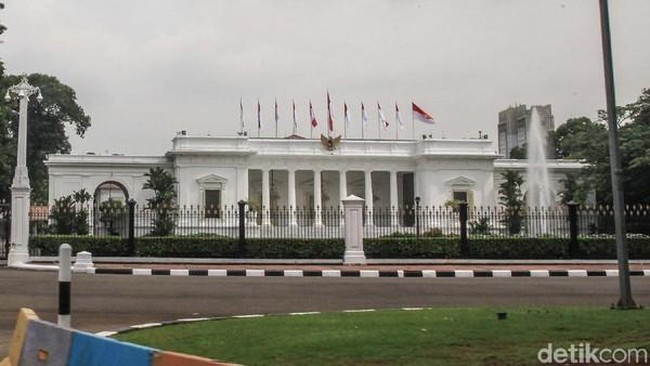
The most dramatic moment of Hoegeng’s investigation occurred when he sought an audience with President Soeharto at his private residence on Jalan Cendana No. 8, Menteng, Central Jakarta. Hoegeng’s intent was to provide a detailed progress report on the luxury car smuggling case and to seek the President’s support in pursuing the high-level figures involved.
However, upon his arrival at the Cendana residence, Hoegeng was met with a sight that fundamentally altered his understanding of the case’s political dimensions. As he was entering the premises, he saw the very man he was investigating—Robby Tjahjadi—leaving the President’s home. The realization that a suspected smuggler had direct, private access to the Head of State before the Chief of Police could even deliver his report was a profound shock.
In his 2016 memoir, "Hoegeng: Polisi dan Menteri Teladan," Hoegeng reflected on this encounter, noting that it became immediately clear that the person he was investigating enjoyed the protection of the nation’s most powerful elite. The meeting with the President that followed was strained. Realizing that his investigation had hit a "wall of power," Hoegeng decided to withhold the full details of his report and returned to the National Police Headquarters. Shortly thereafter, the process for his removal from office was initiated.
Chronology of the Case and the Aftermath of Hoegeng’s Exit
The timeline of Hoegeng’s dismissal and the subsequent handling of the Tjahjadi case illustrates the complexities of justice during the New Order:
- 1968–1970: Hoegeng initiates a crackdown on gambling and smuggling, identifying the luxury car trade as a major source of state revenue loss.
- Early 1971: The investigation into Robby Tjahjadi intensifies, revealing the involvement of customs officials and the use of diplomatic channels.
- Late 1971: Hoegeng encounters Tjahjadi at the Cendana residence.
- October 2, 1971: President Soeharto officially relieves Hoegeng of his duties as Kapolri.
- October 21, 1972: Approximately one year after Hoegeng’s dismissal, Robby Tjahjadi is finally arrested. By this time, public pressure and internal government friction had made his continued freedom a liability for the regime.
- 1973: Tjahjadi is brought to trial. The prosecution proves that his activities caused state losses of approximately Rp700 million. Despite the severity of the crime, Tjahjadi receives a relatively light sentence of 7.5 years in prison, significantly less than the 10-year maximum sought by prosecutors.
The leniency of the sentence and the delay in the arrest served as a stark contrast to the swift removal of the police chief who had first uncovered the scheme. It reinforced the public perception that while the law eventually caught up with Tjahjadi, the "system" had succeeded in neutralizing the threat Hoegeng posed to the status quo.
Analysis of the Broader Implications
The dismissal of Hoegeng Imam Santoso had lasting implications for the Indonesian National Police (Polri) and the culture of governance in Indonesia. Hoegeng was a rare figure who attempted to maintain the independence of the police force at a time when the "Dual Function" (Dwifungsi) of the military was beginning to consolidate power across all sectors of civilian life.
Institutional Impact:
Hoegeng’s removal sent a chilling message to other officers within the police and the military: integrity and strict adherence to the law were secondary to political loyalty and the protection of the regime’s "cronies." This event is often cited by historians as a turning point that accelerated the politicization of law enforcement in Indonesia, where investigations into the powerful were frequently stalled or redirected.
Economic Consequences:
The Robby Tjahjadi case was just the tip of the iceberg. The "crony capitalism" that began to flourish in the early 1970s created a shadow economy where proximity to power was more valuable than market competitiveness. By allowing smuggling syndicates to operate with semi-impunity, the state not only lost tax revenue but also undermined the development of a transparent domestic automotive industry.
Societal Legacy:
Despite his removal, Hoegeng’s legacy grew in the eyes of the Indonesian public. He became a symbol of the "honest cop," a figure against whom all subsequent police chiefs were measured. Former President Abdurrahman Wahid (Gus Dur) famously quipped that there were only three honest police officers in Indonesia: "A statue of a policeman, a speed bump (polisi tidur), and Hoegeng." This joke, while humorous, highlighted the deep-seated public cynicism regarding police corruption and the legendary status Hoegeng attained for refusing to be part of it.
The Simple Life of a Retired General
Following his refusal to take the ambassadorial post, Hoegeng lived a life of remarkable simplicity, which was unheard of for a former high-ranking official of the New Order. He refused the various perks and business opportunities often granted to retired generals. Instead, he turned to his passions for art and music. He became well-known as a painter and a singer of Hawaiian music, performing with the group "The Hawaiian Seniors" on TVRI until the program was eventually banned by the government due to his involvement with the "Petition of Fifty" (Petisi 50)—a group of prominent figures who criticized Soeharto’s authoritarian tendencies.
Hoegeng lived in a modest house and even had to sell some of his belongings to make ends meet, further cementing his reputation as a man of absolute integrity. He passed away on July 14, 2004, at the age of 82.
The story of Hoegeng and the Robby Tjahjadi case serves as a historical mirror for contemporary Indonesia. It highlights the perennial struggle between the rule of law and the influence of the powerful. While the players have changed, the challenges of investigating high-level corruption and the risks faced by those who dare to challenge "untouchable" figures remain central themes in the nation’s ongoing democratic journey. Hoegeng’s dismissal was not just the end of a career; it was a defining moment that tested the moral compass of a nation, leaving a legacy that continues to inspire calls for reform and transparency in the modern era.