
Torrone Italian Nut And Nougat Confection

Torrone: An Italian Confection of Nut, Honey, and Tradition
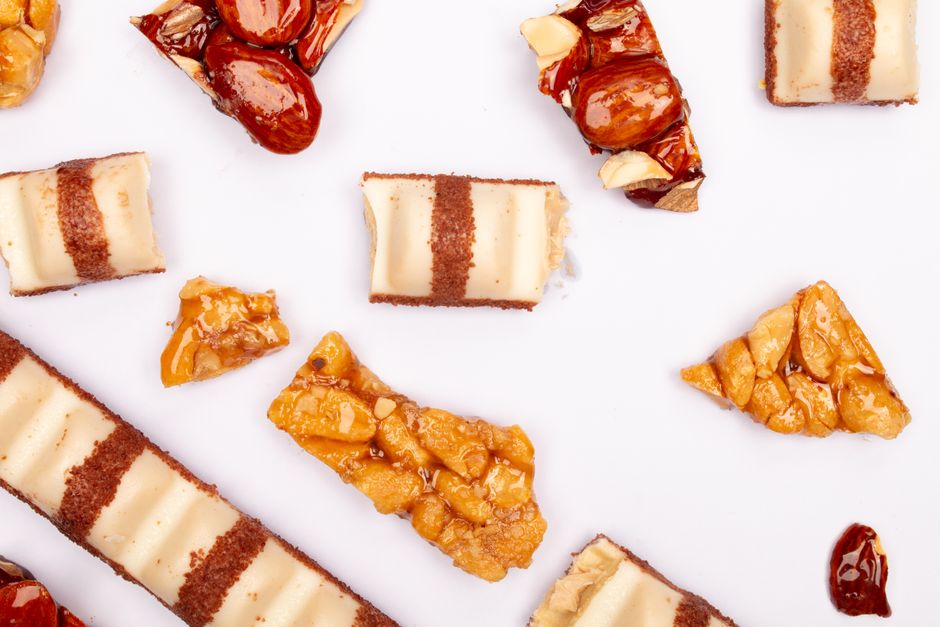
Torrone, a confection steeped in centuries of Italian culinary heritage, stands as a testament to the enduring appeal of simple, high-quality ingredients transformed into a delightful sensory experience. This sweet treat, primarily composed of honey, sugar, egg whites, and nuts, boasts a history as rich and layered as its own texture. While its origins are debated, with claims pointing to regions across Italy, the most prominent association lies with the Lombardy region, particularly the city of Cremona, often hailed as its spiritual home. The name itself, derived from the Latin "torrere" meaning "to toast," hints at a key step in its preparation – the roasting of nuts, which imparts a crucial depth of flavor and satisfying crunch. Torrone is not a singular entity; rather, it exists in a spectrum of textures and flavors, each variation reflecting local traditions and evolving tastes. The most common types include "duro" (hard) torrone, characterized by its firm, brittle texture that requires a bit of effort to bite into, and "morbido" (soft) torrone, which offers a chewier, more yielding consistency. Beyond texture, the choice of nuts and additional flavorings creates a vibrant mosaic of torrone profiles. Almonds are a perennial favorite, their delicate sweetness complementing the honey beautifully. Hazelnuts, with their earthy, roasted notes, offer a more robust flavor. Pistachios, particularly those from Bronte, Sicily, provide a visually striking green hue and a distinct, subtly sweet taste. Walnuts contribute a pleasant bitterness that balances the sweetness of the confection. Beyond these staples, regional specialties might incorporate pine nuts, peanuts, or even dried fruits like candied orange peel or cherries. The preparation of torrone is an art form, a delicate dance of precise temperature control and patient mixing. At its core, the process involves whipping egg whites to a stiff peak, creating a light and airy base. Separately, honey and sugar are heated to specific temperatures, a crucial stage that determines the final texture. For duro torrone, this syrup is typically cooked to the hard crack stage (around 300-310°F or 150-155°C), resulting in a brittle candy. For morbido torrone, the syrup is cooked to a slightly lower temperature, yielding a more pliable candy. The hot syrup is then gradually poured into the whipped egg whites while continuously beating, a process known as "montatura." This creates a stable emulsion, forming the nougat base. Finally, the toasted nuts, and any other desired additions, are folded into the nougat mixture. The molten mass is then poured into a frame, often lined with edible wafers ("ostie"), and pressed firmly to ensure a uniform density. It is then left to cool and solidify for several hours, or even overnight, before being cut into individual pieces. The visual appeal of torrone is undeniable. The interplay of the pale nougat, studded with a mosaic of nuts and often flecked with the vibrant green of pistachios or the orange of candied peel, makes it an attractive centerpiece or gift. The characteristic wafer lining not only prevents sticking but also adds another subtle textural element and a delicate sweetness. The aroma of torrone is equally enticing, a warm and inviting blend of toasted nuts, caramelized honey, and perhaps a hint of vanilla or citrus. Its taste is a symphony of sweet, nutty, and slightly floral notes, with the texture providing a satisfying contrast between the yielding nougat and the crisp crunch of the nuts.
The history of torrone is as elusive as the perfect crack in a piece of duro. While definitive origin stories are scarce, evidence suggests its roots trace back to ancient times. Honey-based confections have been a global tradition for millennia, with early civilizations utilizing honey as a primary sweetener. The addition of nuts and egg whites likely evolved over time, with various cultures developing their own versions of this sweet delicacy. Some scholars point to the Moors, who ruled parts of Italy for centuries, as potential introducers of nougat-like confections. Others believe torrone emerged from monasteries, where monks were known for their sweet-making expertise. The most compelling narrative places its birth in Cremona, Lombardy, during the Renaissance. Legend has it that torrone was created in honor of the marriage of Galeazzo Sforza, Duke of Milan, and Isabella of Aragon in 1441. The shape of the torrone was said to mimic the famous Torrazzo, Cremona’s bell tower. While this tale adds romantic flair, historical verification remains a challenge. Regardless of its precise genesis, torrone gained significant popularity across Italy, becoming a beloved festive treat, particularly during the Christmas season. Its portability and shelf-life made it an ideal confection for travelers and a treasured gift. Over centuries, regional variations began to emerge, influenced by local ingredients and culinary preferences. The Piedmont region, for instance, became renowned for its hazelnut-centric torrone, while Sicily developed its own distinct pistachios torrone. The industrialization of food production in the 19th and 20th centuries allowed for more widespread accessibility of torrone, but traditional artisanal methods continue to be cherished by purists.
The fundamental ingredients of torrone – honey, sugar, egg whites, and nuts – are deceptively simple, yet their meticulous treatment is paramount to achieving the desired outcome. The quality of the honey is a critical factor. Varieties such as acacia, millefiori (wildflower), or orange blossom honey each impart distinct aromatic profiles. Acacia honey, with its light color and delicate flavor, is often favored for its ability to enhance the nutty notes without overpowering them. Millefiori honey offers a more complex, floral sweetness, while orange blossom honey provides a subtle citrus undertone. The sugar used is typically granulated white sugar, providing the necessary sweetness and structure to the candy. Egg whites are essential for their emulsifying properties and for creating the airy, nougat-like texture. They are whipped to stiff peaks, providing a stable base into which the hot sugar syrup is incorporated. The nuts, as previously discussed, are the stars of the show in terms of flavor and texture. They are almost always toasted before being added to the torrone. Toasting brings out their inherent oils, intensifying their flavor and adding a delightful crunch that contrasts with the chewy or brittle nougat. The precise toasting temperature and duration are crucial to avoid burning or undercooking the nuts, ensuring they reach their optimal aromatic and textural potential. In artisanal torrone production, traditional methods often involve hand-roasting the nuts in large copper pans. For those seeking a more luxurious experience, the inclusion of vanilla bean, often scraped directly into the mixture, adds an aromatic depth and subtle sweetness that complements the other flavors. Similarly, a touch of citrus zest, such as orange or lemon, can introduce a bright, refreshing counterpoint to the rich sweetness. Some artisanal producers also incorporate a splash of liqueur, like Marsala or rum, to enhance the flavor profile. The edible wafer, or "ostia," that often lines the torrone is made from unleavened dough, typically composed of flour and water. It serves a practical purpose by preventing the sticky torrone from adhering to molds and cutting surfaces, and it also contributes a very subtle sweetness and a delicate, almost imperceptible textural element to the overall confection.
The preparation of torrone, particularly at the artisanal level, is a labor-intensive process that demands precision and patience. The journey begins with the careful selection and preparation of ingredients. Nuts are meticulously inspected for quality and then expertly toasted to perfection. This often involves a slow, controlled roasting process in large, heavy-bottomed pans, allowing for even heat distribution and preventing scorching. The honey and sugar are then combined in a large copper pot, a material favored for its excellent heat conductivity. This mixture is heated slowly and steadily, reaching specific temperatures that dictate the final texture of the torrone. For "duro" (hard) torrone, the syrup is cooked to the "hard crack" stage, approximately 300-310°F (150-155°C). This temperature range is critical for achieving the brittle, glass-like texture characteristic of this variety. For "morbido" (soft) torrone, the syrup is cooked to a slightly lower temperature, typically around 270-280°F (132-138°C), resulting in a more pliable, chewy confection. Simultaneously, fresh egg whites are whipped to a firm, glossy peak. This aeration is crucial for creating the light and airy nougat base. The hot sugar syrup is then gradually and carefully poured into the whipped egg whites while the mixture is continuously beaten. This delicate process, known as "montatura," requires constant agitation to ensure the syrup emulsifies evenly with the egg whites, creating a stable and smooth nougat. This is where the art lies – the speed of pouring, the intensity of beating, and the precise moment to stop all contribute to the final texture. Once the nougat base is formed and has reached the desired consistency, the toasted nuts and any other additions, such as dried fruits or flavorings, are gently folded into the mixture. The goal is to distribute these inclusions evenly without overworking the nougat, which could compromise its texture. The warm, viscous mixture is then immediately poured into prepared molds. These molds are typically rectangular and are often lined with edible wafers ("ostie"). The torrone is then pressed down firmly and evenly to ensure a dense and uniform product. This pressing is a crucial step, especially for duro torrone, to achieve its characteristic crispness. The torrone is then left to cool and set undisturbed for several hours, or often overnight, in a cool, dry place. The cooling process allows the sugar to crystallize and the nougat to firm up, solidifying the confection. Once completely set, the torrone is carefully removed from the molds and cut into individual pieces. This cutting is done with sharp knives, and for duro torrone, the satisfying "snap" as the knife breaks through the brittle candy is a hallmark of its quality. Artisanal torrone makers often pride themselves on the precision of their cuts, ensuring uniform portion sizes and an appealing presentation. The entire process, from toasting the nuts to the final cut, can take well over 24 hours, highlighting the dedication and craftsmanship involved in producing authentic torrone.
The versatility of torrone extends beyond its role as a standalone confectionery. Its unique texture and flavor profile make it a sought-after ingredient in various culinary applications. Crumbling hard torrone over a scoop of vanilla gelato or semifreddo adds a delightful textural contrast and a burst of nutty sweetness. Soft torrone can be incorporated into cakes and cookies, providing a chewy, caramel-like element. It can also be melted and used as a filling for pastries or as a decadent topping for desserts. In some regions, torrone is even incorporated into savory dishes, though this is less common. The visual appeal of torrone also lends itself to decorative purposes. Slices of torrone can be artfully arranged on dessert platters, adding a rustic elegance. Small pieces can be used as garnishes for tarts, mousses, and other sweet creations. The interplay of colors – the pale nougat, the rich browns of toasted nuts, and the vibrant greens of pistachios – makes it an attractive element in dessert presentation. Furthermore, torrone holds significant cultural and traditional importance, particularly in Italy. It is an indispensable part of Christmas celebrations, appearing on tables across the country alongside other festive treats. The act of sharing torrone with family and friends is a cherished tradition, symbolizing warmth, generosity, and the joy of the holiday season. It is also a popular gift, appreciated for its artisanal quality and its association with festivity. The careful crafting of each piece reflects a deep respect for culinary heritage and a dedication to preserving time-honored recipes. The longevity of torrone, both in terms of its shelf-life and its enduring popularity, speaks to its fundamental appeal. It is a confection that transcends fleeting trends, offering a timeless taste of tradition and quality ingredients.
The global appeal of torrone is a testament to its inherent deliciousness and the universal appreciation for artisanal confections. While its heartland remains Italy, particularly the regions of Lombardy, Piedmont, and Sicily, torrone has gained a following worldwide. Italian expatriates and food enthusiasts have introduced this delightful treat to new markets, and the rise of specialty food stores and online retailers has made it more accessible than ever. In countries with Italian diaspora communities, torrone is often a staple during holiday seasons, evoking a sense of nostalgia and connection to heritage. Beyond direct consumption, the appreciation for high-quality ingredients and traditional craftsmanship has fueled the demand for artisanal torrone on an international scale. Consumers are increasingly seeking out products that offer an authentic taste of regional specialties, and torrone perfectly fits this bill. Its inclusion in gourmet food baskets and as a premium gift item further cements its status as a sophisticated and desirable confection. The marketing of torrone often emphasizes its artisanal production, the quality of its ingredients, and its rich history, appealing to consumers who value authenticity and tradition. Chefs and pastry chefs are also increasingly incorporating torrone into their creations, showcasing its versatility and unique textural properties. This culinary exploration expands the perception of torrone beyond a simple candy bar, positioning it as a sophisticated ingredient in a wider gastronomic context. The continued evolution of torrone, from its traditional forms to innovative interpretations, ensures its relevance and appeal for generations to come. Whether enjoyed as a simple, satisfying bite or as a sophisticated element in a complex dessert, torrone remains a beloved and enduring symbol of Italian confectionery excellence.


