Uncorking Four Decades of History: What We Learned Opening a 1979 Napa Valley Cabernet Sauvignon

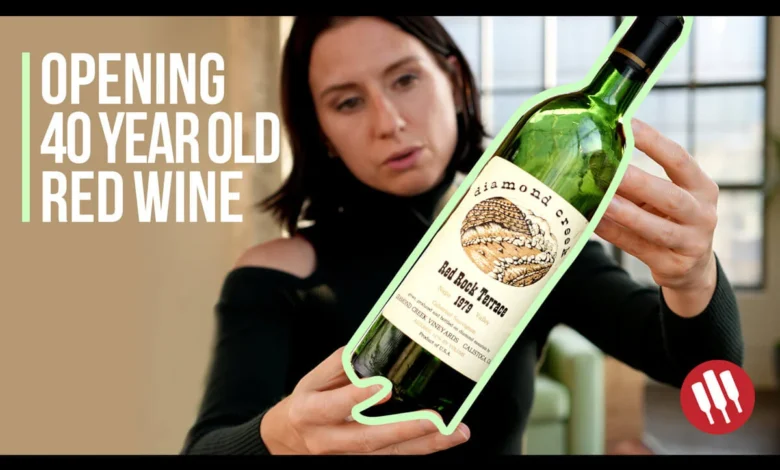
The preservation, extraction, and tasting of aged vintage wine represent a rare convergence of history, chemistry, and sensory evaluation that few connoisseurs experience in a lifetime. Recently, a gathering of wine professionals, collectors, and industry specialists convened to uncork a 40-year-old bottle of 1979 Diamond Creek Red Rock Terrace Napa Valley Cabernet Sauvignon. The event provided a unique window into the aging potential of California red wines, challenging long-held assumptions regarding vintage longevity, storage physics, and the structural integrity of historical cork closures.
Captured on film to document the precarious nature of mature vintages, the opening of the 1979 bottle served as an empirical case study for oenologists and collectors alike. Master Sommelier Jackson Rohrbaugh, alongside winemakers and industry historians, participated in the evaluation, which yielded unexpected insights into how ultra-aged Napa Valley Cabernet Sauvignons evolve over decades. The findings offer practical takeaways for auction buyers, cellar managers, and enthusiasts navigating the secondary wine market.
The Anatomy of a 40-Year-Old Closure: Beyond Standard Openers
The primary hurdle in evaluating a wine with four decades of bottle age begins long before the liquid touches a glass. Standard wine openers, such as conventional winged corkscrews or simple two-step waiters’ friends, are entirely unsuited for aged bottles. Over a span of forty years, natural cork closures undergo significant physical and chemical degradation. Continuous contact with liquid, combined with fluctuating environmental humidity and temperature, causes the cork to become spongy, highly fragile, and structurally compromised.
When a standard helix screw is driven into an aged cork, the brittle material frequently crumbles, dropping fragments into the wine and ruining the vintage. Consequently, accessing a bottle of this age requires specialized equipment. Wine professionals routinely rely on devices such as the "Ah-So" puller—a two-pronged cork puller that slides down the sides of the cork, gripping it friction-wise without piercing or breaking the fragile cylinder. Alternatively, modern preservation systems like the Coravin can be utilized for partial sampling, though fully opening a historic vintage necessitates meticulous manual extraction.
During the 1979 Diamond Creek opening, the fragility of the cork underscored the necessity of proper cellar management. Even under optimal storage conditions, natural corks have a finite lifespan, typically requiring inspection and potential re-corking by estate wineries if a bottle is intended to exceed thirty or forty years of maturation.
Decoding Bottle Integrity: The Significance of Shoulder Levels
For collectors navigating secondary markets such as Spectrum, Winebid, or K&L Wine Merchants, visual inspection of a bottle’s fill level is paramount. Over decades, micro-oxygenation occurs as minute amounts of air permeate the natural cork, and moisture slowly evaporates through the porous closure, particularly in dry storage environments. This phenomenon dictates the "shoulder level" of the wine, a critical metric used to assess a bottle’s provenance, storage history, and current market value.
The fill level is categorized into several distinct tiers by auction houses and appraisers:
- Into Neck / Base of Neck: The gold standard for aged wine. This indicates minimal evaporation, excellent storage conditions, and a lower risk of oxidation.
- High Shoulder: The wine level sits just below the neck where the bottle transitions outward. This is entirely normal for wines dating back several decades and generally poses minimal risk to quality.
- Mid-shoulder: The wine level has dropped significantly, often exposing the wine to a larger volume of oxygen over time. Wines at this level carry a high risk of premature oxidation, stewed flavor profiles, and vinegar spoilage.
- Low Shoulder and Below: Representing severe evaporation, these bottles are typically considered compromised and are valued primarily for historical display rather than consumption.
Understanding these structural parameters prevents costly mistakes at auction. A compromised fill level accelerates chemical degradation, neutralizing the complex chemical reactions that allow structured red wines to develop secondary and tertiary aromas over time.
Cellar Chemistry: How Red Wine Surpasses the Four-Decade Mark
For decades, conventional wisdom in the global wine community held that New World red wines—particularly those from sun-drenched regions like California’s Napa Valley—were crafted for early consumption. Critics from traditional European wine-producing regions frequently characterized Napa Cabernets as overly fruit-forward, high in alcohol, and structurally incapable of weathering decades in the cellar compared to benchmark Bordeaux or Burgundies.
The performance of the 1979 Diamond Creek Red Rock Terrace decisively challenged this narrative. Upon being poured, the wine exhibited a complexity and balance that left Master Sommelier Jackson Rohrbaugh visibly impressed and momentarily speechless. The capacity of a dry red wine to endure for forty years hinges on a precise matrix of chemical components established during fermentation and aging:
- Tannins: Derived from grape skins, seeds, and stems, as well as oak barrels, tannins act as natural antioxidants. Over decades, individual tannin molecules polymerize, softening their astringency while maintaining the structural backbone of the wine.
- Acidity: Tartaric and malic acids provide a preservative backbone, keeping the wine tasting fresh and vibrant rather than flat or heavy as it ages.
- Alcohol Balance: Moderate alcohol levels prevent the solvent-like hotness that can dominate aging profiles if the fruit, acid, and tannin are out of equilibrium.
- Phenolic Compounds: Anthocyanins and complex flavonoids interact over time, shifting the wine’s color from deep ruby to brick-red and garnet while generating tertiary aromas such as leather, tobacco, cedar, and forest floor.
Diamond Creek Vineyards, established by Al and Boots Brounstein in 1968, pioneered the concept of single-vineyard Cabernet Sauvignon in Napa Valley, focusing on distinct soil profiles such as Red Rock Terrace, Volcanic Hill, and Gravelly Meadow. The unique microclimate and iron-rich volcanic soils of the Red Rock Terrace block imparted the structural rigidity and mineral depth necessary to support a multi-decade aging trajectory.
The Great Debate: Will Modern Vintages Stand the Test of Time?
The successful tasting of the 1979 vintage immediately sparked a debate among the assembled winemakers, collectors, and industry authorities regarding contemporary winemaking styles. Specifically, the group questioned whether current releases—such as the highly praised 2018 vintages—possess the necessary attributes to age gracefully over a similar forty-year span.
The discussion highlighted a fundamental divergence in modern viticulture and enology:
- Climate Shifts: Rising global temperatures have led to earlier harvests with higher sugar concentrations, potentially resulting in higher alcohol levels and lower natural acidity in modern wines, which can complicate long-term aging.
- Vineyard Management: Contemporary precision viticulture allows for better canopy management, precise irrigation control, and optimal hang-time, ensuring phenolic ripeness that was difficult to achieve consistently in the 1970s.
- Winemaking Technology: Modern sanitation, temperature-controlled fermentation, and advanced sorting tables minimize flaws, yielding cleaner wines, though some purists argue that modern filtration practices can strip out structural components essential for aging.
While traditionalists express concern that modern winemaking prioritizes immediate approachability and high critical scores over cellar-worthiness, proponents argue that precision farming yields superior balance. Ultimately, the room remained divided. As industry experts noted during the evaluation, laboratory analysis and sensory indicators can project aging potential, but only empirical observation over decades can validate a vintage’s true endurance.
Implications for Collectors and Investors
The insights gained from opening the 1979 Diamond Creek Cabernet Sauvignon carry significant practical implications for the fine wine market. For collectors building portfolios or investing in secondary market acquisitions, the experience reinforces three core principles:
- Provenance is King: The condition of the cork, the fill level (shoulder height), and the historical storage temperature of the cellar dictate whether a 40-year-old bottle is a priceless sensory masterpiece or an expensive bottle of vinegar.
- Tool Preparation is Essential: Accessing mature vintages requires proper equipment, such as an Ah-So opener, to prevent cork failure and preserve the integrity of the tasting experience.
- New World Longevity is Proven: High-elevation, meticulously farmed Napa Valley Cabernet Sauvignons from historic estates possess the structural architecture required to rival the finest Old World cellaring benchmarks.
As modern vintages continue to enter private cellars and commercial warehouses across the globe, the lessons learned from uncorking four decades of history serve as both a cautionary guide for handling fragile antiques and a validation of the enduring craftsmanship defining world-class winemaking.