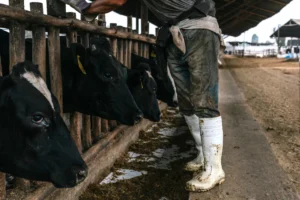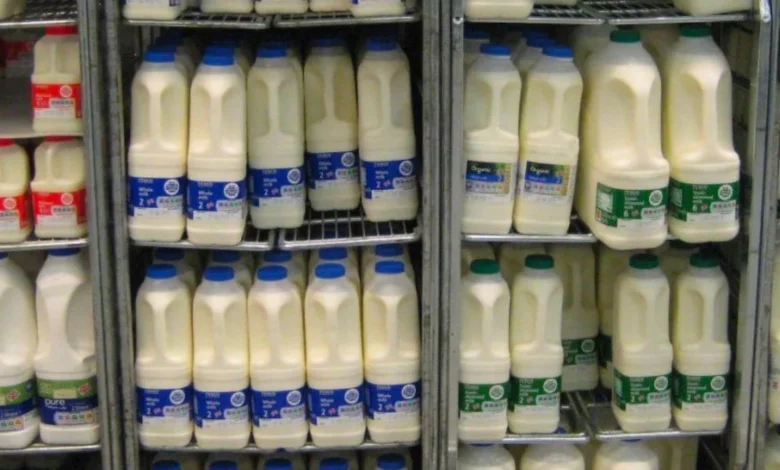
The British dairy industry is currently undergoing a structural transformation that mirrors the industrialization of the poultry and porcine sectors, raising urgent questions about the long-term resilience of the United Kingdom’s food supply. Recent data indicates a stark divergence in the dairy landscape: while the total number of dairy farms has plummeted to historic lows, the scale and intensity of those remaining have surged. An investigation conducted by the Bureau of Investigative Journalism has revealed that the number of "mega dairies"—operations where hundreds or thousands of cows are housed permanently indoors—has doubled over the last decade. Simultaneously, figures from the Agriculture and Horticulture Development Board (AHDB) show that the number of dairy producers in Great Britain has fallen below 7,000 for the first time, a decline of more than 50% since the early 2000s. This shift toward "Big Dairy" is framed by proponents as a necessary evolution for efficiency and global competitiveness, yet environmental researchers and food security experts warn that this model may be creating a system that is increasingly vulnerable to geopolitical shocks, climate volatility, and ecological collapse.
The Economic Squeeze and the Drive Toward Intensification
The primary driver behind the proliferation of mega dairies is an economic environment characterized by razor-thin profit margins and volatile farm-gate milk prices. For decades, UK dairy farmers have operated under a "get big or get out" paradigm. As supermarkets and large-scale processors demand lower prices, smaller family-run farms—often those utilizing traditional grazing methods—find it increasingly difficult to cover the rising costs of labor, machinery, and regulatory compliance.
To survive, many farmers have opted for intensification. This involves moving away from pasture-based systems toward "zero-grazing" or "total mixed ration" (TMR) models. In these systems, cows are kept in large sheds year-round, with their nutritional needs met through precisely formulated feed blends, often consisting of imported soy, maize, and high-protein concentrates. This allows for higher milk yields per cow and greater control over the production environment. However, this model is heavily reliant on external inputs, including synthetic fertilizers to grow fodder crops and fossil fuels to power the machinery and transport systems required to maintain such high-output operations.
A Chronology of Consolidation in the British Dairy Sector
The trajectory of the UK dairy industry over the last twenty-five years illustrates a consistent trend toward consolidation. In the early 2000s, there were over 14,000 dairy farms in Great Britain. By 2010, that number had dropped significantly as the industry grappled with the aftermath of the 2008 financial crisis and fluctuating global commodity prices. The mid-2010s saw further pressure as the abolition of EU milk quotas in 2015 led to a global supply glut, which depressed prices and forced more small-scale producers out of business.
By 2024, the landscape had shifted entirely. The Bureau of Investigative Journalism’s findings highlight that there are now more than 800 large-scale intensive livestock units in the UK that meet the "mega farm" criteria. This consolidation has been facilitated by planning departments approving massive barn complexes and by the vertical integration of the supply chain, where large processors favor high-volume suppliers to streamline logistics. This chronology suggests that without significant policy intervention, the UK is on a path toward a dairy sector dominated by a handful of massive industrial entities, with the traditional grazing herd becoming a niche luxury rather than a staple of the countryside.
Geopolitical Instability and the Vulnerability of High-Input Models
While intensive systems are often touted for their "efficiency," this efficiency is frequently measured by a narrow set of metrics that ignore systemic risks. One of the most significant vulnerabilities of the mega dairy model is its dependence on global supply chains for energy and nutrients. The recent blockade of the Straits of Hormuz serves as a poignant example of this fragility. As a critical artery for a third of the world’s nitrogen fertilizer transport, any disruption in this region immediately impacts the cost and availability of the synthetic inputs that intensive farms rely upon to produce feed.
Furthermore, the UK’s reliance on imported protein for livestock—particularly soy from South America—links British dairy production to deforestation and environmental degradation abroad. When global markets face "permanent stress" due to geopolitical conflict or trade wars, high-input farms are the first to suffer from skyrocketing overheads. In contrast, low-input, pasture-based systems utilize the "upcycling" capabilities of ruminant animals. By converting grass—a resource humans cannot digest—into nutrient-dense milk and meat, grazing systems reduce the need for imported arable crops and synthetic fertilizers. The nitrogen-fixing properties of plants like clover and the natural fertilization provided by grazing animals offer a biological alternative to the industrial inputs that are currently subject to global price shocks.
Climate Change and the Shrinking Map of High-Quality Farmland
The Climate Change Committee (CCC) has issued sobering warnings regarding the future of British agriculture under various warming scenarios. Their research suggests that without rapid adaptation, the proportion of "high-quality farmland" in England and Wales could collapse from 38% to just 11% by 2050 if global temperatures rise by 2°C. This degradation is driven by a combination of soil erosion, which is projected to increase by 15%, and increasing frequency of droughts and floods.
The intensive dairy model, which requires vast quantities of arable crops to feed housed cattle, places immense pressure on this shrinking resource. Using high-quality arable land to grow animal feed is increasingly viewed as an inefficient use of a finite resource. In the South East of England, wheat yields—a staple of animal feed—are already seeing 20% losses during drought years. The past decade has seen some of the worst harvests on record for the UK, with extreme weather events disrupting the planting and harvesting cycles. As domestic crop yields become less reliable, the cost of maintaining intensive livestock will inevitably rise, further undermining the economic argument for mega dairies.
The Case for an Agroecological Transition
In response to these challenges, organizations like the Sustainable Food Trust (SFT) are advocating for a shift toward agroecological farming. This approach prioritizes soil health, biodiversity, and local resource loops over sheer volume of output. The SFT’s "Feeding Britain" report suggests that a transition to more sustainable methods would involve a 20% reduction in dairy production, alongside more significant decreases in grain-fed pork and poultry.
While a reduction in total output may seem counterintuitive during a period of food insecurity, supporters argue that the resulting food system would be far more resilient. Research from Wageningen University supports this view, indicating that a global food system where livestock are fed exclusively on human-inedible feeds (such as grass and food waste) could actually require 25% less arable land than a purely vegan diet. This is because animals can utilize land that is unsuitable for cropping, such as the millions of hectares of permanent grassland in the UK’s uplands and western regions. By integrating livestock into diverse crop rotations, farmers can improve soil structure and fertility naturally, creating a "circular" system that is less dependent on fossil fuels.
Redefining Efficiency and the Role of Government
The rise of Big Dairy necessitates a broader societal discussion about how we define "efficiency" and "sustainability." Current metrics often focus on the carbon footprint per liter of milk, a measurement that often favors intensive systems because they produce higher volumes in shorter timeframes. However, this fails to account for the "system-wide" impact, including water pollution from concentrated slurry, the loss of biodiversity on monoculture feed farms, and the erosion of rural communities as small farms vanish.
Experts argue that the UK government must "up its game" by aligning agricultural subsidies with environmental and social outcomes rather than just production volume. This includes supporting farmers who transition to pasture-fed systems and investing in the infrastructure—such as local abattoirs and smaller processing dairies—needed to sustain a decentralized food network. Without such support, the market will continue to favor the largest players, leading to further concentration of the food supply in the hands of a few corporations.
Implications for Public Health and Animal Welfare
The shift toward mega dairies also carries significant implications for animal welfare and public health. While proponents of indoor systems argue that they provide a controlled environment that protects cows from the elements and disease, critics point to the lack of natural behavior, such as grazing and social interaction in open fields. High-yielding cows in intensive systems are also more prone to "production diseases," such as lameness and mastitis, which can lead to increased antimicrobial use—a major concern for the development of antibiotic-resistant bacteria.
From a nutritional perspective, milk and meat from pasture-raised animals have been shown to have different fatty acid profiles, including higher levels of Omega-3 fatty acids and conjugated linoleic acid (CLA), compared to their grain-fed counterparts. As consumers become more aware of these differences, there is a growing demand for transparency in labeling, allowing the public to choose between products from intensive mega dairies and those from regenerative, grazing-based farms.
Conclusion: Choosing the Future of the British Countryside
The surge in mega dairies and the decline of the small-scale dairy farmer represent a fork in the road for the UK’s agricultural future. One path leads toward a highly industrialised, high-input system that prioritizes short-term output but remains vulnerable to a volatile world. The other leads toward a more diverse, agroecological system that works within the ecological limits of the land to provide long-term food security and environmental health.
The decision is not merely a matter for farmers; it is a question of national security and public values. If the UK continues to judge the success of its food system primarily by the volume of production and the cheapness of the final product, it risks losing the very resilience, wildlife, and farming culture that will be most needed as the climate and geopolitical landscape continue to shift. The rise of Big Dairy is a signal that the time for a systemic rethink of the British food chain has arrived.