Essential Food Preserving Julia Skinner Explores the Art and Science of Sustainable Kitchen Practices

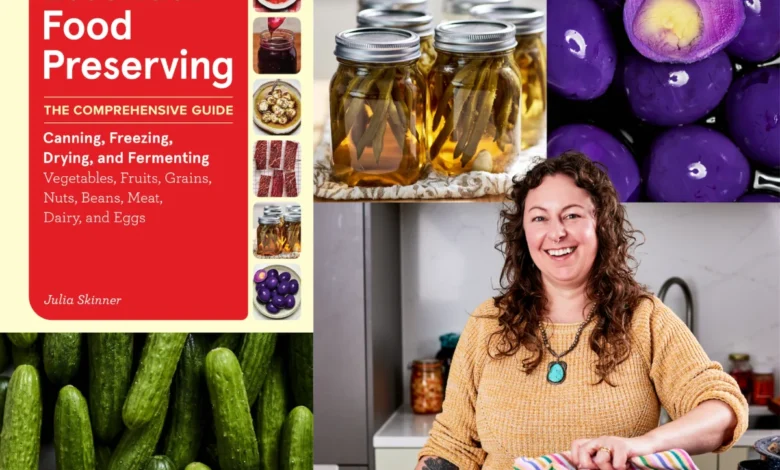
In an era defined by fluctuating grocery prices, supply chain vulnerabilities, and an urgent need for environmental sustainability, the traditional art of food preservation is experiencing a significant cultural and practical resurgence. Julia Skinner, a prominent fermentation expert and author, has addressed this shift with the release of her latest comprehensive guide, Essential Food Preserving, published in May 2024. The book serves as both a technical manual and a philosophical exploration of "putting up" food, offering a diverse array of techniques ranging from ancient fermentation practices to modern pressure canning. As households grapple with the economic reality of rising costs—typified by the soaring prices of seasonal produce—Skinner’s work provides a timely roadmap for consumers looking to reclaim control over their food security and reduce their environmental footprint.
The Economic and Environmental Context of Modern Preservation
The motivation for food preservation has shifted over the centuries. While our ancestors preserved harvests out of sheer necessity for winter survival, modern practitioners are often driven by a combination of economic pressure and ecological awareness. According to data from the U.S. Department of Agriculture (USDA) and various food waste advocacy groups, the average American household wastes approximately 30% to 40% of the food supply. This translates to roughly 23.45 million tons of food wasted annually at the household level in the United States alone.
When food is discarded, the loss extends beyond the item itself; it represents the waste of water, energy, labor, and land used in production, as well as the generation of methane gas in landfills. Skinner’s approach to preservation directly addresses this crisis by teaching consumers how to utilize every part of their produce—from mango pits to strawberry tops—thereby turning potential waste into value-added pantry staples.
Economically, the case for preservation has never been stronger. With inflation impacting the "Consumer Price Index" for food, bulk purchasing and seasonal preserving allow households to lock in lower prices. For example, buying a flat of strawberries at the height of summer for preservation is significantly more cost-effective than purchasing imported, out-of-season fruit during the winter months. Skinner’s book provides the technical literacy required to navigate these economic shifts safely and effectively.
A Comprehensive Methodology: From Fermentation to Pressure Canning
Essential Food Preserving is structured as a definitive tome, dedicating its initial sections to the foundational science of various preservation methods. Skinner moves beyond the "trend du jour" of fermentation to provide a holistic view of the preservation landscape. The book categorizes techniques into several primary disciplines:
1. Cold and Heat-Based Preservation:
The text provides nuanced instructions on freezing, emphasizing that the process involves more than simply placing items in a freezer. Skinner details the importance of blanching to halt enzymatic activity, as well as specialized techniques like syrup packing and sugar packing for fruits. The guide also covers the rigorous safety standards required for water-bath and pressure canning, ensuring that home cooks can prevent the risks of foodborne illnesses such as botulism.
2. Moisture Removal:
Drying and dehydration are explored as ancient methods modernized by electric dehydrators. Skinner discusses the preservation of mushrooms for teas and the creation of fruit leathers, highlighting how removing moisture concentrates flavors and extends shelf life indefinitely when stored correctly.
3. Chemical Transformation:
This includes pickling (both quick-pickling with vinegar and lacto-fermentation with salt), brining, and smoking. The book delves into the chemistry of pH levels and salt concentrations, explaining how these environments inhibit spoilage microbes while encouraging beneficial bacteria.
4. Animal Proteins and Complex Substitutes:
A notable inclusion in Skinner’s work is the preservation of meats, seafood, and dairy. While many modern preservation books focus exclusively on produce, Skinner provides instructions for beef jerky, smoked salmon, pickled oysters, and fermented fish sauce. This inclusive approach acknowledges that a truly self-sufficient pantry must account for diverse dietary needs and proteins.
The Philosophy of Transformation and Discovery
Beyond the technical "how-to," Skinner emphasizes that preservation is a "portal to new flavors and textures." The process of fermentation, for instance, does not merely keep a vegetable from rotting; it transforms its molecular structure, creating umami-rich profiles and probiotic benefits that fresh produce lacks.
Skinner’s work highlights the ingenuity of multicultural culinary traditions. From Japanese koji to European sauerkraut and indigenous smoking techniques, the book honors the global heritage of food preservation. This historical perspective frames preservation not as a chore of the past, but as a sophisticated tool for the modern chef. By mastering these techniques, cooks can create unique ingredients—such as tomato-skin powder or aromatic vinegars from discarded artichoke leaves—that are unavailable in standard retail environments.
Practical Applications: Case Studies in Home Preservation
To illustrate the accessibility of these methods, Skinner includes recipes that range from simple refrigerator jams to complex fermented beverages. These recipes serve as practical applications of the book’s core principles, encouraging readers to experiment with the abundance of their gardens or local farmers’ markets.
Recipe Case Study I: Choose-Your-Own Adventure Herbal Soda
This recipe demonstrates the power of wild fermentation, utilizing the natural yeasts present on fresh herbs and flowers to create a carbonated beverage.
- Yield: 1 gallon
- Ingredients: 1½ cups sugar, 1 cup fresh herbs (such as lavender, rosemary, or rose petals), and 1 gallon of water.
- Methodology: The ingredients are combined in a glass jar and covered with a breathable cloth. The mixture is stirred twice daily for approximately three days. This agitation introduces oxygen and distributes the developing yeast. Once the liquid becomes fragrant and bubbly, it is strained and bottled. A secondary fermentation occurs in the sealed bottles at room temperature for two to three days, building carbonation before being moved to cold storage.
This method highlights the "low-intervention" nature of many preservation styles, where time and natural biology do the majority of the work.
Recipe Case Study II: Fermented Salsa
The fermented salsa recipe provides a solution for the "gluts" of summer tomatoes, offering a shelf-stable (refrigerated) alternative to fresh salsa that improves with age.
- Yield: 1 quart
- Ingredients: 3-4 diced tomatoes, ½ diced onion, ½ jalapeño, cilantro, 1 tablespoon salt, and 1 cup water.
- Methodology: The vegetables are packed into a jar and covered with a salt-water brine. The salt is crucial here; it inhibits putrefying bacteria while allowing Lactobacillus to thrive. The salsa ferments at room temperature for three to seven days. During this period, the "burping" of the jar—releasing built-up carbon dioxide—is essential to prevent pressure failure. The resulting product is tangy, effervescent, and rich in probiotics.
Broader Implications for Food Security and Policy
The publication of Essential Food Preserving arrives at a time when food security is becoming a central theme in public policy discussions. As climate change impacts crop yields and international conflicts disrupt grain and oil supplies, the ability of the individual to preserve food is increasingly seen as a form of "resilience infrastructure."
Experts in food systems suggest that a return to home preservation could alleviate some of the pressure on municipal waste systems and reduce the carbon footprint associated with the global cold chain. While industrial food processing remains necessary for urban populations, the "democratization" of preservation knowledge allows for a more decentralized and robust food system.
Furthermore, the health implications of fermented foods—noted for their role in gut health and microbiome diversity—align with contemporary nutritional science. Skinner’s book bridges the gap between traditional wisdom and modern health trends, providing a scientifically grounded approach to "slow food" in a fast-paced world.
Conclusion
Julia Skinner’s Essential Food Preserving is more than a collection of recipes; it is a comprehensive defense of culinary resourcefulness. By documenting the myriad ways humans have learned to "stop time" for their food, Skinner provides a vital service to the modern household. Whether driven by the "terrifying" price of strawberries or a desire to reduce the 23 million tons of household food waste, readers are equipped with the tools to transform their kitchens into hubs of sustainability and flavor. As the world becomes increasingly uncertain, the ancient skills of salting, smoking, and fermenting remain some of our most effective strategies for ensuring a stable and delicious future.