The Scientific Pursuit of the Perfect Brew: Deconstructing Advanced Coffee Extraction for Enthusiasts

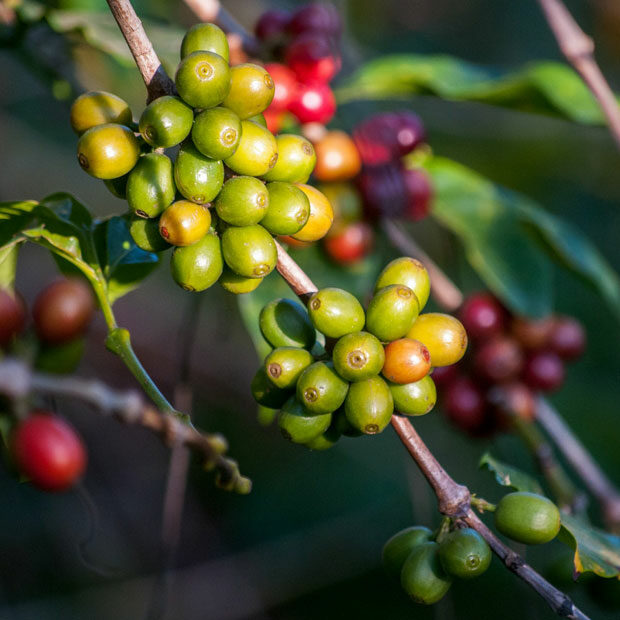
The appreciation of coffee has undergone a profound transformation, evolving from a simple morning ritual centered on caffeine delivery to a sophisticated culinary pursuit driven by flavor and scientific understanding. This shift is largely attributed to the "Third Wave of Coffee" movement, which emphasizes quality, transparency, and a deeper connection to coffee’s origins and processing. Scandinavia, in particular, has emerged as a vibrant hub for this movement, fostering a culture where specialty coffee, often lightly roasted and single-sourced, is not merely a beverage but a subject of rigorous study and passionate exploration. This movement champions a comprehensive approach, from sustainable farming practices to meticulous brewing techniques, aiming to highlight the unique characteristics inherent in each bean.
The year 2020, marked by unprecedented global changes, inadvertently became a catalyst for many individuals to delve deeper into home-based culinary and sensory explorations. For one enthusiast, a personal journey into the scientific intricacies of coffee brewing began with the simple act of receiving a monthly coffee subscription from services like Kaffebox, which sources from renowned roasters across Norway, Sweden, and Denmark. This curated exposure to diverse, high-quality beans, coupled with the extended introspection afforded by reduced social interactions during the holiday season, provided the ideal environment for a deep dive. A "Coffee Advent Calendar," offering 24 days of blind tasting, served as an engaging challenge, sharpening sensory skills and underscoring the subtle yet significant impact of bean origin and processing methods on flavor. The simultaneous experimentation with various coffee hand grinders, a departure from a long-standing routine with a trusted electric grinder, introduced an element of "panta rhei"—everything flows—highlighting the critical role of controlled variables in achieving reproducible results. This initial frustration with inconsistent pour-over extractions ultimately propelled a systematic investigation into the scientific principles governing coffee brewing.
This renewed focus on coffee extraction builds upon previous explorations into various extraction methods, including those involving water, oil, ethanol, and even beer brewing. Past inquiries into specific coffee preparations, such as Norwegian egg coffee, the convenience of the Aeropress for travel, and the curious effect of adding salt to coffee, often in collaboration with industry figures like Tim Wendelboe, laid preliminary groundwork. However, the last decade has witnessed an exponential growth in knowledge, particularly concerning pour-over and drip coffee. A burgeoning body of scientific literature, increasingly relevant to both professional cafés and home brewing, now provides empirical insights into what was once largely an art form. This article aims to synthesize some of these recent learnings, highlighting key parameters that empower brewers to significantly influence the quality of their final cup.
Decoding Extraction: Foundational Parameters
The journey from a coffee cherry on a Coffea arabica shrub to a meticulously brewed cup involves numerous stages, each influencing the final product. While many of these factors, such as cultivation and initial processing, are beyond the consumer’s direct control, the choices made once the roasted beans arrive in the kitchen offer substantial leverage. Understanding and controlling key brewing parameters allows enthusiasts to unlock the full potential of high-quality beans, transforming the brewing process into a precise, repeatable science.
A. Brew Ratio (BR): The Recipe’s Blueprint
The brew ratio (BR) is a fundamental parameter, defining the amount of water used relative to the amount of dry coffee grounds. Expressed as a ratio (e.g., 16.7:1 for 1000g water to 60g coffee), it serves as the foundational "recipe" for coffee, much like baker’s percentages in dough preparation. This simple metric is crucial for consistency and scalability, allowing brewers to adjust volumes while maintaining the intended strength. Typical brew ratios for black coffee generally fall within the range of 1:15 to 1:25. The Specialty Coffee Association (SCA) often recommends a "Golden Cup" standard, which typically aligns with ratios around 1:17 or 1:18, yielding a balanced strength and extraction. Precision in measuring both water and coffee mass, ideally using a digital scale, is the first step toward reproducible brewing.
B. Total Dissolved Solids (TDS): Measuring Strength and Flavor Potential
One of the most immediate sensory impacts of coffee is its strength. An overly strong brew can present as bitter or astringent, while a weak one may taste thin and sour. The addition of a small amount of hot water to an excessively strong cup can sometimes miraculously transform it, revealing latent fruity notes. However, such anecdotal adjustments are not ideal for systematic exploration. This is where Total Dissolved Solids (TDS) becomes invaluable. TDS quantifies the mass percentage of dissolved coffee solids in the brewed beverage, providing an objective measure of strength. While TDS does not directly measure flavor quality, it indicates whether the brew falls within an optimal strength range.
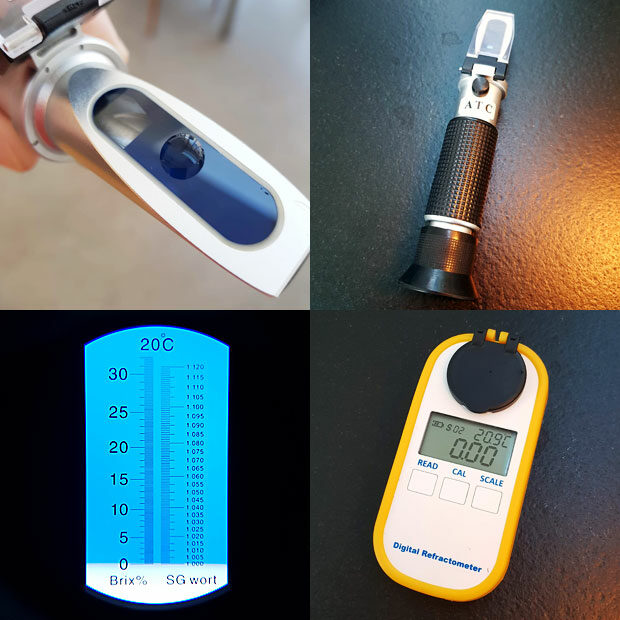
Traditionally, TDS was measured gravimetrically by evaporating a coffee sample to dryness and weighing the residue. This method is highly impractical for daily use, requiring precise laboratory balances (accurate to 0.0001g) to detect the small amounts of solids (typically 1.2-1.5%, or 12-15 grams per liter) present in a standard cup. Fortunately, refractometry offers a more accessible and practical solution. Refractometers measure the change in the speed of light as it passes through a liquid, a property directly correlated with the concentration of dissolved solids. Analog handheld refractometers, often equipped with a %Brix scale, are widely available and affordable. A simple conversion factor (approximately %TDS = %Brix x 0.85) allows for estimation. While handheld units typically offer a resolution of 0.1-0.2 %Brix, sufficient for broad confirmation of strength, digital refractometers provide higher accuracy (e.g., 0.01 °B readout) and automatic TDS conversion, though at a higher cost.
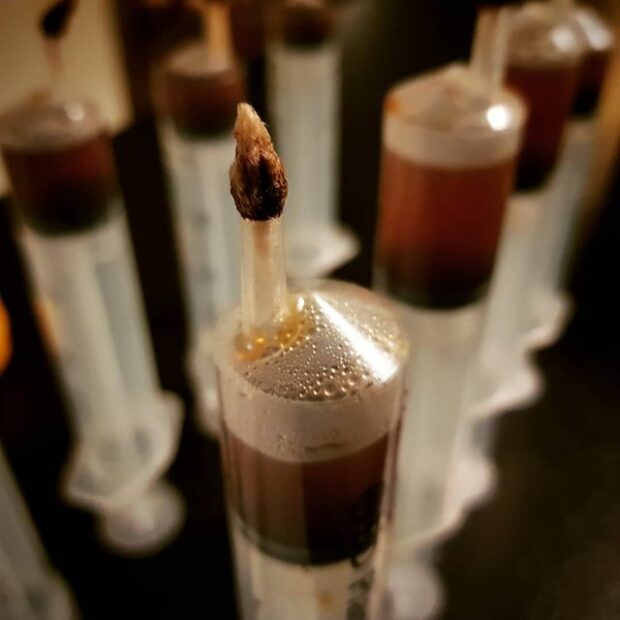
Beyond coffee, a handheld refractometer proves to be a versatile kitchen tool, useful for measuring sugar content in sorbets (aiming for ~26 %Brix) or specific gravity in homebrewed beer. For accurate coffee TDS measurements, especially during extraction studies, samples must be hot-filtered to halt further extraction and then cooled completely before measurement. A practical DIY method involves using plastic syringes fitted with cotton plugs to filter and cool samples, minimizing evaporation and eliminating the need for expensive lab-grade syringe filters. The SCA Golden Cup Standard for optimal TDS typically ranges from 1.15% to 1.35%, indicating that a normal cup of black coffee is remarkably over 98% water.
C. Extraction Yield (EY & EEY): Unlocking Flavor and Efficiency
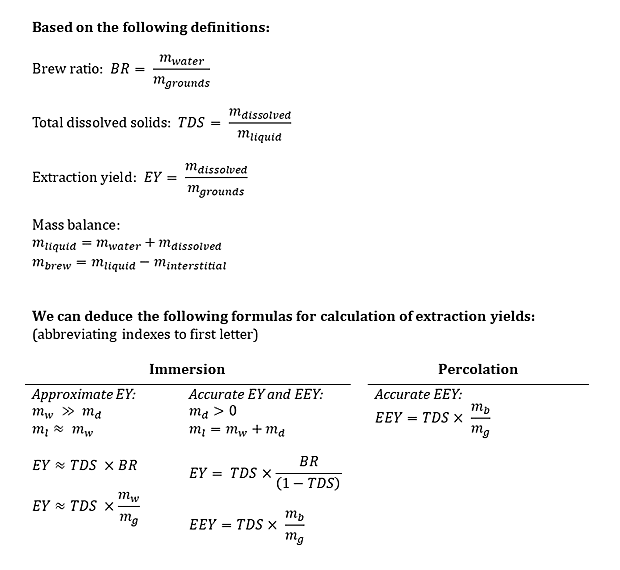
Once TDS is determined, the extraction yield (EY) can be calculated, representing the percentage of the dry coffee grounds that have been dissolved into the brew. This metric is crucial for understanding how efficiently coffee solids are being extracted. The concept becomes nuanced when distinguishing between immersion brews (like a French press) and percolation brews (like pour-over).
For clarity, two types of extraction yield are often considered:
- Extraction Yield (EY): The total mass of dissolved solids relative to the initial mass of dry coffee grounds. This reflects what has been removed from the coffee particles.
- Effective Extraction Yield (EEY): The mass of dissolved solids present in the final cup relative to the initial mass of dry coffee grounds. This is particularly relevant from an economic perspective, reflecting what the consumer actually drinks.
In immersion brews, where all grounds are steeped in the total liquid mass, the entire liquid (minus what’s absorbed by the grounds) has the potential to be consumed. Here, EY and EEY can differ if not all the steeped liquid is served. However, for percolation brews, the "interstitial liquid"—water remaining between the grounds in the filter bed—does not contribute to the final cup. Therefore, for percolation, EY often equals EEY, assuming the interstitial liquid’s composition is similar to the final brew. This distinction has been a subject of detailed discussion among coffee experts like Scott Rao and Jonathan Gagné, who have developed sophisticated models to account for these complexities.
Calculating EY involves multiplying the TDS by the brew ratio (BR). For more precise calculations, especially considering that dissolved solids add to the liquid mass, iterative methods or refined formulas like EY = TDS x BR / (1-TDS) are used. For EEY, the calculation is simpler: EEY = TDS x (mass of brew in cup) / (mass of grounds).
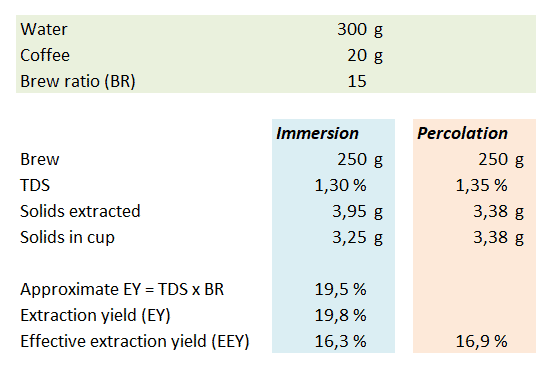
Consider an example: 20g of coffee brewed with 300g of water, yielding 250g in the cup (BR = 15).
- Immersion Brew (e.g., 1.30% TDS): The total dissolved solids from the grounds might be 3.95g (EY ≈ 19.8%). However, only 3.25g solids make it into the 250g cup (EEY = 16.3%).
- Percolation Brew (e.g., 1.35% TDS): The higher TDS often observed in percolation suggests more efficient delivery of solids to the cup. If 3.38g solids are in the 250g cup, then EEY = 16.9%.
This comparison reveals that while immersion might extract more total solids from the grounds into the entire liquid mass, percolation often delivers a higher concentration of solids to the final cup. The difference in the amount and composition of extracted solids (e.g., 3.95g vs. 3.38g in the example) directly explains why immersion and percolation brews exhibit distinct flavor profiles. The SCA Golden Cup Standard for optimal extraction yield is typically 18-22%. Achieving this range requires careful control of all brewing parameters, as deviations can lead to under-extraction (sour, weak) or over-extraction (bitter, astringent). The accuracy of EY/EEY calculations is highly dependent on the precision of both coffee weighing and TDS measurements; even small errors in TDS (e.g., 0.1% for a handheld refractometer) can lead to significant uncertainties in calculated yield.
III. The Mechanics of Grinding: Particle Size and Distribution
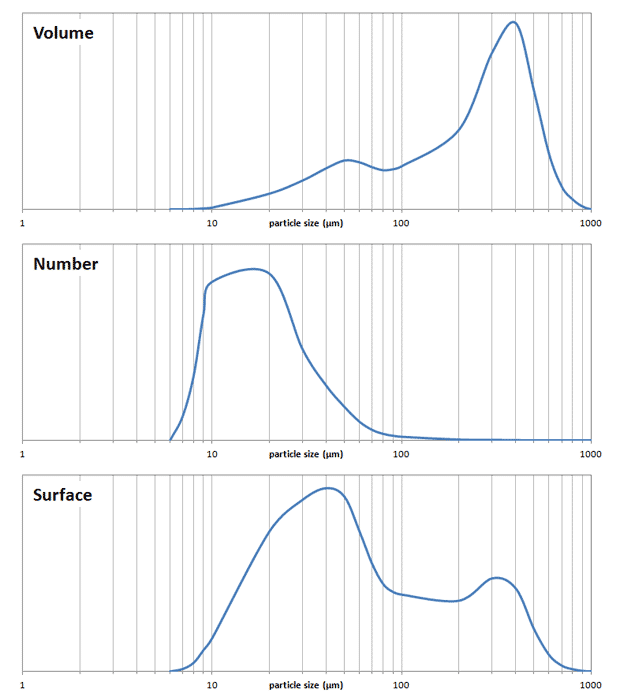
The transformation of whole roasted beans into usable coffee grounds is a critical step, fundamentally influencing extraction kinetics and flavor. When a coffee bean is ground, it shatters, producing a heterogeneous mixture of particle sizes—from larger "boulders" to extremely fine particles, often referred to as "fines" (generally defined as particles smaller than 100 µm). This Particle Size Distribution (PSD) is paramount because extraction occurs primarily at the surface of the coffee particles.
A. Visualizing Particle Size Distribution (PSD)
Understanding the PSD is crucial for optimizing extraction. Various tools exist for measurement:
- Mechanical Sifters: Companies like Kruve produce specialized sifters for coffee, allowing home brewers and cafés to separate grounds into different size fractions. Cheaper mesh test sieves are also available.
- Laboratory Equipment: In industrial settings, advanced laser diffraction systems (e.g., MicroTrac, Sympatec, Lasentech) provide highly accurate PSD measurements.
- Image Analysis: Digital methods, such as Jonathan Gagné’s Python app, allow for photographic analysis of particle diameters against a known reference. However, fines tend to clump, making their quantification challenging.
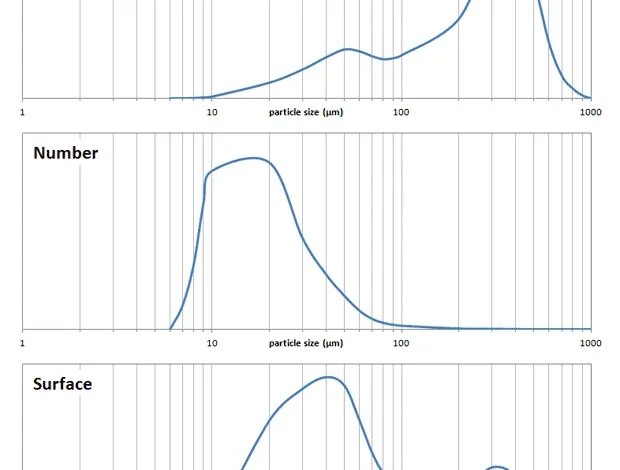
The way PSD is presented significantly impacts its interpretation. While volume distribution (showing the bulk of the coffee mass) is common, it often misrepresents the actual contribution of fines. Displaying PSD by the number of particles dramatically illustrates the sheer quantity of fines, even if they constitute a small volume. Most critically, visualizing PSD by surface area provides the most accurate picture of extraction potential. For instance, data might reveal that over half of the total extraction surface area comes from particles smaller than 100 µm. This is significant, especially considering preliminary findings by experts like Matt Perger (Barista Hustle) suggesting that coffee particles are only extracted to a depth of approximately 100 µm. This implies that the core of larger particles remains unextracted, representing "wasted" coffee. Despite this, larger particles play a vital role in forming a porous filter bed, crucial for maintaining adequate flow rates and preventing clogging in percolation methods.
B. Grinder Technology and Optimization
The choice of grinder is perhaps the most impactful equipment decision for controlling PSD. Cheap blade grinders, which violently chop beans, produce an extremely inconsistent grind with an excessive amount of fines and boulders, leading to uneven extraction and undesirable flavors. Burr grinders, utilizing two abrasive surfaces to crush beans, are the standard for quality coffee preparation. These come in various designs:
- Conical Burrs: Commonly found in hand grinders and many home electric grinders due to their compact design.
- Flat Burrs: Often preferred in higher-end machines and professional grinders, typically offering greater precision and uniformity, especially with larger diameters. Different groove designs within flat burrs are optimized for specific brewing methods; some designs enhance fines for espresso (where they contribute to crema and body), while others minimize them for cleaner pour-over brews.
From a purely mechanical standpoint, industrially ground coffee, processed by cylindrical grinders, can achieve exceptionally narrow particle size distributions. However, this advantage is usually negated by the rapid oxidation of pre-ground coffee. Once exposed to oxygen, the vast surface area of ground coffee accelerates the degradation of volatile aromatic compounds, leading to stale, rancid flavors within days. Therefore, the prevailing advice for specialty coffee remains: buy whole beans and grind them immediately before brewing.
For home brewers seeking to improve their grind consistency, experimental approaches like "double grinding" can be explored—first grinding coarsely, then re-grinding at a finer setting. This gentle, multi-stage reduction might help achieve a narrower PSD by reducing the stress on the beans in a single pass. While measuring the resulting PSD remains a challenge for most home users, sensory evaluation can provide valuable feedback. The ideal grind size for pour-over coffee often involves finding the finest possible grind that allows for a sufficient flow rate without clogging the filter, a balance that the Aeropress coffee maker cleverly sidesteps by employing pressure filtration to control extraction time independently of flow.
IV. Environmental Factors and Material Choices
Beyond the core mechanical and chemical parameters of brewing, several environmental factors and material choices significantly impact the final cup’s quality, offering further avenues for optimization.
A. Freshness of Beans: The Race Against Oxidation
The mantra in specialty coffee is unequivocal: use freshly roasted beans. Coffee beans, particularly after roasting, are a complex matrix of volatile organic compounds and oils. Once roasted, they begin to degas (releasing CO2) and, more critically, oxidize upon exposure to air. This oxidation degrades aromatic compounds and turns desirable oils rancid, leading to stale and unpleasant flavors. Storing beans in an airtight bag, ideally evacuating as much air as possible, and keeping them in a cool, dark place (or even freezing for longer-term storage of larger quantities) can slow this process. However, the most critical step is grinding only the amount of coffee needed, immediately before brewing. Grinding dramatically increases the surface area exposed to oxygen, accelerating degradation from days to minutes.
B. The Unsung Hero: Water Chemistry
Often overlooked, the composition of brewing water is a profound determinant of coffee flavor. Water is not merely a solvent; its mineral content—specifically levels of calcium, magnesium, and bicarbonate—interacts with coffee compounds, influencing extraction efficiency, perceived acidity, body, and the manifestation of specific flavor notes. For instance, magnesium ions are known to enhance the extraction of certain fruity and floral notes, while bicarbonate can buffer acidity, potentially flattening some bright characteristics.
The concept of "DIY mineral waters," where specific salts are added to distilled or local tap water to achieve an ideal profile, has gained significant traction. Online resources and calculators, such as those by Jonathan Gagné, provide recipes often based on distilled water, which is a sensible starting point for areas with hard water. However, for regions with naturally soft water (like many parts of Scandinavia), the approach shifts to adding specific minerals to achieve a desired profile. This allows brewers to tailor their water to complement different coffee origins and roast levels, pushing the boundaries of flavor customization.
C. Temperature: The Kinetic Engine of Extraction
Temperature is a critical variable governing the kinetics and thermodynamics of coffee extraction. The solubility of chemical compounds and their diffusion rates generally increase with rising temperature. Consequently, higher brewing temperatures (close to 100°C, or 212°F) typically maximize the rate and extent of extraction. However, maximum extraction does not always equate to the "best" cup. Different compounds extract at different rates and solubilities. For example, desirable acids and sugars tend to extract earlier, while bitter compounds and tannins extract later and more readily at higher temperatures.
This principle is dramatically illustrated by cold brew, where coffee is steeped in cold water, often overnight, in a refrigerator. The significantly lower temperature drastically slows extraction, yielding a brew with a distinctly different flavor profile—often lower in acidity and bitterness, and smoother, due to the preferential extraction of certain compounds and the reduced solubility of others. Furthermore, the serving temperature of coffee profoundly impacts sensory perception; sweetness and bitterness are perceived more intensely in hot beverages, while sourness and saltiness remain relatively consistent across temperatures. This means that a comprehensive comparison of hot and cold brews should ideally involve tasting them at the same temperature to isolate the impact of extraction temperature from serving temperature.
D. Filter Material: Clarity, Body, and Sustainability
The choice of filter material is another subtle yet significant factor influencing the final cup, primarily impacting clarity, mouthfeel, and the presence of microscopic particles and oils.
- Paper Filters: By far the most common and effective, paper filters excel at retaining fine particles, producing a "clean" cup. The human palate is remarkably sensitive to particle presence; even microscopic particles (as small as 5 µm, comparable to the "just notable difference" in chocolate texture) can be perceived, contributing to a "muddy" or "silky" mouthfeel. This is evident in the contrast between a French press (which allows fines through, contributing to "body" or "texture") and a Chemex (with its thick paper filter, yielding an exceptionally clean cup). Paper also retains diterpenes and other oils, which contribute significantly to the mouthfeel and certain flavor notes, particularly in espresso.
- Metal Filters: These reusable filters allow both fines and oils to pass into the cup, offering a fuller body and different flavor characteristics. Experimenting with metal filters can provide a benchmark for understanding what is retained by paper filters.
- Cloth and Nylon Filters: While reusable and economical, these materials can discolor and, if not meticulously cleaned, can impart off-flavors.
Within paper filters, a vast range exists. The choice between bleached and unbleached filters is often debated. While some prefer unbleached for environmental reasons, bleached filters typically contain fewer residual compounds that could potentially affect flavor. Modern bleaching processes predominantly use oxygen-based agents, not chlorine, to remove lignin and hemicellulose, leaving behind purer cellulose. The scientific study of filter papers, exemplified by detailed analyses from sources like Coffee Ad Astra, delves into pore size, fiber structure, and their impact on filtration performance, often utilizing microscopy. It’s important to note that a filter’s performance can change when wet, as cellulose fibers swell, altering pore dimensions and filtration dynamics.
V. Towards the Ideal Cup: A Structured Approach
Navigating the myriad variables in coffee brewing can be daunting. For enthusiasts seeking to elevate their brewing, a hierarchical approach to parameter exploration is recommended, building a solid foundation before refining subtle nuances.
A. Prioritizing Parameters for Home Brewers
- Brew Ratio (BR), Total Dissolved Solids (TDS), and Extraction Yield (EY/EEY): These interconnected parameters form the bedrock of a balanced brew. Ensuring the coffee is neither too strong/weak nor over/under-extracted is paramount. Without this foundation, even the finest beans or most precise equipment cannot salvage a poorly extracted cup.
- Grind Size and Particle Size Distribution (PSD): Once strength and extraction are within an acceptable range, optimizing the grind becomes the next critical step. A consistent grind minimizes fines and boulders, ensuring even extraction and optimal flow dynamics, especially for pour-over methods.
- Freshness of Beans: While essential, even the freshest beans cannot compensate for fundamental issues in brew strength or grind. Once the core parameters are stable, prioritizing fresh, recently roasted beans becomes highly impactful for maximizing aromatic complexity.
- Water Composition: This is a more advanced refinement. For brewers who have mastered the initial steps, adjusting water chemistry can unlock new dimensions of flavor. However, constant switching between diverse coffee origins and processing methods can make water adjustment complex, as different beans may benefit from different water profiles.
- Temperature: Fine-tuning brewing temperature allows for precise control over extraction kinetics and the selective solubility of compounds.
- Filter Material: This parameter offers subtle adjustments to clarity and body.
B. Tools for Exploration: The Coffee Compass
For diagnosing and correcting common brewing issues, visual aids like the "Coffee Compass" developed by Barista Hustle are invaluable. This tool graphically links sensory defects (e.g., sour, bitter, weak, strong) to potential causes (under-extraction, over-extraction) and suggests practical adjustments (e.g., grind finer/coarser, brew hotter/cooler, increase/decrease dose). It empowers brewers to systematically troubleshoot and refine their technique based on sensory feedback.
C. The Journey Continues: Future Directions
The scientific exploration of coffee is an ongoing endeavor. Continued research into the complex chemistry and physics of extraction promises further insights, potentially leading to new brewing technologies, advanced grinder designs, and even AI-driven optimization algorithms for personalized brewing. The relentless pursuit of sensory perfection, balanced by a deep scientific understanding, ensures that the simple act of brewing a cup of coffee remains a perpetually fascinating and rewarding journey for enthusiasts and professionals alike.