High Court Rules Against UK Government Over Lack of Labelling and Traceability for Precision Bred Organisms

In a landmark decision for the United Kingdom’s agricultural and food regulatory landscape, the High Court has ruled that the Department for Environment, Food and Rural Affairs (Defra) acted on flawed legal advice when developing regulations for gene-edited organisms. The judicial review, led by the advocacy group Beyond GM alongside co-claimants including Patrick Holden, CEO of the Sustainable Food Trust, and food writer Joanna Blythman, challenged the Genetic Technology (Precision Breeding) Regulations 2025. The court found that the government failed to properly assess the necessity of labelling and traceability for "precision bred" organisms (PBOs), a move that critics argue undermines consumer choice and the integrity of the organic food sector.
The ruling centers on the government’s assertion that it lacked the legal authority to mandate specific labelling for PBOs under the primary legislation. However, the High Court concluded that the Farming Minister was "misadvised" by departmental officials regarding these powers. This legal victory marks a significant turning point in the decades-long debate over genetic modification in British agriculture, highlighting a systemic failure in democratic oversight and the communication of scientific risks to policy-makers.
The Legal Challenge and the High Court Verdict
The judicial review was the culmination of a 13-month legal campaign spearheaded by Beyond GM and their legal representatives at Leigh Day and Matrix Chambers. The core of the challenge was not aimed at the Genetic Technology (Precision Breeding) Act 2023 itself—which remains the primary law—but rather the secondary regulations passed in early 2025 that dictate how the Act is implemented. These regulations essentially removed the requirement for PBOs to be identified through the food supply chain, making them indistinguishable from traditionally bred crops or livestock.
In his judgment, the presiding judge noted that the Defra Farming Minister had been repeatedly informed by advisors that he possessed no statutory power to mandate labelling and traceability for these new organisms. The court found this to be a legal error. The judgment suggests that had the Minister been correctly informed of his discretionary powers, he might have reached a different conclusion regarding the impact of the regulations on farmers, retailers, and the public.
Furthermore, the court accepted evidence that the absence of a traceability framework would impose significant financial and administrative burdens on the organic and non-GM sectors. This is the first time a UK court has explicitly recognized that organic farming is not merely a technical certification but a set of fundamental values and professional commitments that require legal protection against involuntary contamination.
Understanding Precision Bred Organisms (PBOs)
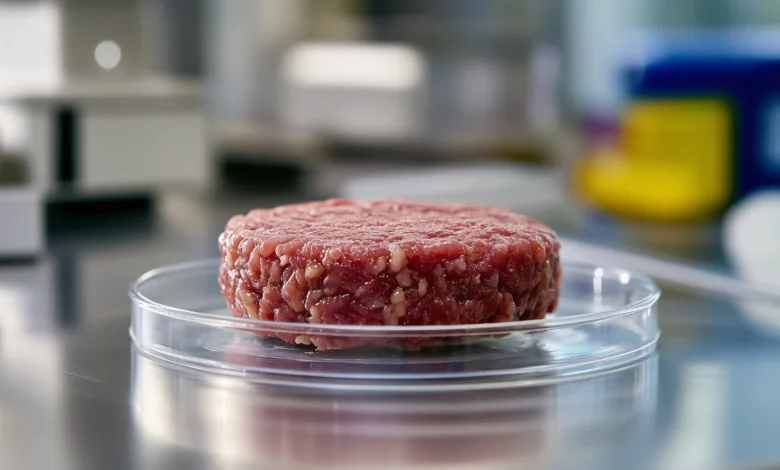
The term "Precision Bred Organism" is a relatively new legal classification in the UK, introduced to distinguish gene-edited organisms from traditional Genetically Modified Organisms (GMOs). While traditional GMOs often involve the insertion of DNA from a different species (transgenesis), PBOs are created using technologies like CRISPR-Cas9 to make targeted "edits" to an organism’s existing genome.
Proponents of the technology, including the UK government and various biotechnology firms, argue that because these changes could theoretically occur through natural mutation or traditional breeding, they should not be subject to the same stringent regulations as older GM technologies. The Genetic Technology (Precision Breeding) Act 2023 was designed to "unlock" the potential of gene editing to create crops that are more resilient to climate change, pests, and diseases.
However, the removal of labelling requirements has been a point of contention. Critics argue that even if the end product is biologically similar to a traditionally bred variety, the process of gene editing is distinct and should be transparent to the consumer. Public sentiment appears to align with this view; data from the Food Standards Agency (FSA) and various independent polls consistently show that approximately 80% of UK consumers believe all forms of genetic engineering in food should be clearly labelled.
Chronology of the Precision Breeding Legislation
The path to the current legal dispute began following the UK’s departure from the European Union, which allowed the government to diverge from the EU’s strict GMO regulations.
- May 2022: The Genetic Technology (Precision Breeding) Bill was introduced to Parliament, seeking to create a new regulatory category for PBOs.
- March 2023: The Bill received Royal Assent, becoming the Genetic Technology (Precision Breeding) Act 2023. This primary legislation set the framework but left the specifics of labelling and traceability to secondary regulations.
- 2024: Beyond GM and co-claimants initiated the judicial review process, arguing that the proposed implementation of the Act violated principles of transparency and impacted the rights of non-GM producers.
- Early 2025: The Labour government passed the Genetic Technology (Precision Breeding) Regulations into law, allowing for the commercial planting and sale of PBO plants without mandatory consumer labels.
- Last Week: The High Court ruled in favor of the claimants, finding the regulatory development process to be legally flawed.
Implications for the Organic and Non-GM Sectors
For the UK’s organic sector, which was worth an estimated £3.2 billion in 2023, the ruling is a vital validation of their supply chain concerns. Organic standards, governed by both domestic law and international bodies, strictly prohibit the use of GMOs, including PBOs. Without a robust traceability system, organic farmers face the risk of accidental contamination through seed mixing, pollen drift, or shared processing facilities.
The Sustainable Food Trust and the Soil Association have long argued that the "burden of avoidance" has been unfairly shifted onto those who choose not to use the technology. Under the contested regulations, the cost of testing for PBOs and maintaining "clean" supply chains would fall entirely on organic and non-GM farmers. The High Court’s recognition of these "real and likely" burdens provides a legal basis for the industry to demand a more equitable regulatory framework where the biotechnology industry takes responsibility for containment and identification.
Historical Context: From the 1990s to the Present
The current legal battle echoes the intense public and political debates of the late 1990s. At that time, the UK government attempted to introduce first-generation GM crops, leading to widespread protests and a "Letter from America" campaign that warned of the ecological and economic consequences seen in the United States.
A key figure in that era was Michael Meacher, the then-Environment Minister under the Labour government, who championed the Farm Scale Evaluations. These large-scale trials were designed to test the impact of GM crops on biodiversity before commercial approval. The results of those trials—which showed detrimental effects on local ecosystems—effectively halted the commercial rollout of GMOs in the UK for two decades.
The recent High Court ruling highlights a shift in the political landscape. Unlike the Meacher era, where environmental impacts were a central pillar of government policy, recent administrations have been accused of being "seduced" by the promise of technological solutions to complex agricultural problems. The court’s finding that ministers were misadvised suggests a narrowing of the internal debate within Defra, where industry lobbying may have outweighed the concerns of civil society and independent ecological experts.
Analysis of Governance and Democratic Oversight
The High Court’s decision raises troubling questions about the quality of advice provided to senior government officials. The ruling states that the Farming Minister was not fully informed of his options, which effectively bypassed the democratic process. When regulations are "waved through" on the basis of party lines or incomplete information, the role of Parliament as a scrutinizing body is diminished.
The case also underscores the decline in media attention toward food safety and agricultural technology. During the 1990s, GM technology was a "front-page" issue. Today, despite the profound implications of gene editing for the future of the British countryside, the issue often fails to make the cut in mainstream news cycles. This "state of torpor," as described by some advocates, allows complex and potentially transformative legislation to pass with minimal public engagement.
Global Regulatory Divergence
The UK’s approach to PBOs stands in contrast to several of its major trading partners. While the United States has largely embraced a deregulated model for gene editing, the European Union has maintained a more cautious stance. Although the EU is currently debating its own New Genomic Techniques (NGTs) framework, it continues to emphasize the importance of traceability and the right of member states to opt-out.
The High Court ruling puts the UK government in a difficult position regarding international trade. If UK-produced PBOs are not traceable, they may face barriers when exported to markets that require strict non-GM certification. This economic reality may force the government to reconsider the labelling requirements, regardless of the domestic legal outcome.
Future Outlook and Next Steps
Following the judgment, Beyond GM and its legal team are currently in discussions with government representatives to determine the next steps. The court has identified serious flaws that cannot be ignored, but the path forward remains complex. The government could choose to:
- Amend the Regulations: Introduce new statutory instruments that mandate labelling and traceability for PBOs, satisfying the court’s concerns about ministerial discretion.
- Re-evaluate the Impact Assessment: Conduct a more thorough investigation into the costs imposed on the organic sector and use this data to reform the implementation of the 2023 Act.
- Appeal the Decision: Seek to overturn the High Court’s ruling in the Court of Appeal, though the specific finding regarding "misadvice" may be difficult to challenge.
For the co-claimants, the victory is a call to action for the public. They urge citizens to engage with their Members of Parliament to demand transparency in the food system. As the UK continues to navigate its post-Brexit identity, the balance between technological innovation and the protection of traditional, sustainable farming practices remains one of the most critical challenges facing the nation’s food security and environmental health.
The ruling serves as a reminder that the integrity of the food chain depends not only on scientific advancement but on the strength of the legal and democratic frameworks that govern it. Without transparency, the "informed choice" promised to consumers remains an impossibility, and the multi-billion-pound organic industry remains at risk of invisible contamination. For now, the High Court has signaled that the government must return to the drawing board to ensure that the "great white heat of technology" does not burn through the rights of farmers and consumers alike.