Uncorking History: The Science and Art of Opening a Forty Year Old Vintage Wine

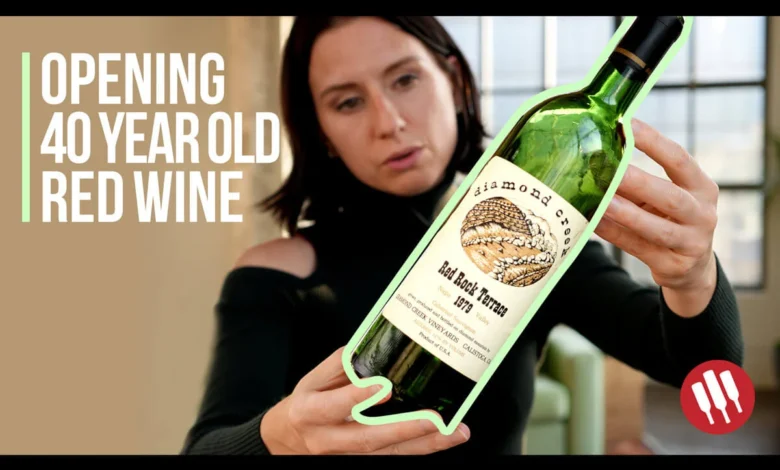
The act of opening a bottle of wine that has matured for four decades is often described by oenophiles as a rare intersection of archaeology, chemistry, and sensory art. While the consumption of wine is a daily ritual for many, the preservation and eventual opening of a 40-year-old vintage, such as the 1979 Diamond Creek "Red Rock Terrace" Cabernet Sauvignon, presents a unique set of technical challenges and historical revelations. This particular bottle, originating from one of Napa Valley’s most storied estates, recently served as a case study for wine professionals, including Master Sommelier Jackson Rohrbaugh, a winemaker, and a group of collectors, to evaluate the longevity of California’s premier varietals. The experience highlighted the delicate balance between viticultural skill and the physical realities of long-term bottle aging.
The Technical Complexity of Mature Corks
The primary hurdle in accessing a 40-year-old wine lies in the structural integrity of the closure. Over decades, the natural cork—a harvested bark from the Quercus suber tree—undergoes significant physical and chemical changes. While cork is celebrated for its elasticity and its ability to allow a minute amount of oxygen exchange, these properties diminish over time. In a bottle that has rested for forty years, the cork often becomes "wine-soaked," absorbing liquid into its cellular structure, which leads to a loss of tensile strength.
Standard corkscrews, which rely on a central screw (or "worm") to pull the cork upward, frequently fail with older vintages. The mechanical stress of the screw can cause a fragile, saturated cork to crumble or, worse, be pushed into the liquid. To mitigate this, wine professionals utilize specialized tools. The "Ah-So," a two-pronged extractor, slides between the cork and the glass neck to grip the closure from the sides rather than the center. For even more precarious situations, the "Durand"—a hybrid tool combining a screw and prongs—is considered the industry standard for high-value vintage extraction. Furthermore, modern technology like the Coravin system allows for the sampling of wine without removing the cork at all, by replacing the extracted liquid with argon gas to prevent oxidation.
The Significance of Ullage and Shoulder Levels
Before the cork is even touched, the condition of a vintage wine is assessed through its "ullage," or the air space between the bottom of the cork and the surface of the liquid. Because no seal is perfectly airtight, wine gradually evaporates over decades. This process is accelerated in dry storage environments or if the bottle has been subjected to temperature fluctuations.
In the wine trade, the level of the liquid is categorized to determine the risk of oxidation. A "fill to the neck" or "high shoulder" level is considered optimal for a 40-year-old bottle, suggesting that the seal remained remarkably tight and the wine has had minimal exposure to oxygen. As the level drops to "mid-shoulder" or "low shoulder," the risk increases exponentially. A lower fill level indicates that a larger volume of air has occupied the bottle, which typically leads to the degradation of the wine’s aromatic compounds and the onset of acetic spoilage. For collectors participating in auctions at houses like Winebid or K&L, the shoulder level is the most critical indicator of the bottle’s potential quality and market value.
Chronology of the 1979 Diamond Creek Cabernet Sauvignon
The bottle in question, the 1979 Diamond Creek "Red Rock Terrace," represents a pivotal era in American winemaking. Founded in 1968 by Al Brounstein, Diamond Creek was the first estate in Napa Valley to produce exclusively Cabernet Sauvignon and the first to designate wines based on specific vineyard sites (terroir). The "Red Rock Terrace" vineyard is a north-facing slope consisting of iron-rich, reddish soil, known for producing wines with firm structures and distinct mineral undertones.
By 1979, the California wine industry was still basking in the afterglow of the 1976 "Judgment of Paris," where California wines famously bested French counterparts in a blind tasting. The 1979 vintage was characterized by a stable growing season, allowing for the development of the high acidity and robust tannins necessary for long-term aging. When this bottle was finally opened forty years later, the tasting panel noted that the wine had transitioned from its primary fruit flavors—such as blackberry and plum—into complex "tertiary" notes of leather, dried tobacco, cedar, and forest floor.
Master Sommelier Jackson Rohrbaugh reported that the initial tasting left the panel momentarily speechless, a reaction attributed to the wine’s unexpected vibrancy. Despite its age, the wine maintained a structural backbone that prevented it from tasting "flat" or overly oxidized, a testament to the viticultural practices employed at Diamond Creek during the late 1970s.
The Chemistry of Longevity: Why Some Wines Age Better
The ability of the 1979 Red Rock Terrace to survive four decades is not a matter of luck, but of chemical composition. Several key factors contribute to a wine’s "age-worthiness":
- Acidity: High acidity acts as a preservative, slowing the chemical reactions that lead to spoilage.
- Tannin Structure: Phenolic compounds found in grape skins and seeds (and oak barrels) provide a structural framework. Over time, these tannins polymerize or bind together, becoming smoother on the palate while protecting the wine from oxidation.
- Alcohol Content: While high alcohol can sometimes make a wine feel "hot," a balanced level (typically 12.5% to 13.5% in the 1970s) supports the wine’s stability.
- Dryness: The absence of residual sugar reduces the risk of secondary fermentation or bacterial growth within the bottle.
The 1979 Diamond Creek possessed a harmonious balance of these elements, allowing it to evolve gracefully rather than simply decaying.
The Debate: 1970s vs. Modern Vintages
A significant point of discussion among the experts during the tasting was whether modern vintages—specifically the 2018 Diamond Creek—would possess the same 40-year aging potential as the 1979. The group remained divided on this issue, reflecting a broader debate within the global wine community.
Critics of modern winemaking argue that contemporary "styles" often favor higher ripeness and higher alcohol levels (often exceeding 14.5% or 15%), which may result in wines that are approachable in their youth but lack the acidic "skeleton" required to last four decades. Conversely, proponents of modern techniques point to advancements in optical sorting, temperature-controlled fermentation, and superior vineyard management, suggesting that today’s wines are more "technically perfect" and less prone to the flaws that might have ruined bottles in the past.
Broader Implications and Industry Analysis
The successful tasting of a 40-year-old Napa Cabernet challenges the lingering European perception that California wines are meant for immediate consumption. For decades, regions like Bordeaux and Burgundy were considered the sole purveyors of "investment-grade" wines capable of aging. The 1979 Diamond Creek serves as empirical evidence that Napa Valley’s specific terroirs can produce wines of immense longevity.
Furthermore, the experience underscores the importance of provenance in the secondary wine market. A bottle that has been moved frequently or stored in suboptimal conditions would likely not have survived to see its 40th anniversary in such pristine condition. For the wine industry, this reinforces the value of professional cellar management and the growing market for "library releases," where wineries hold back a portion of their stock to sell decades later, guaranteeing the storage history for the consumer.
Conclusion
The opening of the 1979 Diamond Creek "Red Rock Terrace" was more than a luxury tasting; it was a verification of historical winemaking philosophy. It proved that the fragile nature of the cork and the risks of evaporation are hurdles that can be overcome by superior initial production and careful preservation. As the wine world looks toward the future, the 1979 vintage remains a benchmark, a liquid record of a specific time and place that continues to offer insights into the complex evolution of Cabernet Sauvignon. Whether the bottles of today will provide similar "speechless" moments in the year 2058 remains a question that only time, and the slow, silent work of chemistry within the bottle, can answer.