The Global Rise of Greek Assyrtiko A Deep Dive into Santorinis Volcanic Viticulture and the Evolution of a Mediterranean Icon

The international wine community has increasingly turned its focus toward the indigenous varieties of Greece, with Assyrtiko emerging as the preeminent white grape of the Mediterranean. Known for its bracing acidity and distinct mineral profile, Assyrtiko offers a profound sense of place, particularly when sourced from its ancestral home on the island of Santorini. As part of a broader global initiative to expand consumer palates through structured tasting challenges, the exploration of Greek Assyrtiko provides a case study in how extreme environmental conditions can produce world-class viticultural results.
The Geological and Historical Context of Santorini Viticulture
The story of Assyrtiko is inseparable from the cataclysmic volcanic history of the Cyclades. Approximately 3,600 years ago, the Minoan eruption reshaped the island of Santorini, leaving behind a complex soil profile known locally as "aspa." This soil is composed of volcanic ash, pumice, and solidified lava fragments. Crucially, the absence of clay in this soil mixture has rendered the island naturally resistant to Phylloxera, the microscopic aphid that devastated European vineyards in the late 19th century. Consequently, many of the rootstocks on Santorini are among the oldest in the world, with some vine systems estimated to be several centuries old.
The chronology of Assyrtiko’s rise to international prominence began in earnest during the 1970s and 1980s, a period often referred to as the "Greek Wine Renaissance." During this time, a new generation of Greek winemakers, many trained in Bordeaux and Montpellier, returned to their homeland to apply modern oenological techniques to ancient varieties. In 1971, the Santorini Protected Designation of Origin (PDO) was established, codifying the standards for Assyrtiko production and ensuring that wines labeled as such met rigorous quality and stylistic benchmarks.
Environmental Extremes and the Kouloura Method
Santorini presents one of the most challenging viticultural environments on the planet. The island receives an average of only 11 inches (approximately 280-300mm) of rainfall per year, mostly during the winter months. During the growing season, the vines must contend with the "Meltemi," a fierce northern wind that can dehydrate grapes and batter foliage.
To survive these conditions, local growers developed the "kouloura" or "stefani" training system. In this method, vines are woven into low-to-the-ground, basket-like circles. The grapes grow on the inside of the basket, protected from the wind and the abrasive effects of wind-blown volcanic sand. This unique architecture also allows the plant to trap the "anidros"—the morning sea mist that rolls off the caldera—providing a vital source of moisture in a region without significant irrigation.
From a physiological standpoint, these stressors result in low yields but high concentration. The grapes remain small, with thick skins and a high ratio of solids to juice. This contributes to the characteristic high acidity and high alcohol levels that define the Assyrtiko profile, a combination rarely found in other white varieties grown in hot climates.
Sensory Analysis: The 2019 Ktima Tselepos Santorini Assyrtiko
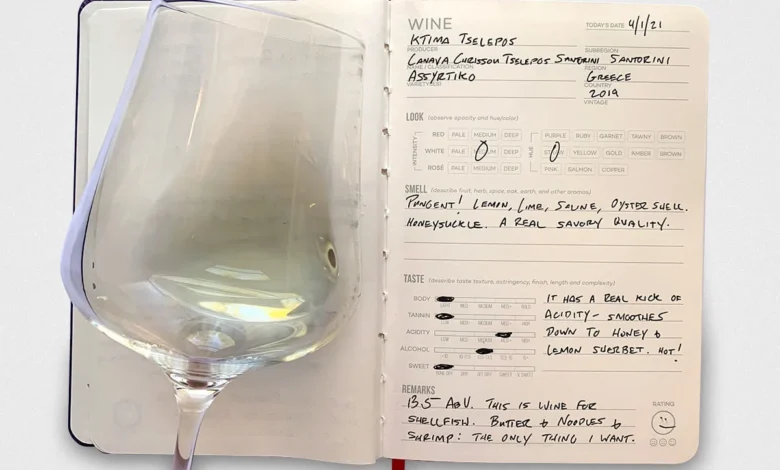
In the context of the recent Wine Tasting Challenge, the 2019 Ktima Tselepos Santorini Assyrtiko serves as a definitive benchmark for the variety. Ktima Tselepos, a producer noted for its meticulous approach to terroir, sources fruit from high-altitude vineyards to maintain the grape’s signature tension.
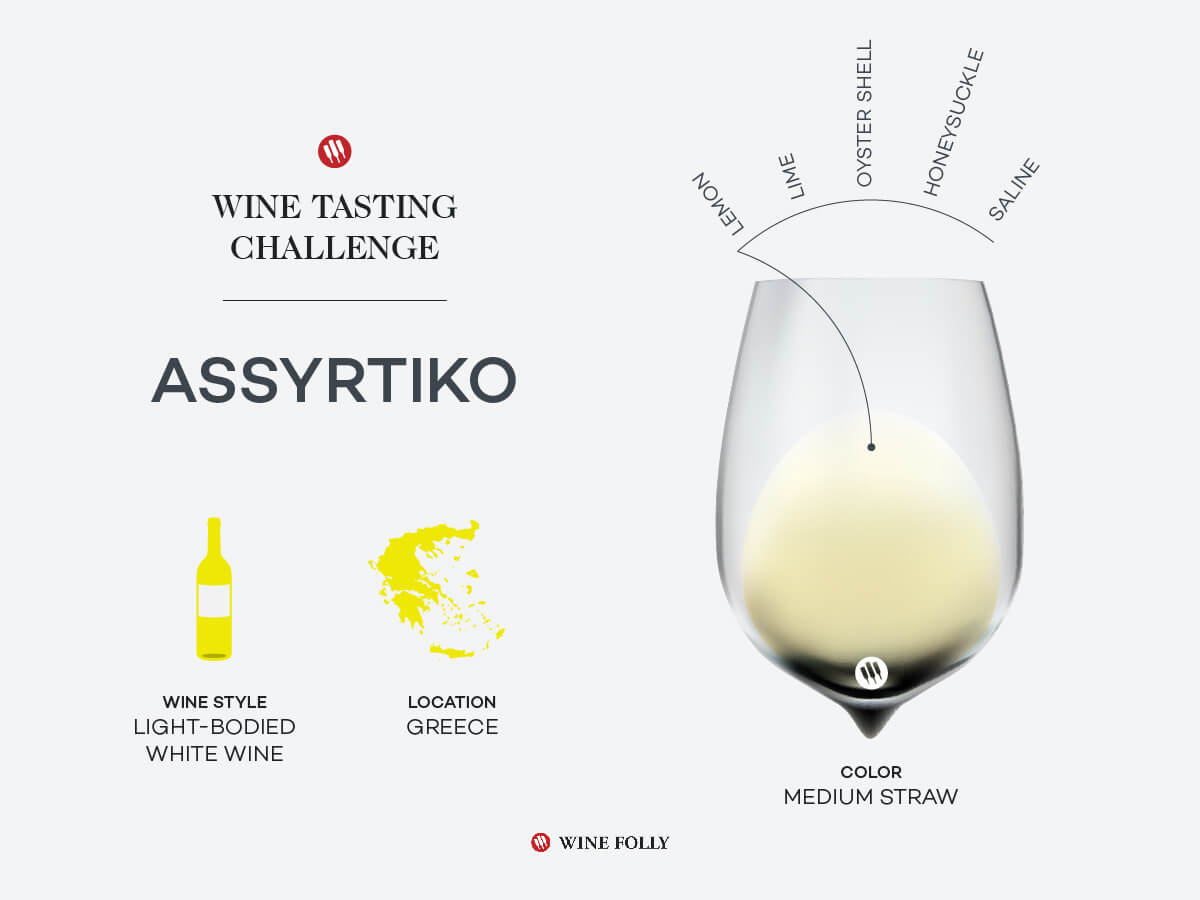
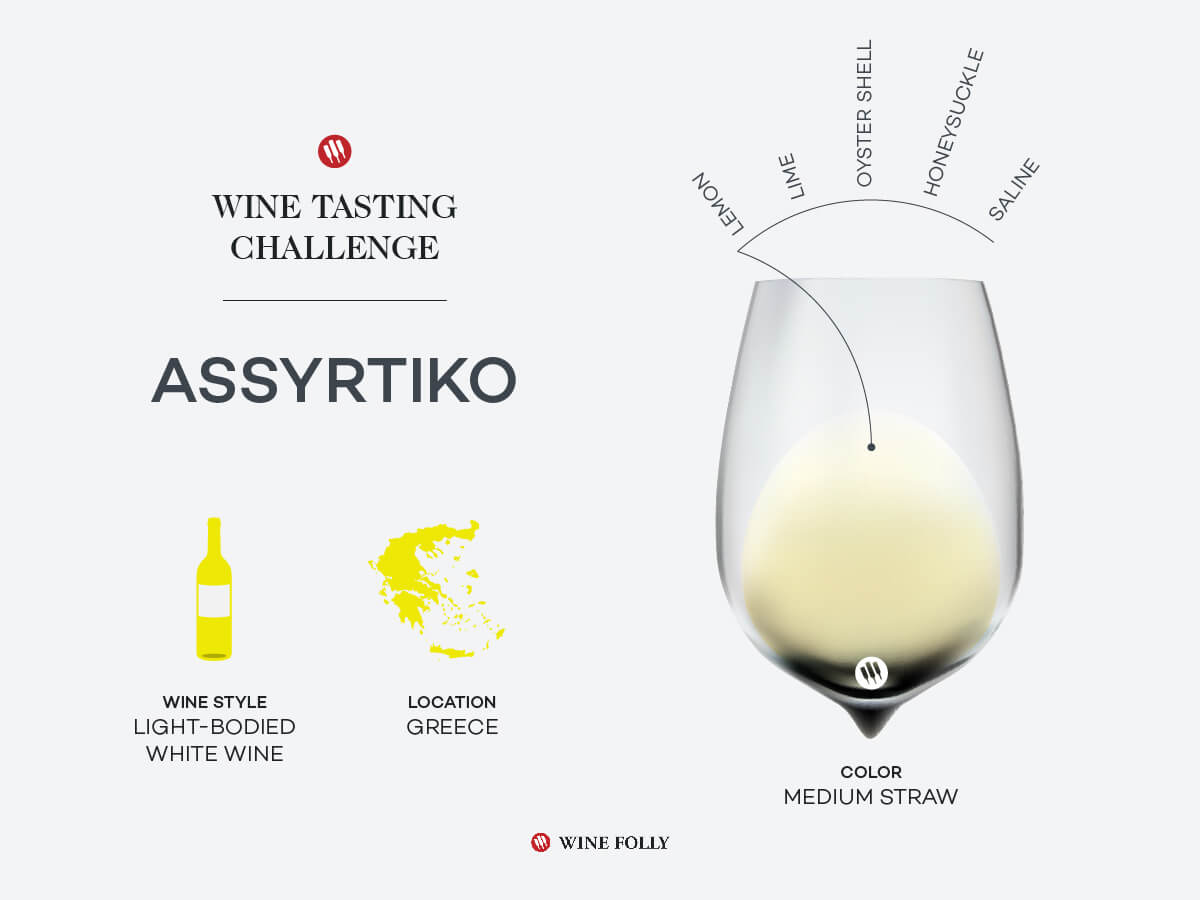
The 2019 vintage exhibits a medium straw hue, indicating a degree of phenolic ripeness and potential skin contact or aging. On the nose, the wine is described as pungent and savory, departing from the primary fruit characteristics of many international whites. Key aromatic markers include lemon zest, lime peel, and a distinct saline quality reminiscent of oyster shells and sea spray. Floral notes of honeysuckle provide a subtle counterpoint to the wine’s more aggressive mineral leanings.
On the palate, the wine demonstrates the variety’s famous structural paradox. It possesses a sharp, "electric" acidity—often with a pH as low as 2.9 to 3.1—which provides an immediate sensation of freshness. However, this is balanced by a significant alcoholic weight (often reaching 14% to 14.5% ABV) and a textured, almost oily mouthfeel. The finish is long and persistent, transitioning from tart citrus to a savory, honeyed sherbet.
The Science of Salinity and Mineral Expression
One of the most debated aspects of Assyrtiko is its perceived salinity. While popular descriptions often suggest that the salt air of the Aegean "seasons" the grapes, oenologists point to a more complex chemical reality. The saline sensation is frequently a result of high concentrations of succinic acid and mineral extracts drawn from the volcanic soil.
Furthermore, the high acidity of the grape can trigger a puckering response in the salivary glands that the brain interprets as saltiness. This "mineral" quality is a hallmark of wines grown in volcanic soils globally, from Mount Etna in Sicily to the Azores in Portugal, but it reaches a pinnacle of expression in Santorini Assyrtiko.
Market Trends and Global Expansion
The commercial trajectory of Assyrtiko indicates a shift in global consumer preferences toward high-acid, food-friendly white wines. According to data from the Hellenic Statistical Authority and various export councils, Greek wine exports to the United States and Canada have seen a steady increase of approximately 35% over the last decade, with Assyrtiko leading the charge in the premium sector.
The variety’s success has even led to its adoption outside of Greece. In a landmark move for viticultural globalization, Jim Barry Wines in the Clare Valley of Australia planted the first commercial Assyrtiko vineyard outside of Greece in 2012. The success of these Australian plantings has proven that Assyrtiko is not merely a local curiosity but a "noble" variety capable of retaining its essential character—namely its high acidity and drought resistance—in diverse geographic locations.
Broader Implications for the Wine Industry
The study of Assyrtiko offers significant insights for the future of the global wine industry, particularly regarding climate change. As traditional wine regions struggle with rising temperatures and water scarcity, Assyrtiko’s natural resilience to heat and drought makes it an attractive candidate for future-proofing vineyards in other parts of the world.
However, the success of Assyrtiko has also created internal pressures within Santorini. The island’s popularity as a global tourism destination has led to a surge in land prices, with some vineyard sites being lost to hotel and villa development. Industry experts note that the survival of the Santorini PDO depends on a delicate balance between the lucrative tourism sector and the preservation of its ancient agricultural heritage.
Conclusion and Gastronomic Integration
From a culinary perspective, the structural integrity of Assyrtiko allows it to pair with a wide range of challenging foods. While its affinity for Mediterranean seafood—specifically shellfish, grilled octopus, and oily fish—is well-documented, its high acidity and weight also allow it to cut through the richness of lamb, feta cheese, and dishes featuring heavy lemon and garlic bases.
The Wine Tasting Challenge highlights that Assyrtiko is more than just a beverage; it is a liquid record of a specific, harsh, and beautiful environment. By successfully navigating the challenges of volcanic soil, minimal rainfall, and gale-force winds, Assyrtiko has secured its place as one of the world’s most distinctive and respected white wines. As more consumers engage with these structured tastings, the appreciation for Greece’s viticultural contributions is expected to continue its upward trend, solidifying Assyrtiko’s status as a staple of the modern wine cellar.