The Reinvention of the Garnish: Jakob McCabe-Johnston and the Culinary Evolution of the Americano Cocktail

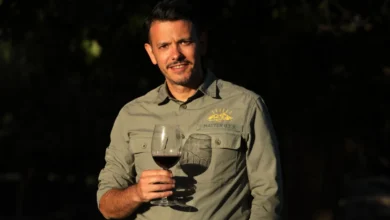
The contemporary cocktail landscape is currently undergoing a transformative shift where the boundaries between the kitchen and the bar are increasingly blurred. At the forefront of this movement is Jakob McCabe-Johnston, a bartender at Atlanta’s acclaimed Kimball House and recently named one of Punch’s Best New Bartenders of 2026. McCabe-Johnston has garnered significant industry attention for a specific innovation that reimagines one of the most traditional elements of drink presentation: the olive garnish. By utilizing a sophisticated agar-agar technique to create a Campari-based jelly, he has developed the "Elephino Americano," a cocktail that challenges the conventional palate while paying homage to the historical roots of Italian aperitivo culture.
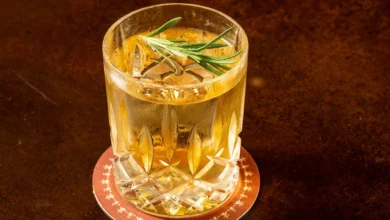
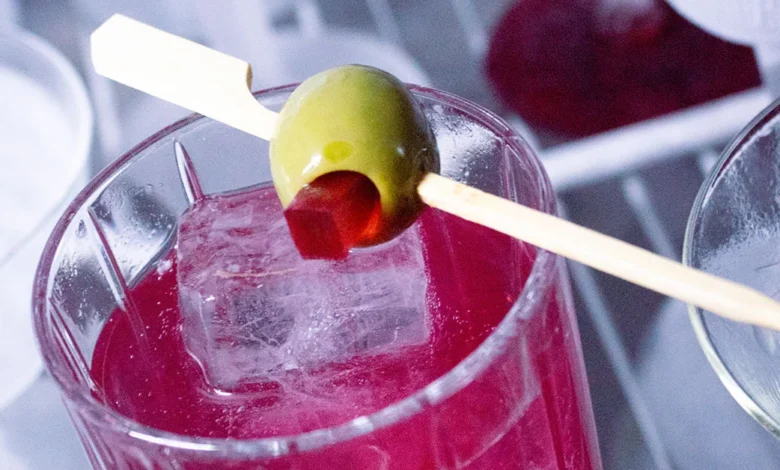
The Elephino Americano serves as a case study in modern mixology’s obsession with "culinary-driven ethos." The drink’s name is derived from a classic joke—"What do you get when you cross an elephant and a rhino? ‘Elephino’ (Hell if I know)"—which reflects the whimsical yet technically precise nature of the beverage. While the name suggests a sense of lightheartedness, the construction of the drink is a rigorous exercise in flavor balancing and structural innovation. Traditionally, an Americano consists of Campari, sweet vermouth, and soda water, usually garnished with a lemon slice or peel. McCabe-Johnston’s version, however, replaces the citrus with a savory, bitter, and salty component: an olive stuffed with a firm Campari jelly.
The Technical Innovation of the Campari-Stuffed Olive
The centerpiece of the Elephino Americano is undoubtedly the garnish. The inspiration for the Campari jelly originated from "A Bar with Shapes for a Name" in London, an establishment renowned for its Bauhaus-inspired, minimalist approach to cocktails and its use of industrial food science. McCabe-Johnston adapted this concept to create a functional, edible component that mimics the appearance of a pimento-stuffed olive but delivers a concentrated burst of bitter botanical notes.
The process of creating the jelly requires a delicate touch. McCabe-Johnston brings Campari to a rapid simmer, a step he emphasizes must be done quickly to prevent the evaporation of the spirit’s volatile aromatics. Once heated, agar-agar—a plant-based gelatinous substance derived from red algae—is whisked into the liquid. Agar-agar is preferred in professional mixology over animal-based gelatin because it sets at room temperature and possesses a higher melting point, ensuring the garnish maintains its structural integrity even when submerged in a drink or handled in a warm bar environment.
After a two-hour chilling period, the jelly becomes firm enough to be manipulated. While it can be sliced into various shapes or even processed into a paste for use on crackers or glass rims, for the Elephino Americano, it is cut into small, precise cubes. These cubes are then hand-stuffed into olives, creating a visual illusion that rewards the drinker with a complex interplay of salinity from the olive brine and the structured bitterness of the Campari. This "bitter and salty" profile is a hallmark of sophisticated modern cocktails, moving away from the sugar-forward profiles that dominated the late 20th century.
Biographical Context and the Culinary Ethos
McCabe-Johnston’s approach is deeply rooted in his familial history. As a third-generation bartender, his perspective on hospitality and beverage construction was shaped by his parents, Jasha Johnston and Carrie McCabe-Johnston. The latter is the chef and owner of Nightingale in Minneapolis, a venue known for its refined small plates and sophisticated bar program.
This exposure to a professional kitchen environment from a young age instilled in Jakob a "chef-like" mentality toward drink creation. He posits that the modern bartender should not merely be a pourer of spirits but a curator of balance, treating liquids with the same scrutiny a chef applies to a sauce or a protein. This philosophy is evident in the other technical elements of the Elephino Americano. Beyond the garnish, the drink utilizes a sesame oil wash to provide a rich, silken texture—a technique known as "fat washing" that has moved from experimental labs into high-end commercial bars. Furthermore, the inclusion of aquavit as a "seasoning" rather than a primary base spirit demonstrates a nuanced understanding of botanical layering. The caraway and dill notes of the aquavit provide a savory bridge between the bitter Campari and the salty olive.
A Chronology of the Americano and the Rise of Savory Cocktails
To understand the significance of McCabe-Johnston’s innovation, one must look at the timeline of the Americano itself. The drink’s origins date back to the 1860s at Gaspare Campari’s "Caffè Campari" in Milan. Originally known as the "Milano-Torino" (due to the origins of its two main ingredients: Campari from Milan and sweet vermouth from Turin), it was later renamed the "Americano" because of its popularity among American tourists during the Prohibition era who sought a lighter, elongated beverage.
For over a century, the Americano remained largely unchanged—a reliable, low-alcohol aperitif. However, the "Cocktail Renaissance" of the early 2000s began a period of intense experimentation.
- 2005-2015: Focus on "lost" ingredients and historical accuracy.
- 2015-2020: The rise of the "Low-ABV" (Alcohol by Volume) movement, placing the Americano back in the spotlight.
- 2020-Present: The "Culinary Turn," where techniques like clarification, fermentation, and gelling (as seen in the Elephino) began to redefine classic templates.
The Elephino Americano sits at the pinnacle of this current era. It represents a move toward the "savory" cocktail, a trend that has seen ingredients like MSG, saline solutions, and vegetable dyes (McCabe-Johnston uses beet dye to achieve a specific hue) become staples of the modern backbar.
Industry Implications and the Future of Mixology
The recognition of McCabe-Johnston by Punch as a "Best New Bartender of 2026" highlights a broader industry trend: the decentralization of cocktail innovation. While London and New York have historically been the twin poles of the cocktail world, the emergence of world-class programs in cities like Atlanta (Kimball House) and Minneapolis (Nightingale) demonstrates that high-level culinary mixology is now a global phenomenon.
Market data suggests that consumers are increasingly seeking "experience-led" drinking. According to recent beverage industry reports, 64% of high-end bar patrons are willing to pay a premium for drinks that feature "house-made" or "technically unique" components. The Campari-stuffed olive is a perfect example of this value-add. It is a labor-intensive, proprietary ingredient that cannot be replicated by a home enthusiast without significant effort, thereby justifying the artisanal status of the modern cocktail bar.
Furthermore, the versatility of the Campari jelly—as noted by McCabe-Johnston regarding its use on crackers or as a glass rim—points toward a future where "cocktail components" are sold or utilized as standalone culinary products. This cross-pollination between the bar and the pantry is expected to grow, with more bartenders seeking patents or retail opportunities for their technical innovations.
Analysis of the "Elephino" Impact
The success of the Elephino Americano lies in its ability to be both "nonsensical" and "sensible." On a theoretical level, stuffing an olive with a bitter liqueur jelly seems like an unnecessary complication. However, on the palate, it solves a common issue in cocktail design: the "static" garnish. Most garnishes are passive; they provide aroma but do not evolve as the drink is consumed. The Campari-stuffed olive is active. As the drinker reaches the end of the cocktail and consumes the olive, they experience a final, concentrated burst of the drink’s core flavors, reinforced by the salt of the olive which acts as a flavor enhancer.
In a broader cultural sense, McCabe-Johnston’s work reflects a generation of bartenders who are as comfortable with a whisk and a saucepan as they are with a shaker and a jigger. By treating the Americano not as a fixed recipe but as a canvas for texture and temperature play, he has contributed to the ongoing elevation of the craft.
As Kimball House continues to serve as a beacon for Southern hospitality and modern technique, the Elephino Americano stands as a testament to the power of curiosity. It proves that even the most established classics can be improved through a combination of humor, family legacy, and a rigorous application of food science. For the industry at large, the message is clear: the next frontier of the cocktail is not just what is in the glass, but how every single element, down to the stuffing of an olive, contributes to a cohesive, culinary whole.