The Allegation of Adam Malik as a CIA Agent: A Deep Dive into the Cold War Controversy and Historical Rebuttals

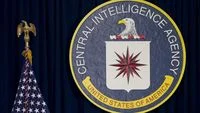
The legacy of Adam Malik, Indonesia’s third Vice President and one of its most distinguished diplomats, remains a subject of intense historical debate following sensational allegations linking him to the United States Central Intelligence Agency (CIA). Malik, a pivotal figure in the transition from the Sukarno era to the New Order, was characterized as a high-level American asset in the seminal work of investigative journalism, Legacy of Ashes: The History of the CIA, authored by Pulitzer Prize-winning journalist Tim Weiner. These claims, which surfaced decades after the events they describe, suggest that the "diplomat of a thousand faces" may have played a more clandestine role in the geopolitical shifts of the 1960s than previously acknowledged by official Indonesian history.
The allegations center on the turbulent mid-1960s, a period when Indonesia was a primary battleground for Cold War influence. According to Weiner’s research, which drew upon declassified documents and interviews with former intelligence officers, Adam Malik was allegedly recruited by the CIA to help neutralize the growing influence of the Indonesian Communist Party (PKI) and the increasingly pro-Beijing stance of President Sukarno. The book, translated into Indonesian as Membongkar Kegagalan CIA in 2008, ignited a firestorm of controversy in Jakarta, forcing historians, politicians, and Malik’s own family to confront a narrative that challenged the national hero’s untarnished reputation.
The Weiner Allegations: Recruitment and the "Shadow Government"
In Legacy of Ashes, Tim Weiner provides a detailed account of an alleged clandestine relationship between Malik and Clyde McAvoy, a senior CIA operative with a history of high-stakes recruitment in Asia. Weiner asserts that McAvoy met with Malik in a series of "safe houses" across Jakarta in 1964 and 1965. During these meetings, the CIA reportedly identified Malik as the ideal candidate to spearhead a "shadow government" that could take the reins of power should Sukarno fall or the PKI attempt a coup.
McAvoy, in an interview conducted by Weiner in 2005, was remarkably candid about his purported relationship with the Indonesian statesman. "I recruited and controlled Adam Malik," McAvoy claimed, describing him as the highest-ranking Indonesian official the agency had ever successfully brought into its fold. The objective of this recruitment was twofold: first, to gain deep intelligence on the inner workings of the Sukarno administration, and second, to create a political alternative that aligned with Western interests.
The book further alleges that this relationship was not merely one of information exchange but involved direct financial and logistical support. Weiner writes that the CIA provided approximately $10,000 to Malik to fund anti-communist activities. While a modest sum by modern standards, in the hyper-inflationary environment of mid-1960s Indonesia, such a fund was substantial enough to mobilize grassroots movements and sustain political factions opposed to the PKI.
The Role of Robert Martens and the "Death Lists"
The narrative of Malik’s involvement with U.S. intelligence extends beyond McAvoy to include other embassy officials. Weiner describes a subsequent meeting between Malik and Bob Martens, a political officer at the U.S. Embassy in Jakarta. During this period, Martens was reportedly tasked with compiling lists of PKI cadres, ranging from top-tier leadership to provincial organizers.
According to the allegations, Martens handed over a list containing the names of 67 high-ranking PKI officials to an emissary of Adam Malik. This list was then allegedly funneled to the Indonesian military, which was at the time engaged in a brutal crackdown following the failed coup attempt of September 30, 1965 (G30S). The historical implication is profound: it suggests that Malik served as a vital conduit between American intelligence and the Indonesian army during the mass killings of 1965-1966, an event that resulted in the deaths of hundreds of thousands of suspected communists.
While Martens later admitted in various interviews to providing names to the Indonesian military, the specific involvement of Adam Malik as the intermediary remains a point of contention among historians. Proponents of Weiner’s account argue that Malik’s position as a founder of the Murba Party—a "national communist" party that was fiercely antagonistic toward the PKI—made him a logical partner for the U.S. in its efforts to dismantle the PKI from within the Indonesian left.
Historical Context: Indonesia as a Cold War Pivot
To understand why the CIA would target a figure like Adam Malik, one must look at the broader geopolitical climate of the 1960s. Under President Sukarno, Indonesia had moved toward the "Jakarta-Phnom Penh-Hanoi-Peking-Pyongyang Axis," alarming Washington. The PKI had become the third-largest communist party in the world, trailing only those of the Soviet Union and China.
The United States feared a "domino effect" in Southeast Asia. If Indonesia, the region’s largest and most resource-rich nation, fell to communism, it was believed that the rest of the region would follow. Consequently, the CIA engaged in a series of covert operations to bolster anti-communist elements within the Indonesian military and political elite. This strategy, often referred to by scholars as "The Jakarta Method," involved the systematic cultivation of local proxies to enact regime change.
Adam Malik, with his extensive international experience and his leadership of the Murba Party, occupied a unique niche. As a socialist who rejected the PKI’s subservience to Moscow and Beijing, he offered a "third way" that the U.S. found useful. Whether he was a "controlled agent" or a pragmatic politician whose interests temporarily aligned with Washington’s is the central question that divides Weiner’s critics and supporters.
Fierce Rebuttals from the Indonesian Establishment
The publication of Weiner’s claims met with immediate and forceful denials from prominent Indonesian figures. Jusuf Kalla, who was serving as Indonesia’s Vice President at the time the book gained traction in 2008, was among the first to defend Malik’s honor. Kalla emphasized that Malik’s political DNA was rooted in Indonesian nationalism and socialism, making the idea of him being a "controlled asset" of a foreign capitalist intelligence agency fundamentally illogical.
"I regret the writing of that book. I cannot believe it, and it is impossible for Pak Adam Malik to have been a CIA agent," Kalla stated in November 2008. He argued that Malik’s role in the founding of the Murba Party and his lifelong commitment to the Indonesian struggle for independence were inconsistent with the profile of an intelligence operative working for a foreign power.
The Malik family also took a stand against the allegations. Antarini Malik, the daughter of the late Vice President, expressed the family’s outrage, stating that her father’s nationalism was beyond reproach. She argued that the claims were a slur against a man who had dedicated his life to the service of his country and that the idea of him accepting a $10,000 bribe was insulting given the scale of the responsibilities he held.
Scholarly Skepticism: Agent or Strategic Partner?
Academic historians have also weighed in, often suggesting a more nuanced interpretation than the one presented by Weiner. Taufik Abdullah, a senior historian and former chairman of the Indonesian Institute of Sciences (LIPI), noted that in the world of diplomacy and intelligence, the line between "informant," "contact," and "agent" is often blurred.
"An intelligence officer’s job is to find information and provide the best analysis. Based on Adam Malik’s life history, it is difficult for me to accept that he was an agent in the formal sense," Abdullah remarked. He suggested that while Malik undoubtedly had frequent contact with American officials—as any Foreign Minister or high-ranking diplomat would—these interactions were likely part of a complex diplomatic game intended to secure Indonesia’s position during a period of extreme volatility.
Other scholars point out that McAvoy and other CIA officers had a professional incentive to "over-report" the success of their recruitments to their superiors in Langley. In the secret world of intelligence, a friendly contact who shares common goals can easily be labeled as a "controlled asset" in internal memos to justify budgets and demonstrate influence, even if the individual in question considers themselves an independent actor.
The Chronology of Adam Malik’s Rise and the 1965 Transition
The timeline of Malik’s career during the mid-60s provides a framework for analyzing the allegations:
- 1964: Malik, as a leader of the Murba Party, becomes increasingly vocal against the PKI’s influence over Sukarno. This is the period when McAvoy claims recruitment began.
- Early 1965: The Murba Party is banned by Sukarno under pressure from the PKI. This pushes Malik further into the camp of those seeking a change in the status quo.
- October 1, 1965: In the immediate aftermath of the G30S movement, Malik joins forces with General Suharto and Sultan Hamengkubuwono IX. This "Triumvirate" becomes the civilian-military face of the New Order.
- 1966: Malik is appointed Foreign Minister. He immediately moves to end the "Konfrontasi" with Malaysia and rejoins the United Nations, reversing Sukarno’s isolationist policies and aligning Indonesia with the Western economic bloc.
- 1967-1977: Malik serves as the primary architect of Indonesia’s New Order foreign policy, facilitating the flow of Western aid and investment.
Critics of the CIA narrative argue that Malik’s actions were those of a patriot trying to save his country from economic ruin and civil war. Supporters of the narrative argue that the seamlessness with which Malik transitioned Indonesia into the Western fold is evidence of a pre-arranged plan orchestrated by his handlers in Washington.
Implications and Historical Legacy
The debate over Adam Malik’s alleged ties to the CIA is more than a dispute over a single man’s reputation; it is a struggle over the narrative of the Indonesian state itself. If Malik, a National Hero, was indeed a CIA asset, it raises uncomfortable questions about the degree of foreign intervention in the birth of the New Order. It suggests that the foundation of modern Indonesia was built not just on internal power struggles, but on a foundation of covert international engineering.
However, the lack of "smoking gun" evidence—such as signed receipts or definitive transcripts—means the allegations remain in the realm of historical controversy. Tim Weiner’s work relies heavily on the testimony of intelligence officers who may have had their own agendas, while Malik’s defenders rely on his public record and the inherent difficulty of proving a negative.
Regardless of the veracity of the CIA claims, Adam Malik’s impact on Indonesia is undeniable. He was a master of the "Active and Independent" foreign policy doctrine, even if his definition of "independent" involved navigating the treacherous waters of Cold War espionage. His role in the formation of ASEAN and his presidency of the United Nations General Assembly in 1971 cemented his status as a global statesman.
Ultimately, the figure of Adam Malik remains an enigma. Whether he was a shrewd nationalist who used the CIA to further Indonesia’s interests, or a recruited agent who helped steer his country toward Washington, his life reflects the brutal complexities of an era where survival often required dancing with the devil. As more documents from the era are declassified in the coming decades, the truth behind the "Legacy of Ashes" may eventually come to light, but for now, Malik remains a symbol of the ambiguous, often dark intersections of national interest and global intelligence.
Related posts: