Tragedy of the SS Eastland: The Deadliest Maritime Disaster in Chicago’s History

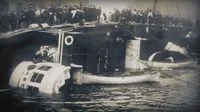
The morning of July 24, 1915, was supposed to be a day of respite and celebration for the hardworking employees of the Western Electric Company’s Hawthorne Works. Instead, it became the date of the deadliest maritime disaster in the history of the Great Lakes and one of the most significant tragedies in American history. As the SS Eastland sat docked on the Chicago River, it underwent a catastrophic loss of stability, rolling onto its side and claiming the lives of 844 people. Despite occurring in the heart of a major American city, mere feet from the shore, the speed and scale of the disaster left the nation in shock and forever changed the landscape of maritime safety regulations.
The Context of the Hawthorne Works Picnic
In the early 20th century, large-scale corporate outings were a staple of industrial life. The Western Electric Company, a massive manufacturer of telephone equipment, employed thousands of people at its Hawthorne Works plant in Cicero, Illinois. Many of these workers were young immigrants—largely of Czech, German, and Polish descent—who saw the annual company picnic as the highlight of their summer.
For the 1915 excursion, Western Electric had chartered five steamships—the Theodore Roosevelt, the Petoskey, the Racine, the Indiana, and the SS Eastland—to transport more than 7,000 employees and their families across Lake Michigan to Michigan City, Indiana. The SS Eastland was the first ship scheduled to depart. Because the picnic was a family event, the crowd that gathered at the LaSalle Street dock before dawn was filled with children and young adults. Of the eventual victims, approximately 70% were under the age of 25, reflecting the youthful demographic of the workforce and their families.
A History of Instability: The "Speed Queen" of the Lakes
The SS Eastland, commissioned in 1902, was known as the "Speed Queen of the Lakes." It was a sleek, narrow vessel designed for speed, but its design was fundamentally flawed from a stability standpoint. From its earliest days, the ship had earned a reputation for being "cranky"—a maritime term for a vessel that tips or leans easily.
The ship lacked a deep draft, meaning it did not sit very far down in the water, and it had a high center of gravity. To compensate for this, the crew had to manage a complex system of ballast tanks, filling them with water to keep the ship upright. On several occasions prior to 1915, the Eastland had experienced frightening "list" incidents where it leaned precariously while carrying passengers. In 1904, for instance, the ship nearly capsized with 3,000 people on board. Despite these warnings, the vessel continued to operate, and its passenger capacity was even increased over the years.
The Titanic Legacy and the Lifeboat Paradox
One of the most tragic ironies of the SS Eastland disaster is that it was exacerbated by safety legislation passed in the wake of the RMS Titanic sinking three years earlier. In 1915, the United States Congress passed the Seamen’s Act (also known as the La Follette Seamen’s Act), which required all passenger vessels to carry enough lifeboats and rafts for every person on board.
While the intent was to save lives, the implementation on the SS Eastland was disastrous. To comply with the new law, the ship’s owners added several tons of heavy steel lifeboats and life rafts to the upper decks. For a ship already suffering from a high center of gravity and poor metacentric height (a measurement of initial stability), this additional weight at the highest point of the vessel made it dangerously top-heavy. The very equipment meant to ensure the safety of the passengers in the event of a sinking in the middle of the lake would ultimately cause the ship to capsize while it was still tied to the dock.
Chronology of the Disaster
The tragedy unfolded with terrifying speed. The timeline of July 24, 1915, serves as a grim reminder of how quickly a festive atmosphere can turn into a death trap.
- 6:30 AM: Passengers begin boarding the SS Eastland at the wharf between LaSalle and Clark Streets. The mood is light, with a band playing on the upper deck and families securing spots to watch the departure.
- 7:10 AM: The ship reaches its legal capacity of 2,500 passengers. Witnesses note that the ship begins to list slightly toward the dock (starboard). To counteract this, the crew pumps water into the port-side ballast tanks.
- 7:16 AM: The ship begins to list away from the dock (port) toward the river. The crew attempts to stabilize the vessel by shifting the ballast again, but the movement of passengers on the decks—many rushing to the port side to wave at people on other ships—makes the list harder to control.
- 7:23 AM: The list to the port side reaches 10 degrees. Water begins to seep into the ship through the lower gangways and scuppers.
- 7:27 AM: The list increases to a critical 25 degrees. On the decks, furniture begins to slide, and passengers struggle to keep their footing. Inside the ship, in the cabins and the dining room, heavy refrigerators and pianos break loose, pinning people against the walls.
- 7:28 AM: The SS Eastland rolls completely over on its side in 20 feet of water. It happens so fast that there is no time to launch a single lifeboat.
The Moment of Impact and Rescue Efforts
When the ship capsized, the scene was one of absolute chaos. Hundreds of people on the upper deck were thrown into the murky, polluted waters of the Chicago River. Those who could not swim were quickly pulled under by the weight of their wool Sunday clothes.
However, the situation was even more dire for those inside the ship. Passengers in the lower cabins and the "belly" of the ship were trapped as water rushed in. Many were crushed by falling machinery or furniture, while others were drowned in air pockets that quickly vanished.
Harlan Babcock, a reporter for the Chicago Herald, famously described the scene: "When the boat tipped, the people on the upper deck were swiped off like ants brushed from a table."
Rescuers from the nearby docks, including workers from other ships and passing pedestrians, jumped into the water to help. The crew of the nearby ship Kenosha pulled hundreds of people to safety. Local warehouses were quickly converted into makeshift morgues. In one of the first uses of such technology in a disaster rescue, welders used oxy-acetylene torches to cut holes in the exposed hull of the ship to reach those trapped inside. While they managed to pull some survivors out, they more often found only bodies.
The Human Toll and Community Impact
The final death toll was confirmed at 844. Entire families were wiped out in an instant. The Western Electric Company was devastated; the Hawthorne Works plant remained closed for days as the community grappled with the loss.
The demographics of the victims told a heartbreaking story. Because it was a company picnic, the victims were often young couples or parents with small children. In some cases, so many members of a single family died that there was no one left to claim the bodies. The disaster was particularly hard on Chicago’s Czech community, as many of the workers lived in the "Little Bohemia" neighborhood. For weeks, the city was filled with the sound of funeral bells and the sight of white hearses—traditionally used for the funerals of children.
Legal Aftermath and the Search for Justice
In the wake of the tragedy, public outrage was immense. Investigations were launched at the local, state, and federal levels. Captain Harry Pedersen, the ship’s engineer, and the owners of the St. Joseph-Chicago Steamship Company were indicted on charges of manslaughter and criminal negligence.
However, the legal proceedings resulted in very little accountability. The defense argued that the ship’s crew and owners could not have foreseen the specific combination of factors that led to the capsizing. After years of litigation and appeals, no one served prison time, and the financial settlements provided to the victims’ families were meager. In 1935, a final court ruling stated that the owners were not liable because the disaster was caused by the negligence of the engineer in managing the ballast tanks, rather than a fundamental flaw known to the owners—a conclusion that many historians and maritime experts dispute given the ship’s long history of instability.
Technical Analysis of the Failure
Modern maritime forensic analysis points to several factors that converged to cause the Eastland’s demise. The primary issue was the metacentric height (GM). For a ship to be stable, the center of buoyancy must shift in a way that creates a "righting arm" when the ship heels.
Because the Eastland was narrow and top-heavy (due to the added lifeboats and the 2,500 passengers mostly standing on the upper decks), its "righting arm" was non-existent. Once the list passed a certain degree, gravity took over, and the ship could no longer right itself. The open portholes and gangway doors near the waterline allowed "progressive flooding," which sealed the ship’s fate. Had the ship been in deep water, it would have sunk entirely; in the shallow Chicago River, it simply came to rest on the muddy bottom on its side.
Historical Legacy and Modern Remembrance
Despite the magnitude of the loss, the SS Eastland disaster is often overshadowed in American memory by the sinking of the Titanic and the Lusitania. Historians suggest this may be because the Eastland lacked the "glamour" of an ocean liner or the international intrigue of a wartime sinking. It was a tragedy of the working class, occurring in a dirty river in the middle of a city.
Today, a permanent commemorative plaque stands at the site of the disaster on the Chicago Riverwalk, near the corner of LaSalle and Wacker Drive. The SS Eastland itself was eventually righted, renamed the USS Wilmette, and converted into a naval training vessel, serving through both World Wars before being scrapped in 1946.
The legacy of the Eastland remains a sobering lesson in the law of unintended consequences. It serves as a reminder that safety regulations, if implemented without regard for the technical specifications of a vessel, can sometimes create the very dangers they seek to prevent. For the city of Chicago, the Eastland remains a scar on its history—a day when a celebration of labor and family turned into a monument of grief.
Related posts: