The Ultimate Wine Tasting Challenge Explores the Sun-Drenched Coastal Profile of Greek Assyrtiko

Great wine possesses the rare capacity to transport the senses across geography, encapsulating the climate, soil, and struggles of its origin within a single glass. As part of an ongoing global survey designed to expand the collective palate through thirty-four distinct varietals originating from twelve countries, this week’s focus centers on Greece’s flagship white grape: Assyrtiko. Hailing from the volcanic landscapes of the Aegean Sea, this resilient varietal offers a masterclass in how extreme viticulture translates into a distinctive flavor profile defined by intense minerality, searing acidity, and a pronounced coastal salinity.
Main Facts and Viticultural Origins
Assyrtiko is most famously associated with Santorini, a sun-drenched, crescent-shaped island in the Cyclades characterized by its stark white architecture, caldera cliffs, and unforgiving volcanic soils. Viticulture in this region is uniquely challenging. Water scarcity is a perpetual crisis; the island receives a meager eleven inches of rainfall annually during a good year, forcing agricultural producers to rely heavily on moisture shipped in from the Greek mainland. Even the municipal tap water carries a pronounced saline quality.
Despite these harsh environmental factors, Assyrtiko vines flourish through extreme adversity. Rather than being trained upward on traditional trellises, Santorini’s vines are pruned into low-growing, basket-like wreaths known as kouloura. This ingenious indigenous training method protects the delicate fruit from howling Aegean winds and scorching summer heat, trapping vital sea mists within the canopy to provide essential hydration.
Viticultural experts often observe that grapevines produce their most complex and expressive fruit when subjected to environmental stress—whether through nutrient-deficient soils, drought, or thermal extremes. Assyrtiko exemplifies this phenomenon. The berries grow small, highly concentrated, and fiercely tart, retaining their heavy malic and tartaric acid levels despite the blistering Mediterranean sun.
Chronology of the Wine Tasting Challenge
The ongoing Tasting Challenge was established to systematically guide enthusiasts through the global taxonomy of wine, emphasizing education, sensory awareness, and geographic context.
- Phase One: Introduction of the global curriculum, outlining thirty-four target wines from twelve distinct nations to systematically build structural palate recognition.
- Phase Two: Exploration of continental European classics, moving through traditional Old World regions in France, Italy, and Spain to establish baseline understandings of acidity, tannin, and body.
- Phase Three: Expansion into Mediterranean and emerging European appellations, bringing the focus directly to Greece and its autochthonous grape varieties, notably Agiorgitiko, Xinomavro, and Assyrtiko.
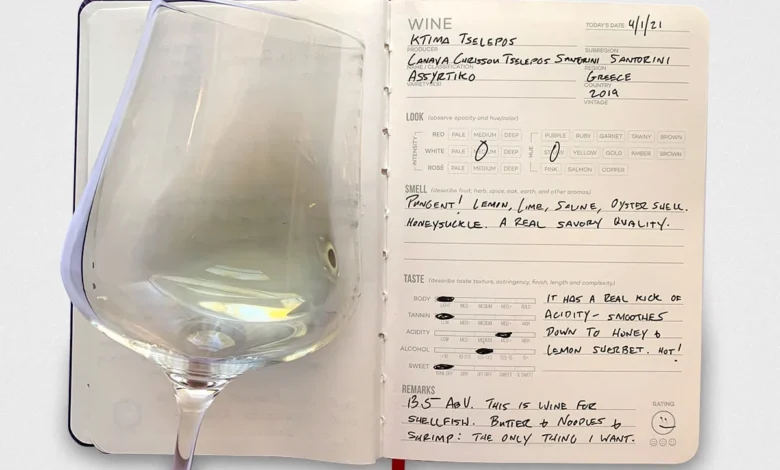
- Current Milestone: Deep-dive sensory analysis of a benchmark expression—the 2019 Ktima Tselepos Santorini Assyrtiko—to evaluate the interplay between volcanic terroir, high natural acidity, and regional microclimates.
Tasting Notes: 2019 Ktima Tselepos Santorini Assyrtiko
To fully understand the varietal, evaluation requires a bottle sourced directly from its native calcareous and volcanic ash soils. The 2019 vintage from Ktima Tselepos serves as an instructive benchmark for modern Greek winemaking, balancing traditional vigor with precise modern enological execution.
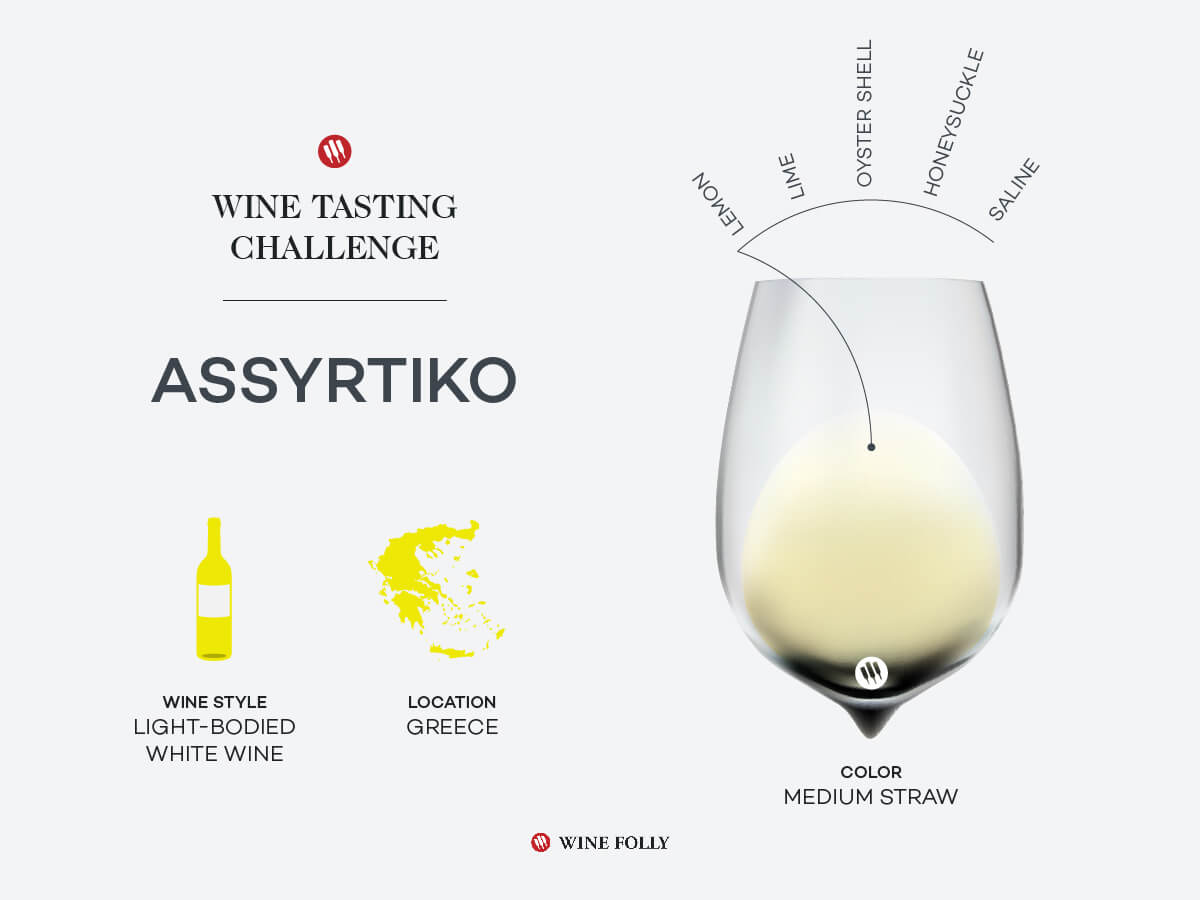
- Visual Assessment: The wine pours a medium straw color with golden highlights, reflecting moderate extraction and clean vinification practices.
- Arometic Profile: Highly pungent and aromatically complex. Dominant notes of fresh lemon and lime peel are immediately supported by intense saline characteristics, crushed oyster shell, and subtle hints of white honeysuckle, creating a distinctly savory aromatic impression.
- Palate Structure: The attack is defined by a formidable structural spine of high acidity. This initial tartness gradually softens mid-palate, transitioning into textural notes of preserved lemon, honeyed citrus sherbet, and a warming, full-bodied alcohol presence that signals the warm Mediterranean growing season.
- Culinary Parallels: The wine’s structural profile makes it an intuitive match for high-protein, high-fat coastal proteins. Standard pairing recommendations include raw oysters, butter-poached shrimp, seared scallops, and seafood pasta dishes finished with lemon, garlic, and fresh herbs.
Supporting Data and Terroir Analysis
A common misconception among wine consumers is that the distinct saline quality found in coastal wines like Assyrtiko is the direct result of sea spray, sand, or seawater absorbed by the roots. Enological science, however, points to a different chemical mechanism.
While Santorini’s vineyards are battered by sea breezes rich in sodium and minerals, the savory, puckering sensation on the palate is primarily driven by high levels of tartaric and malic acidity interacting with specific phenolic compounds. High acidity mimics the physical perception of salt on human taste receptors, creating a mineral-driven profile reminiscent of beach pebbles, wet slate, and marine environments without requiring direct saline infusion during fermentation.
Furthermore, comparative data between cool-climate whites—such as German Riesling or French Chablis—and warm-climate Assyrtiko highlight the grape’s genetic anomaly. Typically, warm climates degrade acidity levels rapidly during ripening. Assyrtiko defies this agricultural norm, preserving its structural backbone even under intense solar radiation and minimal precipitation.
Industry Perspectives and Winemaker Reactions
Greek wine exporters and domestic producers have long championed Assyrtiko as Greece’s passport to the international fine wine market. In recent decades, heavy investments in modern temperature-controlled stainless steel tanks and gentle pneumatic presses have allowed winemakers to capture the purity of the grape without sacrificing its wild, untamed character.
Industry analysts note that international demand for high-acid, mineral-driven white wines has surged as global dining trends favor lighter, fresher, and more regionally distinct culinary pairings. By positioning Assyrtiko alongside established global benchmarks like Chablis, Sancerre, and Etna Bianco, Greek producers have successfully elevated the global perception of Hellenic viticulture from a regional novelty to a serious contender in the fine wine collector’s market.
Broader Economic and Environmental Implications
The international success of Assyrtiko has brought much-needed economic vitality to Santorini and other Greek islands, yet it also presents distinct environmental challenges. As demand for authentic, volcanic-soil wines increases, local producers face mounting pressure to expand yields in a region where agricultural land is strictly limited and water resources are severely constrained.
Climate change further complicates the landscape. Rising temperatures across southern Europe threaten to accelerate sugar accumulation in grapes while prematurely stripping away the signature acidity that defines Assyrtiko. In response, viticulturists are increasingly experimenting with higher-altitude plantings on mainland Greece—such as the slopes of Mount Parnon or regions in Macedonia—to study how the varietal adapts outside of its native island habitat.
Ultimately, Assyrtiko remains a testament to the symbiotic relationship between plant resilience and human ingenuity. Whether enjoyed alongside classic Mediterranean seafood or studied within the rigorous framework of professional tasting challenges, the varietal continues to offer a compelling narrative of survival, terroir, and uncompromising quality.