Uncorking Four Decades of History: What We Learned Opening a Rare 1979 Vintage Wine

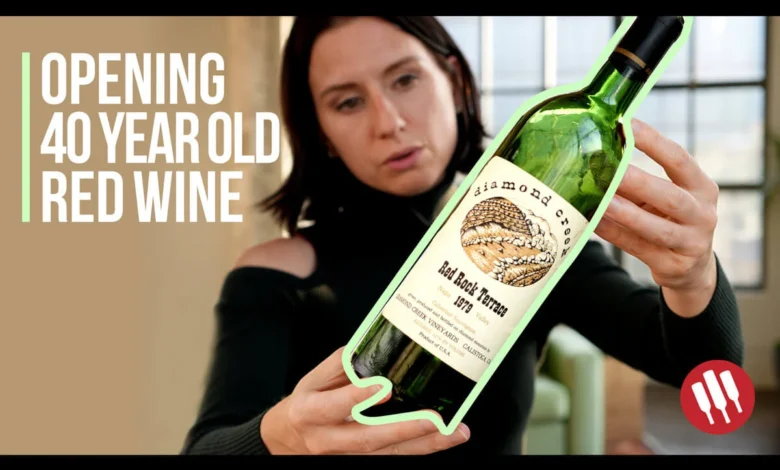
The pursuit of aged vintage wine remains one of the most exclusive and infrequent milestones for collectors and connoisseurs alike, often reserved for momentous life occasions or rare enological retrospectives. Recently, a gathering of wine professionals, including Master Sommelier Jackson Rohrbaugh, winemakers, and collectors, convened to examine a rare artifact of viticultural history: a 1979 Diamond Creek Red Rock Terrace Napa Valley Cabernet Sauvignon. Opening a bottle with four decades of bottle age is rarely a straightforward affair; it presents unique physical challenges, demands specialized preservation metrics, and challenges long-held assumptions regarding the longevity of New World wines. This retrospective examination yielded critical insights into the physical realities of aged corks, the importance of fill levels, and the surprising resilience of California Cabernet Sauvignon.
The Physical Realities of Extant Corks and Extraction Challenges
Accessing the contents of a 40-year-old wine bottle requires specialized equipment and a departure from standard hospitality tools. Standard two-step waiters’ corkscrews, while efficient for contemporary bottlings, often prove disastrous when applied to older vintages. Over decades of horizontal storage, natural cork closures undergo continuous physical transformation. They lose elasticity, become extremely fragile, and are frequently saturated with liquid, compromising their structural integrity.
When attempting extraction with a standard spiral worm, a brittle cork is prone to crumbling, dropping particulate matter into the wine, or breaking off entirely, leaving the upper portion trapped inside the neck. To mitigate these risks, wine professionals rely on specialized instruments. Among the most recommended is the "Ah-So" wine opener, also known as a two-prong puller. This tool inserts two thin metal blades down the sides of the cork, gripping it securely without piercing or further destabilizing the degrading material, allowing the user to gently twist and pull the entire closure upward. Alternatively, modern preservation systems such as the Coravin can be utilized to extract samples without removing the cork entirely, though fully opening a mature bottle for a group tasting necessitates precise manual extraction techniques.
The Metrics of Maturity: Understanding Bottle Fill Levels
Evaluating an aged wine extends far beyond the label and the state of the closure; the liquid level inside the bottle—known colloquially as the "shoulder level"—serves as a critical indicator of provenance, storage conditions, and potential oxidation. Over decades, wine experiences minute, natural evaporation through the porous nature of natural cork. This process accelerates in environments with low humidity or fluctuating temperatures.
Wine auctions and secondary marketplaces categorize bottles based on these fill levels to appraise quality and risk. The optimal condition is a neck fill, where the liquid reaches well into the cylindrical neck of the bottle, indicating minimal ullage (the empty space between the wine and the cork). A "high shoulder" level denotes a fill just below the neck where the glass begins to flare outward, which is generally acceptable for wines exceeding thirty or forty years of age. However, levels descending to "low shoulder" or below signal excessive evaporation, increased oxygen exposure, and a high probability that the wine has prematurely oxidized, turning acetic or flat. Understanding these parameters is essential for collectors navigating secondary market platforms such as Winebid, Spectrum, and K&L Wine Merchants, where provenance directly dictates financial valuation and drinking pleasure.
Challenging Perceptions: The Aging Potential of Napa Valley Cabernet Sauvignon
The centerpiece of the evening, the 1979 Diamond Creek Red Rock Terrace Cabernet Sauvignon, challenged conventional wisdom regarding the evolutionary timeline of New World wines. Historically, European critics and traditionalists have frequently scrutinized Napa Valley viticulture for producing opulent, fruit-forward wines designed for immediate consumption rather than extended cellaring. The prevailing assumption across traditional enological circles has often dictated that dry red wines from California peak within two decades, making a 40-year milestone an improbable prospect for structural survival.
However, upon extraction and decanting, the wine displayed remarkable vitality. Master Sommelier Jackson Rohrbaugh, upon his initial tasting, was visibly and audibly impressed by the wine’s condition, noting that its complex aromatic profile and preserved structural backbone left him momentarily speechless. The persistence of tannins, integrated acidity, and secondary and tertiary flavor development demonstrated that exceptional terroir combined with meticulous winemaking can yield New World expressions capable of defying standard maturation ceilings.
Viticultural Factors Behind Long-Term Ageability
The longevity demonstrated by the 1979 Diamond Creek bottling is not a random occurrence, but the result of specific agricultural and chemical variables aligned during harvest and vinification. Age-worthy wines typically require a triad of foundational elements: balanced natural acidity, structured and plentiful tannins, and moderate alcohol levels.
In the case of Napa Valley’s Diamond Creek Vineyards—founded by Al and Boots Brounstein in 1968 as the region’s first estate winery solely dedicated to Cabernet Sauvignon—the distinct microclimate and soils of the Red Rock Terrace block played a pivotal role. The site features iron-rich, red clay soils that impart distinct mineral characteristics and robust structural tannins to the grapes. In cooler vintage years, grapes achieve physiological ripeness with preserved natural malic and tartaric acids, which act as a natural preservative over decades in the bottle. Furthermore, lower historical alcohol levels in 1970s California viticulture—often hovering around 12.5% to 13.5%—prevented the heat and structural imbalance that can cause contemporary high-alcohol wines to degrade prematurely.
Reactions, Debates, and Industry Implications
The consensus among the gathered group of winemakers, collectors, and critics was one of collective astonishment. The sensory experience of a fully mature, balanced 40-year-old Napa Cabernet provoked broader philosophical discussions regarding the future of contemporary winemaking. A central question emerged during the tasting: Will the heavily structured, fruit-dense vintages produced today, such as the 2018 harvest, possess the same longevity when opened in the year 2058?
The room remained deeply divided on the matter. Proponents of modern viticultural science argued that advanced canopy management, precise irrigation controls, and refined sorting technologies allow winemakers to craft cleaner, more structurally sound wines than ever before. Conversely, traditionalists noted that stylistic shifts toward riper flavor profiles, higher extraction rates, and elevated alcohol levels in recent decades might alter the aging trajectory, potentially causing modern iterations to peak and decline along a compressed timeline.
Broader Market Implications for Collectors and Investors
The revelation that a four-decade-old California Cabernet can retain such profound elegance has direct implications for the global fine wine market. As secondary market demand for mature Bordeaux and Burgundy reaches unprecedented pricing thresholds, collectors are increasingly looking toward benchmark Napa Valley estates as viable alternatives for long-term cellaring and investment.
Auctions featuring historic California vintages have historically seen sporadic interest compared to their Old World counterparts, largely due to lingering misconceptions regarding aging potential. Events that showcase the graceful evolution of 1970s and 1980s Napa wines help validate the region’s historical significance and provide empirical data for collectors evaluating long-term portfolio holds. As climate conditions shift and winemakers adapt to warmer growing seasons, understanding the precise chemistry and storage parameters required to shepherd a wine across a 40-year span remains an invaluable pursuit for the modern enological community. Only time will determine whether today’s contemporary bottlings will match the surprising tenacity of their 20th-century predecessors.