Two Decades of Culinary Science: Hervé This Publishes Summary of Paris Molecular Gastronomy Seminars

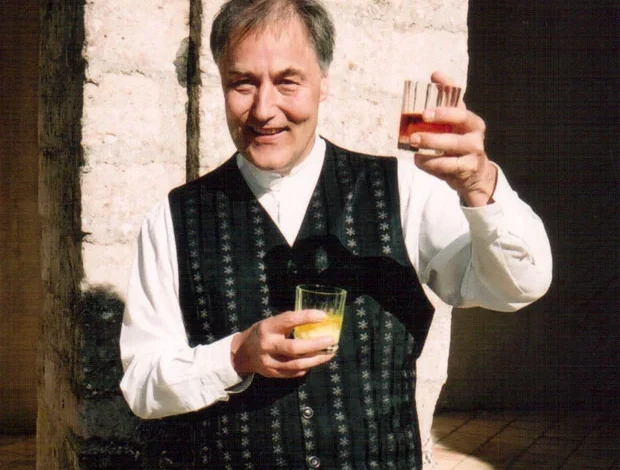
The intersection of culinary arts and hard science has reached a significant milestone with the publication of a comprehensive summary documenting twenty years of molecular gastronomy seminars held in Paris, France. Spearheaded by renowned physical chemist Hervé This—a foundational figure in the scientific study of cooking—the newly released documents distill two decades of rigorous kitchen experimentation, food physics, and chemical analysis into accessible summaries. Distributed freely to the scientific and culinary communities, the records are now available in both French and English, offering a rare glimpse into the systematic deconstruction of traditional cooking techniques.
The publication serves as a bridge between professional gastronomy and academic chemistry, providing chefs, educators, and food scientists with a structured repository of empirical data. By examining the physical and chemical transformations that occur during food preparation, the Paris seminars have spent the last twenty years challenging culinary folklore, verifying traditional kitchen maxims, and discovering novel interactions within food matrices.
Background Context and Origins of Molecular Gastronomy
To understand the weight of this twenty-year retrospective, it is necessary to examine the origins of molecular gastronomy as a formal scientific discipline. The term itself was coined in the early 1990s by Hervé This and the late Oxford physicist Nicholas Kurti. Recognizing that humanity knew more about the composition of stellar atmospheres than about the physical and chemical processes occurring during the cooking of a soufflé or the searing of a steak, Kurti and This sought to establish a dedicated scientific discipline focused on the culinary arts.
In 1992, This and Kurti organized the first International Workshop on Molecular Gastronomy held in Erice, Sicily. This biennial gathering brought together scientists, physicists, chemists, and professional chefs from around the world to discuss the physical phenomena underlying cooking. These workshops laid the groundwork for a broader cultural and scientific shift, eventually inspiring a global movement that redefined high-end dining and food science education.
Building upon the momentum of the Erice workshops, Hervé This established the monthly molecular gastronomy seminars in Paris. Hosted primarily at AgroParisTech, these sessions created a collaborative forum where amateur cooks, professional chefs, students, and senior researchers could gather to propose, test, and analyze specific culinary hypotheses. Over the course of twenty years, hundreds of sessions were conducted, systematically addressing everything from simple emulsions and thermal denaturation to complex flavor extraction and diffusion processes.
Chronology of the Paris Seminars
The twenty-year timeline of the Paris seminars reflects a steady evolution in methodology and scope.
During the initial years in the late 1990s and early 2000s, the seminars focused heavily on fundamental kitchen physics. Discussions centered on basic transformations, such as why custards curdle, how meringues achieve structural stability, and the exact temperatures at which various proteins denature. These foundational sessions established the baseline methodologies that would govern decades of future experimentation.
As the 2000s progressed, the scope expanded to include more complex colloidal systems, rheology, and the psychological aspects of flavor perception. Researchers and participants began utilizing more advanced laboratory equipment while maintaining a focus on home-kitchen accessibility. Experiments were designed in such a way that they could be replicated using standard domestic utensils, ensuring that the findings remained practical for working chefs and accessible for science educators.
In the 2010s, the seminars increasingly embraced the concept of "note-by-note" cooking—a culinary movement introduced by Hervé This in which dishes are constructed entirely from pure chemical compounds rather than traditional plant and animal tissues. While note-by-note cooking remained largely experimental, it pushed seminar participants to think deeply about the fundamental building blocks of taste, aroma, and texture.
By the conclusion of the second decade, the sheer volume of accumulated data necessitated a centralized review. The newly released summaries represent the culmination of this exhaustive chronological effort, synthesizing hundreds of individual session findings into coherent, searchable reference documents.
Structure and Accessibility of the Findings
The newly published documentation is divided into two primary linguistic editions: a French version and an English translation. While the English documents provide concise, high-level summaries of the seminar conclusions, the comprehensive French archives host the full experimental conditions, exhaustive data sets, and detailed methodological notes for every session conducted over the twenty-year span.
Experts note that while Hervé This’s translations occasionally exhibit minor linguistic quirks, the core scientific findings remain clear and actionable. The documents systematically address specific culinary claims, categorize them based on empirical outcomes, and provide the underlying chemical or physical rationale for each verified phenomenon.
The findings cover a broad spectrum of kitchen activities, including:
- Thermal treatments of various meats, vegetables, and dairy products.
- The behavior of foams, gels, emulsions, and suspensions under varying mechanical stresses.
- The diffusion rates of solutes in marinades, brines, and reductions.
- The optical and structural changes in proteins during coagulation and whipping.
Implications for Professional Kitchens and Culinary Education
The publication of these summaries carries significant implications for both professional culinary arts and secondary or post-secondary science education.
In professional kitchens, the trend toward scientific rigor has steadily replaced dogmatic adherence to culinary tradition. Modern chefs increasingly rely on an understanding of thermal conductivity, water activity, and enzymatic reactions to refine recipes and invent new dishes. The Paris seminar summaries provide these kitchens with a reliable, peer-tested database that cuts through culinary myths and operational folklore. By understanding the precise physical mechanisms behind a successful emulsion or a perfectly tenderized cut of meat, chefs can achieve greater consistency and reduce kitchen waste.
In educational settings, the documents serve as an invaluable resource for chemistry and physics teachers. Using cooking as a medium for scientific inquiry is a proven pedagogical strategy; it transforms abstract thermodynamic principles, chemical bonding concepts, and biological reactions into tangible, observable, and edible phenomena. The experiments cataloged in the Paris seminars provide ready-made lesson plans and laboratory exercises that engage students by connecting classroom theory to daily life.
Furthermore, the emphasis on questioning minor kitchen beliefs encourages critical thinking. As demonstrated throughout the twenty-year history of the seminars, even widely accepted culinary maxims—such as the necessity of searing meat to "lock in juices"—can be rigorously tested, evaluated, and corrected through empirical methodology.
Broader Impact and Future Directions in Food Science
The legacy of Hervé This’s work in Paris extends far beyond the confines of any single laboratory or classroom. By institutionalizing the scientific study of cooking, the seminars helped legitimize food science as a vital academic and industrial discipline.
As the culinary world looks toward the future, the challenges facing food production—including sustainability, resource efficiency, and nutritional optimization—demand an increasingly scientific approach. The foundational work established during the Paris molecular gastronomy seminars provides a robust framework for addressing these contemporary challenges. Understanding how molecules interact at a microscopic level allows food scientists to develop healthier alternatives, reduce energy consumption during cooking processes, and innovate new textures from underutilized protein and carbohydrate sources.
The release of the twenty-year seminar summary marks not an end, but a transition. It consolidates two decades of pioneering inquiry into a single, accessible foundation, inviting a new generation of chefs, scientists, and students to continue the work of questioning, testing, and understanding the complex chemistry of the kitchen.