The Paradox of Exponential Growth: How Pandemic Lockdowns Fueled a Baking Renaissance and Revealed the Power of Yeast Microbes

The past year has indelibly marked global consciousness with the concept of exponential growth, primarily in the somber context of the SARS-CoV-2 virus’s relentless spread. This mathematical phenomenon, often counterintuitive in its progression—appearing dormant before an explosive surge—explained the alarming trajectory of COVID-19 cases, seemingly skyrocketing overnight. Yet, amidst the global health crisis and the resulting societal lockdowns, this same principle of exponential growth found a remarkably positive, albeit often unsung, application: the widespread resurgence of home baking, transforming kitchens into bastions of comfort and culinary experimentation. This unprecedented surge in domestic baking activities, driven by newfound leisure time and a quest for solace, created a global demand for staple ingredients, most notably yeast, leading to significant supply challenges in many regions, including a prolonged shortage across Norway. However, for those equipped with a deeper understanding of the microbial world, specifically the exponential reproductive capabilities of Saccharomyces cerevisiae, navigating these shortages became an exercise in scientific application, demonstrating how less can indeed yield more given the right conditions and, crucially, time.
The Global Baking Boom Amidst Pandemic Lockdowns
As governments worldwide implemented stringent lockdown measures in early 2020 to curb the spread of the novel coronavirus, billions found themselves confined to their homes. This dramatic shift in daily routines spurred a collective rediscovery of domestic pursuits. Among these, cooking and baking emerged as prominent activities, offering a sense of normalcy, productivity, and creative outlet during an uncertain period. Social media platforms quickly filled with images of freshly baked sourdough loaves, elaborate cakes, and homemade pizzas, signifying a collective turning point in culinary engagement. This burgeoning home baking movement was not merely a hobby; it represented a deeper cultural phenomenon, providing psychological comfort, fostering new skills, and connecting people through shared culinary experiences online.
The sheer scale of this domestic renaissance exerted immense pressure on global supply chains for essential baking ingredients. Flour mills operated at maximum capacity, and yeast manufacturers scrambled to meet an unanticipated explosion in demand. Reports from across North America, Europe, and Asia detailed shelves stripped bare of all-purpose flour, active dry yeast, and instant yeast. In Norway, as recounted by numerous consumers and retailers, instant dry yeast became a scarce commodity for weeks and even months, reflecting a national trend of enthusiastic amateur bakers. This scarcity underscored the critical role these humble ingredients play in everyday life and highlighted the fragility of supply networks when faced with sudden, unprecedented shifts in consumer behavior. The conventional wisdom of using a standard 12g sachet of instant dry yeast for a typical loaf was suddenly challenged by the reality of limited availability, prompting many to consider more economical and efficient approaches to fermentation.
Understanding Exponential Growth: From Microbes to Macro Trends
At the heart of both the pandemic’s trajectory and the baker’s resourcefulness lies the principle of exponential growth. Scientifically, it describes a process where the growth rate of a quantity is proportional to its current value, resulting in a rapid acceleration over time. This concept, famously illustrated by the ancient "wheat and chessboard problem" where grains double on each successive square, demonstrates how an initially slow increase can quickly lead to astronomically large numbers. In the context of the SARS-CoV-2 virus, this meant that a small number of initial infections could rapidly escalate into millions if unchecked, making public health interventions like social distancing and mask-wearing crucial for "flattening the curve"—slowing the exponential spread.
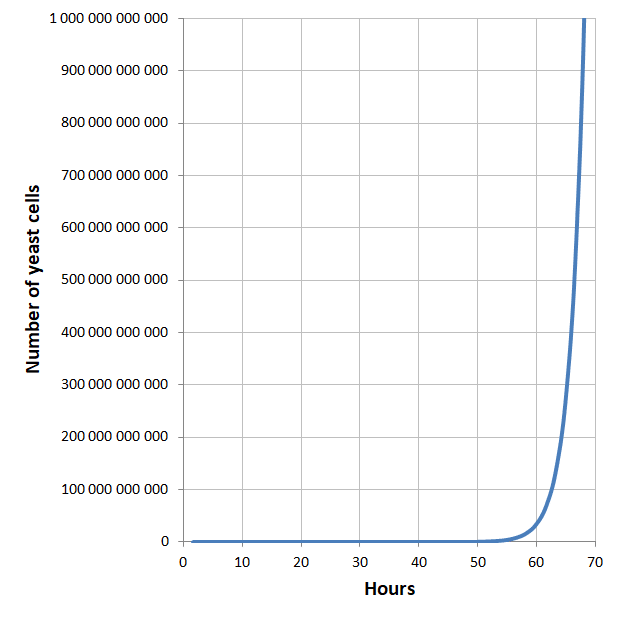
Paradoxically, the very same mathematical principle offers a solution to the yeast shortage dilemma. Saccharomyces cerevisiae, the common baker’s yeast, exemplifies exponential growth in a beneficial manner. Under ideal conditions—optimal temperature (typically around 25-30°C), sufficient nutrients (sugars), and a suitable environment (initially oxygen for aerobic respiration and reproduction, then anaerobic for fermentation)—a single yeast cell can reproduce by budding, effectively doubling its population. The life cycle, from one cell splitting into two, can take as little as 100 minutes. This means that after just 100 minutes, two cells exist; after another 100 minutes, there are four; and so on.
The numbers quickly become staggering:
- After 24 hours (approximately 14.4 doubling cycles), a single cell can proliferate into roughly 16,000 cells.
- After 48 hours (around 28.8 cycles), the count surges to an astounding 268 million cells.
- In less than three days (under 72 hours), the population can reach approximately one trillion (1,000,000,000,000) yeast cells.
To put this into perspective, a typical 50-gram block of compressed fresh yeast contains roughly a trillion yeast cells. This remarkable reproductive capacity highlights that while commercial yeast production optimizes conditions for rapid growth, a home baker can harness this natural process by simply extending the fermentation time, allowing the initially small quantity of yeast to multiply sufficiently.
The Art of Slow Fermentation: Maximizing Yeast Efficiency and Flavor
The understanding of yeast’s exponential growth proved invaluable for home bakers facing depleted store shelves. Instead of adhering to recipes that called for generous amounts of yeast for quick rises, many embraced the principle of "less yeast, more time." This method, a cornerstone of artisanal baking, involves using a significantly smaller quantity of yeast and allowing the dough to ferment over a much longer period, often overnight or even for 24 hours at cooler temperatures.
This approach offers multiple advantages beyond simply conserving precious yeast supplies:
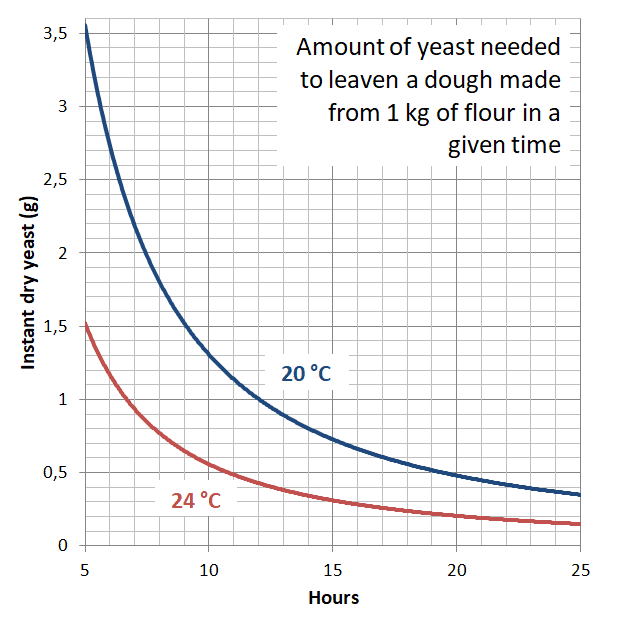
- Resource Efficiency: A small sachet of instant dry yeast, typically 12g, can last for many baking sessions, drastically extending its utility. For instance, a dough made with 1 kg of wheat flour, often requiring 7-10g of instant yeast for a rapid rise, needs only about 0.48g if allowed to ferment for 20 hours at 20°C. This reduction by a factor of over ten is substantial.
- Enhanced Flavor Development: Extended fermentation periods allow yeast to produce a wider array of metabolic byproducts beyond just carbon dioxide and ethanol. Crucially, it also provides an opportunity for naturally occurring lactic acid bacteria (LAB) present in flour to multiply and contribute. These bacteria produce lactic and acetic acids, which impart complex, nuanced flavors, improving the bread’s aroma, texture, and keeping quality. The result is a loaf with a deeper, more satisfying taste profile, often described as more "artisanal" or "sourdough-like."
- Improved Dough Handling: Slower fermentation can lead to better gluten development, resulting in a more extensible and manageable dough, which in turn contributes to a superior crumb structure and crust formation.
Precision Baking: Tools and Technology for the Modern Home Baker
Implementing the "less yeast, more time" strategy necessitates a level of precision often overlooked in casual home baking. Measuring quantities as small as 0.48g of yeast accurately requires more than standard kitchen spoons. This led to a surge in demand for specialized kitchen equipment:
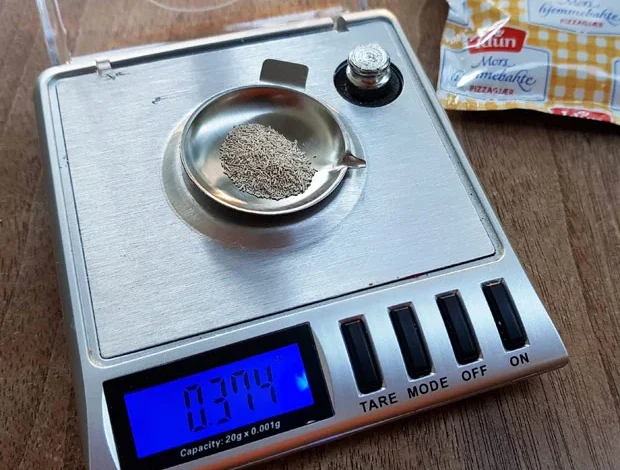
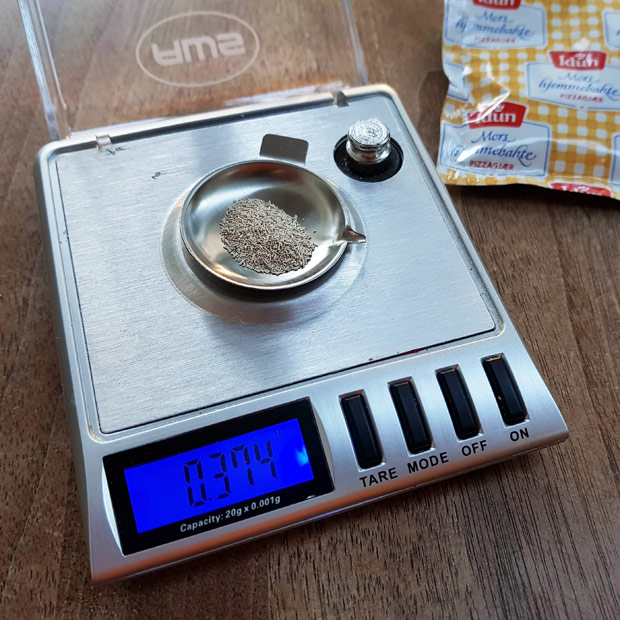
- Precision Digital Scales: Balances capable of reading to 0.01g or even 0.001g (milligram scales) became indispensable tools. While previously considered niche laboratory equipment, affordable versions became widely available, empowering home bakers to precisely control their yeast quantities. These scales are critical for consistency, ensuring that the minute amount of yeast used is exactly right for the intended fermentation schedule.
- Baking Calculation Applications: To demystify the complex interplay between yeast quantity, flour weight, temperature, and fermentation time, digital tools gained immense popularity. The PizzApp+ for Android, for example, became a go-to resource. This application allows users to input parameters such as the amount of flour, desired hydration, fermentation temperature, and target rise time, then calculates the exact amount of yeast required. It offers options for various yeast types—fresh compressed, active dry, instant dry, and even liquid or firm sourdough starters—making sophisticated dough calculations accessible to everyone. Such apps provided a bridge between scientific principles and practical application, allowing home bakers to experiment with confidence and achieve consistent results.
The rise of these tools and the adoption of precision techniques signal a maturation of the home baking community. It moved beyond simple recipe following to a deeper engagement with the science and art of bread making, driven by both necessity and curiosity.
Chronology of a Culinary Shift:
- Early 2020 (March-April): Initial global lockdowns implemented. Panic buying of non-perishable goods, including flour and yeast, begins. Reports of empty shelves emerge worldwide.
- Spring-Summer 2020: Sustained increase in home baking activities. Social media platforms showcase a surge in baked goods. Manufacturers of flour and yeast report unprecedented demand and struggle to keep pace. Yeast shortages become a common experience in many regions, including Norway.
- Mid-Late 2020: Home bakers increasingly adopt "less yeast, more time" methods. Interest in precision scales and baking calculation apps like PizzApp+ grows exponentially. Online communities dedicated to baking share tips for yeast conservation and slow fermentation. The topic of exponential growth, initially linked to the virus, is re-examined in the positive context of yeast.
- 2021 Onwards: While initial panic subsided, the home baking trend showed signs of persistence. Many newly acquired skills and habits, including an appreciation for slow fermentation and precision, continued to influence culinary practices.
Broader Impact and Implications
The pandemic-induced baking boom, and the ingenious adaptations it fostered, carries several lasting implications:
- Elevated Culinary Literacy: Millions of individuals gained a deeper understanding of fundamental biological and chemical processes in food preparation. Concepts like fermentation, gluten development, and the precise role of microorganisms became household knowledge, demystifying aspects of cooking that were once arcane.
- Sustainable Practices: The lesson of "less yeast, more time" subtly promoted a more sustainable approach to cooking. By demonstrating that quality can be achieved with fewer resources, it encouraged mindful consumption and reduced reliance on large quantities of mass-produced ingredients.
- Resilience and Adaptability: The period highlighted human ingenuity in adapting to supply chain disruptions. Individuals and communities found creative solutions, whether by reducing ingredient use, exploring alternative methods (like sourdough starters for self-sustaining yeast), or leveraging technology for better resource management.
- The Sourdough Revival: The scarcity of commercial yeast also significantly propelled the sourdough movement. Many bakers, unable to find instant or active dry yeast, started cultivating their own sourdough starters—a mixture of flour and water that harbors wild yeast and lactic acid bacteria—thereby becoming entirely self-sufficient in their leavening agent. This ancient method experienced a modern resurgence, appealing to those seeking both independence from store-bought yeast and the unique tangy flavors it imparts.
- Economic Shifts: The sustained interest in home baking led to a boost for kitchenware manufacturers, specialty ingredient suppliers, and digital recipe platforms. It also prompted traditional food retailers to rethink their inventory management and supply chain resilience.
- Community Building: Online baking communities flourished, becoming vital spaces for sharing knowledge, troubleshooting, and offering mutual support. This digital camaraderie underscored the social power of food, even in times of physical distancing.
The year of lockdowns presented a unique lens through which to observe the profound impact of exponential growth, shifting from a global health threat to a domestic culinary triumph. The humble yeast cell, through its remarkable reproductive capacity, not only sustained a global baking renaissance but also offered a powerful, tangible lesson in microbiology and resourcefulness, proving that even in scarcity, growth—both microbial and personal—can thrive.