Mastering the Modern Time Crunch: How One Family Conquered Weekly Meal Planning with a Simple Paper System

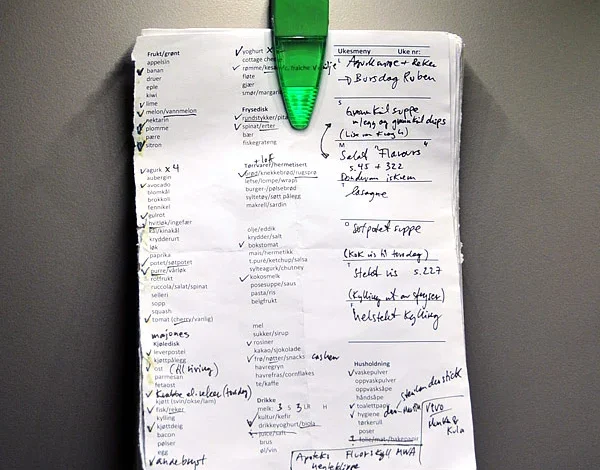
The relentless balancing act of modern family life—often encapsulated by the Norwegian term tidsklemma, which describes the acute squeeze of balancing full-time careers, domestic responsibilities, and family time—has driven households globally to seek out operational efficiencies in their daily routines. For many working parents, the traditional daily trip to the grocery store has transformed from a leisurely culinary errand into a stressful logistical hurdle. Addressing this friction point, long-running culinary and food science platform Khymos has returned from a three-year hiatus to propose a surprisingly low-tech solution to contemporary time poverty: a master grocery list and weekly meal planner anchored entirely in physical paper.
The Anatomy of the Master Grocery List
At the core of the proposed system is a departure from modern digital applications in favor of an optimized, analog framework. Rather than constructing a grocery list from scratch each week—a cognitive and temporal drain for busy households—the methodology relies on a static, generic master document. Developed and refined over a six-year period, the list is categorized logically according to standard supermarket layouts and typical household consumption patterns.
The document, designed to fit compactly on a single A5 or folded A4 sheet of paper, integrates the weekly dinner menu directly alongside the shopping items. According to the system’s designer, paper offers a distinct ergonomic advantage over smartphones and digital tablets. Its physical resolution provides an immediate, uninterrupted overview of the entire weekly culinary schedule and required ingredients simultaneously, eliminating the need to toggle between applications while navigating crowded aisles. Furthermore, the tactile nature of paper allows for rapid annotations, spontaneous additions, and easy archiving for historical review.
The Evolution of Domestic Efficiency
The implementation of structured weekly shopping is not merely a matter of convenience; it represents a broader behavioral shift in household resource management. Historically, daily grocery shopping was standard practice in many European cultures, supported by neighborhood markets and shorter supply chains. However, urbanization, dual-income households, and the rise of hypermarkets have shifted consumer habits toward consolidated, bulk purchasing.
Chronologically, the tested master list has undergone continuous iteration since its inception. Over roughly half a decade, the inventory of items has expanded and contracted to reflect changing family demographics—specifically adapting to the nutritional requirements of growing children. This iterative refinement underscores a central tenet of domestic logistics: a functional system must be treated as a dynamic work-in-progress rather than a rigid template. By reviewing archived lists spanning a few weeks, shoppers can accurately calibrate their purchasing habits, minimizing food waste and reducing impulse buying.
Economic and Nutritional Implications
While spontaneous cooking based on daily market availability is widely celebrated in culinary literature, researchers and nutritionists note that it often proves impractical for families facing strict time constraints. Studies on household food management consistently indicate that structured meal planning correlates positively with healthier dietary intake, reduced household food expenditures, and lower levels of reported domestic stress.
By locking in a seven-day dinner rotation ahead of time, households can streamline nutritional intake, ensure balanced macronutrient distribution, and avoid the caloric and financial costs associated with last-minute convenience foods. Nevertheless, the system’s designers emphasize the necessity of flexibility. Rigid adherence to a meal plan can induce its own form of fatigue. Consequently, successful implementation relies on a built-in margin for spontaneity—permitting deviations for social engagements, such as impromptu dinner invitations from friends, or occasional reliance on take-away meals during periods of peak exhaustion.
Consumer Response and Accessibility
The return of Khymos to the digital publishing space has reignited broader conversations regarding analog productivity tools in an increasingly saturated digital landscape. While app stores feature hundreds of specialized grocery management and inventory-tracking utilities, uptake remains varied due to friction points such as interface complexity, device battery dependency, and shared access hurdles within households.
In response to public interest following the announcement, the platform has made the standardized templates publicly available for global consumers. Adaptable files formatted for both European A4 and North American legal dimensions have been released in editable word-processing formats, allowing users to customize categories based on local supermarket availability and regional dietary preferences.
As urban families continue to navigate the pressures of the modern workday, the resurgence of interest in analog meal planning highlights a growing appreciation for simplicity. By combining behavioral habit formation with optimized physical architecture, the humble paper grocery list demonstrates that solving complex daily friction points often requires looking backward rather than forward.
Related posts: