Mastering the Tidsklemma: How a Six-Year Master Grocery List and Weekly Meal Planning Revolutionized Modern Household Efficiency

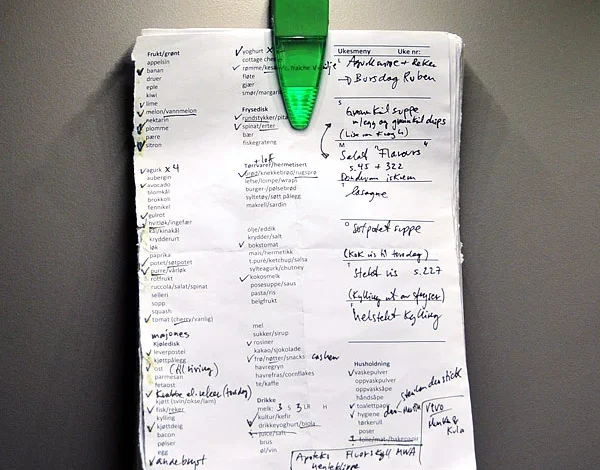
The modern domestic landscape is defined by an increasingly relentless friction between professional obligations, family life, and the daily mandate of preparing nourishing meals. For households navigating what the Norwegian language aptly terms the tidsklemma—the pervasive squeeze of time felt by working parents—the traditional, ad-hoc approach to grocery shopping has become an unsustainable luxury. Recent developments in domestic management strategies suggest a return to analog organization, spearheaded by culinary bloggers and efficiency experts who advocate for a systematic, template-driven approach to weekly provisioning. Central to this movement is the refinement of the master grocery list, a low-tech intervention that proponents argue significantly reduces weekly logistical friction, curbs food waste, and restores a degree of predictability to the evening routine.
The Anatomy of the Master Grocery List
At the core of this organizational shift is the transition from a blank-slate shopping list to a dynamic, pre-compiled template. Rather than inventorying household needs from scratch before every trip to the supermarket, efficiency advocates utilize a static document organized systematically by food categories and mapped directly to the physical layout of the average grocery store.
This methodology relies on a process of elimination and refinement. Items are checked off rather than written out, drastically reducing the cognitive load required to prepare for a weekly excursion. Modern iterations of these templates often incorporate space for specific brands, quantities, and impromptu additions, ensuring flexibility without sacrificing structure.
The rationale behind category-based organization is rooted in retail psychology and store architecture. Supermarkets are intentionally designed to encourage impulse buying through strategic product placement. By organizing a shopping list to mirror the linear progression of a store—moving typically from produce to dry goods, dairy, and finally frozen items—shoppers minimize backtracking, reduce shopping duration, and insulate themselves against unplanned expenditures. Data from consumer behavior studies consistently indicate that structured lists significantly decrease the incidence of impulse purchases, translating directly to household financial savings.
The Analog Advantage in a Digital Era
In an epoch dominated by mobile applications designed to track everything from caloric intake to domestic chores, the resurgence of paper-based planning might appear counterintuitive. Numerous software solutions exist specifically for collaborative grocery management, allowing multiple family members to add items in real time via cloud synchronization. Yet, a subset of home economists and busy professionals continues to champion the physical, A5-sized sheet of paper.
Proponents point to the cognitive benefits of tactile engagement and visual overview. A single sheet of paper provides what usability experts term high information resolution—the ability to view the weekly dinner menu alongside the corresponding shopping list at a single glance, without the need to toggle between application screens or scroll through digital interfaces. Furthermore, paper offers unmatched versatility for ad-hoc note-taking, margin calculations, and structural modifications.
Archiving physical lists also provides a tangible audit trail of household consumption patterns over time. By retaining and periodically reviewing past lists, shoppers can identify seasonal shifts in dietary preferences, track inflationary impacts on staple purchases, and adjust baseline inventory templates to reflect the changing developmental needs of growing children. This iterative refinement transforms a static piece of paper into a personalized, evolving data log of family nutrition.
Historical Context and the Evolution of Domestic Labor
The necessity for systematic meal planning cannot be understood in isolation from broader socio-economic shifts in labor distribution and urban geography over the past several decades. The post-World War II proliferation of supermarkets fundamentally altered food acquisition habits, shifting the consumer role from daily interactions with specialized merchants—such as butchers, bakers, and greengrocers—to weekly expeditions in large, centralized retail spaces.
As dual-income households became the economic norm in the late 20th and early 21st centuries, the time allocated for domestic provisioning contracted sharply. The traditional European and North American model of daily or bi-weekly fresh food sourcing collided with the realities of the forty-hour work week and extended commuting times. This collision generated the aforementioned tidsklemma, a sociological phenomenon particularly pronounced in Scandinavian nations, where work-life balance is culturally prioritized, yet the structural demands of household management remain largely unchanged.
During the early 2010s, the culinary blogosphere began documenting an organic counter-movement. Home cooks sharing strategies online realized that uncoordinated meal preparation was a primary driver of mid-week stress and food spoilage. The evolution of the master grocery list over a multi-year period—often taking five to six years of iterative adjustments to perfect—reflects a broader cultural turn toward optimization in the private sphere, mirroring productivity techniques long utilized in corporate logistics.
The Psychology of the Weekly Menu and Spontaneity
A common critique leveled against rigid meal planning is the perceived stifling of culinary creativity and the imposition of a sterile, corporate routine onto the domestic kitchen. Critics argue that cooking should be an intuitive act responsive to daily cravings and the immediate availability of seasonal ingredients at the local market.
However, proponents of structured planning distinguish between rigidity and resilience. A well-designed weekly menu serves as a flexible framework rather than an unyielding mandate. Experienced planners emphasize the necessity of built-in variance, noting that successful systems must accommodate spontaneous invitations to dine with friends, unexpected professional obligations, or the occasional evening of fatigue that results in takeout orders.
The psychological benefit of the weekly plan lies not in the elimination of spontaneity, but in the reduction of decision fatigue. By the conclusion of a standard workday, the average professional has exhausted a significant portion of their cognitive capacity on complex problem-solving. Confronting the open-ended question of what to prepare for dinner often induces a state of paralysis, frequently culminating in nutritionally deficient or economically inefficient dining solutions. Pre-planning removes this friction, transforming dinner from a nightly crisis negotiation into a straightforward execution phase.
Furthermore, integrating the menu directly onto the physical shopping list provides a vital cognitive trigger while navigating the supermarket aisles. A brief glance at the designated meal for Wednesday can instantly remind the shopper of a forgotten spice or specialized ingredient that would otherwise have been missed on a generalized checklist.
Economic Implications and Waste Reduction
Beyond the psychological and temporal benefits, the adoption of systematic master lists carries profound macroeconomic and environmental implications for individual households. Food waste remains a critical global challenge, with significant portions of edible produce discarded annually at the consumer level due to poor planning, over-purchasing, and spoilage.
When consumers shop without a consolidated list or a cohesive multi-day menu, purchasing decisions are frequently governed by immediate appetite rather than long-term nutritional requirements. This leads to the acquisition of redundant items, overlapping perishables, and an accumulation of pantry items that exceed household consumption rates.
By anchoring shopping habits to a standardized, category-driven template, consumers establish a predictable baseline of household demand. This stability allows for more accurate purchasing volumes, directly correlating with a reduction in organic waste and a lowering of weekly grocery expenditures. Economic analysts note that while initial implementation requires a minor investment of time to catalog preferences and format templates, the cumulative return on investment in terms of monetary savings and psychological well-being is substantial.
Broader Impact and Future Outlook
As digital fatigue grows and households seek tangible methods to reclaim control over their domestic schedules, the return to fundamental, analog efficiency tools represents a significant cultural trend. The widespread availability of customizable templates—offered in various formats such as A4 and legal sizes in multiple languages—signals a democratization of domestic management strategies.
While technology will continue to play a role in household logistics, the enduring utility of the paper-based master list demonstrates that effective solutions are not exclusively defined by complexity. By addressing the root causes of mid-week stress, minimizing cognitive load, and aligning purchasing behavior with store architecture, the master grocery list provides a durable framework for navigating the pressures of modern life. Whether adapted for single professionals or large families, the methodology underscores a timeless principle: structure, thoughtfully applied, is the ultimate enabler of freedom.