From Mole to Waffle: The 250th Birthday of Amedeo Avogadro Inspires a Parametric Baking Generator

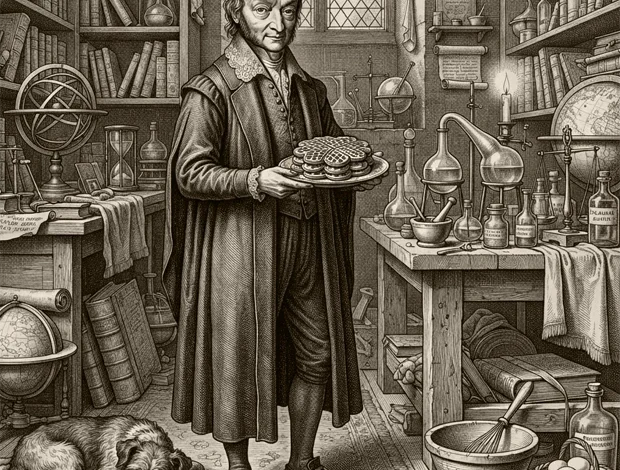
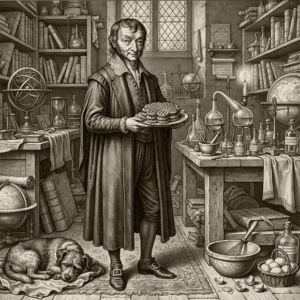
The intersection of theoretical chemistry and culinary arts has reached a new milestone with the public release of Avogadro, a parametric waffle recipe generator that bridges the gap between molecular science and traditional baking. Launched on August 9, 2026, to coincide with the 250th birth anniversary of physicist and chemist Amedeo Avogadro, the digital tool allows users to formulate custom waffle batters through dynamic slider adjustments and ingredient selections rather than relying on static recipe databases.
The launch marks the culmination of a project that began over a decade ago as a conceptual prototype, evolving from an Excel spreadsheet model into an interactive web application designed to explore the mathematical and culinary boundaries of what defines a standard waffle.
Background Context and Historical Inspiration
The naming and timing of the application pay tribute to Lorenzo Romano Amedeo Carlo Avogadro, Count of Quaregna and Cerreto, born in Turin, Italy, on August 9, 1776. Avogadro is best known for his pioneering contribution to physical science now recognized as Avogadro’s hypothesis, formulated in 1811. He proposed that equal volumes of all gases, at the same temperature and pressure, contain the same number of molecules. This foundational concept led to the establishment of Avogadro’s constant ($6.02214076 times 10^23$), which defines the number of constituent particles, usually atoms or molecules, found in one mole of a substance.
In culinary terms, the creator of the platform—known through the food science publication Khymos—drew a parallel between the vast scale of chemical moles and the combinatorial possibilities of baking. By factoring in the multitude of ingredient choices, ranging from liquids and dairy to fats, eggs, starches, and sweeteners, alongside adjustable parameters like sweetness, richness, and tanginess, the application yields approximately $10^27$ theoretical control settings. This numerical scope represents roughly 1,660 moles’ worth of potential waffle batters, providing a conceptual nod to the Italian scientist’s legacy on his quadricentennial semi-centennial anniversary.
Chronology of Development: From 2014 Mockups to 2026 Launch

The journey toward the deployment of the Avogadro generator spans a twelve-year developmental timeline characterized by iterative conceptualization and technological dormancy.
- 2014: The initial concept was conceived. The developer drafted preliminary user interface mockups and structured a basic mathematical model in Microsoft Excel to test whether culinary proportions could be dynamically calculated based on targeted physical attributes.
- 2014–2025: The project remained largely dormant, existing primarily as design sketches and theoretical notes while the developer curated a corpus of approximately 1,000 traditional waffle recipes, predominantly sourced from Norwegian and Scandinavian culinary traditions. These historical records frequently relied on qualitative descriptors such as "add flour until the batter has the right consistency," highlighting an implicit, tacit knowledge base among historic bakers.
- August 9, 2026: To mark the 250th anniversary of Amedeo Avogadro’s birth, the application was officially launched to the public via the Khymos digital platform, offering both standard and expert modes of operation for culinary experimentation.
Anatomy of the Generator: How Parametric Baking Operates
Unlike conventional recipe repositories that retrieve fixed instructions from a database, the Avogadro generator operates on algorithmic calculation. Users interact with a suite of ingredients categorized by functional role: liquids, dairy products, fats, eggs, starches, and sweetening agents. Concurrently, a series of tactile sliders allows the adjustment of organoleptic and structural properties, including sweetness, richness, and acidity.
Upon inputting these parameters, the tool instantly computes a precise recipe scaled in grams relative to the user’s specified egg count. A visual diagnostic feature, termed the "waffle heart quality indicator," provides immediate feedback on two critical metrics: whether the generated batter possesses the physical cohesion required for successful baking, and how its ingredient profile compares to established commercial mixes and traditional recipes.
The system accommodates two distinct user interfaces:
- Standard Mode: Streamlined for casual users, featuring a reduced ingredient list, fewer control sliders, and guaranteed operational parameters to prevent structural baking failures.
- Expert Mode: Designed for advanced culinary practitioners, granting access to the complete catalog of ingredients, all eight control variables, and extended preset configurations intended to venture beyond conventional cookbook boundaries.
Data Analysis and Mathematical Scope
The theoretical breadth of the application spans $10^27$ unique control settings. However, data analysis of the model reveals important caveats regarding practical execution. Due to rounding protocols and the automated pruning of trace ingredients, multiple distinct control configurations frequently resolve into identical batter compositions. Furthermore, extreme slider configurations can occasionally push parameters outside workable culinary limits, a state promptly signaled by the absence of lobes on the interface’s diagnostic waffle heart indicator.

Despite these limitations, the combinatorial space ensures that users can readily formulate novel recipes entirely absent from existing culinary literature. The inclusion of commercial mixes within the database also reveals that many popular manufactured products occupy surprising positions on the periphery of traditional compositional norms, demonstrating that non-standard formulations can yield commercially viable and palatable results.
Implications for Food Science and Culinary Arts
The release of the Avogadro generator touches on fundamental questions within food science, chief among them being the definition of culinary boundaries: specifically, what constitutes a waffle batter and at what point structural alterations render a mixture something else entirely.
Historically, reliance on tacit knowledge—such as adjusting flour by eye or feel—prevented early recipes from being standardized into rigid mathematical formats. By translating traditional Scandinavian recipes and commercial benchmarks into a parametric framework, the tool offers researchers and home bakers alike a systematic method to analyze the physical chemistry of batter formation.
Future Outlook and Community Engagement
As the platform transitions from its initial launch phase into active use, the developer has emphasized the importance of empirical feedback. Given the impossibility of physically testing all $10^27$ theoretical batters, the project relies on crowdsourced experimentation to refine the algorithms governing consistency and baking performance.
Users encountering anomalies, structural failures, or exceptionally successful formulations are encouraged to submit detailed feedback alongside direct URLs of their generated recipes. Through this collaborative approach, the digital monument to Amedeo Avogadro functions not only as a historical commemoration of a scientific pioneer but as an ongoing, living experiment in computational gastronomy.