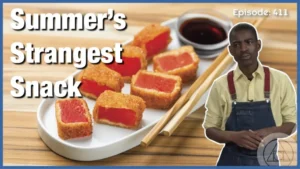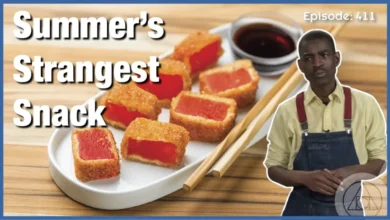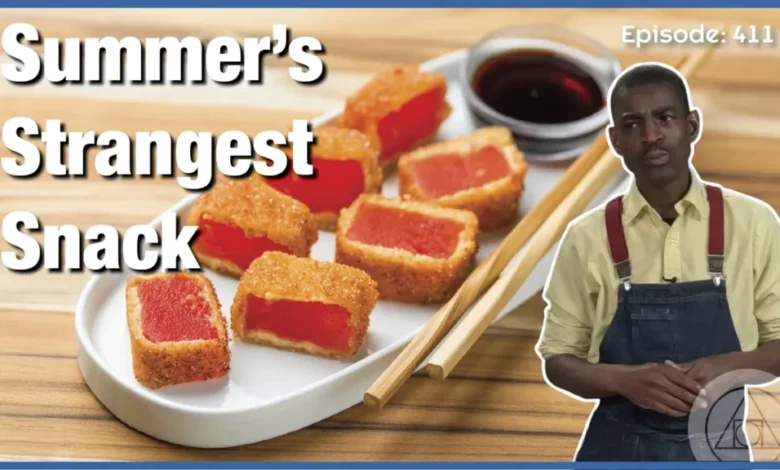
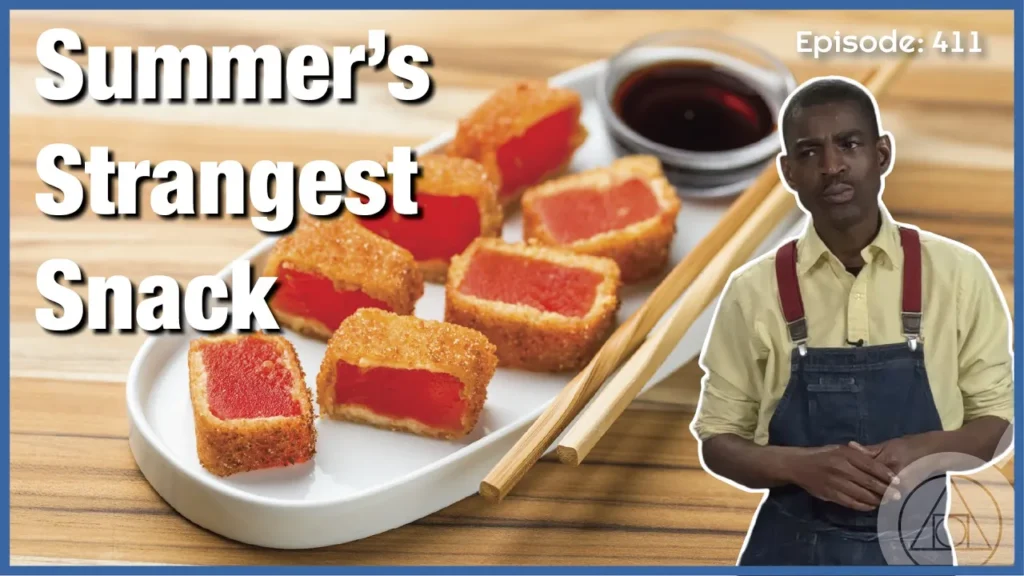
The intersection of modernist culinary techniques and traditional seasonal produce has long been a subject of rigorous experimentation within the professional gastronomy sector. Recently, the "We Transform Food" (WTF) series, produced by Modernist Pantry, investigated the unconventional application of deep-frying to high-water-content fruits, specifically watermelon, cantaloupe, and honeydew. While deep-frying is conventionally reserved for starches, proteins, and fats, this experiment highlights the transformative effects of high-heat immersion on fruit cellular structures, challenging standard culinary paradigms regarding texture and flavor profiles.
The Science of Thermal Transformation
To understand the viability of frying melon, one must first consider the moisture content of the fruit. Watermelon, for instance, consists of approximately 92% water. When a fruit with such high water content is submerged in hot oil—typically heated between 350°F and 375°F—the rapid evaporation of surface moisture creates a steam barrier. This process, when managed with an appropriate batter or coating, allows the exterior to achieve the Maillard reaction—the chemical reaction between amino acids and reducing sugars that gives browned food its distinctive flavor—while the interior undergoes a structural change.
Under controlled high-heat conditions, the pectin within the fruit cell walls begins to break down. This degradation transforms the typically crisp or watery texture of raw melon into a softer, semi-viscous consistency often compared to a custard. The encapsulation of this moisture within a crisp, fried jacket prevents the fruit from disintegrating, effectively creating a vessel for the concentrated sweetness that occurs as the water evaporates and the sugars caramelize.
Chronology of Modernist Culinary Experimentation
The evolution of frying fruit has deep historical roots, yet modern applications have shifted from simple fritters to complex structural transformations. Historically, frying fruit was a method of preservation or a way to utilize overripe produce. In the early 20th century, the proliferation of deep-frying in Southern American cuisine popularized the fried apple pie and fried peach cobbler.
However, the "WTF" series represents a shift toward "Modernist Cuisine," a movement popularized by figures like Nathan Myhrvold. This approach treats the kitchen as a laboratory. The recent experiment conducted on episode 411 of the series follows a specific protocol:
- Preparation: Selection of melons with high Brix levels (sugar content) to ensure flavor stability under heat.
- Coating: Application of a modified starch-based batter designed to withstand moisture release.
- Flash-Frying: Brief immersion in high-smoke-point oil to seal the exterior before the internal structure reaches a total breakdown point.
- Observation: Monitoring the cooling phase, where residual heat completes the textural transformation of the pulp.
Supporting Data and Sensory Analysis
The sensory impact of frying watermelon and honeydew is documented through shifts in physical properties. Raw watermelon has a refractive index and cellular turgidity defined by its water content. Post-frying, the loss of cellular integrity leads to a decrease in tensile strength, effectively softening the fruit.
Data from similar culinary experiments suggest that the flavor profile of melon intensifies during the frying process. As water evaporates, the concentration of volatile compounds—such as (Z,Z)-3,6-nonadienal, which gives watermelon its characteristic aroma—becomes more pronounced. Furthermore, the caramelization of fructose at the surface of the fruit adds a layer of depth that is absent in the raw state. This results in a product that bridges the gap between a fresh fruit salad and a cooked dessert, offering a unique mouthfeel that is simultaneously crisp on the exterior and creamy on the interior.
Broader Culinary Implications
The implications of this experiment extend beyond novelty. For the professional chef, the ability to manipulate fruit texture via deep-frying opens new avenues for plated desserts. Historically, fruit has been used as an accent or a raw component; however, by "transforming" the fruit through heat, chefs can incorporate melon into savory-sweet applications or as a structural element in complex desserts.
From a food safety and preparation standpoint, the primary challenge remains the moisture release. If the batter is not properly formulated, the rapid escape of steam can cause the coating to detach or, in extreme cases, cause oil splatter. The use of specialized hydrocolloids or modified starches, as often explored by Modernist Pantry, allows for a more stable result, which is crucial for commercial scalability in high-end restaurant settings.
Industry Perspective on Modernist Techniques
The "We Transform Food" series serves as an educational bridge between high-end industrial culinary science and the home enthusiast. By deconstructing the process, the series provides a framework for understanding how temperature, pressure, and ingredient composition interact. Experts in the food science industry note that while deep-fried melon is unlikely to replace traditional fried starches, it serves as an excellent case study in how heat can be used to engineer new textural experiences.
Nutritionists often point out that deep-frying alters the caloric profile of the fruit, primarily due to oil absorption. While the core of the fruit remains largely unchanged in terms of fiber and vitamin content, the addition of the fried coating introduces fats and carbohydrates. Consequently, such preparations are viewed strictly as culinary indulgences rather than health-conscious applications.
Environmental and Supply Chain Context
The sourcing of melons for such experiments is tied to seasonal availability. In the United States, peak watermelon season runs from May through September. Culinary experiments that rely on specific produce items are often constrained by the quality and maturity of the fruit. A melon with low sugar content will not caramelize effectively, resulting in a bland product. Therefore, the success of the frying process is inherently linked to agricultural cycles and the selection of varieties with high sugar-to-acid ratios.
Conclusion and Future Outlook
The exploration of deep-frying watermelon, cantaloupe, and honeydew is more than a viral social media trend; it is a demonstration of applied thermodynamics in the kitchen. By challenging the conventional boundaries of what can be fried, the Modernist Pantry series encourages chefs and food enthusiasts to reconsider the potential of familiar ingredients.
As the culinary industry continues to integrate technology and science into daily operations, experiments of this nature provide essential data on how to maximize the potential of seasonal produce. Whether this technique finds a permanent home on mainstream menus remains to be seen, but the success of the transformation suggests that there is significant room for innovation within the category of fruit-based desserts. For those interested in the technical aspects of food preparation, the "WTF" series offers a blueprint for experimentation, emphasizing that with the right application of heat and chemistry, even the most moisture-dense ingredients can be fundamentally, and deliciously, transformed.