Densing Is the Latest Innovation Transforming Modern Mixology and Cocktail Preparation

The evolution of the contemporary bar program is defined by a relentless pursuit of texture, aroma, and efficiency. For decades, bartenders have relied on established techniques such as fat-washing—a process involving the infusion of spirits with melted fats like butter, bacon grease, or coconut oil—to introduce mouthfeel and flavor. However, the industry is currently witnessing a paradigm shift driven by the "densing" technique, a process pioneered by Iain McPherson, the visionary founder of Edinburgh’s acclaimed Panda & Sons. This method, which utilizes vacuum blending to integrate oils into liquids at the molecular level, is rapidly moving from a niche experiment in high-end laboratory settings to a staple of professional cocktail preparation.
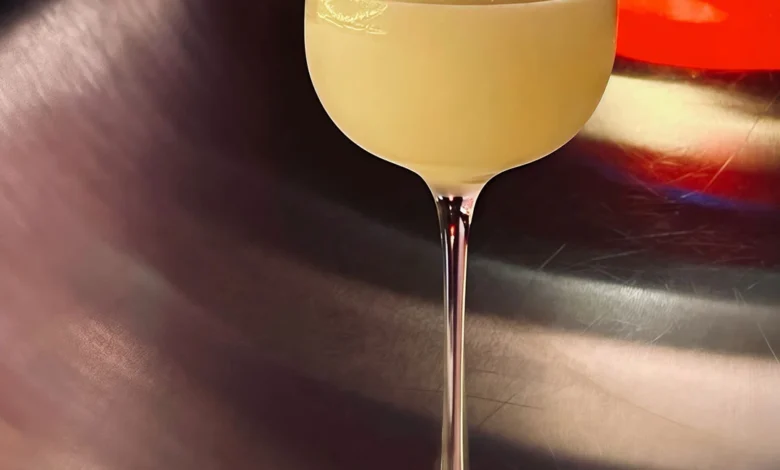
Philip Dizard, who co-owns the New York City establishment Tin’s alongside his wife, Mercury Tin, serves as a primary case study for this transition. Dizard characterizes the classic Daiquiri as the "bartender’s omelette"—a drink that appears deceptively simple but demands absolute precision. This pursuit of perfection is what led Dizard to adopt McPherson’s densing process. By integrating olive oil directly into his signature cocktail, the Dako-Ri, Dizard has achieved a level of textural refinement that traditional methods simply cannot replicate.
The Origins of Innovation at Panda & Sons
To understand the rise of densing, one must first look at the "Brain Melting Society," the research and development laboratory housed within Panda & Sons. Iain McPherson has long been at the forefront of cocktail science, introducing industry-standard techniques that have altered how spirits are treated. His prior contributions include "sous pression," a high-pressure infusion method; "switching," a technique involving the replacement of water content in spirits with other liquids; and "cryo concentration," which utilizes freezing to intensify flavors.
McPherson’s development of densing was born from a desire to address the fleeting nature of aromatics. In a standard cocktail, citrus oils expressed over the top of a glass provide an immediate, vibrant aroma that dissipates rapidly. Densing solves this by binding those oils directly into the spirit. The result is a consistent aromatic profile that persists from the first sip to the last. Furthermore, the process provides a unique aesthetic quality: it creates a "louche" effect, a hazy or cloudy appearance reminiscent of non-chill-filtered whiskies or absinthe, offering a visually distinct alternative to the current market trend of hyper-clarified, transparent cocktails.
The Mechanics of Densing: A Technical Breakdown
The core of the densing process is the vacuum blender, a machine that removes air from the blending chamber to prevent oxidation and ensure a homogenous, micro-emulsified mixture. Unlike traditional blending, which often incorporates air and leads to rapid separation, vacuum blending allows for a stable, integrated liquid.
The operational parameters developed by McPherson require a high degree of precision. The ingredients—typically a spirit, a secondary liquid, and a fat source—must be tempered to between 40 and 60 degrees Celsius (104 to 140 degrees Fahrenheit). The ratio of fat is surprisingly lean, generally ranging between 0.5 and 2.5 percent by weight. Once combined, the mixture undergoes a series of agitation cycles, typically three-minute intervals punctuated by 30-second rests, to ensure the fat is completely and permanently absorbed into the alcohol.
The implications for production are significant. While traditional fat-washing can require 12 to 14 hours of infusion followed by a tedious freezing and filtration process to remove excess lipids, densing is completed in roughly 15 minutes. Moreover, the resulting emulsion is remarkably stable. Dizard reports that test samples of "densed" rum have remained shelf-stable at ambient temperatures for six months without showing any signs of separation or degradation.
The Dako-Ri and the Practical Application of Science
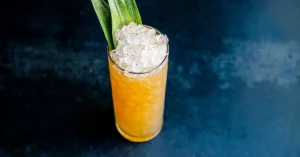
The Dako-Ri, featured at Tin’s, illustrates the practical application of this technology. Inspired by a tea shop the owners visited on their honeymoon in Yunnan, China, the drink incorporates lemongrass-infused rum, a syrup derived from Mao Jian tea, lime juice, and a one-percent proportion of olive oil.
The inclusion of olive oil is not merely a flavor choice; it is a structural one. Dizard notes that the oil provides a "rounded texture" that allows the cocktail to balance high acidity without requiring excessive sugar. In the competitive landscape of modern mixology, where many bars lean toward "lean" and "acidic" profiles, the Dako-Ri achieves a sophisticated equilibrium. By utilizing the vacuum blender, the bar team at Tin’s has effectively created a drink that honors the traditional Daiquiri format—rum, lime, and sugar—while introducing modern, savory notes that were previously impossible to stabilize in a single glass.

Broader Industry Impact and Economic Viability
The adoption of the vacuum blender is not without a financial barrier to entry. Commercial-grade vacuum blenders can cost anywhere from $350 for entry-level models to $2,000 for high-output industrial units. However, for many operators, the return on investment is realized through labor savings and reduced prep time.
"The prep time, refrigerator time, and space and labor time saved is remarkable," Dizard explains. By eliminating the need for long-term infusion storage and the cleaning of filtration equipment, bars can dedicate their resources to other aspects of the guest experience. Furthermore, the ability to batch large quantities of densed spirits ensures consistency across every drink poured, a critical metric for high-volume establishments.
The influence of McPherson’s "open book" approach—sharing his techniques via social media and industry workshops—has been a catalyst for this widespread adoption. When Dizard first encountered McPherson’s videos, he immediately recognized the potential for his own bar program. Within days of seeing the technique, the vacuum blender was ordered and integrated into the workflow at Tin’s, demonstrating the rapid pace at which technical innovations now permeate the global bartending community.
Analyzing the Shift: Why Now?
The transition toward techniques like densing comes at a time when the cocktail industry is moving away from the era of "molecular mixology" that relied heavily on foams, spheres, and chemical additives. Instead, the focus has shifted toward "cleaner" science—methods that enhance the natural properties of ingredients without introducing artificial stabilizers.
Densing represents the "third wave" of cocktail innovation:
- The Classic Revival (2000s): A focus on historical accuracy, fresh ingredients, and the rediscovery of pre-Prohibition recipes.
- The Molecular Era (2010s): A focus on spectacle, using hydrocolloids and laboratory equipment to change the state of ingredients.
- The Precision Era (Current): A focus on efficiency, stability, and subtle enhancement, where technology is used to refine the drinking experience without making the drink feel "over-engineered."
As bars like Tin’s continue to refine these methods, the industry is likely to see an increase in the adoption of vacuum technology. While it may not replace traditional shaking or stirring, densing has proven that it is a powerful tool for those looking to expand the textural vocabulary of their cocktail programs.
Looking Ahead
The success of the Dako-Ri and the broader interest in densing signals a future where the line between the kitchen and the bar is increasingly blurred. As bartenders continue to experiment with lipid integration—using everything from avocado oil to nut butters—the potential for flavor discovery is expansive.
For Iain McPherson and the team at Panda & Sons, the goal has always been to push the boundaries of what is possible within a glass. By democratizing these techniques and fostering a culture of collaborative experimentation, the industry is entering a period of unprecedented creative freedom. Whether or not densing becomes as ubiquitous as the traditional fat-wash remains to be seen, but its early success suggests that for the modern, high-volume, high-quality cocktail bar, the vacuum blender is quickly becoming an indispensable piece of kit.
As Dizard concludes, the pursuit of the "perfect" drink is an endless endeavor. By utilizing the precision of the vacuum blender, he has not only optimized his workflow but has fundamentally altered the sensory experience of a drink that has been in existence for over a century. In the world of professional mixology, such advancements are the building blocks of the next great chapter in drink history.