The Fragile Future of British Dairy: Is Intensive Farming Eroding Our Food Security

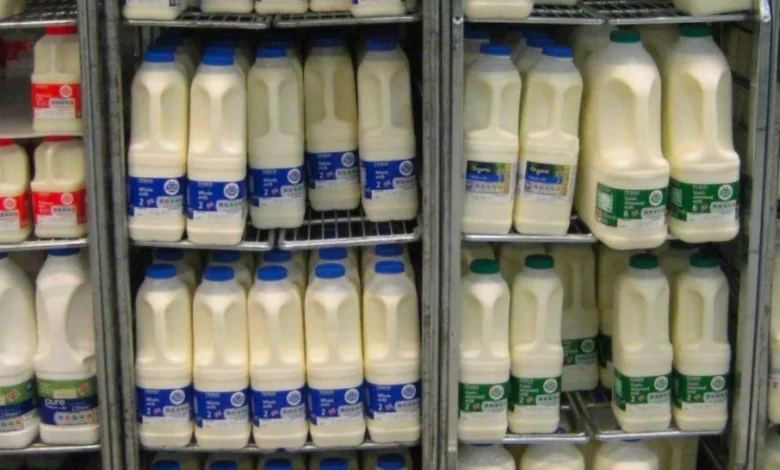
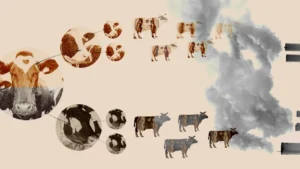
The British dairy landscape is currently undergoing a structural transformation that pits the drive for industrial efficiency against the urgent necessity of ecological resilience. Recent investigations by The Bureau of Investigative Journalism have confirmed that the number of "mega dairies"—operations housing hundreds or thousands of cattle in permanent indoor environments—has doubled over the past decade. This shift coincides with a stark contraction in the total number of dairy farms operating across Great Britain, which has, for the first time in recorded history, dipped below 7,000. This milestone represents a decline of more than 50% since the early 2000s, marking a decisive pivot toward a high-input, high-output model that prioritizes volume over land-based sustainability.
The Chronology of Industrial Intensification
The evolution of the British dairy sector has been defined by a cycle of consolidation and dependency. Historically, dairy farming was a decentralized, pasture-based industry. However, the last two decades have been characterized by persistent volatility in milk prices and a relentless increase in the cost of production inputs.
In the early 2000s, the UK boasted over 14,000 dairy farms. By 2010, the pressures of globalization and the volatility of commodity markets began to squeeze smaller operators out of the industry. Farmers were faced with a binary choice: scale up through significant capital investment in intensive housing and automated technology, or exit the sector entirely. This trend accelerated between 2015 and 2025, a period marked by the rise of "mega dairies." These facilities, designed to maximize yield per animal, rely heavily on imported soy-based feed and synthetic fertilizers—inputs that are increasingly susceptible to global supply chain shocks.
The Myth of Efficiency: A Data-Driven Analysis
Proponents of intensive agriculture argue that these systems are the only viable path to feeding a growing population. However, recent data suggests that the "efficiency" of these systems is a narrow metric that ignores systemic risks. According to the Climate Change Committee (CCC), the UK’s current trajectory poses significant risks to long-term food security. Their recent assessment indicates that under a 2°C warming scenario, the availability of high-quality farmland in England and Wales could plummet from 38% to just 11% by 2050.
The reliance on synthetic fertilizers is a particularly vulnerable point in this model. A significant portion of the nitrogen fertilizer used in the UK is imported, with vast quantities traveling through geopolitical bottlenecks like the Straits of Hormuz. The blockade of this region serves as a case study for the instability of the current food system. When these supply chains are disrupted, the cost of farming operations spikes instantly, creating a feedback loop of financial distress for farmers who have already leveraged their assets to meet the requirements of intensive production.
Environmental Degradation and Climate Sensitivity
The environmental cost of this transition is multifaceted. Intensive dairy systems require significant arable land to grow feed, which competes with the production of crops for direct human consumption. This is an inefficient use of resources, particularly as extreme weather events become more frequent. England has recorded three of its worst five harvests in the past decade, causing the five-year harvest average to fall below the 20-year average—a trend that historical data suggests is unprecedented.
Soil health is also a casualty of the intensive model. The reliance on chemical fertilizers often comes at the expense of soil structure and organic matter, which are essential for water retention and drought resistance. In contrast, agroecological systems—which integrate livestock with grassland—utilize the natural cycle of manure and nitrogen-fixing plants like clover to restore soil fertility. Research from Wageningen University suggests that a global food system focused on grazing livestock could actually require 25% less arable land than a purely vegan model, by converting human-inedible biomass (grass) into high-quality protein.
Official Perspectives and Policy Implications
The Sustainable Food Trust (SFT), among other advocacy groups, has called for a radical shift in how the UK defines "efficiency." Robert Barbour, Senior Research Manager at the SFT, argues that policy should move away from product-level footprint analysis, which tends to favor industrial systems, and toward system-wide metrics that account for biodiversity, soil health, and resilience.
Government intelligence agencies have also weighed in, highlighting that the nation’s reliance on imports leaves it exposed to global instability. A recent government security assessment warned that the UK would likely be unable to maintain food security if ecosystem collapse drives intense geopolitical competition for resources. This suggests that the current agricultural strategy—which favors intensive imports—is fundamentally at odds with national security goals.
The Case for Agroecological Transition
Transitioning to a lower-input, pasture-based system is not merely an environmental preference; it is an economic and strategic imperative. By reducing the reliance on imported feed and fertilizers, farmers can shield themselves from the volatile price swings of global commodity markets. While this model would necessitate a reduction in total production volume—the SFT’s Feeding Britain report models a 20% reduction in dairy output—it would simultaneously create a more robust system capable of withstanding extreme weather.
This transition would also necessitate a shift in consumer habits. A move toward consuming smaller quantities of high-quality, pasture-raised meat and dairy would align better with domestic land capacity. Such a system would prioritize the use of UK grasslands that are otherwise unsuitable for arable farming, effectively turning marginal land into a productive asset without the need for high-input chemical interventions.
The Path Forward: Beyond Market Solutions
The assumption that the market alone will drive this transition is increasingly viewed as flawed. High input costs have existed for years, yet the trend toward consolidation has only intensified. This suggests that without government intervention, the structural incentives favoring "Big Dairy" will remain dominant.
Policy experts suggest that a transition requires a multi-pronged approach:
- Redefining Subsidies: Shifting support mechanisms from production-based payments to incentives that reward soil carbon sequestration, biodiversity restoration, and water quality.
- Infrastructure Investment: Providing capital for smaller-scale, localized processing and distribution networks to help regional farmers retain more value.
- Aggregated Metrics: Adopting government-mandated reporting standards that account for the full environmental and social cost of food production, rather than just the retail price or yield per hectare.
The rise of "mega dairies" is a symptom of a broader, systemic philosophy that views agriculture as a mechanical process rather than an ecological one. As the UK faces the realities of a changing climate and an unstable geopolitical environment, the definition of success must evolve. If the primary objective remains the pursuit of maximum output at any cost, the nation risks losing not only its independent farming capacity but also the very resilience required to navigate the coming decades of ecological and economic stress.
The question facing policymakers is not whether to modernize, but whether that modernization should serve the interests of industrial output or the long-term viability of the land. The evidence suggests that the current path of intensification is leading to a state of permanent stress, one that may eventually leave the UK’s food system unable to adapt when it is needed most. Addressing this requires a departure from the "bigger is better" narrative and a commitment to a food system that is, above all, capable of enduring the shocks of the 21st century.