The Grand Unification of Baking and Chemistry: Introducing Avogadro, the Parametric Waffle Recipe Generator Marking Amedeo Avogadro’s 250th Birthday

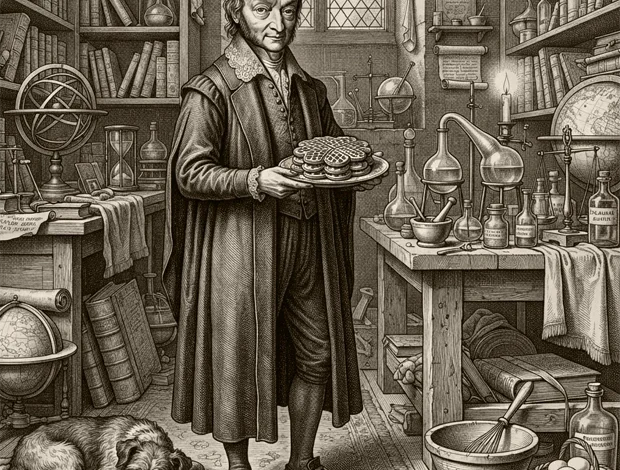
The intersection of culinary arts and theoretical chemistry has long been fertile ground for innovation, yet few projects have bridged the two domains with the mathematical precision recently unveiled in the culinary science community. To mark the 250th birth anniversary of the celebrated Italian
physicist and chemist Amedeo Avogadro, researchers and food scientists have launched an ambitious digital tool: a parametric waffle recipe generator aptly named Avogadro. This web-based application calculates custom, high-precision Norwegian heart-waffle batters on the fly, offering users access to a staggering combinatorial landscape of culinary possibilities grounded in an analysis of roughly one thousand traditional Scandinavian recipes.
A 12-Year Incubation Period
The conceptualization of the Avogadro project traces its origins back to 2014, when the initial framework began as a series of static interface mockups and basic spreadsheet models. For over a decade, the project remained in dormancy, constrained by the technological limitations of dynamic web-based food chemistry modeling and the extensive data collection required to map traditional baking practices.
The turning point arrived with the convergence of modern web development and a comprehensive corpus of historical baking data. By compiling approximately 1,000 traditional Norwegian and Scandinavian waffle recipes—many of which relied on historical tacit knowledge, such as the qualitative instruction to "add flour until the batter has the right consistency"—developers established a quantitative baseline for what constitutes a viable waffle batter. The public launch on August 9, 2026, deliberately coincides with the quasitercentenary of Amedeo Avogadro, born in Turin, Italy, on August 9, 1776.
An Architecture Without a Database
Unlike conventional culinary websites that rely on static databases of pre-tested recipes, the Avogadro generator operates entirely on algorithmic computation. The platform discards the traditional model of storing and retrieving user-submitted entries. Instead, users curate their batter by selecting specific components across core culinary categories, including liquids, dairy products, fats, eggs, starches, and sweeteners.

Once the ingredients are selected, users manipulate a series of parametric sliders governing fundamental rheological and sensory properties:
- Sweetness
- Richness
- Tanginess
- Density and structural integrity
The application instantaneously computes a precise, gram-scaled batter formulation tailored to the exact number of eggs specified by the user. To assist bakers in navigating this vast parameter space, the interface features a specialized "waffle heart quality indicator." This diagnostic tool provides immediate feedback, evaluating whether the generated proportion of ingredients will yield a functional, structurally sound batter and assessing its deviation from historical culinary norms. Interestingly, comparative analysis reveals that several commercially successful, mass-market waffle mixes occupy surprising outliers on the quality spectrum, proving that unconventional ingredient ratios can yield commercially viable results.
Dual-Mode Interface for Novices and Experts
To accommodate varying degrees of culinary expertise, the platform is divided into two distinct operational modes:
- Standard Mode: Designed for accessibility, this interface streamlines the ingredient selection process and restricts the number of active sliders. It employs robust guardrails to ensure that any combination generated within this environment results in a reliable, tested style of waffle.
- Expert Mode: Tailored for food scientists, professional chefs, and culinary enthusiasts, this mode unlocks the complete ingredient inventory, all eight parametric sliders, and a broader array of presets. It grants users unfettered access to experimental formulations that transcend traditional cookbook boundaries.
Mathematical Scale and the Homage to Avogadro’s Number
The name of the generator is more than a mere historical nod; it reflects the staggering scale of the application’s mathematical architecture. By calculating all permissible permutations of ingredient selections and slider positions, the Avogadro generator spans approximately $10^24$ distinct control settings.
To contextualize this figure, it is helpful to look at the foundational constant of physical chemistry from which it draws its name. Amedeo Avogadro is internationally renowned for his 1811 hypothesis—now known as Avogadro’s Law—which posits that equal volumes of all gases, at the same temperature and pressure, contain the same number of molecules. The modern Avogadro constant ($N_A$) is defined precisely as $6.02214076 times 10^23$ elementary entities (such as atoms or molecules) per mole.
Consequently, the parametric control space of the waffle generator covers roughly 1,660 moles’ worth of theoretical waffle batters. Project developers note, however, a crucial empirical caveat: while the system accommodates $10^24$ control settings, mathematical rounding, the pruning of trace quantities, and physical constraints mean that many distinct slider positions resolve to identical batters. Furthermore, extreme configurations inevitably fall outside the boundaries of physics and chemistry, resulting in structurally inert formulations flagged by the absence of active lobes on the quality indicator. Nevertheless, the remaining subset of workable recipes guarantees that users can routinely generate entirely novel culinary compositions previously undocumented in human history.

Implications for Culinary Science and Modern Gastronomy
The deployment of parametric tools in the kitchen represents a broader shift toward data-driven gastronomy. By transforming qualitative kitchen heuristics—such as "the right consistency"—into quantifiable mathematical variables, projects like Avogadro help demystify the physical and chemical interactions between starches, proteins, fats, and liquids.
Food scientists and culinary historians have noted that such models provide valuable insight into regional recipe evolution. By mapping Scandinavian heart waffles across a multidimensional coordinate system, researchers can visualize how regional ingredient availability historically dictated batter mechanics. For instance, variations in fat content and dairy acidity across different Scandinavian valleys map neatly onto specific clusters within the generator’s parametric space, illustrating how empirical baking techniques intuitively optimized for structural elasticity and thermal browning long before the underlying biochemistry was formally understood.
Future Outlook and Community Engagement
As the Avogadro generator goes live, its creators are actively soliciting feedback from the global community of bakers, food scientists, and amateur enthusiasts. Because testing $10^24$ individual batters is a physical impossibility, the mathematical model relies heavily on crowd-sourced empirical validation.
Bakers encountering edge cases where the algorithm produces unusual physical behaviors or structural failures are encouraged to submit detailed feedback alongside the direct URL of the specific recipe configuration. This iterative feedback loop is expected to refine the underlying algorithms, improving the predictive accuracy of the waffle heart quality indicator.
As institutional celebrations for Amedeo Avogadro’s 250th anniversary unfold across academic and scientific institutions worldwide, the culinary community has found a uniquely fitting tribute. By marrying the rigorous counting of molecules with the precise weighing of flour, butter, and sugar, the Avogadro generator invites practitioners of both science and art to engage in an unprecedented exploration of kitchen chemistry—one waffle at a time.