Two Decades of Molecular Gastronomy: Hervé This Releases Comprehensive Summary of Paris Seminars

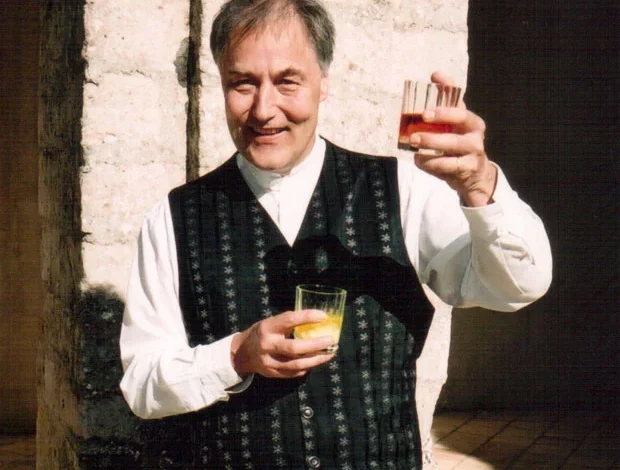
The intersection of culinary arts and scientific inquiry has reached a significant milestone with the official publication of a retrospective document detailing twenty years of molecular gastronomy seminars held in Paris, France. Spearheaded by renowned physical chemist Hervé This—a foundational figure in the scientific discipline of cooking—the newly released summaries offer an unprecedented look into decades of empirical testing regarding traditional recipes, culinary myths, and kitchen processes. The documents, made publicly available in both French and English translations, aim to democratize scientific findings for professional chefs, industrial food scientists, academic researchers, and home cooks alike.
Main Facts of the Seminar Archives
The newly published compendium distills two decades of monthly experimentation conducted under the guidance of Hervé This at AgroParisTech. These seminars were established to systematically investigate the physical and chemical transformations that occur during food preparation. While the newly circulated PDF documents provide concise bulleted summaries of the findings, extensive documentation containing detailed experimental conditions, quantitative measurements, and comprehensive methodologies remains accessible via the official AgroParisTech web portal in French.
The scope of the seminars spans a vast array of culinary phenomena, ranging from the thermal denaturation of proteins in eggs and meat to the rheology of emulsions, foams, and gels. By applying rigorous scientific methods to domestic cooking, the participants of the Paris seminars have sought to separate culinary folklore from verifiable physical laws. The release of these summaries marks a pivotal moment for the discipline, bridging the gap between academic laboratories and professional kitchen operations.
Historical Chronology and Background Context
The genesis of molecular gastronomy as a formal scientific discipline can be traced back to the early 1990s. In 1992, Hervé This and the late Oxford physicist Nicholas Kurti organized the first International Workshop on Molecular and Physical Gastronomy held in Erice, Sicily. The initiative was born out of a shared passion for understanding the physical mechanisms underlying traditional culinary techniques. Although Kurti passed away in 1998, This continued the mission in France, establishing the monthly Paris seminars that have run continuously for two decades.
Over the past thirty years, the field has evolved from a niche academic interest into a global culinary movement. While the term "molecular gastronomy" is frequently co-opted by the restaurant industry to describe avant-garde dining styles, high-tech kitchen gadgets, and modernist presentation techniques, practitioners like This have consistently emphasized that the discipline is fundamentally a pure science rather than a cooking style. The Paris seminars have served as the intellectual engine of this distinction, focusing strictly on understanding why culinary transformations occur rather than inventing new ways to plate food.
Methodology and the Deconstruction of Kitchen Lore
The operational framework of the Paris seminars is rooted in the empirical testing of culinary maxims. For twenty years, participants—comprising chemists, physicists, gastronomy students, and professional cooks—have met regularly to propose, test, and document hypotheses related to everyday cooking.
Many common recipes rely on instructions passed down through generations without formal verification. The Paris seminars systematically dismantle these unverified claims. For instance, participants have evaluated assertions concerning the precise temperatures required for poaching eggs, the impact of salt addition timing on the boiling point and cooking duration of vegetables, and the structural integrity of complex sauces under varying mechanical stresses.
By subjecting these culinary traditions to standardized laboratory conditions, the seminar participants have demonstrated that numerous widely accepted kitchen rules are either scientifically unfounded or based on misunderstandings of underlying chemical reactions. Conversely, the experiments have frequently validated traditional techniques by uncovering the precise molecular reasons for their success, thereby reinforcing the value of historical culinary wisdom through a modern scientific lens.
Implications for Education, Industry, and Professional Kitchens
The publication of the twenty-year summary carries profound implications across multiple sectors, including culinary education, industrial food manufacturing, and secondary and higher education science curricula.
In professional kitchens, the data provides chefs with a deeper understanding of the ingredients they manipulate daily. Rather than relying on trial and error, culinary professionals can utilize the principles outlined in the seminar documents to troubleshoot recipe failures, optimize cooking times, and innovate new textures and flavor profiles with scientific precision. The systematic approach championed by This encourages a culture of critical inquiry within the culinary arts, moving the profession closer to an applied science.
In the realm of education, the findings serve as an invaluable resource for chemistry and physics educators. Abstract scientific concepts—such as phase transitions, colloidal suspensions, chemical equilibrium, and thermodynamics—can be difficult for students to grasp when confined to traditional textbook problems. By utilizing culinary contexts, educators can transform standard kitchen activities into engaging laboratory exercises. Phenomena such as the whipping of egg whites, the browning of meats via the Maillard reaction, or the crystallization of sugar provide tangible, relatable platforms for teaching complex chemical principles.
Furthermore, the food processing industry stands to benefit from the foundational research compiled in the Paris archives. Understanding the fundamental chemistry of food matrices at a micro-level allows manufacturers to improve product stability, enhance nutritional retention, and develop novel food textures without relying heavily on empirical guesswork.
Global Reception and Future Outlook
The broader scientific and culinary communities have warmly received the release of the bilingual documents. Observers note that the accessibility of the summaries removes significant language and technical barriers, enabling a wider international audience to engage with the decades of accumulated data.
While some critics of modernist cuisine argue that excessive scientific reductionism strips cooking of its cultural and intuitive essence, proponents of molecular gastronomy maintain that science enhances rather than diminishes the culinary arts. Understanding the mechanisms of flavor release and texture modification does not mechanize cooking; rather, it empowers the cook with greater control over the medium.
As Hervé This continues his pioneering work, the legacy of the Paris seminars remains a testament to the power of curiosity-driven research. The comprehensive documentation serves as a permanent reference point for anyone seeking to understand the intricate chemical ballet that occurs every time heat, mechanical force, and ingredients interact in the kitchen. By inviting ongoing scrutiny and further experimentation, the seminar archives ensure that the dialogue between science and gastronomy will continue to thrive for decades to come.