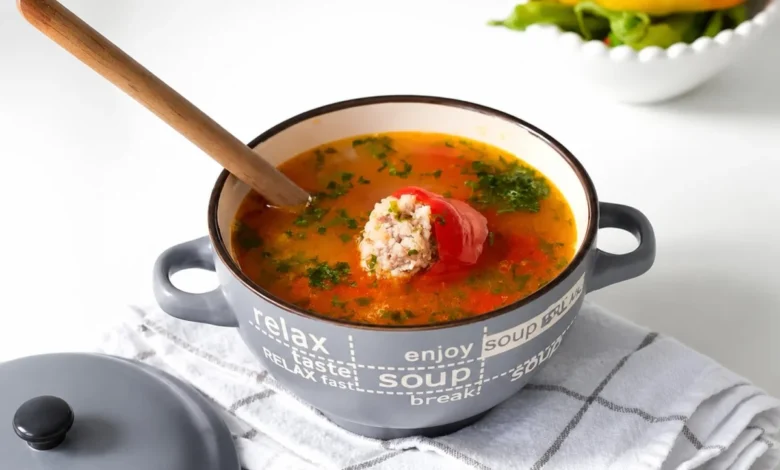
This traditional Romanian stuffed pepper soup, known locally as Ciorbă de Ardei Umpluți, represents a beloved culinary cornerstone, transforming the classic stuffed pepper dish into a rich, aromatic, and deeply satisfying soup. It stands as a testament to Romania’s vibrant gastronomic heritage, offering a comforting blend of tender bell peppers, seasoned meat and rice, all simmered within a savory, tomato-based broth. As the peppers gently cook, they impart their distinctive earthy and slightly bittersweet essence into the surrounding liquid, culminating in a rustic and profoundly flavorful creation cherished across the nation.
A Staple of Romanian Gastronomy
Popular throughout Romania, Ciorbă de Ardei Umpluți is frequently served as a family-style lunch or dinner, embodying both heartiness and nourishment while maintaining a delightful lightness. The soup’s tomato-infused finish introduces a subtle acidity and depth, which is then elegantly brightened by the addition of fresh parsley, completing a harmonious flavor profile. Served piping hot, typically alongside generous slices of crusty bread and, for an added layer of richness, a dollop of sour cream (smetană), this dish epitomizes classic comfort food. Its simplicity and warmth are characteristic of traditional Romanian cooking, making it a perennial favorite.
What truly elevates this recipe in the hearts of many Romanians is its remarkable versatility. In countless households, the cooked stuffed peppers are not exclusively confined to the soup. They are often carefully extracted and served separately, frequently accompanied by a simple, homemade tomato sauce. This ingenious approach effectively transforms a single culinary endeavor into two distinct yet equally comforting dishes: a flavorful soup and a classic plate of stuffed peppers, showcasing the practical and resourceful nature of Romanian kitchen traditions. This adaptability ensures that no part of the flavorful creation goes unappreciated, providing variety and satisfying different preferences at the dinner table. The dish’s appeal extends beyond mere sustenance; it evokes a sense of home, tradition, and familial warmth, deeply embedded in the national consciousness.
Historical Roots and Culinary Evolution
The concept of stuffing vegetables, particularly peppers, is not unique to Romania but is part of a broader culinary lineage that stretches across the Balkans, Eastern Europe, the Middle East, and even parts of the Mediterranean. The practice can be traced back to the Ottoman Empire, where dishes like dolma (stuffed vegetables) and sarma (stuffed leaves) were widespread and evolved over centuries. As the Ottoman influence permeated various regions, including present-day Romania, these culinary techniques and preferences were adopted, adapted, and integrated into local gastronomies.
Bell peppers, originally native to the Americas, made their way to Europe following the Columbian Exchange. Their introduction transformed European cooking, providing new flavors, colors, and textures. In Romania, bell peppers found a welcoming home, becoming a cornerstone ingredient in numerous dishes. The evolution of Ciorbă de Ardei Umpluți likely occurred as local cooks began to combine the Ottoman-inspired stuffing technique with the indigenous Romanian tradition of sour soups, or ciorbă. This fusion resulted in a dish that distinctly reflects both historical influences and local ingenuity. Early versions would have utilized ingredients readily available in Romanian villages: often a mix of ground pork (a common meat in Romanian diets), rice, and aromatic herbs, all cooked in a broth that could be soured with various local agents. The shift from a standalone stuffed pepper dish to a soup highlights a desire for a more complete, one-pot meal, especially suited for colder months or large family gatherings.
The Essence of "Ciorbă": A Souring Tradition
The term "ciorbă" itself is a fundamental concept in Romanian cuisine, denoting a category of sour soups that are central to the national diet. Unlike many Western soups, which are often characterized by creaminess or clear broths, Romanian ciorbă is defined by its characteristic tartness. This sourness is traditionally achieved through various agents, including borș (fermented wheat bran liquid), sauerkraut juice, lemon juice, or vinegar. The use of these souring agents is not merely for flavor; it also serves historical purposes of food preservation and is believed to aid digestion.
Ciorbă de Ardei Umpluți, while often having a strong tomato base, firmly fits within this "ciorbă" tradition due to the judicious addition of a souring agent. This could be a splash of lemon juice or vinegar towards the end of cooking, or sometimes even a small amount of borș in more traditional regional recipes. This tart element provides a crucial counterpoint to the richness of the meat and the sweetness of the peppers and tomatoes, creating a balanced and invigorating flavor profile that is deeply satisfying. The preparation of a true ciorbă often involves a delicate balance of vegetables, meat (or beans/vegetables for vegetarian versions), and the signature sour component, making it a complex yet comforting culinary art form. This practice of souring soups is a hallmark of Romanian and neighboring Balkan cuisines, distinguishing them from other European culinary traditions.

Crafting the Perfect Stuffed Pepper: Ingredients and Technique
The success of Ciorbă de Ardei Umpluți lies in the careful selection and preparation of its core components. The bell peppers themselves are paramount. Medium-sized, firm, and vibrant peppers—often green, yellow, or red—are preferred. Their robust structure allows them to hold their shape during prolonged simmering, while their inherent sweetness and mild bitterness infuse the soup with a distinctive flavor. Prior to stuffing, the peppers are typically cored, and any seeds or membranes are removed, preparing them for the savory filling.
The filling is a harmonious blend of seasoned ground meat and rice. Traditionally, ground pork or a mixture of pork and beef is used, offering a rich and tender texture. The rice, usually a short-grain variety, serves not only as a filler but also absorbs the meat juices and broth, expanding to bind the ingredients together and contribute to the filling’s succulence. Finely chopped onions, fresh herbs such as dill and parsley, and a medley of spices like paprika, salt, and black pepper are crucial for seasoning the meat mixture, ensuring each bite is bursting with flavor. Some recipes might also include a small amount of egg to further bind the filling.
The broth begins with a vegetable base, often involving sautéed onions, carrots, and sometimes celery, which form an aromatic foundation. Tomato paste or crushed tomatoes are then introduced, creating the characteristic red hue and tangy sweetness of the soup. Water or vegetable/meat broth is added, bringing the soup to a simmering consistency. The stuffed peppers are carefully placed into this simmering liquid, ensuring they are submerged. The cooking process is slow and gentle, allowing the flavors to meld and the peppers to become fork-tender without disintegrating. This slow simmering is essential for the peppers to release their aromas and for the rice within the stuffing to cook thoroughly, absorbing the savory liquid. Towards the end, the aforementioned souring agent is added, along with more fresh herbs, to achieve the desired balance and brightness.
Beyond the Bowl: Cultural Significance and Versatility

Ciorbă de Ardei Umpluți transcends its identity as a mere dish; it is a cultural artifact, deeply interwoven with Romanian identity and traditions. For many, it evokes powerful memories of childhood, family gatherings, and the warmth of a grandmother’s kitchen. It is a dish often prepared for Sunday lunches, holidays, and celebrations, symbolizing hospitality and abundance. Its presence on the table signifies a commitment to traditional values and the continuity of culinary heritage across generations.
The dish’s versatility, as noted, is a key aspect of its appeal. The ability to serve the stuffed peppers separately, perhaps with a richer tomato sauce or a side of mashed potatoes, speaks to the resourcefulness inherent in Romanian cooking. This dual-purpose preparation allows families to enjoy two distinct meals from one cooking effort, extending the enjoyment and maximizing the flavors. This practice also highlights a broader philosophy in Romanian kitchens, where ingredients are valued, and dishes are often designed to be adaptable and economical. This approach to cooking is not just practical; it is a creative expression of how to nourish a family efficiently and deliciously.
The Nutritional Profile: Hearty and Wholesome
From a nutritional standpoint, Ciorbă de Ardei Umpluți offers a wholesome and balanced meal. Bell peppers are rich in vitamins C and A, antioxidants, and fiber. The ground meat provides essential protein and iron, while rice contributes complex carbohydrates for energy. The addition of various vegetables in the broth (onions, carrots) further boosts the vitamin and mineral content. When served with a modest amount of sour cream, healthy fats are introduced.
While specific caloric and macronutrient values vary greatly depending on the exact recipe and portion sizes, the dish generally provides a good source of energy, protein, and micronutrients. Its hearty nature makes it particularly appealing during colder months, offering sustained warmth and satiety. For those seeking lighter alternatives, leaner meats can be used, or vegetarian versions incorporating mushrooms, grains like bulgur, or mixed vegetables can be prepared, maintaining the essence of the dish while accommodating different dietary preferences. The emphasis on fresh vegetables and a well-balanced combination of protein and carbohydrates makes it a nourishing option for families.

Economic and Cultural Impact: A Culinary Ambassador
Ciorbă de Ardei Umpluți plays a significant, albeit often understated, role in Romania’s broader economic and cultural landscape. Domestically, it supports local agriculture through the demand for fresh peppers, tomatoes, and other vegetables. It’s a staple in traditional restaurants and guesthouses, particularly in rural areas and regions promoting agro-tourism, where authentic home-cooked meals are a major draw for visitors. This demand contributes to the livelihoods of farmers and small businesses across the country.
Internationally, the dish acts as a culinary ambassador for Romania. In the globalized world, food is a powerful tool for cultural exchange. Romanian diaspora communities worldwide cherish and prepare Ciorbă de Ardei Umpluți, using it to connect with their heritage and introduce their culture to others. When culinary tourists explore Romania, dishes like this offer an authentic taste of the country’s soul, leaving lasting impressions and encouraging deeper engagement with Romanian traditions. Its inclusion in international cookbooks, food blogs, and culinary festivals further elevates Romania’s profile on the global gastronomic stage, fostering appreciation for its unique flavors and culinary artistry.
Perspectives on a National Treasure
Culinary experts and food historians often highlight Ciorbă de Ardei Umpluți as a prime example of Romanian culinary ingenuity, a dish that masterfully blends historical influences with local ingredients and traditions. They emphasize its role in preserving ancestral cooking methods and flavor profiles that define the national palate. "This soup is more than just food; it’s a narrative of our history, a blend of resilience and resourcefulness passed down through generations," one prominent Romanian food critic might observe, underscoring its deep cultural resonance.

For countless Romanian homemakers, the dish embodies comfort, family, and tradition. "When I make Ciorbă de Ardei Umpluți, I’m not just cooking; I’m creating a connection to my mother and grandmother, to the flavors of my childhood," a Bucharest resident might share, reflecting the dish’s powerful nostalgic pull and its role in fostering family bonds. The relative ease of preparing a large batch and its ability to feed many make it an ideal choice for communal meals, further solidifying its place in social customs.
International food enthusiasts and tourists often express delight at discovering the rich, complex flavors of Ciorbă de Ardei Umpluți. Its hearty nature, combined with the unique tang of the ciorbă tradition, often comes as a pleasant surprise, distinguishing it from other European stuffed pepper variations. "It’s incredibly satisfying, a truly authentic taste of Romania that feels both exotic and deeply comforting," an American tourist might remark, highlighting its ability to bridge cultural divides through flavor. This collective appreciation, from within Romania and abroad, reaffirms its status as a cherished national treasure.
Preserving Culinary Heritage
In an era of increasing globalization and fast food, the continued popularity of dishes like Ciorbă de Ardei Umpluți is vital for the preservation of Romania’s culinary heritage. It serves as a reminder of traditional cooking techniques, the importance of fresh, local ingredients, and the cultural narratives embedded in food. Efforts by chefs to modernize and refine traditional recipes, while respecting their core essence, ensure that these dishes remain relevant and appealing to younger generations. Food festivals, cooking classes, and culinary tourism initiatives also play a crucial role in promoting and preserving this rich gastronomic legacy.
Ciorbă de Ardei Umpluți is more than just a recipe; it is a symbol of Romanian identity, a dish that nourishes the body and soul, and a testament to the enduring power of traditional home cooking. Its blend of historical depth, cultural significance, and undeniable flavor ensures its place as a cherished staple in Romanian homes and a captivating representative of the nation’s rich culinary landscape for the world to discover.