ASDP Indonesia Ferry Anticipates Final Year-End Surge at Merak-Bakauheni Crossing Amid Significant Holiday Traffic Growth

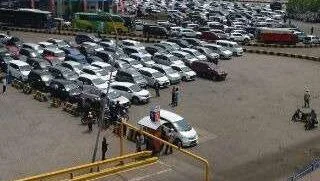
As the calendar turns toward the final hours of 2015, PT ASDP Indonesia Ferry (Persero) is preparing for a projected uptick in traffic across the strategic Merak-Bakauheni corridor. While the state-owned ferry operator expects a rise in volume during the Wednesday evening transition into the New Year, official forecasts suggest that the density will not reach the record-breaking peaks observed during the Christmas holiday rush last week. Nana Sutisna, the Branch Operations Manager for PT ASDP Indonesia Ferry at Merak, confirmed that while an increase is inevitable, the surge is expected to be manageable compared to the primary departure wave that characterized the mid-December period.
According to internal projections, the volume of private vehicles is expected to see a modest rise of approximately 8 percent, while the number of pedestrian passengers—those traveling without vehicles—is predicted to climb by 12 percent. These figures represent the final push of the year-end holiday season, which has already seen a double-digit percentage growth in overall traffic compared to the previous year. The Merak-Bakauheni route, often described as the "Golden Bridge" connecting the islands of Java and Sumatra, remains the busiest maritime crossing in the Indonesian archipelago, serving as a vital artery for both passenger travel and the movement of essential goods.
Current Port Status and Operational Capacity
As of the morning of Wednesday, December 30, 2015, the atmosphere at the Merak Port in Banten was reported as relatively calm. Despite the looming New Year’s Eve celebrations, the anticipated influx of travelers had not yet led to significant congestion at the boarding docks or ticket plazas. Nana Sutisna noted that the weather conditions remained favorable, with clear skies and calm seas providing an ideal environment for maritime operations. This meteorological stability is a crucial factor for ASDP, as the Sunda Strait is known for its unpredictable currents and wind patterns, which can frequently disrupt docking schedules during the monsoon season.
To handle the year-end demand, ASDP has maintained a robust fleet deployment. Data covering the 24-hour period from December 29 to 8:00 AM on December 30 indicates that 27 vessels were in active operation, completing a total of 93 trips across the strait. During this specific window, the port successfully processed 33,924 passengers, marking a 9 percent increase from the 31,092 passengers recorded during the same period in 2014. The growth in vehicle numbers was even more pronounced: two-wheeled vehicles reached 1,199 units, a 31 percent jump from the 913 units seen the previous year, while four-wheeled vehicles (including private cars and small commercial vans) rose by 17 percent, totaling 6,251 units compared to 5,343 in 2014.
Comprehensive Analysis of the 2015 Holiday Season
The year-end holiday period in Indonesia, which encompasses both Christmas and New Year (locally referred to as "Nataru"), serves as a critical barometer for the country’s transportation infrastructure. A deeper look at the cumulative data from December 18 through December 29, 2015, reveals a significant year-on-year expansion in travel demand. Total passenger volume during this 12-day window reached 480,556 individuals. This represents a 22.1 percent increase over the 393,543 passengers recorded during the corresponding period in 2014—an additional 87,013 people utilizing the ferry service.
The vehicle statistics are equally telling. Total vehicle crossings reached 95,985 units, an increase of 17,278 units or 22 percent compared to the 78,707 vehicles handled in 2014. Within this data, certain categories showed explosive growth:
- Motorcycles: Two-wheeled transport saw the most dramatic spike, with 18,476 units crossing the strait, a staggering 70.8 percent increase from the 10,819 units in the previous year.
- Private Cars: The backbone of holiday travel, private automobiles, reached 47,478 units, up 21.6 percent from 39,030 units.
- Mixed Four-Wheeled Vehicles: This category, which includes small buses and light goods vehicles, reached 77,509 units, a 14.2 percent rise from 67,888 units.
The massive surge in motorcycle traffic has become a focal point for ASDP management. Nana Sutisna highlighted a specific logistical detail: approximately 7,000 motorcycles that crossed from Java to Sumatra earlier in the holiday period have yet to make their return trip. This "deficit" suggests that the upcoming return flow (Arus Balik) in the first week of January 2016 could be particularly intense, as thousands of riders converge on Bakauheni Port simultaneously to return to the industrial centers of Tangerang, Jakarta, and Bekasi.
Strategic Mitigation and Fleet Management
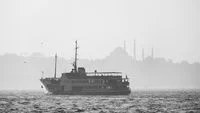
In response to these burgeoning numbers, PT ASDP Indonesia Ferry has implemented a multi-tiered strategy to ensure safety and efficiency. The company has placed 28 vessels on standby to serve the Merak-Bakauheni route. A key component of this year’s strategy is the prioritization of larger-capacity vessels. By deploying ships with higher Deadweight Tonnage (DWT) and larger deck space, ASDP aims to clear port parking lots more quickly, reducing the "waiting time" that often leads to tailbacks reaching the Tangerang-Merak Toll Road.
The use of larger ships is not merely about passenger comfort but is a tactical necessity. During peak hours, the bottleneck is rarely the speed of the ships at sea, but rather the speed of the loading and unloading process (port call time). Larger vessels allow for a higher "throughput" per docking cycle. Furthermore, the coordination between the Port Authority (OPP) and the Indonesian Navy (TNI AL) remains a standard procedure during these high-traffic periods to ensure maritime security and provide emergency search and rescue (SAR) readiness if required.
Efficiency Measures at the Terminal
Beyond the vessels themselves, ASDP is focusing on the "human element" of port logistics. One of the primary causes of delays at the Merak terminal is the transaction time at the ticket booths. To combat this, Nana Sutisna issued a formal appeal to all travelers to be more proactive during the boarding process.
"We urge all service users to prepare their departure as well as possible," Sutisna stated. He emphasized two critical points for travelers:
- Exact Change: Preparing the exact amount of cash for ticket payments significantly reduces the seconds lost per transaction, which, when multiplied by thousands of vehicles, can save hours of cumulative delay.
- Identification Readiness: The requirement to present a National Identity Card (KTP) is a mandatory part of the manifest system. ASDP officials noted that many travelers only begin searching for their wallets or IDs once they reach the front of the line, causing unnecessary friction.
These small behavioral changes are seen as vital for maintaining the "flow" of the port. In a high-pressure environment like the Merak terminal, where thousands of vehicles are funneled through limited lanes, any micro-delay at the gate has a "ripple effect" that can cause kilometers of congestion on the access roads outside the port.
Socio-Economic Context and Future Implications
The 22 percent increase in overall traffic at Merak-Bakauheni is indicative of broader economic trends in Indonesia. As the middle class grows, the ownership of private vehicles—particularly motorcycles and low-cost green cars (LCGC)—has surged. For many Indonesian families, the ferry crossing is an essential part of the "Mudik" tradition (returning to one’s hometown), which now occurs not only during Eid al-Fitr but also during the Christmas and New Year period.
The 70 percent increase in motorcycle traffic is particularly noteworthy. It reflects a preference for flexible, low-cost travel, even over long distances that involve crossing sea straits. However, this trend also presents significant safety challenges. Long-distance motorcycle travel is inherently riskier than bus or train travel, and the high volume of bikes at the ferry terminals requires specialized handling to prevent accidents during the boarding process on slippery metal ramps.
From an infrastructure perspective, the 2015 data underscores the urgency of the ongoing developments in the region. The Trans-Sumatra Toll Road, which is currently under various stages of construction, is expected to further increase the volume of vehicles arriving at Bakauheni in the coming years. This will, in turn, place even more pressure on Merak to expand its pier capacity and modernize its IT-based ticketing systems.
Conclusion and Outlook for the Return Flow
As PT ASDP Indonesia Ferry manages the final hours of 2015, the focus is already shifting toward the first week of 2016. The "Arus Balik" or return flow is expected to be more concentrated than the departure phase. While the departure was spread out over the Christmas week, the return is likely to happen in a dense 48-hour window as schools and offices reopen.
The management’s current success in maintaining "lengang" or quiet conditions on December 30 is a testament to effective scheduling and the public’s willingness to spread out their travel dates. However, the true test of the 28-ship fleet and the larger-capacity strategy will come when the 7,000 "missing" motorcycles and tens of thousands of private cars begin their journey back to Java. For now, ASDP remains on high alert, monitoring weather patterns and terminal density to ensure that the transition into the New Year remains safe and orderly for the nearly half-million Indonesians who have crossed the Sunda Strait this season.