Best Bar Hot Dogs in New York City A Definitive Guide to Gourmet Glizzies and Iconic Dives

New York City’s culinary identity has long been tethered to the humble hot dog, a staple of the metropolitan landscape that traces its roots back to the late 19th-century pushcarts of Coney Island. While the city’s street-meat culture remains an unmatched global phenomenon, a sophisticated evolution has taken place within the five boroughs’ nightlife sector. Bars, ranging from world-class cocktail institutions to gritty subterranean dives, have increasingly adopted the hot dog—colloquially rebranded by younger generations as the "glizzy"—as the ultimate bridge between a casual snack and a substantial meal. This gastronomic trend capitalizes on the frankfurter’s inherent versatility: it is cost-effective for the operator, nostalgic for the consumer, and infinitely adaptable to various culinary themes.
The strategic inclusion of hot dogs on bar menus is not merely a matter of convenience; it is a calculated response to the shifting economics of the New York hospitality industry. As real estate costs and labor shortages continue to pressure margins, the hot dog offers a high-margin, low-complexity solution that satisfies the "snack-to-meal" demand. Furthermore, the rise of "high-low" dining—pairing luxury spirits or complex cocktails with approachable comfort food—has solidified the hot dog’s place in venues where one might otherwise expect charcuterie or oysters. From the West Village to the industrial corridors of Bushwick, the following seven establishments represent the pinnacle of New York City’s bar-room hot dog offerings, showcasing a range of styles that include traditional corn dogs, international street food variations, and avant-garde gourmet creations.

The Evolution of the Bar Snack: A Historical Context
To understand the current prominence of hot dogs in NYC bars, one must look at the history of the "free lunch" tradition. In the late 19th and early 20th centuries, many American saloons offered a free meal to patrons who purchased at least one drink. These meals were often high in salt to encourage further beverage consumption. While the legalities surrounding free food in liquor-licensed establishments have fluctuated over the decades, the spirit of the tradition survives in the modern bar snack.
In the 1980s and 90s, the NYC bar food scene was dominated by standard fare: pretzels, peanuts, and perhaps a basic burger. However, the cocktail renaissance of the early 2000s, spearheaded by venues like Please Don’t Tell (PDT), introduced the concept of the "chef-driven" hot dog. This era marked a turning point where the quality of the meat, the provenance of the bun, and the complexity of the toppings became as important as the drink menu itself. Today, the NYC bar dog is a canvas for cultural expression, reflecting the city’s diverse immigrant populations and its penchant for culinary innovation.
The Corn Dog at Cowgirl: A West Village Institution
Located in the heart of the West Village, Cowgirl has served as a neighborhood anchor since its inception in 1989. Originally known as the Cowgirl Hall of Fame, the venue was founded on a "Texas-friendly" philosophy, bringing a slice of the American Southwest to Hudson Street. The interior is a masterclass in kitsch and Americana, featuring antler chandeliers, vintage saddles, and a general store aesthetic that has remained largely unchanged for over three decades.

The food program at Cowgirl is unapologetically Southern, featuring items like rattlesnake bites and fried okra. However, it is the corn dog that stands out as a quintessential bar snack. Unlike the mass-produced, frozen varieties found at carnivals, Cowgirl’s version features a high-quality frankfurter encased in a thick, pillowy batter of sweet cornbread. The texture is a deliberate study in contrasts: a crisp, golden exterior that yields to a soft, cake-like middle and a savory center. Served with traditional "catsup" and mustard, the corn dog at Cowgirl is a nostalgic nod to state fair culture, reimagined for a sophisticated Manhattan audience. Its longevity on the menu is a testament to the enduring appeal of simple, well-executed comfort food in a neighborhood that has seen rapid gentrification.
Innovation in Gowanus: The Hidden Rivers Glizzy
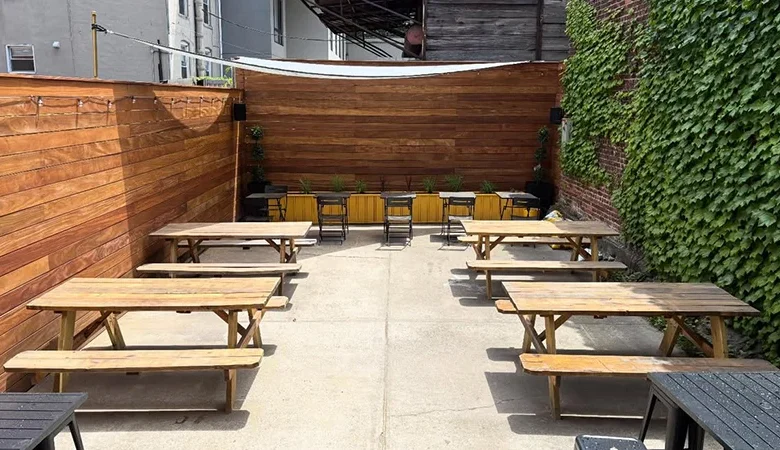
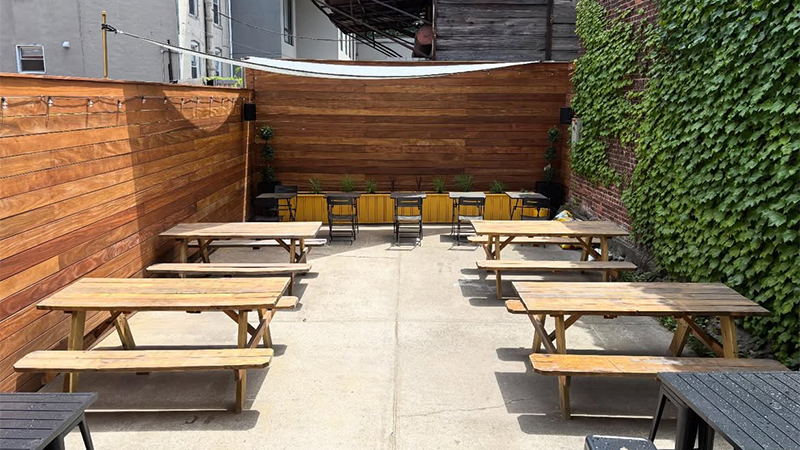
As the industrial neighborhood of Gowanus undergoes a massive residential and commercial rezoning, new establishments like Hidden Rivers are defining the area’s modern social fabric. Opened in the summer of 2024, Hidden Rivers was designed specifically to celebrate the New York craft brewing scene. The bar features a rotating selection of local drafts and a spacious backyard that has quickly become a local favorite for communal drinking.
The food philosophy at Hidden Rivers is one of radical simplicity. The menu is intentionally sparse, focusing on a few high-quality items designed to complement beer. Their flagship offering, the Gowanus Glizzy, is a notable departure from the standard NYC street dog. The preparation involves a unique "bifurcated" dressing technique: instead of piling toppings vertically, the condiments are applied horizontally to the bun. One side features a sharp grain mustard and bright green relish, while the other is lacquered with a rich pimento cheese. This creates a flavor profile that balances acidity and spice with the creamy, fat-forward notes of the cheese. The visual presentation—a striking contrast of neon green and muted yellow—has made it a frequent subject of social media documentation, illustrating how even a simple hot dog can be optimized for the "Instagram era" of dining.
International Influence: The Montreal Steamie at Peek Inn
In Greenpoint, Brooklyn, the team behind the acclaimed Meat Hook butchery and Cozy Royale has expanded their footprint with Peek Inn. This venue, which opened in early 2024, leans into a retro-dive aesthetic while maintaining the high standards of sourcing associated with the Meat Hook brand. Peek Inn has gained notoriety for its "cold Martinis" and a hot dog program that is arguably the most experimental in the city.
The "Montreal Steamie" is a highlight of their rotating menu. A "steamie" is a traditional style of hot dog popular in Quebec, characterized by a bun and sausage that are steamed together until they reach a soft, unified texture. Peek Inn’s version uses the Meat Hook’s signature snappy wieners, which are notably oversized for the bun, creating a comical yet indulgent presentation. The dog is topped with a traditional cabbage slaw, white onions, relish, and mustard. The crunch of the raw cabbage provides a necessary textural counterpoint to the soft, steamed bun. Peek Inn’s willingness to cycle through global styles—including street taco-inspired dogs in pambazo buns—reflects a broader trend of "culinary tourism" within the NYC bar scene, where patrons can experience international flavors without leaving their barstools.
The Speakeasy Standard: The Chang Dog at Please Don’t Tell (PDT)
No discussion of NYC bar hot dogs is complete without Please Don’t Tell (PDT). Since opening in 2007, PDT has become one of the most famous bars in the world, accessible only through a vintage phone booth inside Crif Dogs, a legendary East Village frankfurter joint. This symbiotic relationship between a high-end cocktail den and a gritty hot dog shop defined the "high-low" movement of the late 2000s.

The Chang Dog is a permanent fixture on the PDT menu and represents a collaboration between the bar and world-renowned chef David Chang. The dish features a deep-fried, bacon-wrapped hot dog—a technique popularized by New Jersey "rippers"—topped with spicy kimchi sourced from Chang’s Momofuku. The fermentation of the kimchi provides a piquant, acidic bite that cuts through the intense richness of the bacon and the fried sausage. This pairing of a $15+ cocktail with a complex, bacon-wrapped hot dog remains a foundational element of New York’s modern nightlife identity, proving that the city’s most discerning drinkers still crave the salt and fat of a well-made frankfurter.
The 90s Western Aesthetic: Romeo’s on St. Marks Place
St. Marks Place has historically been the epicenter of counterculture and cheap eats in the East Village. Romeo’s, a relatively recent addition to the strip, pays homage to this history while injecting a 90s-era Western film aesthetic into the mix. The bar is known for its "eccentric" cocktail program, which includes unconventional ingredients like snap peas and gazpacho.
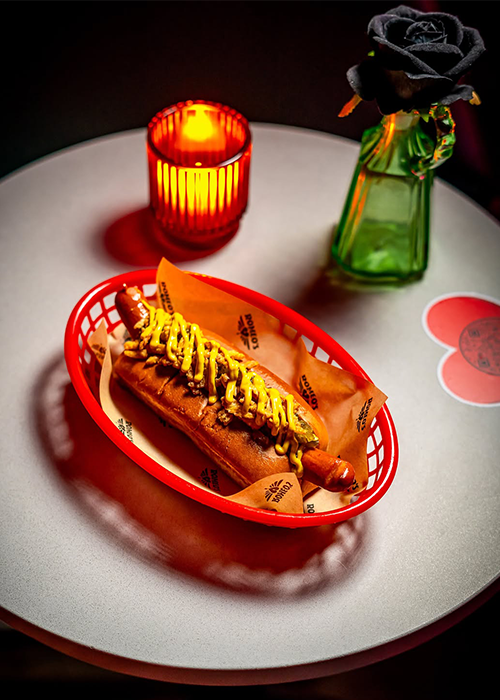
The Romeo’s Hot Dog is designed to be as bold as the drinks. It features a snappy Brooklyn-made frankfurter topped with jalapeño relish, crispy fried onions, and mustard, all served on a buttery brioche bun. The use of brioche is a deliberate "upmarket" choice, providing a sweetness that balances the heat of the jalapeño. Romeo’s also frequently hosts "kitchen takeovers" and collaborations with local chefs, using the hot dog as a base for seasonal experiments. This collaborative approach reflects a larger trend in the NYC hospitality industry where bars act as incubators for culinary talent, using a simple food item like the hot dog to test new flavor combinations.

The Economic Miracle: The Free Hot Dog at Rudy’s Bar & Grill
Rudy’s Bar & Grill in Hell’s Kitchen is perhaps the most famous example of the "free lunch" tradition surviving in the 21st century. Opened in 1933, the year Prohibition was repealed, Rudy’s has maintained a reputation as one of the most affordable bars in Manhattan. Its exterior is marked by "Baron," a large pink pig statue that has become a neighborhood landmark.
The business model at Rudy’s is straightforward: every drink purchase comes with a free hot dog. In an era where a cocktail in Midtown can easily exceed $20, Rudy’s offers pints for as low as $4. The hot dogs themselves are standard-issue frankfurters served on basic white buns with optional mustard and kraut. While they lack the artisanal pedigree of the Meat Hook or the gourmet toppings of PDT, the "Rudy’s dog" is an essential New York experience. It represents the democratic nature of the city’s dive bars—a place where construction workers, actors, and tourists sit side-by-side, united by the simple value of a cheap beer and a free snack. Economically, the free hot dog serves as a powerful loss leader, ensuring high foot traffic and legendary brand loyalty in a hyper-competitive market.
Venezuelan Street Food Meets Bushwick: Santa Salsa
In Bushwick, the intersection of the neighborhood’s industrial past and its artistic present is perfectly encapsulated by Santa Salsa. Originally a street food cart, Santa Salsa evolved into a permanent dive bar location in 2011. The venue specializes in Venezuelan-style street food, offering a cultural alternative to the standard American frankfurter.
The Perro Con Todo ("Dog with Everything") is the star of the menu. Priced between $6 and $8, it is a masterclass in maximalist toppings. A traditional Venezuelan hot dog is defined by its abundance; at Santa Salsa, this includes crushed potato chips (for crunch), onions, cabbage, cheddar cheese, ketchup, mustard, and a signature sweet corn salsa. The result is a multi-layered flavor profile that hits every taste bud—salty, sweet, savory, and tangy. The inclusion of potato chips as a topping is a hallmark of Latin American street food, providing a textural element that is rarely found in domestic NYC dogs. Santa Salsa’s success highlights the growing influence of the Venezuelan diaspora on the city’s culinary landscape and the role of bars in introducing these regional specialties to a wider audience.
Broader Impact and Implications for the NYC Hospitality Industry
The resurgence of the hot dog as a premier bar snack carries significant implications for the future of the New York City hospitality industry. Firstly, it signals a move toward "functional dining." As the cost of living in the city rises, consumers are increasingly looking for social spaces where they can both drink and eat affordably. The hot dog allows bars to fulfill the role of a casual eatery without the overhead of a full-service kitchen.
Secondly, the "glizzy" phenomenon demonstrates the power of digital culture in shaping real-world dining trends. The hot dog’s visual appeal and its status as an "ironic" internet meme have driven younger demographics into traditional dive bars and experimental cocktail lounges alike. This has created a rare bridge between Gen Z consumers and "legacy" establishments like Rudy’s or Cowgirl.

Finally, the diversification of the hot dog—from Venezuelan "Perros" to Canadian "Steamies"—reflects New York City’s ongoing status as a global culinary laboratory. By taking a simple, universal food item and infusing it with local and international flavors, NYC bars are ensuring that the humble hot dog remains as relevant in the 21st century as it was on the boardwalks of Coney Island 150 years ago. Whether it is a free dog at a Hell’s Kitchen dive or a $15 bacon-wrapped creation in a hidden speakeasy, the frankfurter remains the undisputed king of the New York City bar scene.