Beyond the Principles: Why Outcome-Based Frameworks Are Redefining the Future of Global Agriculture

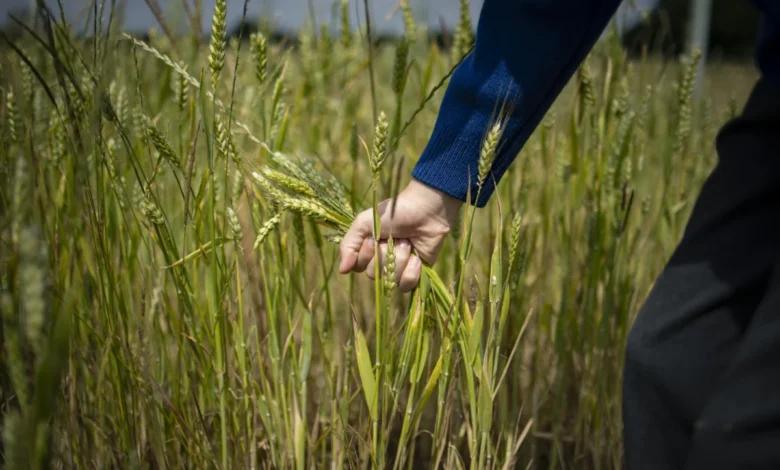
Regenerative agriculture is increasingly recognized not by a rigid checklist of farming practices, but by the tangible environmental and social outcomes it delivers, marking a fundamental shift in how the global food system measures success. For decades, the agricultural sector has relied on standardized inputs and specific techniques to gauge performance. However, as climate volatility intensifies and biodiversity loss accelerates, the industry is pivoting toward the Regen10 Outcomes Framework—a landmark, globally co-developed initiative designed to define success through impact rather than prescription.
A Paradigm Shift in Agricultural Assessment
The transition toward outcome-based agriculture represents a move away from "prescriptive farming," which dictates specific tools or methods, toward "adaptive stewardship." The core of this transition lies in the realization that farming is a localized, complex, and living system. A protocol that improves soil carbon sequestration in the temperate climate of the United Kingdom may be ecologically detrimental or economically unviable in the arid, drought-prone regions of Sub-Saharan Africa.
The Global Farm Metric (GFM), alongside the Regen10 coalition, argues that while regenerative principles—such as minimal soil disturbance, crop rotation, and cover cropping—are valuable, they are merely the means to an end. The true goal is the improvement of the holistic health of the farm, encompassing soil integrity, water quality, biodiversity, and the economic viability of the farming community. By shifting the focus to outcomes, the industry is empowering farmers to act as local experts, utilizing their unique knowledge of the land to achieve measurable ecological and social improvements.
The Evolution of Regenerative Thought: A Chronology
The discourse surrounding regenerative agriculture has accelerated significantly since 2020. Before the COVID-19 pandemic, the concept was largely niche, confined to academic research and small-scale sustainable agriculture circles.
- 2020-2021: The pandemic-induced supply chain disruptions forced a global reckoning regarding the fragility of centralized, industrial food systems. Farmers’ markets and local supply chains experienced a resurgence, highlighting the role of small-to-mid-scale agriculture in community resilience.
- 2022: The emergence of the Regen10 initiative marked a turning point. Recognizing that fragmented definitions of "regenerative" were confusing policymakers and investors, global stakeholders began a rigorous consultation process.
- 2023-2024: The development of the Regen10 Outcomes Framework gathered momentum, pulling together data from the Global Farm Metric and aligning it with international standards like the Sustainable Development Goals (SDGs) and the Kunming-Montreal Global Biodiversity Framework (GBF).
- Current State: The framework now acts as a reference point for NGOs, businesses, and government agencies seeking to align their investment strategies with verifiable ecological performance.
Supporting Data and The Complexity of Metrics
The challenge of measuring agricultural success is underscored by the immense scale of the sector. According to the Food and Agriculture Organization (FAO), agriculture accounts for approximately 70% of global freshwater withdrawals and roughly 25% of global greenhouse gas emissions. However, these figures are often used to characterize agriculture solely as a problem.
The Regen10 framework seeks to flip this narrative. By focusing on metrics like soil organic matter, nutrient cycling efficiency, and net-farm income, the framework provides a pathway for farms to transition from being net-emitters to potential carbon sinks.
For instance, data from the 4per1000 initiative—a key influence on current regenerative policies—suggests that increasing soil organic matter by just 0.4% annually could significantly offset global fossil fuel emissions. The challenge, however, is that this is not a universal constant. It is dependent on local soil type, historical land-use patterns, and current climate conditions. This is why a standardized "practice-based" label is often insufficient; without an outcome-based metric, a farm might adopt a regenerative practice without actually achieving the desired sequestration results.
Stakeholder Perspectives and Institutional Alignment
The development of the Regen10 Outcomes Framework was not a top-down mandate. It involved extensive consultations with Indigenous Peoples, smallholder farmer organizations, and multinational corporations.
Industry analysts suggest that this collaborative approach is critical for the "de-risking" of agricultural investment. For financial institutions and supply-chain managers, the lack of a standardized language has historically prevented the scaling of capital into regenerative projects. By creating a shared definition of what constitutes "success," the framework provides the transparency necessary for ESG (Environmental, Social, and Governance) reporting.
"The goal is not to force every farm into the same mold," notes an anonymous policy researcher familiar with the framework’s development. "It is to create a common ledger of progress. If a retailer, a government, and a farmer all agree that ‘improved biodiversity’ is the goal, the path to that goal becomes a matter of local innovation rather than central compliance."
Implications for the Global Food System
The adoption of an outcome-based framework has several profound implications for the future of global food security:
- Economic Resilience: By focusing on outcomes, farmers can shift from a dependency on high-cost synthetic inputs toward a model that leverages natural cycles. This can reduce overhead costs and mitigate the risks associated with the volatility of global chemical and fertilizer markets.
- Accountability and Greenwashing: One of the primary risks in the rise of "regenerative" branding is greenwashing. Companies may claim their products are regenerative based on a single practice. A rigorous, outcome-based framework forces companies to demonstrate, through data, that their supply chains are actually delivering improvements in soil, water, and community health.
- Policy Reform: Governments are currently re-evaluating agricultural subsidies, many of which historically rewarded production volume regardless of environmental cost. An outcome-based approach provides a template for "public money for public goods," where subsidies are linked to measurable environmental improvements.
- Community Reconnection: Perhaps most significantly, the focus on social and human health recognizes that farming is a cultural activity. By measuring the prosperity of rural communities and the accessibility of fresh food, the framework brings human welfare to the forefront of agricultural policy.
The Path Forward: Moving Beyond Fixed States
A critical takeaway from the Regen10 framework is the rejection of the idea that a farm can be "fully regenerative." Instead, it posits that regeneration is a continuous, dynamic process. This view acknowledges the inevitability of climate change and the need for constant adaptation. A farm that was considered highly productive ten years ago may now be struggling with new pest pressures or rainfall patterns.
By asking the "harder questions"—such as whether biodiversity is thriving despite these external pressures—the framework encourages a culture of continuous improvement. It shifts the burden of proof from "did you use this machine or that seed" to "is the land more resilient today than it was yesterday?"
As this framework gains traction, the agricultural sector stands at a crossroads. The transition toward outcome-based assessment is not merely a technical update; it is a fundamental shift in the philosophy of land management. By aligning the interests of farmers, scientists, policymakers, and consumers, the Regen10 framework aims to build a global food system that is not only capable of feeding a growing population but is also capable of restoring the ecological foundations upon which all human society depends.
The future of agriculture will likely be defined by this transition. The successful implementation of these metrics will depend on the willingness of stakeholders to move beyond traditional, siloed interests and embrace a common, science-led language of regeneration. The data suggests that the transition is not only possible but necessary, providing a roadmap to reconcile the dual challenges of global food production and environmental stewardship.
Related posts: