Historical Context and Culinary Philosophy
The origins of steaming as a preferred method for fish in the Canton region (Guangdong Province) are deeply rooted in the area’s geographic accessibility to fresh maritime resources. Historically, the proximity to the South China Sea meant that Cantonese cooks had daily access to live fish. When the raw ingredient is of superior quality, the prevailing culinary logic dictates that the chef’s role is to act as a facilitator rather than a masker of flavor.
Unlike the heavy braising techniques common in Northern Chinese cuisine or the intense stir-frying found in other regions, Cantonese steaming is an exercise in restraint. The technique is designed to showcase the "freshness" (known in Cantonese as heung), characterized by a firm yet silky texture and a naturally sweet, clean flavor profile. This method has evolved over centuries to become a quintessential part of celebratory meals, particularly during Lunar New Year, where the whole fish symbolizes abundance—a play on the Chinese word for fish, yu, which sounds identical to the word for surplus.
Technical Parameters of the Steam Process
The preparation of Cantonese steamed fish is dictated by strict adherence to heat management. The standard process involves high-intensity steam, usually achieved by boiling water at a rapid rate before the fish is introduced to the vessel.

- Preparation: The fish—typically sea bream, grouper, or rockfish—is cleaned and patted dry. Modern culinary standards suggest scoring the flesh to ensure even heat penetration, especially for larger specimens.
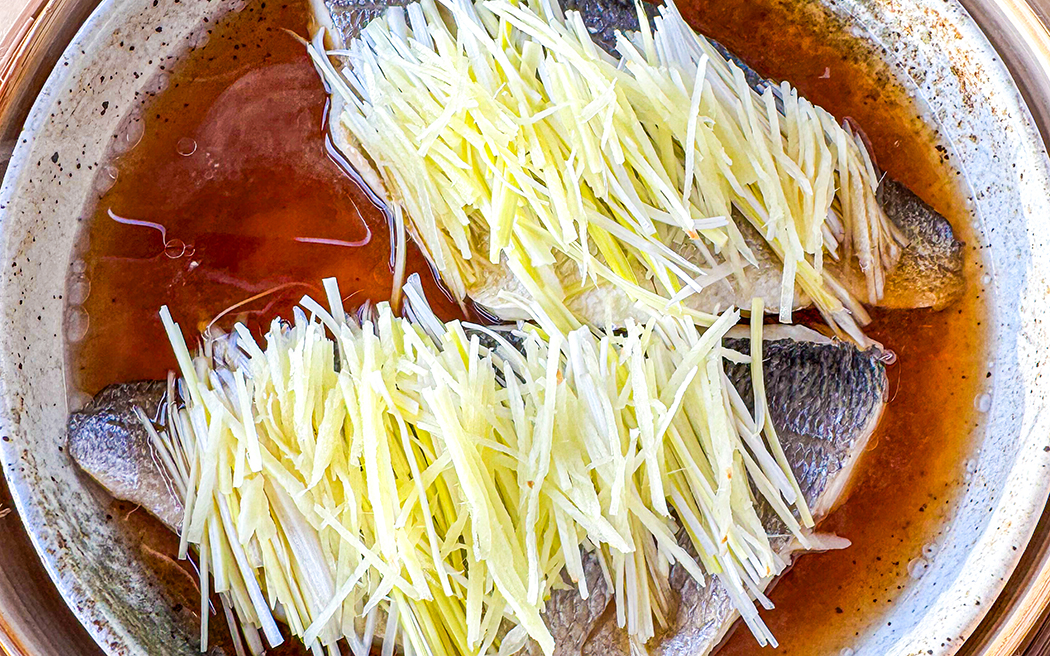
- Aromatic Integration: Ginger and scallions serve as the primary aromatics. These are not merely decorative; they function as a chemical bridge, with ginger neutralizing the "fishy" volatile compounds (amines) through its own essential oils, while scallions add a bright, herbaceous counterpoint.
- The Thermal Threshold: Steaming a whole fish typically requires 5 to 8 minutes, depending on the weight. Excessive exposure to steam results in the denaturation of proteins to the point of toughness, causing the flesh to pull away from the bone in a dry, unappealing manner.
- The Hot Oil Infusion (Dip Yau): This final step is essential for the dish’s aromatic profile. By pouring near-boiling oil over the ginger and scallions at the final moment, the chef achieves a "blooming" effect, where the heat forces the essential oils of the aromatics to release, creating a complex scent that permeates the sauce.
Data and Nutritional Considerations
From a nutritional perspective, steamed fish is widely regarded as one of the healthiest methods of protein preparation. Because the technique involves no added fats during the cooking process, the caloric density remains low while the Omega-3 fatty acid content is largely preserved.
Clinical dietary data suggest that steaming, compared to frying or grilling, results in the lowest formation of advanced glycation end-products (AGEs), which are linked to oxidative stress and inflammation. A standard portion of steamed white fish provides approximately 20–25 grams of lean protein, making it an ideal candidate for balanced dietary planning. The accompanying soy-based sauce—typically a blend of light soy sauce, a touch of sugar, and sometimes Shaoxing wine—adds a modest amount of sodium, but when portioned correctly, does not negate the health benefits of the base ingredient.

The Role of the "Dip Yau" Technique in Contemporary Kitchens
The dip yau technique, or the application of hot oil, has been subject to culinary analysis regarding its role in the sensory experience of the meal. Food scientists note that the "sizzle" heard when the hot oil hits the aromatics is a multi-sensory trigger that heightens the diner’s perception of freshness. In a professional kitchen setting, the precision of the oil temperature—usually between 180°C and 200°C—is critical. If the oil is too cool, it fails to release the aromatics; if it is too hot, it can scorch the delicate scallions, leading to a bitter flavor profile.
Socio-Economic Implications and Global Adoption
The democratization of the Cantonese steamed fish recipe has seen a significant shift over the last two decades. Once considered a dish that required the expertise of a restaurant chef, the availability of high-quality steamers and improved logistics for fresh seafood have allowed home cooks to replicate the dish with high success rates.

Market analysis indicates an increased consumer interest in "minimalist" cooking, where households prioritize sourcing high-quality, sustainable seafood. This trend has benefited local fishmongers and specialty markets that provide live or high-grade chilled fish, as opposed to frozen, processed alternatives. The dish’s popularity serves as a litmus test for the "clean eating" movement, as it aligns with consumer demand for transparency in ingredients and simplicity in preparation.
Institutional Perspectives on Culinary Authenticity
Professional chefs often emphasize that the "authentic" version of this dish is defined by the quality of the soy sauce used. Traditional Cantonese kitchens often utilize a combination of aged soy sauces, sometimes house-brewed or infused with specific botanicals. When prepared at home, the substitution of standard commercial soy sauce is common, though it is recommended to add a small amount of sesame oil or a splash of water to balance the salinity.

In terms of presentation, the "whole fish" format is standard in traditional settings. However, industry trends show that for modern home-cooking, fillets have become an acceptable substitute. While the visual impact of a whole fish is significant for events like weddings or holiday feasts, the flavor extraction from the bones during the steaming process is arguably the key advantage of the traditional method. The bones provide structure and contribute a subtle, savory gelatinous quality to the sauce that is missing in fillet-based preparations.
Conclusion: The Future of the Dish
As culinary globalization continues, the Cantonese steamed fish has transitioned from a regional specialty to a globally recognized standard of healthy, sophisticated dining. Its future lies in the continued balance between respect for traditional preparation and the integration of modern food safety and sourcing practices. Whether prepared for a formal celebratory banquet or a weeknight meal, the dish remains a testament to the idea that the most profound culinary expressions often come from the most restrained techniques. By focusing on the interplay of heat, timing, and fresh aromatics, the cook is able to transform a simple sea creature into a dish that is as intellectually satisfying as it is gastronomically sound.